
Translated material
You are a genius, old man!
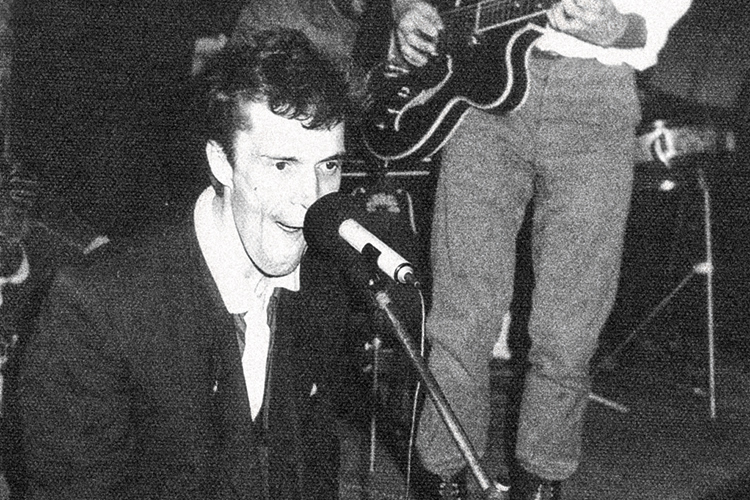
Almost 30 years ago, in 1989, another vivid name appeared in domestic rock-the Rostov group “Beijing Row-Row”, led by a poet, artist, an active participant in the famous art-comic “Art or Death” Sergei Timofeev. The team did not gain wide popularity, but in Rostov-on-Don it is still considered cult. And the songs “Shigi-Jigi”, “Spring”, “On Sadovaya Street”, “Zhu-Zhu” went to the people and still sound in the underground crossings and at concerts of the “animals” group. 25 years ago, Sergei Timofeev died tragically in Moscow - he was 34 years old. This summer, the counter-cultural label “Departure Exit” released a double disc with all the surviving “Beijing Row-Row”-CD with the repaired albums “Besamemuch” and “Living Force” and DVD with concert records, as well as clips and documentary film “Shigi-Jigi, or everything will be fine, which was filmed then by the beginning of the director Cyril then Serebrennikov. Alexander Nurabaev contacted the group members and close friends of Sergei Timofeev, who recalled the brief and vivid story of Beijing Rowe Row and his outstanding leader.
Dmitry Keleshyan (guitarist, co -author of the songs): It all started when I returned from the army to a completely different country, which was only nominally called the Soviet Union. Everywhere in the city you could meet people in bright, unusual clothes, some punk with ridges on their heads, which was impossible to imagine a couple more years before. I especially remember a tall guy dressed in a baggy jacket, in woolen hetras knee -deep, in army gallife - looked very unusual. A little later, Avdey Tero-Oganyan offered me to learn from one cool artist at the Musical Comedy Theater. This artist turned out to be Valera Koshlyakov, and in his workshop I met that guy in woolen leggings. It was Seryozha Timofeev. We drank some port, sang, played on the guitars. Tim immediately proposed to create a group and the next day came with a song, the text of which was recorded on some napkins. And these words beat in the very heart. And, even though I already had my own group, I immediately realized that this is exactly what should be done, and not try to imitate the “cinema”, “zoo” and “aquarium”, as everyone around did.
"Beijing Row Row"-"Spring"
Viktor Pivotorspavlo (drummer, leader of the “forbidden drummers”): friends introduced me to Sergey in the hostel of the Rostov Conservatory. We met on some kind of booze, and Seryozha struck me with his openness, the breadth of his eyes. He was one of those people who immediately became the center of the company. And after meeting a few more days I was impressed by this man and his incredible energy characteristic of geniuses. We immediately made friends and began to play, rehearse, write down. I then met my future wife. And Sergey, barely seeing us, said: “Old man, you are so lucky. Look, do not miss. ” Consider him blessed us. I well remember those words. And so we have been living together for 26 years. And this is thanks to Sergey.
Keleshyan: In a strange way, all informals, eccentric characters and creative personalities united in one place. At some point, they called the association “Art or Death” and went down in history. Tim was a participant in this association. But he did not influence very much. The commander there was Avdey Stepanovich Ter-Oganyan. He directed this very subtly, knew how it should look. Tima threw up ideas, developed the concepts of exhibitions. All this was mixed with something new. Then no one talked about the commercial component. We were satisfied and happy only that we were allowed to express our thoughts and ideas. It was art for the sake of art. As in Beijing, everyone tried to do something of their own, not like anything.
Avdey Ter-Oganyan (artist, cornist, founder of the Art or Death partnership and gallery in Trekh-Pre-Lane): I met Sergey in the 87-88th year. The very fact of acquaintance, I do not remember the first meeting. But in absentia, of course, knew about him. In Rostov, he was the personality of the already famous enough, and everyone around was surprised how I did not know such a wonderful artist and a glorious guy. And when this happened, we got closer very quickly. There was a restructuring, and enormous opportunities with exhibitions were opened. We immediately joined in active activity and went together to Moscow. Having returned, we made the exhibition “Italy has the shape of a boot”, as well as an exhibition in a public toilet in Rostov, which the authorities closed the next day after the vernissage. But everything went bright, we called the splash.
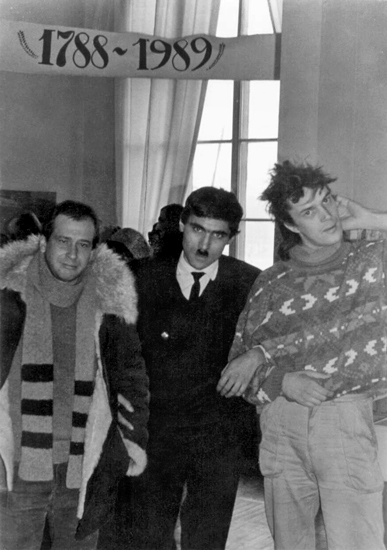 Gosha Burenin, Avdey Ter-Oganyan, Sergey Timofeev at the opening of the exhibition "Italy has the shape of a boot"
Pivotnovlo: From all this company artists, I knew only Serega and a little Avdeya Ter-Oganyan. For me, they were like astronauts, not from this world. They always walked funny, buffet, with guitars, damn them as dressed. Asocial types. Even being nearby meant to be under suspicion. There was such a time then. The time of the break. And Rostov himself was always a little strange. Fricit characters always lived in it, ranging from Porfiry Ivanov and ending with these artists. So it is quite logical that in the late 80s, in a turning point, a course developed from which so many brilliant artists came out. Seryozha in this company was a border element. His entourage was slightly torn over his drawings, work. Seryozha was easily about this. He could take a pen and instantly on a piece of a notebook paper in a cell, draw a very light and sparkling cartoon. And for a long time he did not know how to sit on the paintings.
Ter-Oganyan: Seryozha was a station wagon in absolutely everything. But he made such a rather populist graphics. And I did not like this poppedness. Of course, we criticized it. Then it was customary to openly criticize each other. Now someone criticizes someone, and this may affect sales. Then there was no lozing on money. Timofeev was an artist in the Komsomolets newspaper, earned well, and he was appreciated there. He could absolutely in any condition very quickly, professionally do it. He had a stuffed hand.
Gypsy buffoonery: a lot of noise, bright colors. Something like such years later I saw in the films of Kusturitsa.
Keleshyan: The first thing we decided with Seryozha regarding our group was no rock. Including any accessories associated with rock music, such as jackets, skin, hairstyles. The image we attached serious importance. I then unexpectedly discovered the Soviet stage of the 50s-60s: Maya Kristalinsky, young Muslim Magomayev. All kinds of tweets and neck that were not like Western music. They had a national flavor, very unusual, a little idiotic. And this idiocy impressed us very much. And we tried to mix all this in one bottle and develop our own style. Such a gypsy buffoonery: a lot of noise, bright colors. Something like such years later I saw in the films of Kusturitsa. We lived so - bright and fun. And many musicians who played with us were happy to abandon their Kabatsky-restaurant hack and passed to us. Thus, a group of three people grew to a whole orchestra.
Dmitry Katkhanov (composer, producer of the album “Living Force”): at the time when I met Timofeev, “Beijing” was the following: Tima is a super -talented artist who turned out to be absolutely everything, and Dima Keleshiyan on the guitar is also a great guy. They took [to the group] of everyone who was nearby. For example, in the first composition they had a drummer - such an early bald man who played with only one hand. And not because he had one hand: he just played like that. I have never seen this again. It was the impression that the students were going to have fun. So they sounded.
"Beijing Row Row"-"So far everything is in order"
Keleshyan: Initially, the group was perceived by Tima, perhaps, like a joke. And he saw performances, rather, like hippenings, performances. Then he realized that musicians really gathered around and seriously relate to all this. He changed his opinion and began to study very seriously. From the side it seemed that everything was easily given to him. In fact, he sat with the guitar for hours, taught new chords, which he first knew only one or two. So he initially composed using these chords, and I already developed and designed further. But over time, Seryozha began to invent his musical moves.
Victoria Timofeeva (the widow of Sergei Timofeeva): I heard that the first time Sergey took the guitar of about 30 years. Before my eyes, he, spreading his fingers, clamped the strings. He spent it on them, asked: "What is it?" They answered him: “This is such and such a dominantseptakkord. Where did you get him like that? " “I don’t know, it just happened.” He composed unusually easy, too easy. Of course, he worked a lot on this, sat, sat and wrote, wrote, but still it was a miracle. I don’t know, maybe a lot has boiled in the previous years until I sang. Once, while we lived on the north, he came up with four to five songs to the second album during the night. While we were all thumping and supervised, he sat at a table in the kitchen and somehow Hop-and wrote. So it seemed that Hop. It is clear that the devil is going on in the author’s head, knows what; Only now I understand that it was some incredible alchemy of genius, and then it was perceived by me as follows: oh, cool, yes, rushed on.
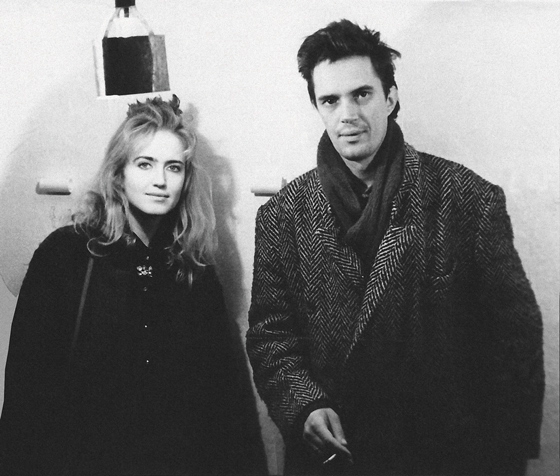 Victoria and Sergey Timofeev
Kathanov: In fact, there were no concerts, and those few that were, came out of terrible quality. One, for example, took place at the birthday of a relative in the Balkan restaurant-the present of such a gangster restaurant.
Pivotorsdlo: There was almost no concert activity as such. For all the time of my presence in the group, the number of concerts can be counted on the fingers of one hand. Except for spontaneous performances in crossings or someone in the apartment. And, of course, there was a performance in Moscow at the legendary festival "Syrok".
Timofeeva: Sasha Bolokhov brought us to Moscow to the festival “Syko”, over whom, by virtue of his natural kindness and modesty, they always made fun of, but without Bolokhov, beans, there would be neither “cheese” nor records of two albums. Everyone was terribly worried, this was the first big scene on which Beijing performed. I sang along the trio "Killer" - wonderful girls who received me well. I remember that there were some failures with a sound, a phonel microphone, half of one song disappeared ... I also remember that I was lent to me a gorgeous red dress for one cube, the wife of our Rostov friend. The dress was tight, and I was quite a juicy nipple, and the panties stood out frivolously. Right before the scene, I thought of taking them off. There was definitely nowhere to put the cowards, and Tim simply put them in his jacket pocket. During the performance, he either pulled them out, then hid them, periodically used as a scarf, on the record it is visible. It was terribly funny ... Tima was dazzling. It was specially sewn in chamomile trousers. And all the musicians were, it seems to me, wondering how good.
"Beijing Row Row"-"Cairo" (performance at the festival "Survenger")
Ter-Oganyan: I was absolutely indifferent to music. But I remember how Seryozha, when we went to Moscow, composed these songs with me on the guitar. And when the group developed, I told him all the time: “Well, what kind of nonsense do you do? Let's make exhibitions. ” And only then it dawned on me how valuable it is and how cool it is.
Kathanov: Tima attracted me by the fact that his songs had nothing to do with our rock. He gathered in himself all the good things that they could not scatter for these 70 years, squeeze out. He had the ability, which I have never met anyone for all the years of my career (and I worked with many) - anyone who was in a radius of 100 meters from him suddenly became talented. With my own eyes I saw how completely unbelievable, unremarkable people suddenly gave things out that they would never have given out.
Pivotnovlo: Work in the studio has always been interesting and fun. Seryoga constantly brought some incomprehensible people with him. For example, a harmonist who accidentally met, drinking in the transition. Or brought some two girls and said: "These girls sing perfectly, they will sing along with us." And at almost every session, something similar happened. And the most interesting thing is that all these characters participated in the record: someone sang, someone danced, someone hit something once, someone rustled on the washing board. Once we found an old xylophone on someone's grandmother's attic, on which half of the keys were not enough, hung it in the studio and recorded the ingenious song “On Sadovaya Street”.
Kathanov: The first album ("Bememucha". - Ed. ) Was a student. I practically did not intervene in it, so I played a little. But the task was to fix them as they were. And they recorded. And on the second album, Tim personally turned to me for help. And I suggested such a concept: to turn to the listener face and already tell a certain story. At that moment, we had a four -channel tape recorder Otari . Sasha Bolokhov, the director of the group, bought it. We were written in a recreation center for chemists. “Sailor Silence” and “12 Volts” (Rostov rock bands.- Ed. ) Were recorded on this tape recorder later. Four paths do not give so many opportunities, and therefore we decided to do everything as follows: to write down the stereo on two paths - Vitins (Pivotorspavlo. - Ed. ) Drums and Timin vocals. And this was the find, because when you write the vocals on the phonogram, the drive is lost. And so Tim fell into tonality. And then everything else was superimposed on the remaining two paths. On the first album, Tima has teenage, yard. And it should be noted that Seryozha was much older than us. If I was then 23 years old, then Tim is already thirty. I told him: “You are already a mature elk. Come on yourself. ” He listened and changed the manner of singing. In the Angel, for example, he gives out such passages and does it absolutely honestly. Maybe he was not always correctly intoned. But the meaning conveyed so accurately that this “crap” was quite justified. We always recorded it from the first double. They were busy with other musicians.
Ter-Oganyan: The group spin quite well. Some notes went, in Rostov the group was already quite popular. And in the midst of success, Tim moved to Moscow to us, in three -breed. And he was immediately taken to work at Ostankino. His old friend Max Vasilenko, as well as Dima Dibrov, also from Rostov worked there. He immediately joined this company.
Kathanov: No one was engaged in distribution. We released the album, and just a few days later in the tram I heard some boys singing the songs of our “moose”. And this is without any marketing. The record, by the way, cost 10 rubles. The cost of a bobbin of a four -channel tape recorder or two bottles of vodka.
Keleshyan: In Moscow, Tim was taken by the main artist of the ATV television company, headed by Anatoly Malkin. A lot of work fell on Seryozha, a lot of responsibility. He made a studio of various programs, programs. In particular, the program “Timechko” was then Hedlinalen. I lived with him in a three -breed in the squat, where all the artists lived. And when Tim came home from work, he often visited a rather gloomy mood, which he used to be completely unusual. He began to smile less and less music. Just Cyril Serebrennikov interviewed him during this period. Tima told him once (I remembered it well) that he constantly sees such a hand over him open and hears his voice: “Well, Seryozha, took a walk? Have fun? Smoke? It's time and honor to know. " And a huge hand descends from heaven and slamms like a bug. And literally after two to three months it happened. This premonition was in him, and it was no longer the Tim that everyone knew and loved. But only a few people knew and saw him on this side.
At the present time, Seryozha could not exist.
Ter-Oganyan: I did not notice any changes for Tima. Of course, we were leaning very much, there was a stressful mode of operation, he still participated in our projects. Of course, he was tired. But everything that he took for was brilliantly and very easily gave him. In general, he was a very light person.
Pivotnovlo: When I came to Moscow, Seryozha and I always tried to see ourselves. And in his three -breed I have been to him. In May 1993, I arrived with a jazz orchestra to the capital. We stopped at the Russia hotel, I immediately dialed Seryozha, his wife Vika answered me, said that Seryozha was in intensive care. It was the day after all this happened. I immediately rushed there, but of course I was not allowed. Vika came out, said that Seryozha was telling greetings and jokes. I decided that everything would be fine. And he just always joked, even on a bunk in intensive care at death.
Timofeeva: On May 28, we walked from Petlyura along a passionate boulevard. I walked 10-15 meters ahead. And the day before we bought two excellent bright Chinese cloaks. 10 rubles, the same size. Almost reached the monument to Pushkin, a hundred meters remained to the house. I turn around - Tim is lying. Well, I think, as always. What kind of acting is stupid. I will wash a new cloak. I run up, Tima says: "Vikulya, they killed me." I didn’t even understand at first that he was not joking. And then I saw that a bullet was lying on the hatch. They called an ambulance, the police arrived. Меня в скорую не пустили, нас повели в отделение, которое за «Макдоналдсом». Не помню ничего, кроме того, что пьяный мент пытался хватать меня за грудь, а я кричала и плакала.
Как рассказывал парень из ларька, Тима покупал сигареты, подошли двое и толкнули его. Тима, улыбаясь, обернулся: «Вы что, я же тут первым стоял». Один из подошедших наставил на него пистолет и сказал: «Я тебя, сука, застрелю». Тима, улыбаясь, поднял руки. Не было ни драки, ни конфликта, ничего. В него просто выстрелили… Вечером хозяин ларька был еще готов давать показания, он говорил, что это были чеченские парни. Утром он сказал, что ничего не видел, ничего не слышал.
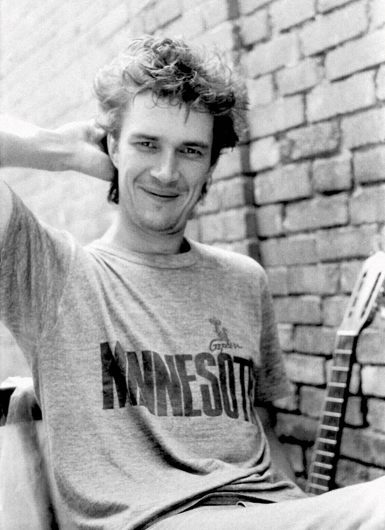 Сергей Тимофеев
Пивторыпавло: Очень скоро после Тиминой смерти на ростовском телевидении вышел фильм Кирилла Серебренникова про Сережу. Тогда, 25 лет назад, я его посмотрел и помню только, что он мне не понравился. Если я пересмотрю, может, и поменяю свое мнение.
«Шиги-Джиги, или Все будет хорошо»
Келешьян: Фильм Серебренникова хорошо характеризует Тиму. Если бы не Кирилл, не сохранилось бы столько видеодокументов, передающих Тимин образ и рассказывающих о нем тем людям, которые хотели бы узнать о нем что-то, послушав песни «Пекина». Вообще первые шаги в творчестве Кирилла — это были клипы нашей группы. И хотя Кириллу не нравились наши песни, он видел в Сергее яркую личность с огромным творческим потенциалом, чувством юмора. Он был для него материалом, персонажем, вокруг которого можно строить сюжеты. В этом особенность Кирилла — он снимает фильмы не о времени, явлениях, предметах, а о людях. И правильно делает, потому что выстраивание отношений между людьми — это самое важное, что есть в жизни. Судьба свела Кирилла в одном городе с такой ярчайшей личностью, и он, как уже тогда большой художник, не мог пройти мимо такого ценного материала, как бы это цинично ни звучало. И так вышло, что фильм послужил трамплином впечатляющей карьеры Кирилла.
Тер-Оганьян: Фильм мне очень не понравился, поскольку все участвующие там коллеги-художники подводят некую закономерность Тиминой смерти. Якобы они ее предчувствовали. Все эти разговоры, поиски чего-то, предвещающего смерть, — это все свойственное ростовчанам декадентство. Я с этим категорически не согласен. Смерть была абсолютной и страшной случайностью. Ничто не предвещало. Какие-то непонятные бандиты, без всякой причины… Вся эта грязь, которая откуда-то в те годы вылезла. В советское время, кто бы что ни говорил, ты чувствовал себя безопасно. Менты ходили без оружия, ночью в любое время можно было выйти на улицу абсолютно спокойно.
Такой вот настоящий провинциальный гений.
Келешьян: В то время, которое сформировалось в 90-е, и в нынешнее Сережа бы не смог существовать. Он никогда не был коммерсантом, бизнесменом. Он уже был достаточно взрослым человеком и не смог бы себя перестроить. Он был настолько открытым, настолько бескорыстным, что если бы его не убила та пуля, то убило бы то время, отношение людей к творчеству, которое стало продуктом на продажу. Он мог бы спиться, сторчаться. Почему-то мне так кажется. Не случайно после его смерти чередой стали уходить многие люди из «Пекина Роу-Роу» и «Искусства или смерти». И умерли они не от водки и наркотиков, а, скорее, убивали они себя этим, так как чувствовали себя лишними в ту эпоху, когда прежние ценности и мироощущение сменялись другими.
Тимофеева: Я, конечно, миллион раз думала, что наворотил бы Тима, если бы был жив. Такая несправедливая, нелепая, нелогичная точка. Конечно, мои претензии к мирозданию (или как там называется все это вон там, наверху) выглядят глупо, но он был до того безыскусно-гармоничен, что эта смерть была совершенно не в том месте и не в то время. Ни пика, ни кульминации, он шел к какому-то необычайному расцвету. Попутно делая прекрасные вещи. Наверное, оттого и не могу принять эту смерть.
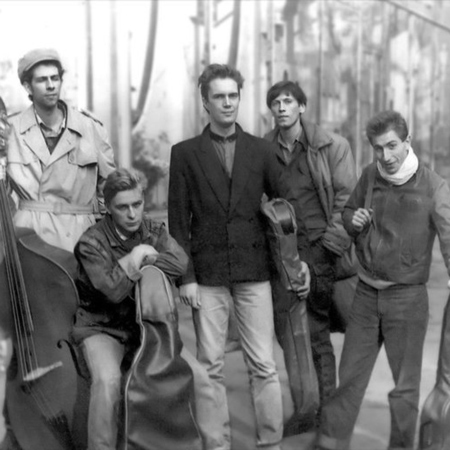 «Пекин-Роу-Роу»
Тер-Оганьян: Тима все разбазаривал. Вот в чем его беда. Он все бросал. Он писал стихи, тексты, которые непонятно где сейчас находятся. Такой вот настоящий провинциальный гений. Вот кем Тима был. Такое легкое отношение к вещам, к жизни, к своим работам — оно вообще свойственно нашему поколению. В то время легко дарили работы друг другу. Мне дарили картины Юра Шабельников, Валера Кошляков, а я их не удосужился забрать. А вот Тимины картины пропали, тексты пропали. Все это свободное творчество ничего не стоило, поэтому и не сохранялось. И это, конечно, очень печально. Музыка осталась, потому что она консервируется. А вот когда мы делали каталог «Искусство или смерть», мы не смогли найти его работы. Всего одна Сережина картинка вошла в тот каталог.
Тимофеева: Он постоянно что-то придумывал — картинки, тексты, музыку. После его смерти я узнала, что он изучал компьютер и хотел учиться играть на виолончели. Создал множество красивых концепций для телевидения, еще никогда не было такого красивого ящика — это понимают те, кто помнит то время. Он снялся во всех своих «релаксах» «Все будет хорошо» (социальная реклама — «Главный»). К сожалению, я не знаю, где все эти записи. Вообще почти все Тимины вещи у меня пропали — семь холстов, папка с коллажами. Какая-то мистика. Это очень тяжело, но сходить с ума не буду. Ну, вещи и вещи. По сравнению с жизнью и смертью Тимы это незначительная деталь, а работы его все равно когда-нибудь всплывут.
Келешьян: Нас нигде не было, не крутили по радио, по телевизору. Хотя были клипы Серебренникова. Но те, кто знал, к кому попадали записи на кассетах, на бобинах, эту память сохранили. Я, например, слышал, как наши песни играют на Арбате в Москве. На черноморских курортах слышал, как поют их 16—17-летние подростки. В общем, тех, к кому как-то попали наши записи, они взбудоражили, попали в сердце. Широкого наследия «Пекин Роу-Роу» не оставил, но песни эти уже живут своей жизнью и будут жить всегда.
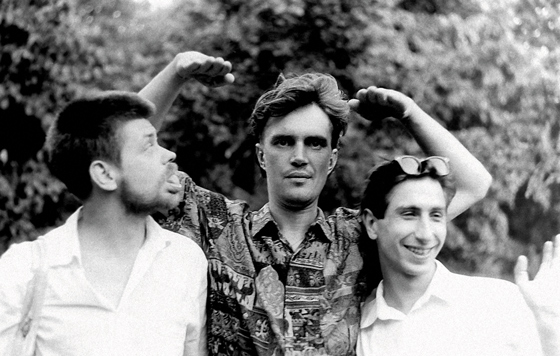 Владимир Вещевайлов, Сергей Тимофеев и Дмитрий Келешьян. Последний концерт, 1992 г.
Катханов: Я довольно долго жил в Германии. И проводил своего рода исследование — давал своим тамошним друзьям послушать разные наши группы, в том числе и успешные. Это очень хороший тест на талантливость. И на успешных группах они всегда морщились, а когда ставил «Пекин», все всегда были в восторге. Они все говорили: «Это очень круто». И суперпрофессиональные музыканты, и академические, и джазмены, и киношные люди. Вообще все мои друзья, хорошие режиссеры, — Попогребский, Хлебников, Бычкова, Ванька Лебедев (лучший монтажер в российском кино) — все они знают «Пекин» и фанатеют от него. Серебренников вообще прикоснулся к прекрасному. Он обожает Сережу, поскольку увидел в нем настоящего художника.
Пивторыпавло: У меня много друзей, которые любят «Пекин». И их молодые дети и друзья детей в моем окружении с этой группой хорошо знакомы. Думаю, определенное место в отечественной музыкальной культуре эти песни занимают. И мне нравится, что молодые люди открывают эти песни и говорят слова благодарности. Значит, это дело живет. На меня же лично Сережа повлиял очень сильно. Я постоянно от него заряжался энергией и очень многое в свое время взял. Например, в плане самоиронии, когда человек не боится показаться смешным, глупым. Помню, мы с ним как-то шли на день рождения к одной знакомой. Молодые, голодные, без копейки в кармане. Я говорю: «Серега, у нас ни копейки. Что дарить-то будем?» Он мне: «Да ладно. Не ссы!» Берет какой-то кирпич прямо у дома и какую-то ветку. Дело было то ли зимой, то ли весной. Мы поднимаемся, дарим эти подарки нехитрые. Она на радостях нас обнимает, расцеловывает. Мы празднуем, выпиваем. Через неделю встречаем эту девушку, и она говорит: «Представляете! А ветка-то у меня зацвела». Она ее в кувшинчик поставила, и она зацвела. А кирпич как-то удобно что-то подпирал. Пригодился, в общем. Человек легко относился к жизни, и она ему отвечала взаимностью. Вот эти примеры жизненные, маленькие уроки я очень берегу и ценю.
Катханов: В тот момент страна была на развилке. Одна дорога — это свобода, любовь, восторг существования. А вторая — это цинизм и понты. В местном регионе «Пекин» пошел в народ. Я приезжаю на лиманчики у нас в Ростове и у каждого костра слышу песни «Пекина». А по стране это не пошло. Страна выбрала второй путь. И когда Сережку убили, эта развилка и прошла. Сережка предлагал альтернативу. Все, за что он брался, он превращал в праздник, талант, но не был услышан. Если о «Пекине» и писали, то писали снисходительно. И [Артемий] Троицкий, к которому наши записи попали, так и сказал: «Это просто веселые ребята». Он не увидел там этого шанса, который нам был дан. Это не имеет отношения к року. Наш рок — это вообще какое-то недоразумение. Какой вообще мог быть рок в несвободной стране? А Сережка в конце песни «Ящерицы-лестницы», когда лирический герой поднимается на крышу, поет: «Только бы на небо не смотреть, только бы не видеть красоты». Слова такого восторга от мира, при том что Тима прекрасно понимал всю несправедливость окружающую. Он любил всем говорить: «Ты гений, старик. Ты можешь сотворить чудо». И чудо действительно случалось.