
Translated material
The United States and China exchanged bits of $ 100 billion: what does this mean for the global economy?
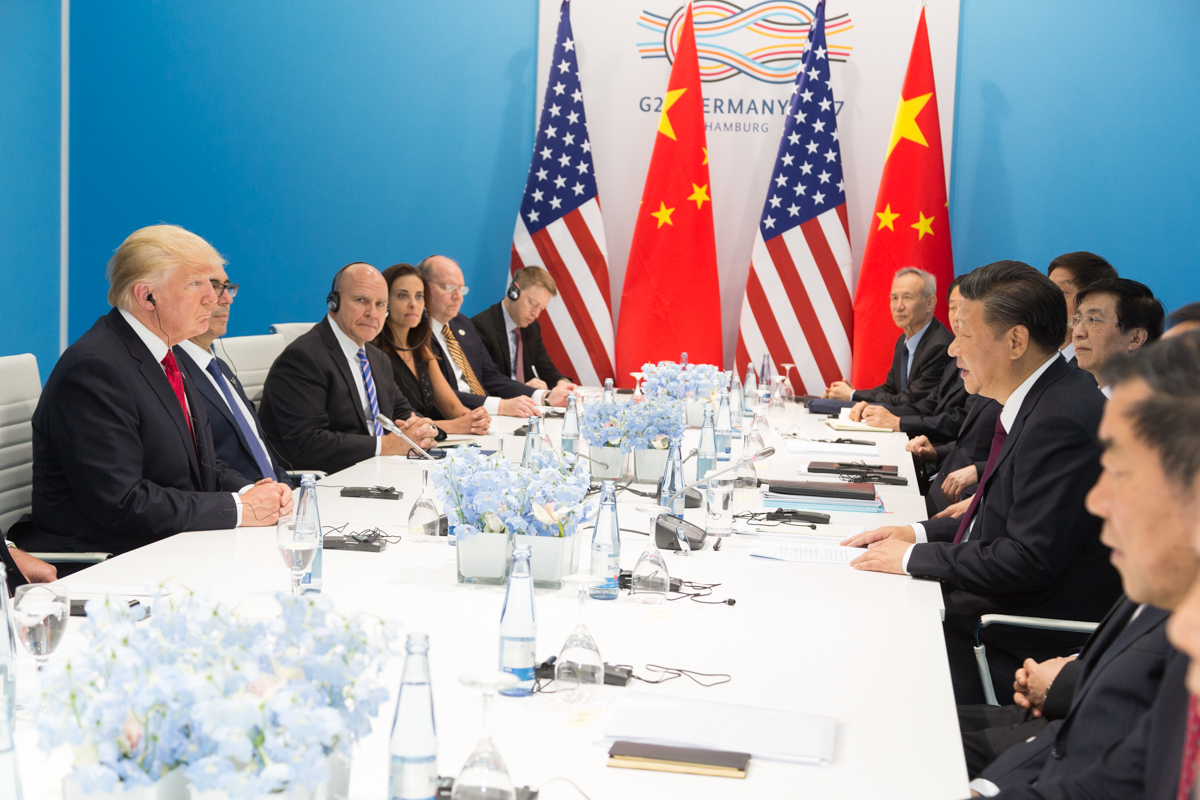
The two largest economies in the world today inflicted on each other on the second impact-the United States and China announced new mutual 25%duties for goods, the export of which is about $ 16 billion on both sides. Developing markets immediately responded to the news with a fall . The continuation of the trade war will lead to a slowdown in the growth rate of the global economy and hit by companies that are connected by trade relations with China, experts warn.
Details
- Under the second round of American duties (25%), Chinese imports in the amount of $ 16 billion fell, the first restrictions against Chinese goods were introduced on July 6. China answered both times mirrored, promising to file a lawsuit against the United States in the WTO. Thus, in total, the damage in a short time of the trade war is already about $ 100 billion.
- And this is not the limit - by the end of September, the American side can introduce additional restrictions on Chinese goods, whose deliveries are estimated at $ 200 billion. And if this does not help, Trump threatened to introduce duties in general for the entire Chinese import ($ 500 billion). China will no longer be able to answer the last measure, Reuters notes: American imports are estimated at a much smaller amount (actually this imbalance of Trump, who untied the duties, and tries to align). But the Chinese authorities can complicate the life of American companies and support their export with the weakening of the yuan.
- The White House states that he had already won this war, speaking of a slowdown in economic growth in China and selling in the Chinese stock market.
Quote: “They will not give up so simply,” said US Minister Wilbur Ross. “But in the end, we have more gunpowder in powder and they know it.” We have a stronger economy than their, and they also know this. ”
What will happen next?
- China was already trying to take several measures to strengthen its economy - for example, he took off the restrictions on lending, contributing to the growth of consumption and increase state expenses. However, economists warn that the increase in public debt against the background of a trade war can even weaken the Chinese economy in the long run.
- In parallel with the escalation of the trade conflict, two-day negotiations (August 22-23) between the Deputy Minister of Trade of the United States David Malpass and the deputy minister of trade China Wang Showwann are held. This is the first official meeting of representatives of the United States and China since the beginning of the trade war.
Consequences for the global economy
- Asian markets have already reacted to the news with a fall . The MSCI index fell by 0.1%. The automobile sector, according to which the trade conflict hits the most strongly in Europe decreased by 0.9%.
- Economists believe that each round of mutual duties in relation to goods totaling $ 100 billion will reduce the volume of world trade by about 0.5%, Reuters writes. In 2019, world growth rates will also slow down, Moody's analysts warn . At the same time, the rates of economic growth in China can decrease by 0.1-0.3 percentage points. Already this year, the American GDP will suffer a little less.
- The consequences of the trade war will be especially noticeable next year, when the effect of the trade war will spread to other countries and companies connected by trade relations with China. So far, the costs of consumers and business are increasing mainly in the conflicting countries themselves.
- American companies working in China should prepare for evacuation: the PRC authorities are already interested in technological giants whether they plan to withdraw their production from the country, writes Bloomberg. At the same time, China does not offer them any favorable conditions, but does not put forward specific requirements.
Context
- Back in March, the US Trade Representative published an investigation from which it followed that China’s policy related to the transfer of American technologies, intellectual property and innovation “is unreasonable and discriminatory” and impedes American trade.
- In parallel with China, the United States wages a trade war, albeit on a smaller scale, with Canada, Mexico and EU countries. At the end of May, the United States introduced trading duties on steel (25%) and aluminum (10%) from these countries.
New external shocks are unlikely to be bypassed by Russia. Together with the risk of new sanctions on the part of the United States, the general nervousness of investors in relation to developing countries for the ruble is a situation that can turn into an ideal storm -
Liana Faizova