
Translated material
Module for imitation
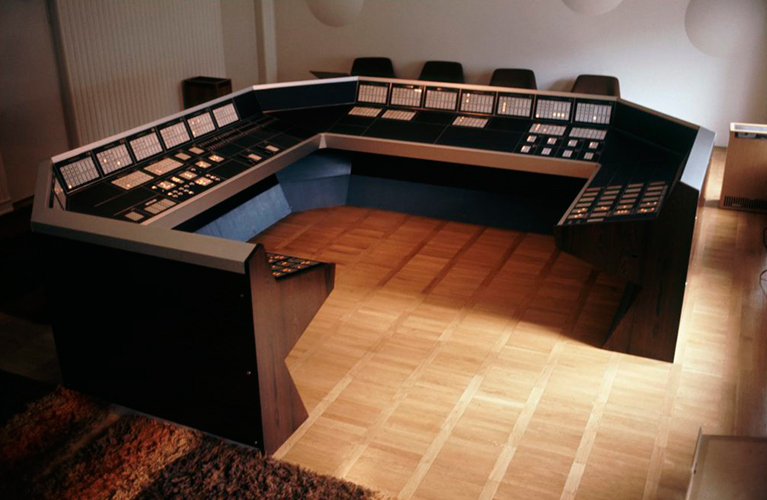
The Synthposium 5 festival will host the Swedish EMS showcase, one of the world's oldest electronic music studios, where since the mid-1960s, composers from different countries have been creating experimental music. Nick Zavriev tells how she managed to adapt to modern realities.
The current popularity of electronic music is largely a consequence of its accessibility. To record an electronic track, today a computer and a simple midi keyboard is enough, and we know a lot of large hits created that way. But in the fifties and sixties, at the dawn of electronics as an independent musical genre, things were completely different. Of course, then there was no question of personal computers as we know them now. And the synthesizers were also not massively produced then-a few specimens (often developed for a specific organization and its tasks) were either in the education system (at universities they were intended for scientists who studied acoustics and radio electronics, in conservatives to avant-garde composers), or in studios in television and broadcast corporations, where they served to create sound effects For films and radio shows.
The EMS studio ( Elektronmusikstudding -an electronic music studio), opened in Stockholm in 1964, combined both ways. The initiator of the creation of the studio, as well as its first ideologist and leader, was the whip of Wiggen, an avant-garde composer, close to Karlhainz Shtokhausen, Yanis Xenakis and Pierre Shefer. At that time, Wiggen headed the Swedish Association of Avangard Music FylKingen and his mission saw precisely the development and promotion of electronics and electroacousticity. Wiggen organized the first concert of electroacoustic music in Sweden back in 1952 in partnership with national radio, and when ten years later it came to the creation of the studio, Wiggen managed to knock out the patronage of the Swedish radio under his idea.
Any musician got the opportunity to work in the studio: for this it was necessary to send an application by describing his project.
As conceived, the studio perfectly equipped by the standards of the mid-1960s, on the one hand, became a bridgehead for the academic research of Wiggen and his colleagues, and on the other, she solved the applied problem. But even doing seemingly applied radio projects, EMS has always been part of the art world. “For the radio, the key direction was the so-called textual and sound art (radio sponsor, etc.),” recalls the current Director of EMS Mats Lindstraem. - Work on him went in a small studio created in the image and likeness of the Warsaw Radio Studio. And this activity, which then made up most of the EMS work, has always been art. ”
In 1975, Viggen left EMS and returned to his native Norway, but the studio continued to work. EMS still fulfilled its main mission-it was a state platform for composers working with electronics (which perfectly filed in the idea of Swedish socialism, part of which there was always art support). At first, it was opened only for the Swedish musicians (for some time the studio worked under the patronage of the Royal Musical College), then opened the doors for foreign visits. So in EMS they came to a rather unusual idea. Any musician got the opportunity to work in the studio: for this it was necessary to send an application by describing his project. Having studied the applications, the directorate provided the best applicants with the residence - for a certain period, the musicians not only gained access to the studio equipment, but could also use the services of staff who perfectly owned each of the many unusual synthesizers installed in the EMS .
With the onset of the new century, the EMS studio, however, were waiting for difficult times. The technology for recording electronic music was cheaper, synthesizers were replaced by computers, and the need for the studio as such sometimes completely disappeared. The patronage of the Swedish radio ended, the studio desperately needed new ideas. A new life for EMS came with the advent of the post of director Mats Lindstra. Since the 1980s, Mats has been a member of the Association of Avangard Musicians FylKingen (the same one that Viggen was led by the EMS ), and from 1998 to 2000 he headed it. Then Mats for several years was the coordinator of the Stockholm festival of new music, in general, the experience of managing work in the art sphere had a rich one. In addition, Lindstraem was not only a manager, but also a current composer working just in the field of avant -garde electronics.
Mats Lindström - "Mig"
With his priority task, Mats Lindstraem set an increase in the loading of the studio. “By the time of my arrival in EMS , one composer worked a year,” Mats recalls, “now there are fifty.” He formulates his mission as follows: “On the one hand, we want to consolidate the international status and fame. On the other hand, we strive to keep abreast of world innovations both in the technical and creatively. Working with composers and helping them realize their ideas, we ourselves also learn a lot from them. At the same time, we not only provide the studio for composers, but we ourselves are actively involved in the art of the art world: we talk about something, participate in educational projects, we cooperate with the organizers of the events. ” Today, it is art - the main priority of EMS , however, historical ties with the academic world are not eager. “We ourselves are not engaged in scientific activities,” says Mats Lindstraem, “but many composers, especially foreign, bring research projects to us.” Another area of EMS was the creation of a giant music library, where the work of Swedish composers is especially carefully gathering.
Among those who have received a residence in EMS in the past few years, are not only avant -garde and representatives of the electro -acoustic scene, but also those who are closer to the club world: for example, Lorenzo Senny, Lee Nawble and SØS Gunver Ryberg . For an organization whose roots go to the academic world, this step is quite bold - representatives of electroacoustic, as a rule, relate to club electronics without great respect. But here, Mats Lindstraem sees a window of possibilities: “We have an excellent relationship with a huge number of different musicians, and, as it turned out, we manage to avoid creative conflicts and play the role of the neutral territory in which these two worlds can meet. In fact, the interpenetration of club and electro -acoustic scenes and the exchange of experience between musicians are now very active. But we do not own any special diplomacy, we are just always there, we are pleasant people, and we have no ambitions to conquer the world: we remain a modest and small studio. ”
Once a residence in EMS even received a musician whose biography is too similar to a hoax.
The list of EMS residents looks very heterogeneous - musicians, completely unfamiliar to the general public, are adjacent to sufficiently famous characters. This is how Lindstron formulates the selection criteria when considering applications: “We want to achieve maximum diversity in all parameters, from style to floor and age. Of course, we monitor the quality-it should be a top-level. Sometimes we ourselves show activity and invite someone to work with us. ” As a result, EMS has developed many years of years and fruitful relations with some musicians. For example, Stephen O'Melli (participant in many experimental groups, including Sunn O ))) and ktl . - Ed. ) not only worked in EMS as a resident, but also issued several works on the IDEOLOGIC Organ on his Label, at different times recorded in the studio.
Akos Rozmann - "12 Stationer VI"
Once a residence in EMS even received a musician whose biography is too similar to a hoax. Talking about Abul Mogard , all resources together publish the same photograph and retell the story of “an elderly Serbian worker with a Vermona synthesizer, which in the evenings recorded an emphanty in order to get distracted from heavy physical labor”, and during rare concerts, only a dark silhouette in the fog is visible to the audience. Here is what Mats Lindstraem recalls him: “As far as I remember, it was a modest gentleman who did not really speak English, and we, as you know, are not too many employees who speak Serbian. I have no idea what he was doing in the studio, but it seems that it sounded like an industrial in the spirit of the 80s. ”
However, we could not exclude that Mats decided to deliberately support the legend. Well, the best in the history of EMS, Mats calls the residence of the Danish composer Federika Hoffmeier Aka Puce Mary , whose experiments are delighted with PitchFork and The Quietus , in 2014: "She chose just the perfect moment of her career to come to us."
PUCE Mary - "The Spiral"
With all the professionalism of the studio, a successful combination of circumstances cannot be discounted: the star hour EMS coincided with a new turn of fashion for modular synthesizers. In the 2010s, the musicians, tired of the accessibility of digital technologies, began to return to the origins and use modular systems created in the image and likes of those that prevailed in the 1960s, until portable synthesizers appeared. Their strengths are called flexibility (the modular synthesizer is arranged according to the principle of the designer, where everyone collects a device for a specific task) and that each device has its own unique character and generally “lives its own life”, becoming an involuntary co -author for the composer. Well, the classic synthesizers of the 60s-70s became the subject of lust and worship-a great connoisseur of the analogy sound Jean-Michel Zharr even compares them with the violins of legendary Italian masters.
It is these synthesizers that became the “heart” of EMS . The studio operates two modular work systems for the legendary American engineers Don Bukla and Serge Cherepinnin - Buchla 200 and Serge Modular . At the dawn of synthesizers, in the sixties, there was an active rivalry of two schools. A buffet and Cherepinnin worked on the western coast of the United States, Robert Mug on the eastern. The latter considered the synthesizer a continuation of the line of classic tools and proposed to execute a traditional repertoire on it, from Bach to pop hits. Cherepinnin and a mud, like the Soviet avant-garde artists, considered the traditional 12-ton system a relic of the past, and the piano keyboard was considered a cage from which the musician should escape. The market was won by Mug, but the philosophical dispute is still continuing, and it seems that now the pendulum was again inclined towards the west coast. “We are definitely adherents of the school of Bukla and Serge! - says Mats. “The presence of piano keys and a traditional system in the synthesizer seems to many of our employees a rather contradictory solution.”
Abul Mogard - "All this Has Passed Forever"
At the same time, they look at the work of young engineers in EMS at least with interest. The studio actively cooperates with modern manufacturers of synthesizers, conducts joint workshops with them and even takes something into service. “We never use vintage systems in its pure form,” comments Lindstraem. “We have a lot of modern modules.” When asked what, from the point of view of EMS , there should be an ideal synthesizer, Mats replies: “It must be flexible and have an ultramodern sound. But of course, we have to take into account the reliability of the devices, as well as put up with the fact that every year we work up to three hundred musicians, and only one of our employees can answer questions about how this or that instrument works. ” Are modern devices capable of taking a place among the classic models near the products of Don Bukla? It may very well be. “I won’t call specific models, but probably, the pantheon will soon replenish any of the strange modern machines.”
Today, the studio, which is located in the center of Stockholm, in the art cluster on the site of the former brewery on the shores of the island of Sudermalm, looks not only an influential player on the field of modern media art, but also a prosperous enterprise. The Swedes manages to combine creative and educational activities with a commercial (the studio is leased), but in reality their position does not look cloudless. “Now we don’t have enough budget to support residence,” Mats complains, “therefore, the musicians should be able to finance the road and accommodation.”
Shokaseis of the EMS studio
Daniel Araia: “Synthesisers in Elektronmusikstududion” (Lecture)
"Stanislavsky Electroter", electric ladder, September 1, 12:00
Mats Lindstraem: “History Elektronmusikstududding” (Lecture)
"Stanislavsky Electroter", electric zone, September 1, 14:00
EMS - Daniel Araya (Live)
"Pluto", September 1, 23:30