Translated material
Love for the block
Essay Leonid Yuzefovich from the book "How we write"
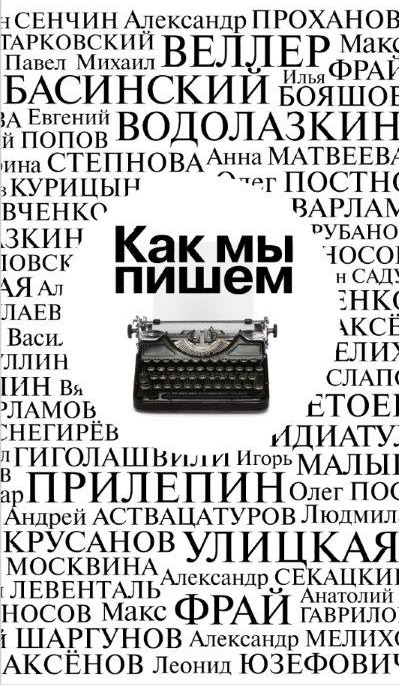
The ABC publishing house a collection of the essay “How we write”, compiled by Pavel Krusanov and Alexander Etoev: modern authors talk about their work and writing techniques. Gorky publishes the text of Leonid Yuzefovich about the block that has entered the book.I loved poetry since childhood, but the first poet, about twelve years piercing my heart, was Alexander Blok.
This is from the cycle "on the Kulikovo field":
The river is spread out. Flows, sad lazily
And washing the shores.
Above meager clay yellow cliff
Stores are sad in the steppe.
And this:
Flies, splashing the lights at night,
Black, quiet, like an owl, a motor ...
Or is it:
Sadness - it is covered with poisoned steam
From the Galician Bloody Fields ...
I knew about Kulikovo, but I had no idea about the "Galician bloody fields". The “motor” was just a motor for me, I did not understand why he, quiet, like an owl, spray with lights, but all this was completely not important. Much later, I learned what I felt even then - poetry does not have to be clear to be understood.
We had a volume of Blok from the pre -war library of the poet. My mother, Galina Vladimirovna Shenscheva, in 1943, after the medical institute, leaving for the front, took him with her and, most amazing, brought it back. I gave it a student to one girl with whom I had a novel. The volume of the beloved poet - as a shrine of the wonderful force - was called upon to hold our love, but two months later love left, and Mom's Blok also left me with her. However, I knew many verses from this little blue book by that time by heart.
In 1950, when I was two years old, my mother married Abram Davidovich Yuzefovich, who adopted me and replaced my father. He worked all his life at the Motovilikhinsky cannon factory in Perm, where he got after the institute, was the head of the barrel workshop, then the chief technologist. In the factory village of Motovilikh, the first half of my life was held on the outskirts of the city. When my mother and I came from Moscow to my future stepfather, in his room in the dormitory there were, according to his mother, eleven books: ten volumes of “Encyclopedia of Engineering” and “War and Peace” in one more format volume. The stepfather was indifferent to the poems, but he was very characteristic of a poetic attitude to the world. In retirement, he became interested in whales and supported the international conventions to protect them. Shortly before his death, I told him: “Dad, you have nothing to regret in life. In my opinion, your conscience should be clean. ” He replied: “You are mistaken. I made harpoon guns for the whaling flotilla "Glory". "
Mom loved poems, and she wrote them herself. In adulthood - only humorous. She was always distinguished by a cheerful disposition and frivolity. The latter was partially transmitted to me and more than once helped me out in situations where prudence would hardly help. When asked whether she was scared in the war, her mother replied that she was not at all, because their medical battalion was in an absolutely safe place: mines did not reach them, and the shells flew over them. Once he and the boss had to walk along the minefield. The chief gallantly let her forward, as if they were entering the theater. Mom laughed and went.
By frivolity, she kept a diary at the front, although she heard that of this out of the corner of her ear that it was possible to please the tribunal for this. Now her diary is stored in my house. It does not contain any important thoughts and observations for which it would be worth risky. Girls are interspersed with curses of the Nazis, descriptions of nature - by their own motherly verses. One of them was written in April 1945, near Koenigsberg:
Mustard trumpeter, tin soldier
I was presented as a sign of friendship with you,
And in a bag of clothing, certainly back
I will take a soldier home.
The trumpeter will rest there, the satellite of the painful days
And on the way my friend is unchanged.
I am sure then he will be alive,
He will suddenly play on the pipe.
And he will remind of the past, about the campaigns of the past,
About friends who died in battle,
And about the feats of the glorious, about their immortality.
Your friendship will remind me.
The poem is dedicated to a certain S.P. A. Who he was, I did not guess my mother, but it seems that the relationship between them was really nothing more than friendly. I get it out of the fact that the donor of the trumpeter is indicated by all three initials. That is, mother called him with a patronymic - it means, according to her concepts, he was a middle -aged man. As for the soldier, it is hardly S.P. A. took him with him to the front, like the mother of Blok. Probably picked up in one of the German houses abandoned by the owners. But whether my mother fulfilled a promise and whether the tin’s barbeling brought home is unknown. In any case, I have not seen him.
Mom was a Jewish, but one of her grandfather, who lived in Melitopol and served in a bank, moved from Judaism to Lutheranism, and the other, who owned a shop of pussy supplies in Kronstadt, turned to Orthodoxy. I suspect that the goal of both of these multidirectional confessional perturbations was one - to circumvent the interest and give all the children the opportunity to enter the gymnasium. My mother’s grandmother had five brothers and sisters, my grandfather had four.
I am the fruit of the school novel. You can even say two. Mom, stepfather and my biological father, Konstantin Vladimirovich Efimov, studied not only only in the same Moscow school, but also in the same class. Father fought in the infantry, then served in SMERSH. He returned to Moscow in 1946, like mother, after the war, treating German prisoners of war in a camp near Shaulya. Both were in the same rank - senior lieutenants. The stormy novel ended with the wedding, but even before my birth, my father, like many front -line soldiers, began to drink, drank not only money, but also things. Mom did not endure it for long. Patience has never been among her virtues. In 1949, just on those days when Moscow was magnificently celebrated by Pushkin’s 150th birthday, she divorced her classmate and soon left for Perm with me-to another. He was in love with her from school.
My father did not become an alcoholic, but my mother, having a sip of a female dashing, was very afraid that I would go in his footsteps. She considered her duty with any opportunity to give a fight to drunkenness. At our house, neighbors were hiding, escaping from their husbands raging after a pay. If a drunk spouse burst into our apartment, his mother boldly opened the door for him, meeting him with a bitter word of truth and soft - exhorting. At the front, she operated on a bombing, but in such conflicts her beauty was perhaps more important than courage. Mom was considered the most beautiful girl in the classroom. She studied for many years in a ballet studio and, although she was not taken to the choreographic school because of high stature, she retained the perfect figure until old age. A straight back and long legs gave her speeches an irresistible persuasiveness for buoyan.
At a conscious age, I saw my real father once - in 1978, in the Achor restaurant, on Gorky Street. He invited me there, after I found his phone through the reference bureau and called him home. Of his two grandfathers, one was Russian, the other German, and of two grandmothers - one Russian, another Armenian. Behind the bottle of cognac from the homeland of this great-grandmother, stunned by the information that suddenly fell on me about the multi-components of blood in my veins, I somehow forgot to find out the class origin of my father’s ancestors and their place of residence before moving to Moscow. Both that remained a mystery to me. The next time I saw my father ten years later, in a coffin.
But I did not fail to ask what his relationship with poetry is. Father said that he was not reading poetry, but at school he composed them. "About love and nature?" I asked. He grinned: “I'm not a girl. I wrote poetry about the war in Spain. ” - "And nothing more?" - I did not believe. “Only about the Spanish war,” he confirmed. “When Madrid fell, he threw out this notebook and did not write more poems.”
It turned out that he also loved Blok before. Bloc and Yesenin. Rather, Yesenin and Blok. In mom, these two were in the reverse order. At one time, Yevtushenko joined them, but for a short while, and on bird, compared to the owners of her heart, rights.
I learned a student that soon after the death of Blok, part of his library bought a Perm University. When a pedagogical institute was borne from him, these books were there. They were not even given out to their students, not like a stranger, but a familiar librarian showed me one invaluable volume with the notes of the block. I don’t remember what kind of book it was and what was discussed on the page where its emphasis remained, but the drawing of pencil lines in the fields and in the text itself stands before my eyes. The same bewitching rhythm, as in the verses of my deity.
Then I found another thread among myself and the block: it turns out that I dedicated the verses to my cousin, my grandfather’s sister, singer and dancer Bale Shenscheva. On the eve and during the First World War, Baechka, as his grandfather called it, was widely known in the narrow circles of St. Petersburg bohemia as Kazarosis. She sang songs to the verses of Mikhail Kuzmin, who came up with a Spanish pseudonym for her, and in the drama Drama de Vega “Fuante Ovehun”, in the meerhold, performed the incendiary dance of a tavern guitar.
This crown number of her is described by the block in the poem "Spanka":
Do not cough, admitting to yourself,
That for a moment you were full of one,
The one that got up then, panting,
In front of a rare and well -fed crowd.
………………………………….
And rested on the thigh with her hand,
And the heel stood on the bridges,
Multi -colored ribbons with a river
Drivenly poured to the white stockings ...
Kazarosis became the prototype of the heroine of my novel “Kazarosis”, but, unlike it, was not killed on stage in 1920, but opened her veins nine years later.
I began to write prose to an adult married man, at the end of the third dozen, and my first poem was about the sea, which I did not see, and composed the native shores of the Soviet cruiser at the age of six.
The latter is the year before last, forty years after he served as a lieutenant in Transbaikalia and lived in the village of Berezovka, fifteen kilometers from Ulan-Ude:
These were handed over to me
Jealousness of hostile ver -
Old Believers Uncle Petya
and aunt Shura, from Bandera,
Kerzhak and Greek Catholic,
But the marriage was strong, the house said.
In winter, a hot stove was drowned
warehouse stolen coal.
Nature surrounded their house,
Frying bloomed among the stones,
a little further than the Selenga lay
With a Japanese cemetery above it.
On the hills nearby - above, below
Already there is no place for crosses
To rebuild on the day
To the open heaven.
For Uncle Petit, Aunt Shura
Crosses at the very top
He set his son, proud of himself.
Though cooked from reinforcement,
But the background is heavenly blue.
Now I am writing one poem in a few years, and in my youth I wrote several pieces a week, or even a day. The first printed publication to publish my poems was the factory multi -line Motovilikhinsky Worker, the second - the newspaper “Young Guard”, the body of the Perm regional committee of the Komsomol. I was seventeen years old. Strictly for the season, I sang spring, birds on wires and a canteen at the factory, where at that time I worked as a milling mill. The amount of the fee amounted to seven rubles 20 kopecks. This money was enough for me to note the brilliant beginning of my literary career with din and a bottle of dry wine in the Cosmos youth cafe with young virtual careers with young virtual women.
A year later, I ascended to the new peak: the regional book publishing house released the literary almanac “Contemporaries” with my verses. They were there with creations of more than forty Perm poets, but I did not feel lost in the ranks of this legion. The fact that I was allowed to print a large and defiantly apolitical cycle of poems about love about my exceptional place among my comrades was evidenced. True, while the Almanac was going to the reader, I managed to part with the addressee of my love lyrics. He was the same girl whom I gave my mother’s block and who did not return it to me, but her sins were not exhausted by this. Of course, she did not cost such verses, but I tried to forget about her and enjoyed success, when suddenly in the newspaper Zvezda (the organ of the regional committee no longer the Komsomol, but the CPSU) appeared a crushing review of our almanac. Its author was not some kind of assistant philologist from the pedagogical institute, but then the famous writer Viktor Astafiev, who lived in Perm.
“All other authors were surpassed by Leonid Yuzefovich with a cycle of the poems“ Lip Kub, ”Viktor Petrovich stated in the article“ Under one Roof ”, later included in his collected works. - All this cycle is about lips, more precisely about the “node of the lips”. And the young author frolic! On his temple “slowly flows his beloved hand, and insight on his soul“ puts the seal ”, and he begins to meet with contempt all the rustles of the world.” And the “lips of the inevitable noon” concern his face, and he “dreams of immortality”, and he repents that “he came to pray on your hand”, and “the lover’s hands hang, even though the lips are connected by a knot”, and then the author will “look into the soul of a spaceship shower”.
Astafyev is right. These are bad verses, but I am not ashamed of them. They are the same source on the history of my life as a ticket to the Bolshoi Theater in my home archive, where I listened to Boris Godunov and where a living horse was taken out on the stage. Or children's drawings of the daughter of Gali and the son of Misha. Or the letters of my wife Natasha, remaining from the time when I have not yet moved to her to Moscow. In the early days of our acquaintance, I, of course, tirelessly chose it with reading by heart of Blok, Annensky, Zabolotsky, late Lugovsky, early Tikhonov. Neither Yesenin nor Pasternak were listed among my favorites, and I almost did not know Mandelstam then.
Until recently, I personally and quite closely was familiar with the only big poet - Alexei Reshetov. We came together, in particular, on the love of Blok. In the capitals of Reshetov, they know little, but in the Urals he is a classic, in his hometown of Berezniki, in the north of the Perm region, a monument was erected to him. Lesha is the first and probably the last person immortalized in bronze with whom I have repeatedly drank.
And this man is a poet.
Life was long. There were different periods and different hobbies in it, but now that my youth comes to life and approaches me more rapidly than in the old years I left me, I again fell in love with poems almost more than anything else.
I think this is forever.