
Translated material
Aspin nest
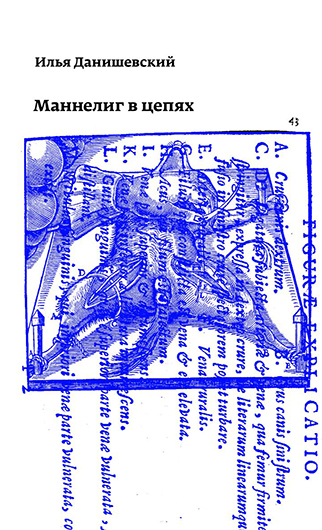
In the series “New Poems” of the publishing house “The Order of the Words”, the book of Ilya Danishevsky “Mannelig in the chains” is published. Her presentation will take place within the framework of the conference “Letter“ Writes us ”, which will be held on September 6 and 7 at the St. Petersburg International Book Festival “ Revision ” . Colta.ru publishes Elena Fanailova's preface.
It would be nice to have a preface to this body of texts, but Intro, like rappers' albums. I think that Ilya is a modern rapper, a new star in the world of literature is no worse than Oximiron - so much private (closed, on all keys of a closed) life against the backdrop of current policy and anger of the day in a hard format, he has been recorded and he affects so many people around him. Such an intro could write, according to my ideas, Andrei Levkin, whose letter, irrational and suggestive, personal and general, tactile and intellectual, lies in the same methodological field. Or Dmitry Volchek, who was already referred to by the reviewers of Danishevsky. In this letter there is a feature with which I, as the author of a preface that is not able to replace Intro, can not always cope. I'll try to do without spoilers that the authors of future reviews will need.
Ilya spoke at one of our meetings when we discussed the works of young people about family memory (the publishing project “Memorial” and the AST publishing house “Angedonia”, which oversees Danishevsky), is something like this. In family history about the tragedies of the twentieth century, neither he nor the people of his generation and circle see the need. Too little genuine, and not invented, information about the family, too much about himself became aware of the observer of modern political history in recent years. Then it surprised me a little. Now, after reading the corps of its texts presented here, the course of his reasoning and the method become clearer. The one who entered the dark waters of his mental and wants to achieve the latest depths of knowledge about a person almost without the help of specialists and idle sympathetic, the history of the Gulag and the Holocaust, the texts of Shalamov and Hannah Arendt help little. Their literature is just words, tickling nerves, and the generation of Danishevsky cannot intellectually and morally agree with such a picture of his metaphysical. Danishevsky’s reactions are similar to how the Israeli grandchildren of those who survived in the Holocaust do not want to go to Auschwitz for an excursion today: there are not an entertainment program, and we are not sacrifices. About this, Sergei Loznitsa made his stunning film: can we feel Auschwitz or is it an attraction? Ilya’s answer is such that we, as brave and intelligent people living here and now, cannot believe other people's evidence, but we must deal with our mental status. Every day to be aware of in their mental trauma. Fix your private wounds in order to move on and become subjects of the modern political field. In his text there are so many events of the East European political history of the last four years, who make his heroes its actors, idiots, sufferers and crazy lousers that the question of the author’s engagement is disappeared. As the founders of the documentary theater are told, this book is written from zero position.
 © "Order of Words"
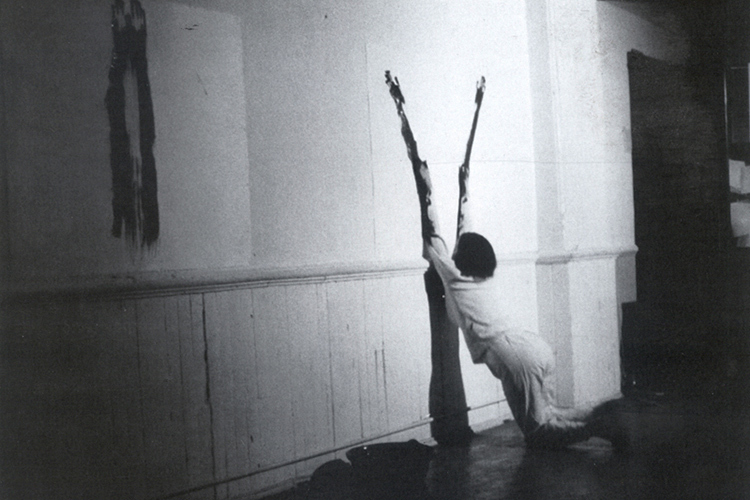
About the people of the circle of Ilya and the author himself are interested in this. They take out the entire personal psychoanalytic problem to the site of the poetic statement. This is personal injuries, the details of which would have to, as it seems at first glance, is discussed with an analyst in closed mode. This is information for the reader who is ready to be the author of the author. In this sense, we do not passively read Danishevsky’s literature: we are in the field of Contemporary Art , when the viewer of the performance is also his participant and everyone can stick needles into the body of Marina Abramovich. Or take hydrogen peroxide and iodine to cauterize the artist’s wounds made by others.
The beginning of the book, its own intro, was made as the history of the education of feelings in the French or Anglo -American spirit of the old times: customs in closed boarding houses and monasteries of past centuries differ little from the habits of the characters of the “lord of flies”. Like the rules for senior schoolchildren of the decaying Soviet empire with their uncontrolled homoerotism and quasi -eerotic, erotic metaphysics. I like (although here the bad word “likes”), as the characters of Danishevsky and his alter ego beat to the blood and to clinical depression, almost to death, for their existential freedom and an erotic choice, which is akin to political.
I would read this book in the spirit of a movie of Fassbinder, starting with his early films: first bewilderment, what the author wanted to say. Perplexity from the presented stream of life, from the author’s inability to the film image, to the moral ending for the viewer. In the third film, you understand what it is about, and this type of speech becomes your inevitable. Something that you will constantly return to your mind. About neo -Gothic and neo -barroacro in the texts of Danishevsky is already quite written, there is no point in repeating. There are episodes in the spirit of Pavel Pepperstein and late conceptualism, but this is just one of the author’s speech.
This is a book about father and mother. About our fathers and mothers, as they told us about rock and gender, about family history, through how they criticized us and intervened in our sex and our love affairs with their comments in the kitchen or by phone. About what happens to us when they die.
This is a book about the war that will last until the Soviet Union breaks up. This historical period will last some time that we cannot predict and see in the future. The author of Intro assumes that the author of the text did not think too much about it. I would not want to attribute his thoughts to him.
This is about all our loved ones.
Yes, why is the "aspen nest." I choose this chapter from the book of Danishevsky, for me the central in the narrative, as if I started reading “in more often” with different scenarios from the point of real, equal to all and understandable plot with the presence of a hornet's nest in your house. I had a similar story with Osami in my house, only I was an adult, unlike the author of the book. These wasps with their underground nest were biological competitors of people living in the house, and brother and comrades, taking alcohol on their DR, set fire to a hornet nest, which was located in the so -called summer refrigerator (this is a box in the wall of the Brezhnev construction for storage of products in winter), and then a brother with the guys threw it right with their hands in the window. I saw a picture of the battle between Osami and people the next day. The broken glass was lying around, smelled of a conflagration, the unfinished wasps curled over the nomads and fought for their victory. People won, they treated burns in their hands, but the wasps also paid for their defeat. Their feat is anonymous, but immortal.
You should terribly sting you so that you start telling how everything really happens. Our body and its long -term memory keep this hornet nest in the mediastinum.