
Translated material
"Palaces and channels in place, and the city sank somewhere"
On September 8, the inhabitants of St. Petersburg will read the lists of the dead in the blockade. We talked with the participants in the action
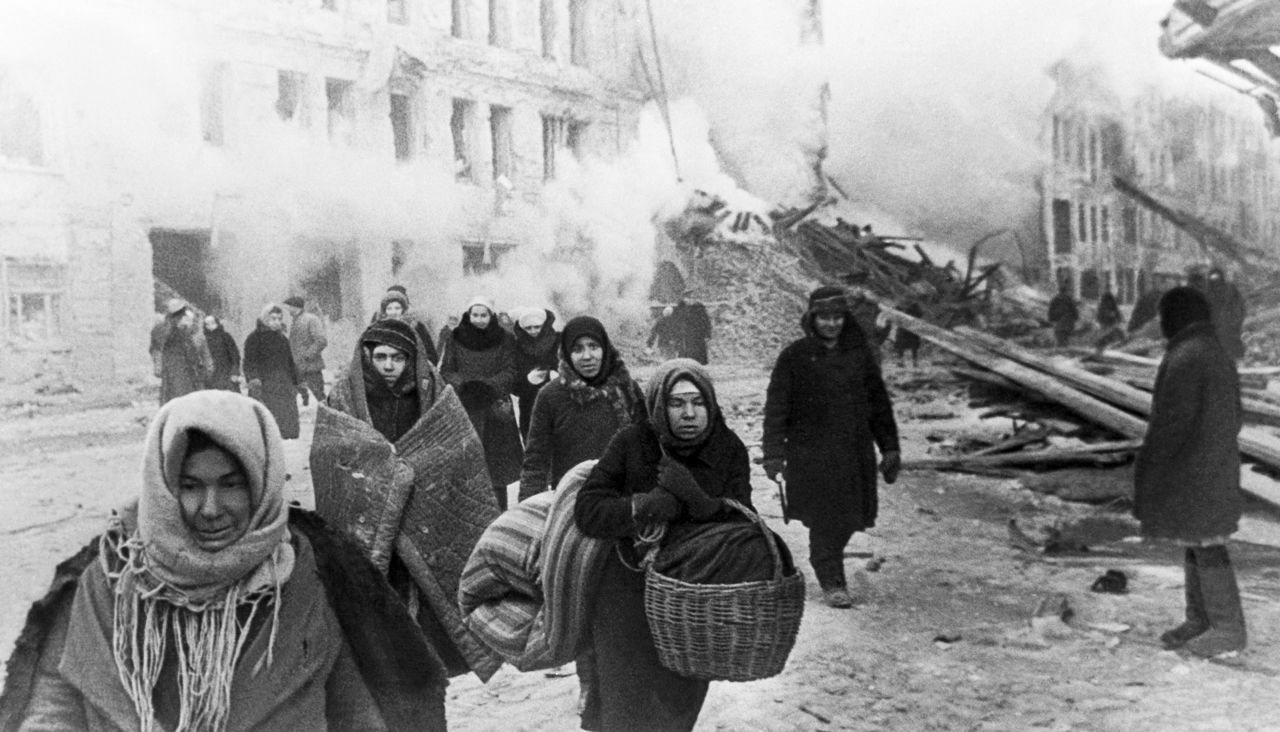
On September 8-on the day of the start of the blockade of Leningrad-in St. Petersburg there will be a rally of memory of those who died in the blockade years: in houses, institutions and in squares, in the Hermitage, the Russian Museum, Universities and district schools, everyone will call the names and addresses of people who died in the city in 1941-1944. Invented the action “Committee on September 8”, which is headed by historian and publicist Lev Lurie; The organizers hope that it will become annual. Some residents of St. Petersburg turned to the “Committee” with a proposal to independently organize reading the lists of those who died in their homes and courtyards. Medusa recorded the stories of such people.
Natalia Nikolaeva
50 years, chairman of the HOA "Dobrolyubova 19"; Organizes reading at his home
A few years ago, our house had already taken part in the “ Last Address ” campaign. This year they decided that it was necessary to honor the memory of not only the executed residents of our house, but also those who left during the blockade.
The blockade claimed 68 lives from our house. We have already published a list of victims on the site of the house so that today's residents knew what tragedy took place in their apartments.
Representatives of those apartments in which people have died on the readings. Naturally, we emphasize children - adults and so everyone knows, and children begin to forget. Our 16-year-old neighbor Alexander Bolotin will play the tragic work of Bach. Perhaps we will read the verses of Olga Bergholz . In the lobby of our house there is a piano - it was taken out of the apartment three years ago: there was nowhere to put it. Now we are arranging evenings around him. Last year, in honor of the centenary of our resident, a concert was arranged, there are Christmas stories.
I moved to this house only in the 1990s. Of all the stories about the blockade in this house, I best remembered two. As in the apartment 22, where the director of Torgsin lived - the All -Union Association for Trade with Foreigners - a woman with a child, homeless people came during the blockade. They were allowed to live - and the apartment became communal. Do not put it out into the street after the blockade. And in the apartment 66 - Margarita Pavlovna from there perfectly tells this story - during the blockade they decided that the aunt was dead and took to the morgue. She was able to get up, immediately came home to the kitchen and said: "Who used my caps from the pots?"
Elena Vilenskaya
63 years old, assistant deputy of the Legislative Assembly of St. Petersburg from Yabloko Mikhail Amosov; Lives in a house on Karpinsky Street, 18
I learned about Facebook readings. Ours will be at the blockade well. The place was not particularly chosen - it immediately came to mind. This is such an unofficial place - there was a well where people took water, because it was not in the houses. There was still a military airfield nearby, but it seemed to us that the theme of the blockade was still civilian, so they did not want anything military. One of our activists, Sergei Nazarov, found 420 people in the book in the book of memory [historical territory in the Kalininsky district of St. Petersburg] citizens who died in a blockade. How much in two hours we will be able to pronounce names, I do not know.
For me, it would be better if there was no official memory at all. I am not satisfied with heroization, retouching of memory. It was scary! When they do not tell how it really was, I don’t want to touch this memory of officialdom at all.
Mom did not like to tell anything about herself. Or maybe I didn’t ask much - you know, unfortunately, when I want to find out everything, there is no one to ask. But my mother said that when the grandmother's husband died, she fell ill and often lay in the hospital. And they could not evacuate it. Grandma was the only one of my family who stayed in Leningrad - mother and sister were evacuated.
Grandmother in a blockade lay in the Skvortsov-Stepanov psychiatric hospital, died in April 1942. There were two small leaves of mom. On one leaflet - it is clear that they made a request, in what condition it is - it is written that it lies, that she has lost a lot of weight and that she does not show interest in life. I can’t say anything - maybe they took food, or maybe there were crystal honest people there. Unfortunately, I don’t know anything about it. The second is already a message that she has died.
Irina
58 years old, financial director in an advertising and polygraphic company; Lives in the house 46 on the 5th line of the Vasilievsky Island. Asked not to indicate my last name
117 people died in my house.
All the time I am trying to understand what happened in these scenery some time ago, because I feel a little alien. There is a feeling that there was already some kind of life here, and we all came here after this life was interrupted. This connection is interrupted. In my house, for example, there are no more people who lived here before the war or directly to the blockade. Blocades - I specially looked at the lists - these are mainly people born in the 19th century, and children. Mostly the most feeble died - those who were not connected with work and who did not have time to get a job.
I worry how many people will come to reading. From this topic, they often dismiss as a terrible movie. This is hard, there are a lot of other things that you can take yourself on a weekend.
I have been living in St. Petersburg for 40 years. I came to go to the institute, then stayed here after graduation. The city brings up very much. We all value what we get here. I live here only because there is an aura of this city, and we are very lucky that we live here.
For me, as for many, this, of course, is associated with architecture, which raises and educates. But history is also important: there is a feeling that those people who built this city so were better than us - and that is why it still nourishes us. I do not leave the feeling that we are treasure hunters, people who plunge to the depths to find the sunken treasures. Palaces and channels are on the spot, but there are no former cities. The city actually sank somewhere. And we can pull out this knowledge and feelings on the thread that it actually unfolded here.
Recorded Polina Eremenko