
Translated material
Leo and Lamb
Why in Russia you can not save an ordinary Shabunin, but you can write “War and Peace”. Dmitry Bykov - about the film by Avdotya Smirnova "The History of one appointment"
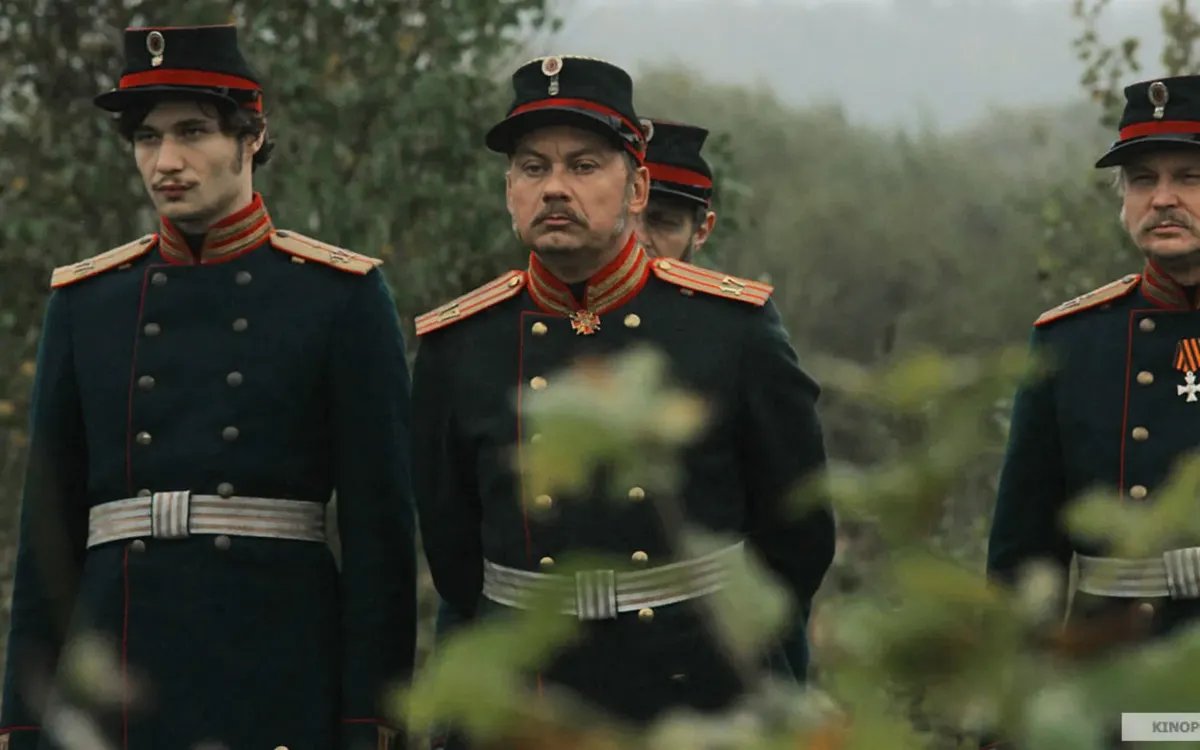
About the film by Avdotya Smirnova ... As already heavily with this “Dunya”, what kind of dunya she is to you! So it could be called it in young journalistic times. Films are shot by a completely different person. So, about the film by Avdoty Smirnova “The History of one purpose” will write a lot and complimentary, because it is not just her best work, but probably the main picture of this year, fruitful for good cinema, as befits in stagnation.
“Disney”, who took it to ride, proved intuition: someone will go to watch a costume melodrama from the count's life (it is there), someone is a political picture with direct and inevitable analogies, someone is a historical tragedy, although it is historical to call this film “hard to be God” in the film fiction. Someone will attract the names, because the director of the Garden Ring Alexei Smirnov played the grandiose main role here, his father Andrei Smirnov is the grandiose secondary, and Evgeny Kharitonov and Irina Gorbacheva depicted the most charming couple of thick ones, although there is something to choose from. Recall at least a flammer and Mirren on the Last Sunday or the couple Gerasimov - Makarov in the 1984 Leo Tolstoy. And this has not yet come out of the “unbeliever” of Khutsiev, about which we will also say and in which Mikhail Pakhomenko did not play Tolstoy, but, it seems, caused his spirit.
It makes no sense to analyze in detail, “how it is done”, how the action is skillfully inhibited at the beginning and accelerates to the final, how the director modernizes speech and plastic, how he works with the actors, etc. Once I asked a large cinema, why, in fact, Eisenstein got involved in “Ivan the Terrible”, because under Stalin it is impossible to speak objectively about this era, there will be a defeat or political, a defeat or political, there will be a defeat, or a politic or artistic. Kinoved answered: in order to create an excellent art work. Then I liked this answer, but now I think that the masterpiece is almost never created from the desire to create a masterpiece. Art (including by the definition of Tolstoy) moves the energy of error, and Eisenstein wanted to say something very significant about the nature of the Russian power, not state and not liberal, but our conceptual apparatus for analyzing this plan is still poor. “History ...” is not just a good movie, this is an important conceptual statement that we will try to read.
Firstly, the story of clerk Shabunin, who hit his company commander and whom Leo Tolstoy tried tolelessly to save from the execution, occurred in 1866, in the midst of working on the “war and the world”, but more importantly, in the midst of Russian reforms. These reforms are somewhat more dangerous for life than stagnation (certainly), and sometimes than repressions (point). It is during reforms in Russia that the maximum number of errors is made, because only at this time something is done at all. Sometimes it seems (and, most likely, it is) that all these reforms are started with the only purpose - to compromise the idea of changes itself, so that then for another thirty years to nod at them: you don’t want, like in the nineties? Like in the sixties-xx, when they shot in Novocherkassk and planted corn? Like in the sixties-XIX, when they raised terrorists, they shot the abyss and ordinary Shabunin? Reforms are almost always imitative, they are carried out exactly by the same people who conduct clamps and campaigns of state lies, and tells Smirnov not even from Tolstoy, but with Turgenev’s intonation, in the one with “Fathers and Children” tells about the liberal governor. When the commander of the regiment is a young man (he is played by Gennady Smirnov, a namesake) warns a company about a “sudden check” and organizes a treat to her ... Well, that we will hit in an analogy! Russian reformation is still more false than Russian conservatism, because it mows to freedom, and conservatism is frank in his stupidity and contempt for man, he does not mow anyway. The young progressive lieutenant of Kolokoltsev lets the soldier to wash themselves in the bathhouse, because they are very dirty, and the soldiers set fire to this bathhouse, in which girls wash to see how naked will run; Shabunin, therefore, was shot during relative freedoms, that they are panicky of this people with freedoms to corrupt and dissolve, and therefore fall into hysteria, like Khrushchev in 1963.
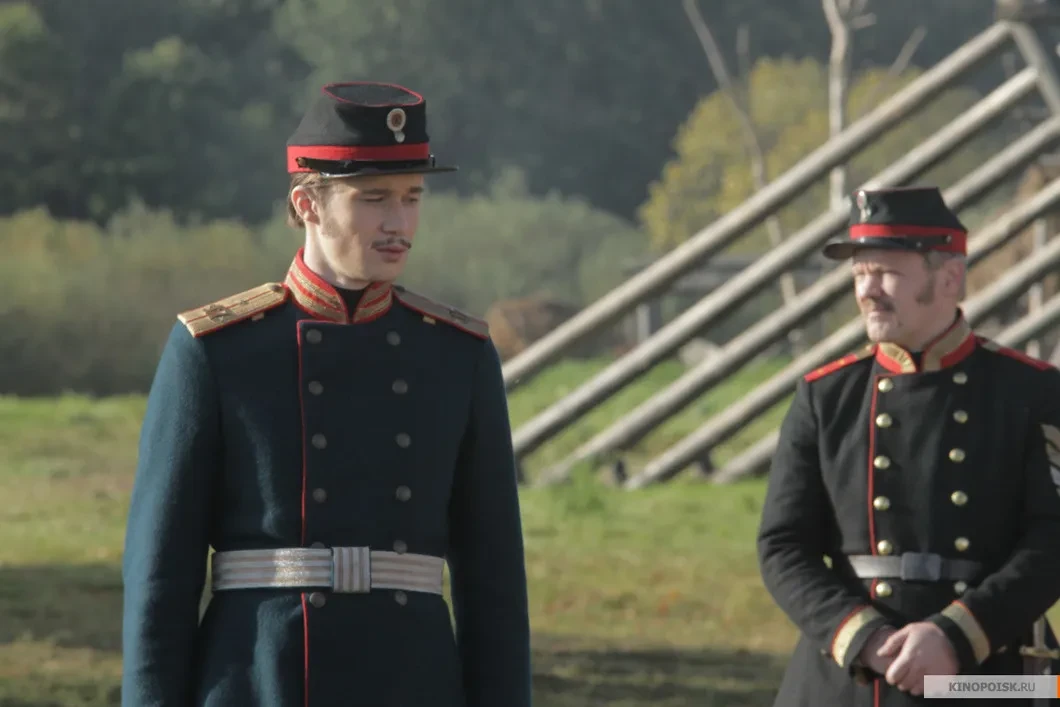
Hence morality: Yes, this is such a system. Smirnova at a press conference expressed fear that the film would be accused of fatalism-they say, we always had it, and there was nothing to hide. I think in a calm statement “Yes, this is such a country” there is nothing wrong. She has never been different and is unlikely to become. After Putin, a period of reforms awaits us, subjectively pleasant for society, but completely hopeless and rather traumatic, and the reforms will be such that the majority immediately nasaling Putin. And I’ll say more - it’s not such a country, but such a world, just in this world - external to Russia - there are all sorts of distraction and attractions, and we perceive life as it is. The people, who first poison Shabunin, and then proclaims the saints, and then tramples his grave, and then prays on it - this is exactly the same people who scream “Mosenna” on Sunday, and on Friday the coming week “cut it off”. Russia is frank, that's all. This film does not call for barricades, although it can least be reproached for coldness: he leaves the viewer with a feeling of anger and disgust - directed, however, not to external circumstances, but at himself. After all, we require engagement from Smirnova, and we live, tolerate, shake our heads, quietly indignant and wait. And with equal readiness we welcome and curse the reformers. And with a heavy sigh, we admit that although Putin and (Censored), but there is no other and is not expected, and it is impossible with us otherwise. And yes, it’s impossible with us otherwise, and yes, we do not deserve another, and if some softening of morals is observed, then it is akin to softening the brain: it indicates not a humanization, but of decay. This system may be doomed; But then it will die with the country - because it is such a country in which you cannot save an ordinary Shabunin, but you can write a "war and peace."
And here, in my opinion, the main thing. Unable to save Shabunin, the Russian Lamb, whom Philip Gurevich played “to the aortic gap” - here you have the holiness, bordering on idiocy and alcohol, bordering on holiness - Lev Tolstoy sits in clear and writes “War and Peace”, writes intensively with great hobby. The camera admires them.
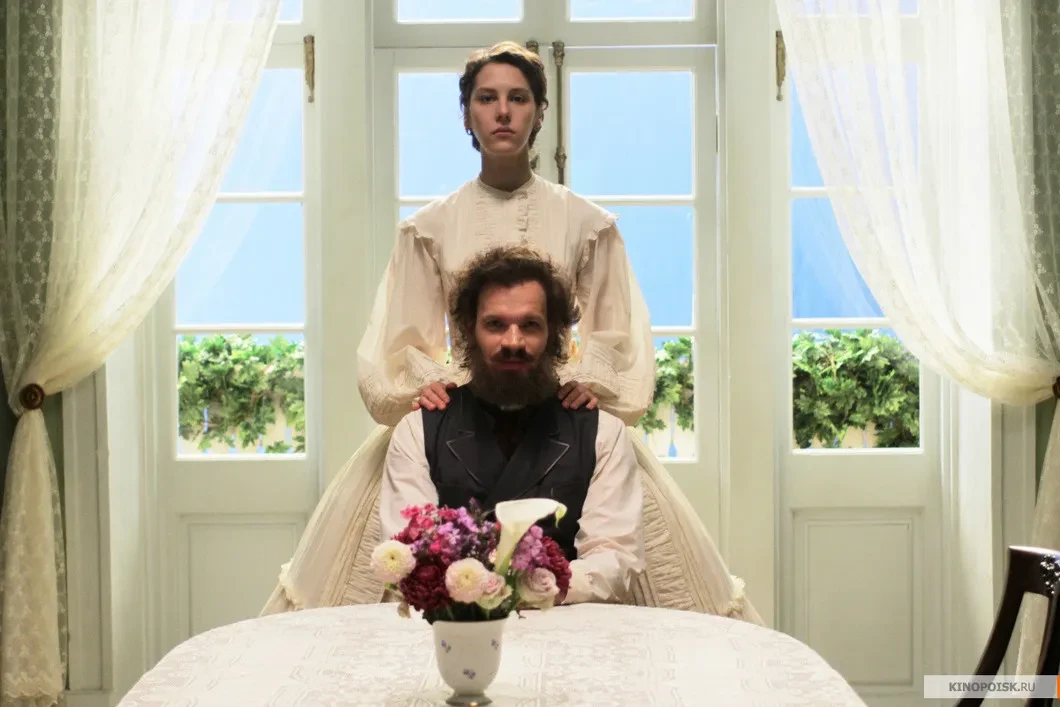
And at this moment, the viewer possess, to put it mildly, complex feelings. On the one hand, well, well, well, well, a good romance! And on the other, you, a bad person, just told Kolokoltsev, refusing him from home that you don’t know how to survive it all! You said that you could not imagine how to live after the shooting of Shabunin, but you live, sit and write! The most honest hero, ensign Stasyulevich, went and drowned, and you? Who could save and did not save? What is it called, Lev Nikolaevich?
This is called the Russian modus operandi, dear spectators, because it is really such a country and such a system - in which everything is done solely to write a “war and peace”. Khutsiev in the picture, which he made for 15 years and seems to be released, Tolstoy first proves in detail that it is pointless to write to the emperor - and in the next frame dictates this letter. After Auschwitzim, the only thing that can be done is to write poetry so that there are more poems and not much less than Auschwitz in the world. In Russia, the only thing that makes sense is to write masterpieces or shoot the “History of one purpose”, because the film, in general, about two initiations. One is a lieutenant of the bells: until you participated in the execution - not to be a commander of any level. And the other is Lev Tolstoy: until you participated in the sacrifice of the Lamb at least as his lawyer, until you went through guilt, powerlessness and disgust - not to become a writer of a super -scale; Terrible, but so. And the appeal of modern Russian art to the image of Tolstoy is very symptomatic. Like a pound, Tolstoy sat (in the room under the arches) at four kings. Under Nicholas I Palkin, he wrote “Childhood”, under Alexander II of the Liberator - “War and Peace”, under Alexander III of the Surrosion - “The Death of Ivan Ilyich” and the first half of the “Resurrection”, under Nicholas II Bloody - “Father of Sergius” and “Haji Murat”. And this is the most valuable that remains of the mentioned four.
Under Vladimir Putin (Beslan, Tauride, Censored), Avdotya Smirnova wrote (together with Basinsky and Parmas) and removed the "History of the same purpose."
This does not mean, of course, "thanks to Putin."
Thanks to Smirnova. And if her husband helped her producing the picture, this is the only nanotechnology that has an influence on the Russian future.