
Translated material
"The boiler where the peoples were cooked"
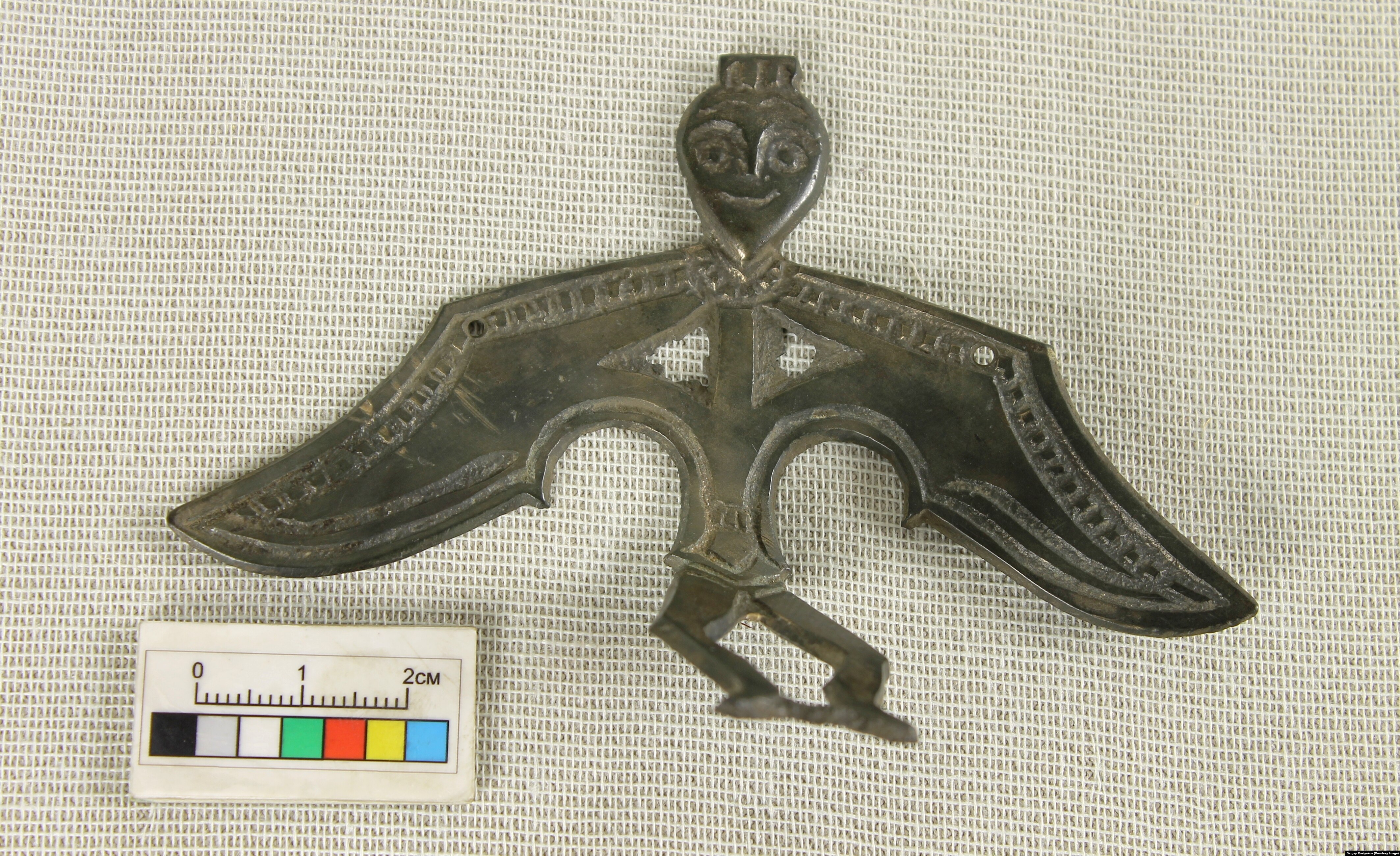
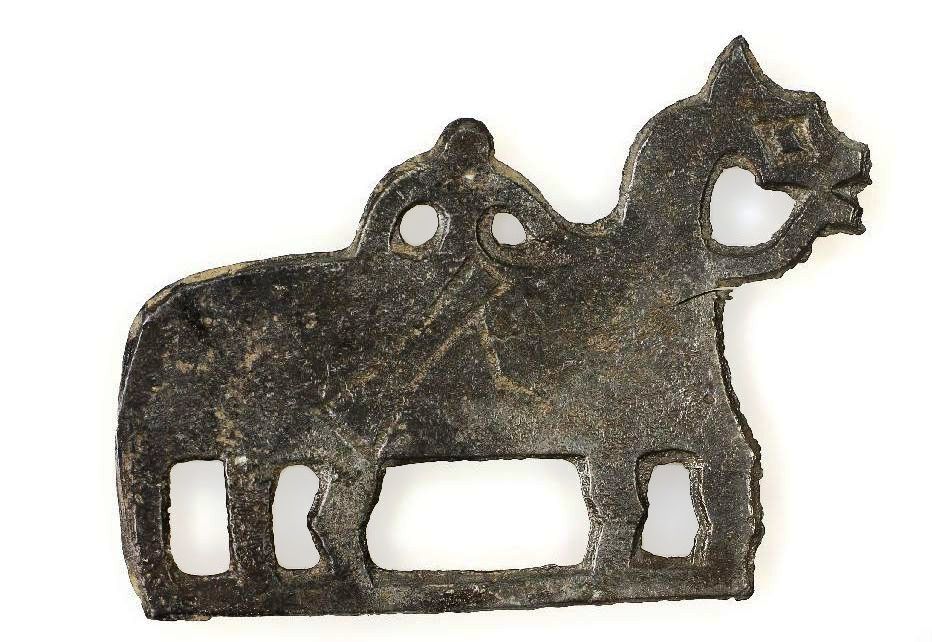
This summer, when the excavations near the village of Suzun have not yet ended, in the Novosibirsk Museum of Local Lore, they hastened to put the finds already gained at that time. These are cast bronze figures created about one and a half thousand years ago. Despite the deep antiquity, objects are perfectly preserved - up to small details. Archaeologists had no doubt that all these horse riders, winged little men and other fantastic creatures were directly related to the beliefs of the ethnic group, which in science is commonly called Obskoga . Similar things were found before, but never before - in the territory of the south of Western Siberia.
Now, the head of the archaeological expedition of the Novosibirsk Museum of Local Lore, Sergei Roslyakov, had new reasons to call the Novosibirsk region a "boiler, where the peoples were cooked." This is a place where different ethnic groups intersected. The find of the sanctuary with small figures is an important event for science. This is evidence that in ancient times there were also the ancestors of the two modern indigenous peoples of Siberia - Khanty and Mansi:
- Previously, the monuments of this culture were discovered in the territory of the modern Altai Territory. There are burials and settlements of this era. A lot of such settlements were found on the territory of the same Novosibirsk region, but much north of our excavation. The presence of a religious place here, in the Suzunsky district, is not quite usually. Still, this is not the central zone of the resettlement of tribes of the Ob Ugrs. It would be clearer-to find a similar complex somewhere in the Tomsk region or in the north of the Novosibirsk region, where the taiga begins. And this territory is still more adapted for other peoples. For the cattle breeders of Altai, for example. Although here there is a huge Suzunsky boron. Most likely, the people who created the cult casting we found were confined to this borus. Now its boundaries are five kilometers, and at that time, maybe it was the territory of Bora.
- Why are you talking about Bor? Does this mean that your Ob Ugra was mainly hunters?
Enough fingers of one hand to list such finds
- Yes, the main type of their economy is hunting and fishing. But there was also cattle breeding. True, not the same type as, for example, among the Mongols or among the Turks. That is, the Ob Ugra were not nomads. And these are cattle breeders who lived in the villages, had a small herd of horses and cattle. The cattle were kicked out in the summer, and for the winter the livestock was reduced, scored on meat. Only some part was kept in the village for the winter, harvesting a small amount of hay for this.
- It turns out they lived?
- Yes, they lived enough. They had both fortified villages and summer housing in floodplain places where there are a lot of grass.
- You said that in other places many monuments related to Ob Ugra were found. Why, in this case, your find of 122 bronze figures is recognized as unique?
Predatory birds, bears, a person sitting on a horse - all of them have direct analogies with ideas about the universe of the universe of the universe and modern UGRs
-After all, we found not scattered things, but immediately a whole set of objects where there was some kind of cult place. Probably, it was a sanctuary where for some time the objects of the cult associated with the worldview of the ancient UGRs gathered. Enough the fingers of one hand, maybe two to list the places where a large amount of cult casting was discovered. This is really a rarity for Eurasia. I mean the territory from the Urals to the eastern lands of Siberia. The rarity is when such sacred objects appear as a result of targeted excavations, and not by chance, as it happens, for example, during the construction of a gas pipeline or laying an oil tower. Well, quite very rare - so that such an amount is in one place. We can say that this is one of two or three cases.
- You say that the excavations were purposeful. How did you know that it was necessary to explore this particular place called "Upper Suzun-10"?
- Previously, this place was not known on the archaeological map of the Novosibirsk region. So we decided to examine him. The traces of the settlement were discovered there, most likely, the era of late bronze - this is about three thousand years ago. But along the way, we found bronze figures associated with a later era. It turned out that the sanctuary was placed in the place where, two thousand years before, there was a more ancient settlement.
At one time, this territory opened under the farmland. Therefore, several objects were turned along with the layers of the Earth out. So they were found by us as a result of an examination of this place.
“Did they just find them on the surface?”
- Yes. We did not go there specifically with the aim of finding a cult place, but found it as a result of such a thematic examination. The initial task was to inspect the territory of the Suzunsky district in order to choose a monument that we will explore this and next year.
- And then, when these things were found on the surface, did you already conduct complete excavations?
- Yes. At first we laid the pit to determine if there is a cultural layer and what is its composition. In this small excavation, we soon found five bronze objects a meter per meter. We can say that the members of our expedition experienced shock, since we have not found anything like that yet.
- How do you date these figures? How old are they?
- This is the era of the early Middle Ages. And the early Middle Ages for Siberia is the sixth and eight century of our era.
- Of course, there are no written sources. Not that they are not preserved, but they simply are not. The Obi Ugra River, who lived in the basin of the Obi River, were a uninvited people.
- It is. In addition, the neighbors did not write about the territory of the south of Western Siberia.
- In that case, what does your finds testify to? In other words, is it possible to reliably restore the belief of this people?
- Of course, archaeological finds themselves can say little about. We can only compare these items with objects, worldview and ideas of later eras, from which Russian written sources have already been preserved. And just some images allow us to say that these are most likely objects associated with the worldview of ancient UGRs. Predatory birds, bears, a man sitting on a horse - all of them have direct analogies with ideas about the universe of the universe of both ancient and modern UGRs.
Often archaeologists reconstruct the economy, culture, and the worldview of the ancients, relying on what has survived to this day or was recorded by ethnographers in the 18-19th centuries. Of course, these are not direct analogies, but we can talk about such ideas. Say, about the rider on a horse as the god of Mir-Susne-Hum , who is one of the supreme deities of the Ugrians. We can say that this is such a hero, like Prometheus, who gave people a place for hunting, taught them to shoot on onions and so on.
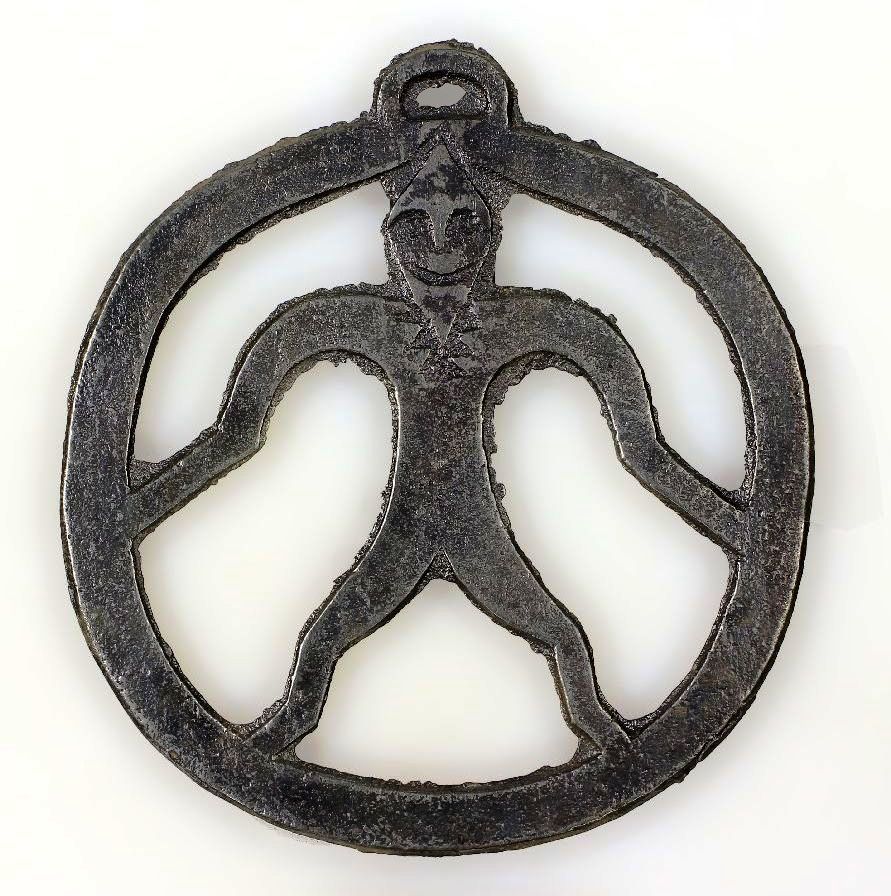
- August 15, exactly on the day of the archaeologist, you found a memorable figure. In the middle of the anthropomorphic image. This is a man with a pointed head. He is in the FAS, and on the sides with him, two other figures merge. They are already in profile. What does this plot mean?

-This is a very interesting image, which is still difficult to say anything about. Such a triune beginning is quite often present both in the finds of monuments of cultures of Western Siberia, and, for example, in a rush. The central figure is always anthropomorphic, but the side can be different. For example, there may be wolves or images of not very understandable creatures, most likely, fantastic ones. There may also be images also anthropomorphic, but they are usually smaller in size and, as a rule, are turned to the center in profile. As for our case, perhaps this is an image of the goddess and her sons. But this is only one of the options. In general, oddly enough, such figures are in the image of the legendary Sumerian hero Gilgamesh . It is also depicted as a central figure, and next to it are two demons.
- You said it was strange. Because your finds from Gilgamesh are very far away? And geographically and in time.
- Yes, this is very far away. But the worldview of the ancients often gave out similar ideas about the world. Therefore, in different cultures, different peoples have images of the central figure of the hero and his subordinates, or defeated enemies, or brothers.
- And yet, how do you tend to interpret this triune figure?
- In principle, just like many other images of ancient UGRs. That is, as images of the supreme deity and its lower hypostases. Often they are generally considered children the main deity.
- I noticed that there are a lot of winged creatures among the Suzun complex. What is it connected with?
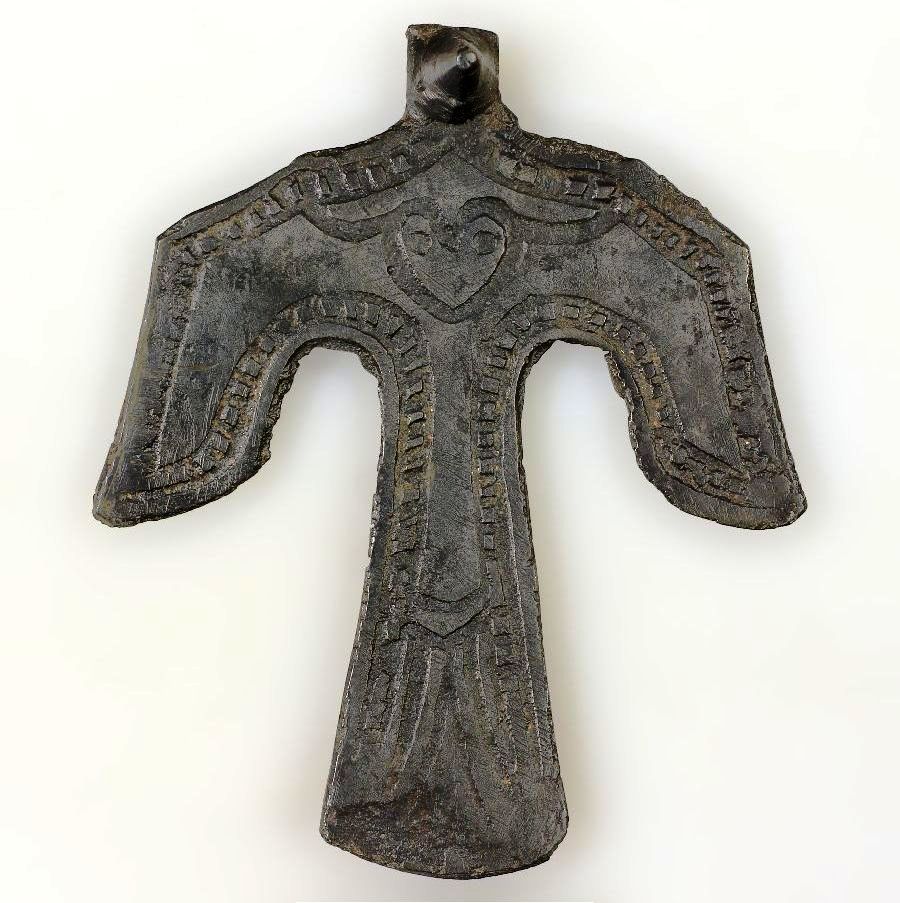
- With the worship of a bird, or rather spirits in the image of a bird. This is a widespread phenomenon in ancient UGRs and UGRs of the 18–19th centuries. Very often, birds, especially predatory ones, acted as ancestors of a particular kind. It is important to note that those figures that we found are not exactly the same. This just speaks of the allocation of different characters. For example, there is a man-man where something like a necklace is very clearly drawn on the chest, and in the wing fracture, in the elbow area, the angle is quite well noticeable. Just in this way, a bibber bird looks in nature. And the osprey is a hypostasis of one of the lower gods of UGRs.
Any kind had a totem animal. As I said, many births considered predatory birds to their ancestors. However, not only predatory. Gagar bird is very popular. It is considered a creature that contributed to the emergence of peace. More precisely, the lands as such on which people and spirits settled.
“Is this the very myth according to which she walked the nest?”
- Yes. Gagara was caused by the Supreme God. Two birds, having arrived in the world that God created, did not find the opportunity for a place where the nest could be sustained. They began to dive under the water and get out of a bit of the ground, spreading it on the surface. Thus, they created a land where they were able to make a nest. Then, people, animals and plants appeared at this place.
- Among the found figures are with ears, that is, these were pendants, and there are holes. How were these small images that fit in the palms used? They sewed somewhere, hung somewhere?
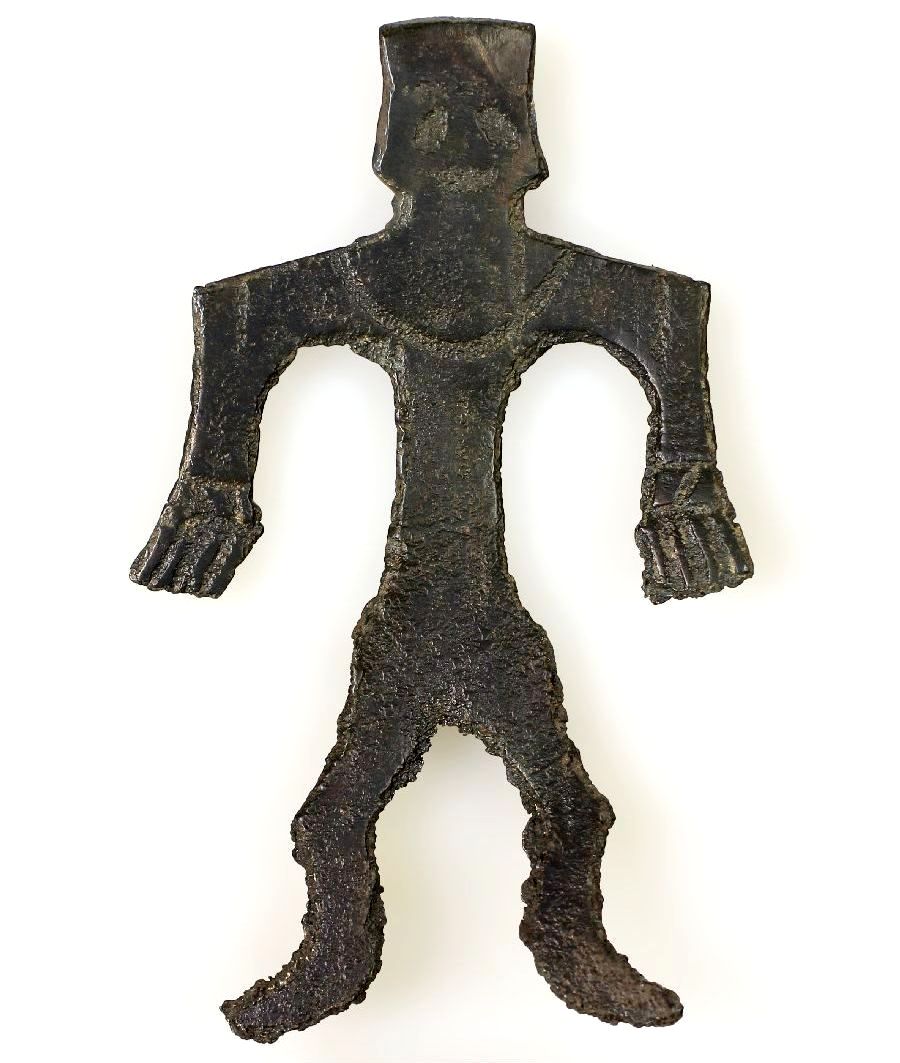
- This is just the moment with which it is the most difficult to work archaeologists. We excavated a fairly large area, that is, these were three clusters of bronze objects. Each of them occupied about two or two by three meters. Still, this place was plowed a few years ago, so some of them could move. Most likely, initially the figures were in some room like the so-called "barns", which have in the sanctuaries of Khanty and Mansi. In these barns, which are in sacred places, images of spirits are stored. There are some kind of subject offerings, for example, coins or rags. They are laid inside the barn, and they are stored there. Most likely, something like that was. In the same way, these figures were brought and put into a special room. During the holiday, which they happened during the year several times, they were taken out as needed, rituals were held, and then they were folded back. Gradually, the number of them grew, because it could be some kind of offering in honor of God on a certain day, or with a request for a good hunt. So they accumulated.
Some of them really have a hole, but I can’t say that they were suspended or nailed with carnations to some basis. I can only report that, for example, the Khants for the wooden images that they put to the spirits often nailed a metal image with some bird, beaver or other animals. I assume that some of our ancient figures were used that way, that is, in fact it was a metal insert into a wooden base. But, again, I am starting from evidence of the 18–20th centuries. And we are talking about an era that is actually almost 1.5 thousand years from us.
“So they could have been used differently?”
- Could. But it is important to keep in mind that we have no evidence of the presence of such a stationary building at the site of excavations as a house. There would be a house, so there would remain a pit from the home, a bonfire or a hearth where they cooked food. Then we could say-yes, it was stored somewhere, and then fell into the ground. We most likely are dealing with a simple building. With a small one and a half by two meters, a barn like that of Khanty or Mansi, where all the sacred objects were. Then the sanctuary was abandoned, and they fell into the ground.
In principle, in the early testimonies of Russian missionaries about the Khanty of Trans -Urals and Western Siberia, it is said that they had sacred groves, where the offers were suspended simply on trees. I could assume that trees stood at the site of the excavations, but we still have the fact of the presence of hollows in the ground, to which the accumulations of bronze objects are confined. We excavated them. We can say that these are some small pits, over which, probably, there was just a barn, and there is absolutely no evidence that it was a residential building. Where they lived - I can't say. Nearby there are no burials or traces of settlements. It turns out that it was some separate place where they specially came, ”says Sergey Roslyakov .
-

Lilya Palvelieva
Correspondent of the Moscow Bureau of the Republic of Kazakhstan. Cooperates with RS since 1989. The author and leading headings about the Russian language "keyword".
Subscribe