
Translated material
Devaluation in a neighborly one
Sanctions against Russia are beating in Kazakhstan: the national currency has again collapsed in the country
On September 7, the President of Kazakhstan Nursultan Nazarbayev went to the city of Temirtau, where many years ago his transformation from the operator of the blast furnace to politics took place. Grateful and trained citizens arranged a jump into the past: dressed in costumes from the 50-60s, they, together with Elbasy (head of state), performed a "song about anxious youth." "Get ready for a great goal, and Glory will find you!" - Soloed the President of Kazakhstan.
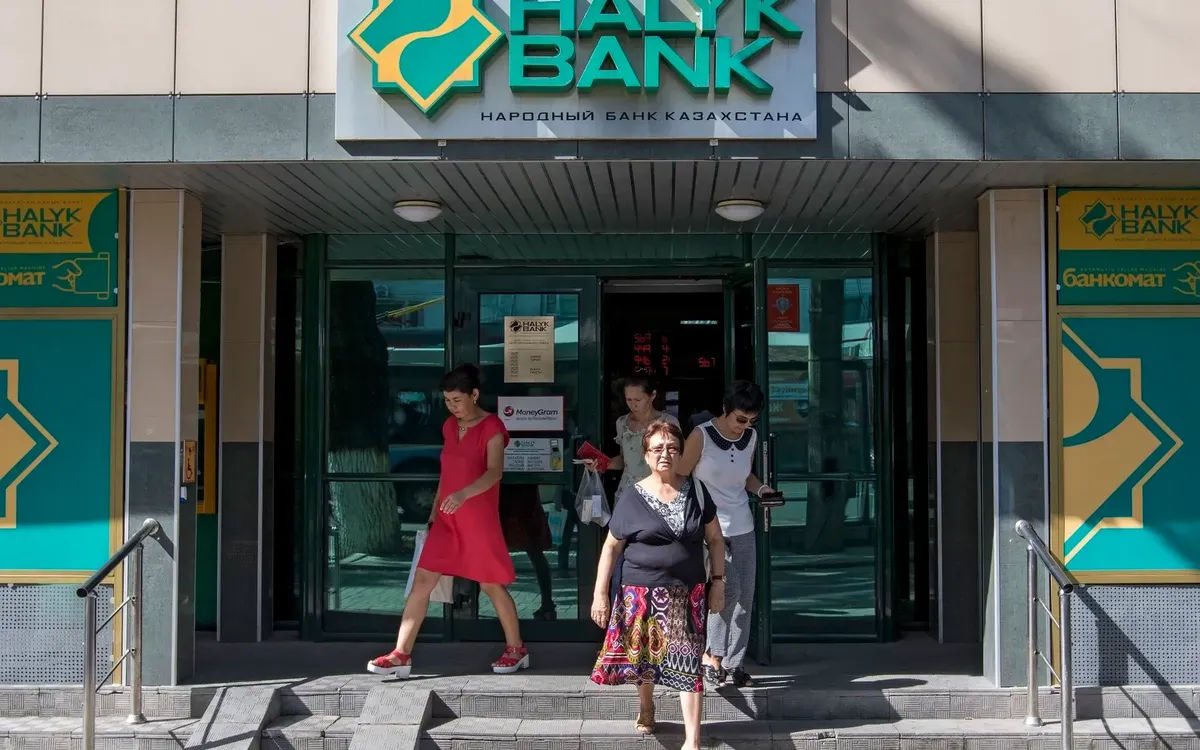
The country is not up to songs. Over the past month, tenge has fallen by more than 10% - from 340 to 380 per dollar. In fact, this is a new devaluation, but this word in the country is prohibited to pronounce officials. Formally, the Kazakhstani currency is in the "Free Swimming" mode. Analysts believe that the fault of Kazakhstani power in what is happening is not the main thing: the tenge pulls anti -Russian sanctions to the bottom.
The Minister of National Economy Timur Suleimenov said that the government actually translates the country into a regime of confrontation between Western sanctions against Russia.
“The key influence will be manifested through the course of the ruble to the dollar, then tenge to the dollar and the ruble. We have all macroeconomic calculations, we have calculations and industry. Moreover, we have calculations even of how this can affect individual enterprises, on those that are most susceptible to sanctions, ”says Suleimenov.
He also added that the plan implies the support of these enterprises - obviously financial, although the minister was silent about this: in terms of allegedly there are a lot of “closed things”. Economist Peter Suyk is sure that support will be to pour budget money or money from the National Fund - "there is simply no other option."
The population made for themselves another obvious conclusion: we must wait for 400 tenge per dollar.
“I think such a scenario was laid on the“ top ”itself,” says the director of the risk assessment group by Dosym Satpaev. - Although the budget for next year is a upward at 350 tenge per dollar, it is outdated even before adoption. In November, when the second package of sanctions, which are called the most serious, can be introduced against Russia, its own “red zone” will come for Kazakhstan when the tenge’s course can fall. ”
Indirectly, the analyst is confirmed by the statement of the head of the National Bank Daniyar Akishev: usually a banker neat in forecasts warned of an almost inevitable exit for an inflation corridor in the foreseeable future (now it is 6-8%) due to the weakening of the academy. First of all, this will affect the prices of food: an increase of 10 or even 20%is unofficially predicted, although the same Minister of the National Economy dispenses this in every possible way.
“Will he significantly influence? I will say not. Why? Because by 80% we provide ourselves. Thus, the price of goods will change by 10-20% of the rate and 10-20% changed - such a direct correlation should not be, ”Timur Suleimenov tried to encourage everyone.
In fact, the Tenge course and the entire Kazakhstani economy, being the vast majority of raw materials, are sensitive to all major world events. Oil fell-the tenge fell (now it was true, the oil rose-and the tenge, like the ruble, was not), wrote something Trump-tenge fluttered again, the Chinese market was agitated-the Kazakhstan currency in a panic.
“The USA, Russia and China are three elephants that are of little interest to what the mouse feels nearby,” Satpaev is selecting a metaphor. But it is the bunch of tenge with the Russian ruble that brings the most problems. So it happened historically, Peter Suyk explains: in the mid-90s, the currency was not attached to each other, and then, after the default-1998 in Russia and devaluation a little more than six months later in Kazakhstan, one ruble of five tenge was established. “Sometimes it fell to three, sometimes it rose to almost six tenge per ruble, but in general the parity remained,” says Sobik. “We have the vast majority of exports from Kazakhstan through Russia, it is generally impossible at all.” There are no documented agreements on this subject, but the Kazakh authorities hold on to the ruble much more than for the dollar.
At the same time, the National-patriotic part of the society is not against conducting a “de-ribbon”-to leave the Eurasian Union, for example. But at the official level, no one dares to hint about this, I am sure of the upsurous Satpaev: if you continue to compare with the mouse, then because of the geographical location and 7,500 kilometers of the common border (Nazarbayev calls this “this neighbor”) there is nowhere to go-you have to continue to cry, but there is a cactus. The whole piquancy of the situation is that this should be done with the most spiritualized person: the same Minister Suleimenov as a mantra repeats that “we are firmly moving towards 30 developed states”, and “we have a“ strategy-2050 ”-this is the main document,” but this already looks frankly mockery or trolling “God”.
At the same time, the main economic problems of Kazakhstan are ahead: as if after Nazarbayev’s winter trip to the United States, everyone will never brave, that now the sanctions will not touch the republic, any further round of tension will hit the country even more. To protect yourself, it would be nice to go to a proven route. Both in 1999 and in 2015, the main blow to the economy of Kazakhstan after the fall of the ruble accounted for 6-9 months. During this time, Nursultan Nazarbayev had time to re -elect to his post as a result of the presidential early elections. The current trip to the cities - Temirtau is not the first stop in the tour of Elbasy - also very much resembles a pre -election tour (formally, the elections should be held in 2020, but in the history of Kazakhstan they have never passed on time, always earlier). If so, then think about the “alarming youth” 78-year-old Nazarbayev is the time.