
Translated material
Between the two wars
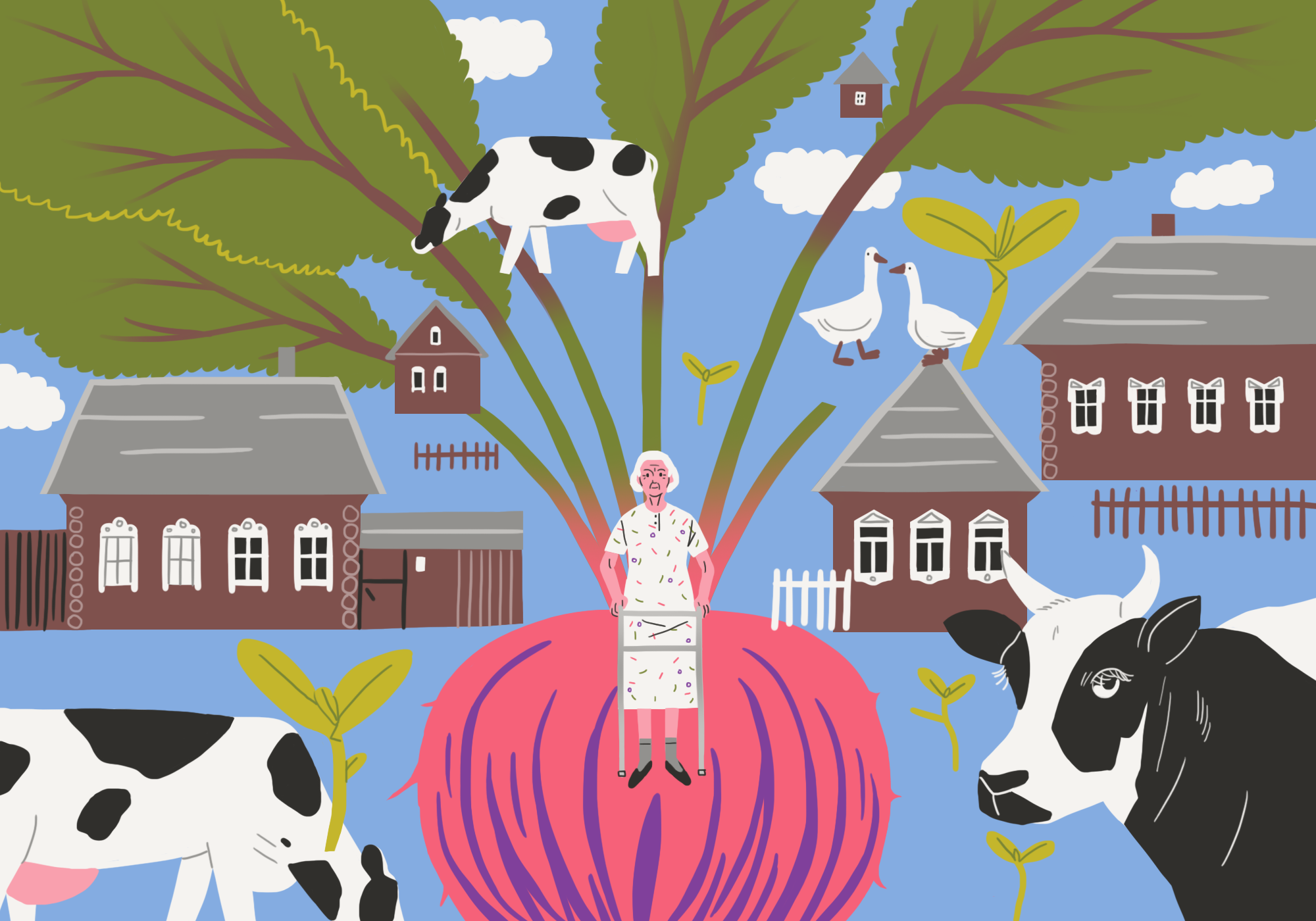
During one war, she was born, from another in old age she was saved on walkers. And between the wars there were decades of hard work
We help to help for a long time and happilyTatyana Tikhonovna, lying on a hospital bed, seems very small, like a child. Studed hands, a quiet voice. There are several more people in the ward. Someone is awake, someone moans in a dream. Tatyana Tikhonovna says, carefully looking the interlocutor in the eyes. Her own eyes seem incredibly deep, but it seems to be dark - apparently, it affects that vision has weakened after a stroke.
We start from the very beginning.
“I was born in the Belgorod region, the village of Bulanovka. In total, there are six children in the family, but two were small when there was hunger in the thirties. Many had it. I was born already during the war ... "
M " Catf
Having graduated from a seven-year school in her native village, she began to work on a collective farm-weed beets, help the elders. Parents worked there, for workdays. They received the money not every month, but once a year, and then a penny. The work book is one for all, and at first the records for a minor Tanya did not, they recorded everything on adults.
Gradually it became easier: they began to give out more grains, pay salaries every month. Since 1958, 15-year-old Tanya began to officially work as a calf. It was the hardest thing to feed and drink animals manually.
“There was no auto -plate yet, everything is on myself,” recalls Tatyana Tikhonovna. - The cows were dismantled and driven to the well, poured water into the trough. It was necessary to drag a bucket from the well. They gave the cows to crushed flour. She had to interfere, also carry buckets, give them. You will put straws, and this mash woman on the straw. And they wore a storm in their arms, and cleaned all this manually, and finished it. And my hands are small ... "
She touches me a little noticeably with her thin hand and continues: “I had finished the cow before, but one, and then there are 15 cows! Podil - and fell ill at all. ”
"Easy work"
In the 1960s, Tatyana Tikhonovna was ill with tuberculosis, doctors issued a certificate that now she was only easy to work. But where is the collective farm easy work? The chairman sent a scam, in parallel, she also worked as a postman, and in the rain and in the snow. And then again the disease, and after the operation, she was sent to Belgorod, study for an accountant. But to switch to “easy work” again did not work: when there were not enough workers, beets sent everyone in a row to weed.
Only in 1978 she received her first passport, and at the same time the freedom of movement in the Union. Brother and sister invited Tatyana Tikhonovna to her, to Ukraine, where she still went on vacation, on a certificate from the village council. She was again taken by an accountant, only not to the collective farm, but to the sewing enterprise. But here it was not without physical activity - all employees were taken from time to time to weeding, not beets, but sunflower. The fact that a woman with disabilities should not work in the sun, no one wanted to listen - until she was ill again. Then they allowed to go into the field after the heat subsides.
Refugees on the walkers
23 years on the collective farm, 18 years in production, the title of labor veteran, its own apartment. But quiet, cloudless old age did not work. In 2011, Tatyana Tikhonovna had a stroke, depriving her of her ability to see and move normally. Soon the older sister died, the brother was no longer alive. Only social workers helped around the house. Tatyana Tikhonovna recalls them of heat - as, however, about almost all people in her life. Ambulance doctors, who had to call from time to time, constantly repeated: "You can not live alone!" Tatyana Tikhonovna could move only on walkers, often fell.
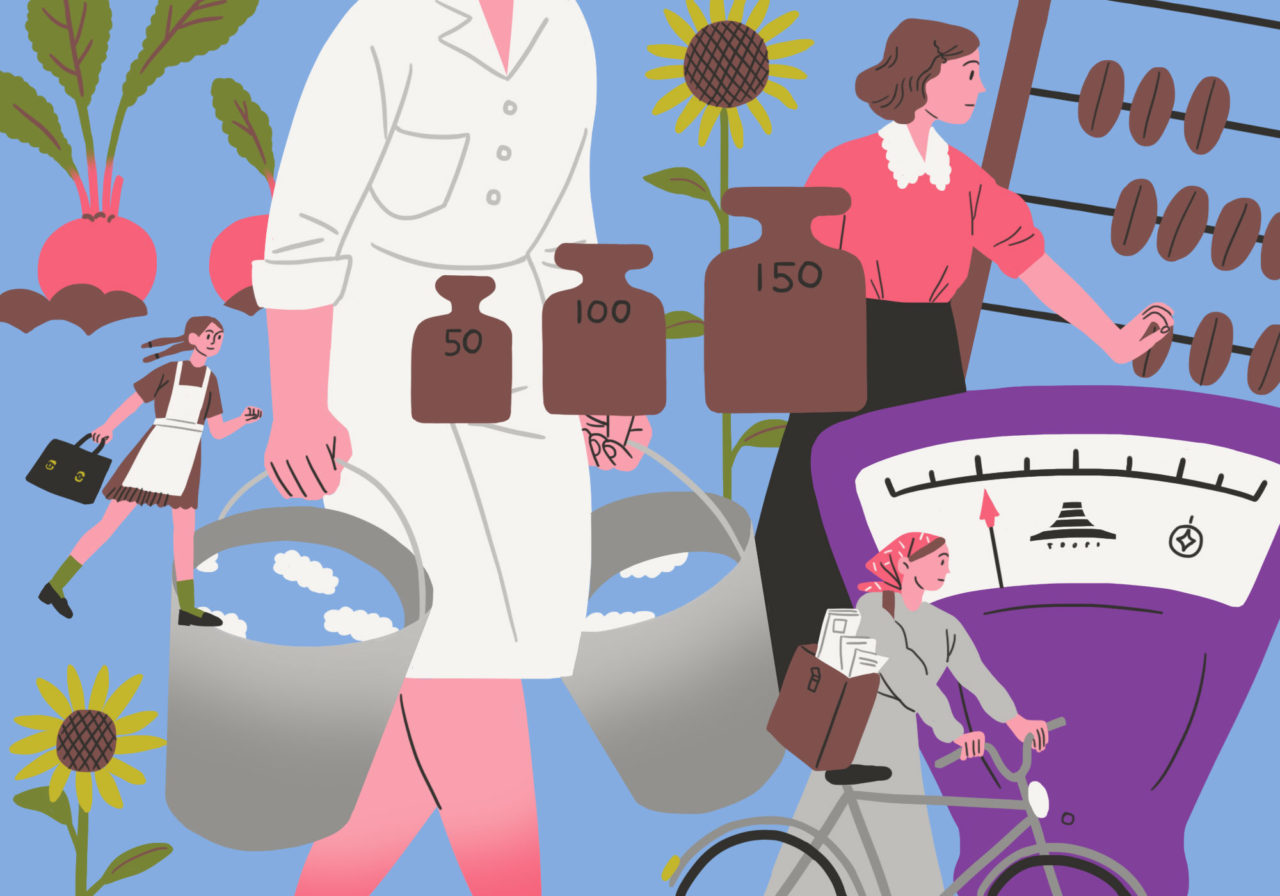 Illustration: Sasha Baranovskaya for TD
Meanwhile, war began to get to Artemovsk. There were no bombing in the city, but military planes flew in the sky, it was alarming. Then the niece Svetlana invited Tatyana Tikhonovna to move to her to Petersburg. It was four years ago. Since then, Tatyana Tikhonovna, a stateless refugee, has been living with his niece. Svetlana - a musical worker in a kindergarten, is engaged in a children's music theater. It goes to work by seven in the morning, returns late, and without it you can’t get out of the house in a wheelchair. There are almost no acquaintances in the city of Tatyana Tikhonovna - unless the elderly neighbors sometimes manage to chat. He says: “Once, when Sveta drove me, an old woman came up to me-she sat on a bench in the yard. We met. “How much,” I say, “are you years old?” She joked: "I am 18!" - I laugh in response: "And I'm 12!" Then Sveta told me that she was gone ... "
Dreams about the house
Tatyana Tikhonovna loves to listen on radio programs about Petersburg. He recalls how she came here with her sister in the mid-80s, how they went to the Hermitage and the Gostiny Dvor. Relatives and now sometimes drive her around the city by car, try to show beautiful places. But vision does not allow you to make out everything properly. But at night before the eyes - a native village in all details. Still dreaming.
Tatyana Tikhonovna believes Artemovsk as her second house. He recalls walks in the parks with which he had previously been famous, concerts that could be listened to when sitting right on the grass, as Sofia Rotaru sang, as they themselves and her sister sang. He said in bewilderment: "They told me that Artemovsk is now the LPR ..."
Now Tatyana Tikhonovna’s niece left for Ukraine - to receive a pension for her, which can not be transferred. At this time, for the second year in a row, Tatyana Tikhonovna has been admitted to the Maximilian hospital, because she cannot stay at home unattended by her relatives.
Maximilian hospital is one of the oldest in St. Petersburg. It opened in the middle of the 19th century and since then has not changed its location - in Kolomna, in the quietest part of the historical center. Phones in the hospital are caught poorly - the walls are too thick. Inside, it’s hard to navigate from the habit, not only the layout, but also the relief is peculiar: the corridor suddenly comes down or, conversely, stretches somewhere upward ...
The hospital specializes in the care of the elderly. There are almost no hospital smells, clean, bright, comfortable in its own way: in the corridor an aquarium with turtles, a book shelving. Everything would be fine, only many patients need to undergo rehabilitation, and special equipment is sorely lacking. So the line does not reach Tatyana Tikhonovna.
“Doctors are good here,” she assures. - The doctor says that it would be necessary to undergo rehabilitation, but the line is very large, not to break through. There are 53 of us in the department alone. Of course, after the stroke, many years have passed, but I would like to try, otherwise I have almost stopped walking lately, it doesn’t work out. The left side is paralyzed, the legs are spinning. But you have to go ... "
Maximilian hospital specializes in rehabilitation and care for elderly people. The life of many of them can be qualitatively improved by returning them, at least partially, motor activity, the ability to self -service. But this requires new equipment - what is in the hospital is outdated, and it is not enough for all patients. Help with the hospital is provided by the charity fund "Happily." It can be supported by any amount. If you donate even 100 rubles, this will allow Tatyana Tikhonovna and other patients to undergo rehabilitation, to feel better and more confident.