
Translated material
About the dangers of "healthy relationships"
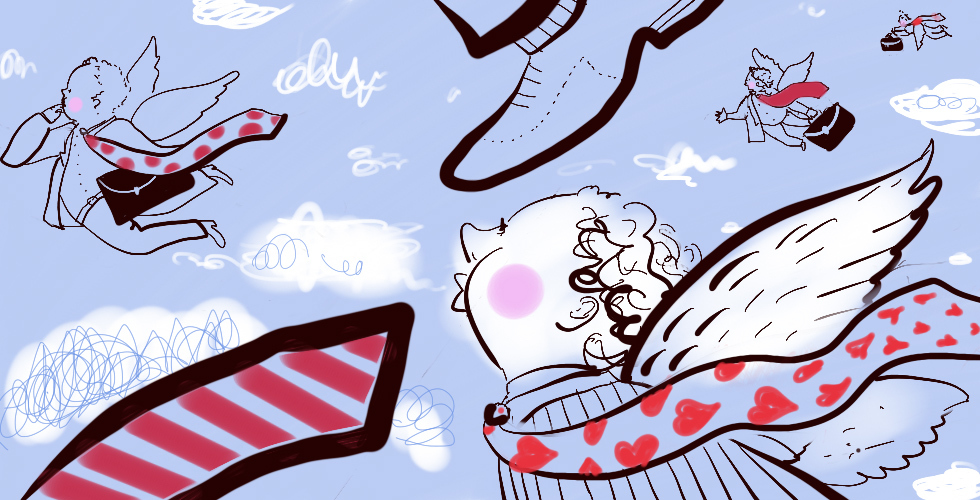
I met Sylvia in the Berlin bookstore - in front of the Sociology shelf. She leafed through Eve Illuz, I am Alena Badya. We both wanted to know what love was made of in the 21st century. A few days later, she called me to invite “to one closed circle where they speak similar topics” - and if so, she would talk to the organizers. I immediately agreed and soon received a written invitation: the request to come to such a day by nine in the evening at a private address in Kreutsberg and join the “small group of people (six to eight reliable people), regularly gathering at home from the participants in order to boldly and without false shame to discuss issues of love and sexuality.” The beginning of the meeting in so many, the end is open-"depending on the course of the conversation."
All day the day before, I vividly imagined different scenarios of the “course” of this very “conversation”, trying to put the mask brought from Venice in the bag, then the packaging of contraceptives, then the stun gun - stopping as a result on the bottle of red. Having left the house, like Rodion Raskolnikov, “in early July, in an extremely hot time, in the evening,” I was in an equally decisive mood: leaving trembling creatures, drinking Latte with soy milk on the playground under the windows, I irreconcilably moved to the dusty Kroyzberg - to the holiday of free love.
The door was opened by a small statue of a blonde of rounded shapes, she looked 30 years old. She was dressed in tight jeans, a white T -shirt and shabby striped socks. “Go to the kitchen,” she said and showed at the end of the corridor. The rest of the participants had already gathered there-the same “six to eight reliable people”: two men and four women, all in appearance-peers of the hostess. The conversation was in English: "Do Weed More Wine Glasses?" - “No, we are fine, but let's open the home.” A huge stature in a checkered shirt, similar to Arnold Schwarzenegger in the role of a terminator, hugged the girl in horny glasses by the shoulders of almost the same growth. There were vases with crackers and salted sticks on the table, a stack of small white leaflets rose nearby and a mountain of pencils lay. On the shelf in the corner stood a row “7 skills of highly effective people”, “power of positive thinking”, Eckhart Tolla and Coelho. In the opening between the windows, a postcard with a slogan "surround themselves with those who pull you up - and get rid of those who pull you down."
Finally, everyone took their places, and an intimate conversation about love and sexuality - bold, of course, and without false shame - began. “As usual, each of you will now take three leaflets of paper and write on each of them on the issue or on the topic that you want to talk to today,” said the hostess, distributing to all guests on the pencil. - Then we put them together, mix them, we will take out three at random - and vote for one topic or one question. Who will conduct the protocol today? " "I!" - the dark -skinned young lady with a piercing in the nose volunteered and opened a linked notebook in front of her. "Start!" - the hostess announced and clapped her hands. The guests bent over the notes, silence reigned for several minutes in the kitchen. Finally, the terminator collected notes, threw them into a deep bowl for salad and, for some time, rustling with them concentratedly, pulled out three crumpled leaves.
"How to overcome fear, having been injured?" - read the terminator. Two hands rose.
“How to get courage to let go of a loved one?” Four hands.
"What is a healthy relationship?" Six hands.
“Healthy relationships,” the hostess decisively announced. - A wonderful and versatile topic for conversation. Who wants to start? "
* * *
That evening I heard many stories. A girl with a piercing, replacing, by her own admission, the “three -digit” number of partners, finally met a person with whom she wanted an “exclusive relationship,” and at exactly this place found a sexually transmitted disease. “How can I, a sick person, can build a healthy relationship? How can I overcome this injury? " She exclaimed, waving her arms.
The other felt that she could not escape from the “trap of toxic relationships”: “I was constantly drawn to the same type of men - to narcissistic egoists. Whenever I enter into a relationship, I already see red flags from the very first steps - and still climb ahead. I know that everything will end in disaster, but I persuade myself that this time it will cost. I have to learn how to build a healthy relationship, otherwise I will just ditch myself! "
The terminator realized that he constantly “reproduces toxic patterns from his childhood”: “Gazlaling, passive aggression, the depreciation of the partner’s feelings.” And if earlier he “did not think about the well -being of his partners”, then the meeting with a new friend made him “work on a healthy relationship”.
The conversation was, indeed, "boldly and without false shame." The participants of the circle turned themselves inside out, without hiding anything - starting with a description of the symptoms of gonorrhea and ending with a very reliable image of quarrels about uncleaned dishes. They talked about the alcoholism of their parents; About how they were beaten in the face and not only; About the failed sex and jealousy, which did not let them go in an “open relationship”. Every now and then diagnoses were sounded: depression, narcissism, bipolar disorder, ovarian inflammation, and scattered attention syndrome. These men and women tore off all the covers-and yet something mechanical was felt in their sincerity, and their life experience presented in the halogen light of the scientific laboratory. An X -ray was made for discussion, accompanied by a medical card - and not a human portrait.
In an “intimate conversation” they talked about the technology of working with feelings - but they did not share their feelings themselves . In two hours I spent in the “closed circle”, I heard the word “relationship” many times - but I have never heard the words “love”. Moreover, the difference between these two concepts is similar to the difference between clean cuisine, decorated with motivating cards, and Darkram of the Berlin club Kit Kat.
The relationship is controlled, contracted, regulated. Love is unpredictable, fundamentally unfair (even “evil”), is poorly lending on rationalization. Relations can be articulated by the language of management, love is expressed by a poetic language - including, of course, its taboo part. Relations with those who are “pulling up” conveniently fit into the habits of effective people - love, on the contrary, often pulls down and refuses to succumb to positive thinking.
The American philosopher Alan Bloom celebrated 25 years ago: “Relations” is a pale pseudo -scientific word, whose slurry itself makes strong attachment impossible. This method of describing the connections between people is based on the idea of the unreliability of our affection, on the assumption that we are individual atoms that go into clusters only at the whim, and not if necessary, the situation that makes only contractual relations possible at best. <...> You need to be a completely insensitive log in order to talk about your greatest love as a “relationship”. Is it possible to say that Romeo and Juliet had a “relationship”? ” [1]
The conflict of the concepts of “love” and “relationship” is a conflict of different languages of describing human experience. That evening in Kroutsberg, after listening to five or six stories about the “relationship”, I asked the participants of the circle if they could find an analogue of the expression “ Healthy Relationship ” in its native languages - Portuguese, Spanish, Arabic, German. Having looked at me disapprovingly - I seemed to undermine the foundations of the foundations - they admitted one by one that they could not find a simple translation. “So we can say, but it sounds like a borrowing,” they agreed with surprise. “In Portuguese, we say not“ toxic relationships ”, but“ unhappy love, ”said one of the participants.
* * *
Why did the “relationship” so tightly and confidently replaced the “love” from the everyday language? Even the most seemingly sentimental genres-a romantic comedy and a reality show-spoke with the tongue of Selfhelp, so brilliantly mastered by the members of the Berlin mug, while "love" gradually turns into atavism, into an element of costume drama.
The change of concepts - from “love” to “relationships” - is part of the global cultural process, which many researchers call “therapeutic turn” - that is, the triumph of the conceptual apparatus of popularized psychology both in private and in public life. This conceptual apparatus “involves work on yourself, during which the individual discovers its genuine emotions, explores them and recognizes their meaning, and then learns to manage them,” explains Julia Lerner, sociologist and professor of the Ben-Gurion University in Israel.
In this model, trauma plays the role of original sin in personal history: it is inevitable, everyone is marked with it - and the meaning of life is the continuous and progressive overcoming. The ability to build a “healthy relationship” - a relationship that does not reproduce injury - becomes a certificate of personal success, a guarantee of a life -lived life. The torment of love is no longer considered as something inherent in human life and, moreover, making it human . On the contrary, suffering is only evidence that the personality failed to “competently” form.
“In the therapeutic narrative, a successful, prosperous person loves“ healthy love ”. The inability to find and hold love indicates a pathology; It is associated with fear of proximity and stems from early traumatic experience. But excessive love is also suspicious: this is obsessive behavior, trying to compensate for the lack of love in childhood. Correct love is not related to pain; Only unhealthy love hurts, ”says Julia Lerner.
It is such - therapeutic - love is broadcast into "relationships". The love of romantic - the love of the XIX and twentieth centuries, the love of the young Werther and Emma Bovary - there are only two aggregate states - happy/mutual and unhappy/unhappy. “Relations” suggest a whole spectrum of possible optimization, a whole continuum of emotional and sexual “healing”.
* * *
The therapeutic turn has already been carried out in the West and gradually comes to Russia. Sociologists Anna Temkina and Elena Zegomyslova, who for many decades studying the emotional and sexual culture in the Soviet and post -Soviet society, note that “life with passions characteristic of the late Soviet generation is pushed to the periphery into public and private discourses. <...> Biographical narratives tell you about control over emotions, about the rational search and choice of partners, about the advantages of marriage by calculation. Romantic love ceases to act as a structural -forming rod of stories about sexuality ” [2] .
Of course, in the rationalization of feelings and in control of emotions there is a huge liberation potential: it is no coincidence that the discourse of “spiritual bonds” opposes the discourse and study of feelings. However, in mass media and in popular genres, a reflective attitude towards their own emotions is increasingly reborn into “smug and aggressive mental health”, in the words of Dmitry Bykov.
A rethinking of love from the point of view of whether it fits into the scheme of “healthy relationships”, occurs everywhere. In one of the most popular Runet blogs - on the page of evolution - several personal stories sent by the participants are examined in detail. Public flogging, which evolution and its readers arrange a hero of history, is called upon to “improve” his personality and teach him (or her) to build the right ones - that is, painless and beneficial relations - relationships. “The purpose of the heading,” writes evolution in the blog rules, “illustrate and discuss the technology of getting rid of addictions and frustration, and not console the authors.”
However, not only private love dramas, but also collective narratives about love are subjected to revaluation. If 20 years ago, the story of Zhenya and Nadi from the main Soviet New Year's fairy tale seemed to be a many ideal scenario of love - a script written by fate itself - today psychologists express serious fears about their union. “Each woman met such average men in her way, who, by the age of 35-36, are good only because they are not married for fans on the guitar. Add to this his timidity, indecision, softness, blind devotion of the mother, who drink without measure of friends and undoubted problems with alcohol himself. <...> Naturally, such a man can also be “hunting” for such a man, ” writes family therapist Maria Dyachkova in MK . The characteristic given to his wife Lukashin Hippolytus is “for people like you, the main thing is not the mind, but feelings, impulse. Such as you - a threat to society ” - was an exhaustive description of the ideal lover in the seventies. Today it is the basis for the diagnosis. A positive hero in the sequel of the Irony of Fate now appears Hippolytus himself - a man in a strong fur hat, by car and with spirits for the bride. Zhenya is love. Hippolytus is a relationship.
Moreover, a therapeutic turn represents in a new light not only Soviet, but also Russian classics. Julia Lerner analyzed several adaptations of Anna Karenina made in Soviet times-and the film adaptation made by Sergey Solovyov in 2009 and converted to the series in 2013. In the interpretation of Solovyov, Lerner notes, “Love has turned into a manifestation of painful obsession. Like any disease, in the course of the film it develops from one symptom to the following: euphoria, the inability to function, hallucinations, morphinism, complete loss of self -control, death. Love and passion are represented as a dysfunction that needs treatment; Suffering, being a symptom, indicates a pathology. Soloviev recreates the story of Anna not as a story about a moral choice and its consequences, but as a therapeutic narrative of the unexplored neurosis. ”
In Russia, a rethinking of a romantic narrative, translation of the language of “love” into the language of “relationships” - this is not just a shift in understanding emotions. This is, first of all, an attempt to create a new person, the next “personality cut”, this time from the so -called homo confusion (conditional Zhenya Lukashin) to the psychological technocrat (conditional reader of evolution), confidently moving towards the ideal of “healthy relationships” - casting along the path of “relations that pull down”. He will not scream on the guitar and write poetry, because you can’t write poetry about “healthy relationships” - they can be summarized at best in “7 skills of highly effective people”. But he will buy apartments in elite houses and be treated in private clinics: his relationship with the state will be as “healthy” as relations with “partners”, that is, not burdened with mutual obligations and founded exclusively on mutual benefits.
Today we are ready to “boldly and without shame” talk about our struggle for “health”. But who is ready to talk about readiness to sacrifice their interests without shame, about pain that does not pass, about torment, to which there is no rational approach? Relations are “unhealthy”, but we are no longer able to consider beautiful or inspiring part of life. “The courage today is Emma Bovary,” writes Eve Illuz .
* * *
The cult of “healthy relationships” is able to become an unhealthy habit that leads to the obsession with each of its trauma and ways to overcome it. Don ' t Fix What ' s not Broken -the common truth reads, and it has a lot of correctness: paradoxically, many couples are disintegrated today not because of the presence of genuine misunderstanding and genuine problems, but because of the needs of each of the partners to first create an injury from improvised material (as a rule, these are disadvantages of a partner)-and then successfully cure it, often due to parting. Indeed, judging by the women's magazines, I did not “get out of toxic relationships” - consider it, did not live.
The time has come for a new turn - from therapeutic to the poetic, from the extremist planting of “health” to the surprised understanding of the unknowable personality. “Take care of everything that seems incomprehensible to you. This can be a work of art! " - Written in the Prado Museum in Madrid. Perhaps about what seems unhealthy to you, you just need to write poetry.
[1] Bloom, A. Love and Friendship . - Simon & Schuster , 1993. P. 14 (translation of the author).
[2] Elena Zedomyslova, Anna Temkina. From hypocrisy to rationalization: discursive transformation in the field of sexual relations // Gender Research, No. 11, 2004.