
Translated material
The military wants to prohibit publishing information on the Internet
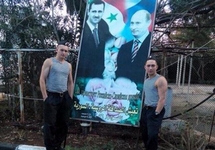
The government introduced to the State Duma a draft amendment to the law "On the status of military personnel", which prohibits the military on the media and the Internet "Information (including photos, video materials, geolocation data about themselves and other military personnel (military personnel - foreign citizens), which allows to reveal their departmental affiliation, information about their official activities or official activities of other military personnel (military personnel - foreign citizens), the activities of military (so in the original. - Ed.) Units, organizations and units in which military personnel (military personnel - foreign citizens) undergo military service, and the place of their deployment (location). " The document is published on the website of the lower house.
Exceptions from the rule are assumed only in "cases provided for by regulatory legal acts of the Russian Federation."
The document was signed by the Deputy Minister of Defense Nikolai Pankov. As stated in an explanatory note to the bill, analysis of the activities of the Russian army, as well as "other troops, military units and bodies", including in Syria, demonstrated that "military personnel are of particular interest for special services of individual states, terrorist and extremist organizations." The military publications in the media and the Internet are used "for information and information and psychological impact, as well as in some cases to form a prejudice of the assessment of the state policy of the Russian Federation."
Amendments, further saying in the note, are proposed "in order to neutralize the specified impact."
As RBC notes , such amendments to the legislation are not proposed for the first time. So, back in May last year, the Ministry of Defense prepared a draft law that obliges contractors to report on the publication of personal data on the Internet. In the fall of 2017, the draft of the new law was presented, which already suggested a complete ban on placing photos and other information on the Internet, allowing the military to track.
Publications of Russian personnel military, as well as mercenaries of private military companies in social networks provided invaluable assistance in investigating crimes in Moscow, in particular in Ukraine and Syria. So, largely thanks to these publications, it was possible to prove Russia's involvement in the blow to the Malaysian Boeing-777, shot down in July 2014 over the Donetsk region of Ukraine.