
Translated material
Media: In the case of the murder of the Skripals, four more suspects
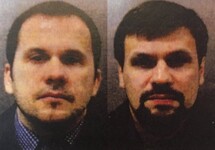
In the case of an attempt in Britain on the former GRU Colonel Sergei Skripal, in addition to Russian military intelligence agents, Alexander Petrov and Ruslan Boshirov, there are four more suspects, reports The Daily Mirror with reference to British intelligence sources.
It is claimed that Petrov, Boshirov and four more Russians were in a detachment of killers, known as "cleaners." The first two were the direct executors of the attempt, and the remaining four covered the operation: they followed the Skripal and his daughter Julia so that they would not appear at the house of the ex-intelligence at the time of applying the "newcomer" to the door handle, and in case of unforeseen circumstances to remove the poison under the guise of passers-by.
According to the newspaper, the remaining participants in the attempt flew to Britain on March 2 simultaneously with Petrov and Boshirov, but arrived at other airports. To enter the country, they used personality certificates with the data of prisoners in the EU prison, so they did not need to receive British visas.
Petrov and Boshirov, the publication said, before the attempt on the Skripals visited Britain several times, so their next arrival in the country did not cause suspicion.
On Tuesday, The Daiy Express said that Petrova and Boshirova identified the Russian agent -rebuke under the code name "Apollo" - an embassy employee in Rome, under a diplomatic cover, collecting secret information about NATO in Italy. For a few months, the Russian spy was transferred to the MI6 employee, taking advantage of the fact that the diplomat did not like Vladimir Putin’s course to confront with the West. In April, the Russian was taken to Britain in April, where he identified Petrov and Boshirov during the survey, and also provided British intelligence agencies with information about their real personalities (according to some reports, the names of the suspects - pseudonyms named by the British authorities).
On September 7, The Telegraph reported with reference to the British intelligence services that between November 2017 and February 2018 Petrov and Boshirov flew six times to Geneva. It was claimed that the important task of the investigation is to establish the identity of the one with whom they met there. In November-December, when the GRU agents were in Geneva, there was another round of negotiations on the settlement of the Syrian conflict. In addition to Switzerland, GRU officers visited Italy, and also flew to Paris - in total, by the time of the poisoning of the Skripals, they managed to make about 30 trips to Europe. After departure from London to Moscow on March 4, 2018, their passports issued in September 2016 were no longer used.
According to The Sun, Petrov and Boshirov were known to Mi6 as GRU agents before the attempt on the Skripals. It was claimed that the investigation did not publish the real names of the suspects, hoping that their individuals were identified by the Russian media. According to the newspaper, the suspects are in a special GRU unit, which specializes in dangerous tasks abroad, including murders.
British law enforcement officersrevealed the individuals of the two suspects in the poisoning of the Skripals on September 5. London issued the European Order to arrest them, valid on the territory of all EU members, and will also seek their search through Interpol. Britain is not going to demand from Russia the issuance of GRU agents, since the country's constitution prohibits the extradition of its citizens.