
Translated material
The fate of the Chekist
From the life of words
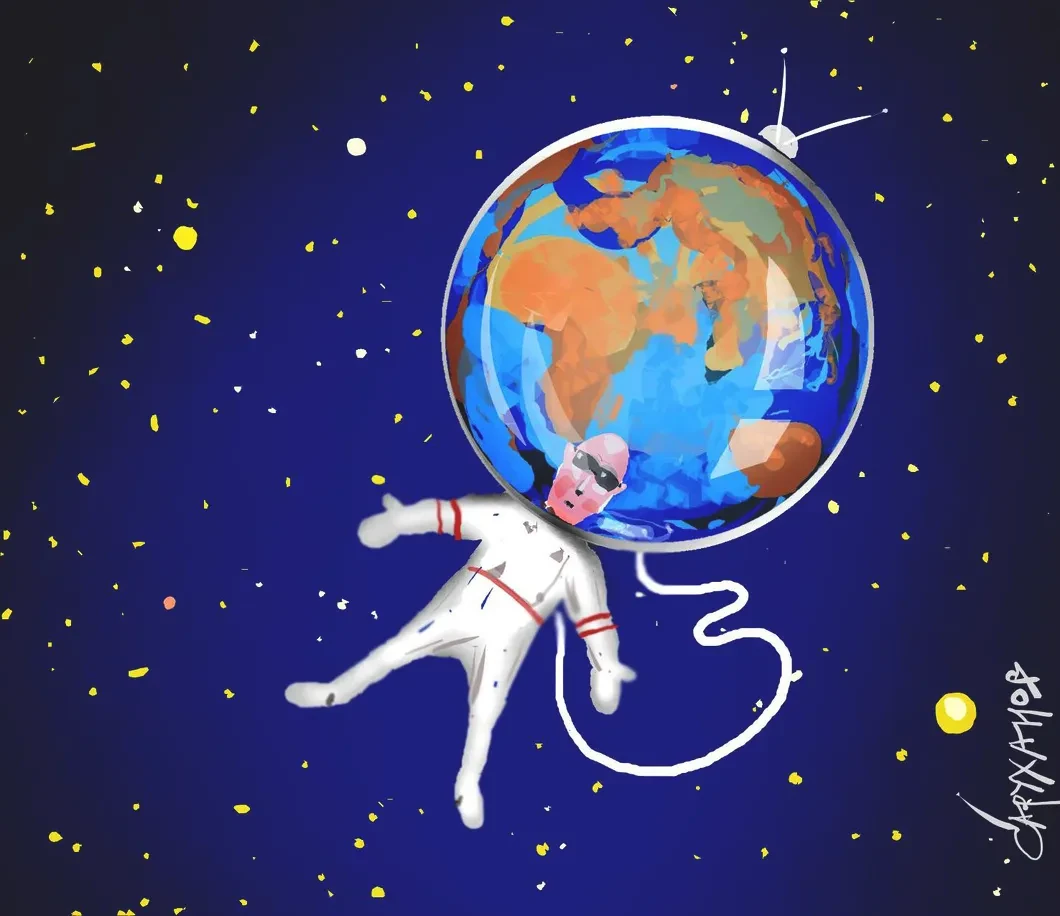
As a child, I learned that some words, like some people, can not only die, but also resurrect. Then the goalkeeper struck me, I did not yet know that he had been called a goalkeeper before. Only much later I heard a magnificent Old Slavonic root, and when he met me again in Belgrade on the sign “Molimo Close the Gate”, I immediately realized what they wanted from me and closed the doors.
Another example is werewilders. I thought that they were found only in fairy tales until they showed me the cottage of one policeman in the suburbs, who buried his golden toilet. Since then, I have been wary of folklore, and I am doing the right thing, for he resolutely crawls into a new life, taking the appearance of, say, trolls. Popular throughout the North, but especially in Norway, they meet and escort each tourist, like our nesting dolls. Preferring the familiar evil unknown, the locals adapted trolls for key fobs, figurines and children's toys. The trolls, of course, are shit, but according to trifles: either the keys will sleep, then the laces will untie, then rustle at night. But it is known who is to blame and what to do: to endure with a laugh.
Probably, you should behave like that with those trolls that they moved south and settled in Olgino. They can be recognized by dirty paws and spelling errors. Trolls, which were not distinguished by the mind in Pers Gunta, did not grow smarter at all, reaching the computer. And their repertoire is the same: lies and dirty tricks. Worse, now, reading nonsense, I am never sure if their living author or folklore character writes.
The history of the dead, living and revived words fascinates, demonstrating that each of them has different weight, pressure and influence. A classic example is with Sinyavsky.
“The revolution won,” he wrote, “because they usurped three magic words: Bolsheviks, advice and check.”
The first two disappeared without a trace in my time. Nobody ever asked for advice from us, and the nickname “Bolsheviks” lost all meaning after all the Mensheviks were shot. But with a check it is getting harder. The word, it would seem, went to the bottom and popped up in the memory of only previous generations, to which my grandmother, who used them along with the forgotten - “additional” and “gopnik”.
For us, the "Chekist" was a word that was not used from superstition. Our ancestors came in this way with a formidable bear, calling him euphemisms “clubfoot” or in patronymic - Potapych. That's exactly how we treated the KGB, replacing the abbreviation with a dimensionless word “organs” or even more air “you understand”.
Nevertheless, the Chekists, having served in historical and revolutionary militants, did not disappear from the language. They waited for their time, like dinosaurs from the “Jurassic Park”, and when it came, the zombie word reached the speech surface of the 21st century with the same sinister persuasiveness that was characteristic of the Chekists a century ago.
Why?
At the height of perestroika, when even the celestials infected the excitement of reforms, I was lucky to hear what Brodsky was thinking about them. On that day, he gave our colleague Ole Timofeeva the most outlandish interview of all that I read and heard.
Hard of the Scottish whiskey, a beautiful lady and a careful company, the poet poured aphorisms, shone with paradoxes, built and scattered geopolitical concepts and historiosophical hypotheses. He began by inviting the country not to call the alignment not the same, but with a new name: Stirlitz. Further - more.
“Previously,” he said, “everyone tried to implement the city utopia, it's time to try the utopia of the peasant.”
“Like in Cambodia,” I thought, but did not dare to kill the classic.
“And most importantly,” Brodsky spread, “you can’t miss the chance to use the secret police.” Until now, she defended the state from the personality. Now the grandiose material and human resources of the KGB should be directed, or as it is now called, to protect the personality from the state.
“But the KGB is the state,” was torn from me, but I again said nothing, fascinated by the scope of thought, bordering, as it still seems to me, with madness. Nevertheless, Brodsky’s “modest proposal” does not leave me alone, because it is distinguishable by that underlying thought that explains the resuscitation of the words and deeds of the Chekists. Unlike Komsomol christians, the Politburo, Stroyds and the Party in the singular, the Chekists are alive not only in Lubyanka, but also in the public consciousness, where they represent the power of powerful, dangerous and ambivalent, like atomic energy.
In essence, this is exactly what Brodsky had in mind, considering it possible, moreover, it is necessary to change signs so that the Chekists become "the power that always wants evil, but does good."
What a whimsical whim of genius it was this thought, it has less original in it than it seems to us. This can be judged by the authors who created the most attractive ideological system, which, perhaps, remained, despite the fact that they first called it communism, and a little later they renamed the world of noon.
I know arrogant readers who condescendingly consider the utopia of the Brothers Strugatsky to the sunny city of Dunno for senior, not younger schoolchildren. This does not bother me, but pleases, for it gives a chance to maintain the faith of youth in a bright future: the world without borders and money, where everyone is busy only with creative labor, remembering firmly that Monday begins on Saturday. I know that this does not happen, the Strugatsky wrote about it themselves, assuring that they came up with the world in which they dreamed of living. And they themselves explained why it is impossible. As soon as their science fiction has grown a little and moved from the "country of crimson clouds" to the ground, it turned out that the construction of utopia was interfered not by evil authorities, but by ordinary, very ordinary people.
“The main thing always remains on Earth, and I will remain on Earth,” says Ivan Zhilin, in the final of “interns,” the flight engineer of the spacecraft, in order to appear in a different capacity in the next book.
The new Zhilin, the main and only positive hero of the story “Predatory Things of the Century”, is a secret employee of the Security Council, designed to protect people from themselves, since, remaining unattended, they turn into a soulless herd.
And this is only the beginning. A secret agent of good is a Rumat from the story "It is difficult to be a god." In the “Inhabited Island” the most influential character is a wanderer, he is also Rudolf Sikorski from the Galactic Security Council of the Earth. In the initial version, this organization was called the Galactic Security Commission, but, having read the abbreviation, the authors forced to make a change, one of 896. Censorship, however, did not notice that the wanderer was not a negative character at all. On the contrary, only he is an adult in the world of evil and kind children. Only a wanderer, say, knows what inflation is and how dangerous the radiation starvation of people, deprived of a daily portion of propaganda. It is clear that it is he who falls out the role of a mentor of a wiped Cammer. In the books “Beetle in the Anthill” and “Waves, the wind is extinguished”, like Zhilin, returns to the Earth by a conspirate agent of all the same secret services, designed to protect humanity from the dangers of progress unknown to them.
All varieties of the secret police in the fiction of the Strugatsky play one role - the one that Brodsky dreamed of. The knights of good, protecting us from us. We know ourselves and guess how dangerous people are left to the arbitrariness of their thoughtless will and sinful temptations.
Behind all this is an unconditional reflex - fear of democracy. And he is quite understandable. Democracy is an experiment rare in the history of the West and did not exist in the past of the East. In ancient China there were a hundred philosophical schools, and not one thought of democracy. Brodsky explained - why, arguing about democracy in the country with a billionth population.
“What parliament,” he wrote in the essay “On the Dictatorship”, “would it turn out there and how many tens of millions of people would be in the minority?”
Democracy is really always dangerous. She killed Socrates, was delighted with Crimea, chose Trump and does not even promise to improve. But, having lived, like Jews in the desert, 40 years in the democratic par Excellence America, I know one thing: only democracy, periodically and peacefully changing the authorities, forces to move tacks, and not directly turn into an inevitable dead end.
The same Brodsky wrote about this:
The empire looks like a trirem
In the channel, for trime is too narrow.
Rowers pound with oars by land,
And the stones strongly tear off the side.
New York