
Translated material
Mecca of constancy
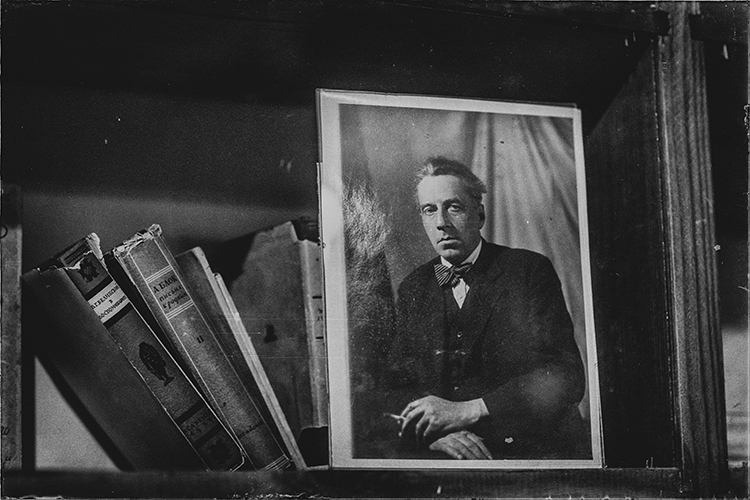
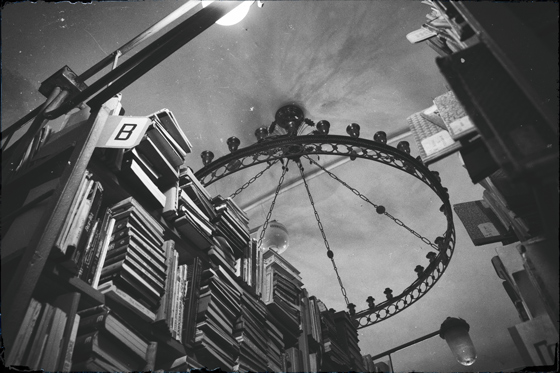
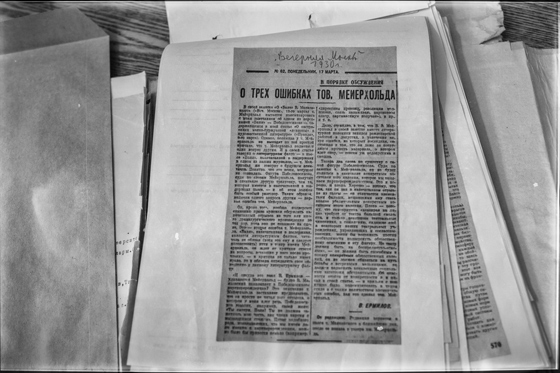
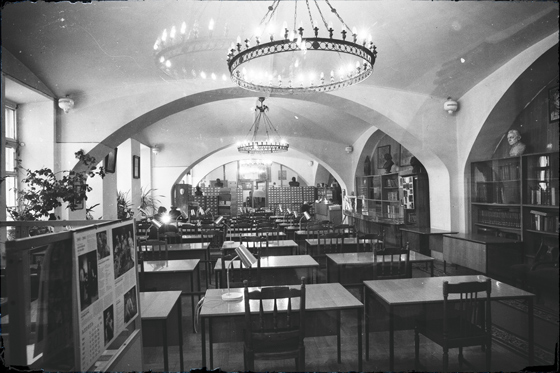
The first from the time of the “Jubilee Group”, the Moscow project of Semyon Aleksandrovsky was founded, albeit remotely, at a real event: when Vsevolod Meyerhold was arrested, the WTO library (now - STD), risking everyone, retained its archive. The performance called “Time” is in the reading room of the same library, and during working hours: readers do not mind, because, in essence, this is the radio floor that you listen to in the headphones. The library is not only the scene of the performance, the main place of its action and the subject of thoughts of heroes. This is also an idea that sets the direction of directorial thought.
1.
Asya Voloshina wrote a play for the project (she has a second Moscow premiere for the season: the “man from fish” has just been released in the Moscow Art Theater in the production of Yuri Butusova). Almost the entire text is two female monologues: one dated 1939, the other is 2018. The first heroine, Mila, is the “ideal Soviet girl”, who had just entered the theater in GITIS and observing local freedom with horror. The second, Vita, her great -granddaughter, - the photographer, often says “Case” and “Trauma”, lives in Prague and dreams of a four -month residence in Switzerland.
 © Alexandra Muravyova
The plot is almost detective: the modern heroine comes to Moscow to bury a grandmother and finds a page from her mother’s diary, marked with a library cipher. Inquiring her own mother about the great -grandmother, Vita will be surprised to find out that she had passed the Gulag - they never talked about it in the house. Having decided to restore the family history (and then make the exhibition from the study), it comes, in fact, to the Library of the STD - and finds the diary of Mila, who has been stored in the fund all these years. It becomes clear little by little: for which the theater-year-old-year student was arrested, how her notes got into the library, who was the great-grandfather of Vita and, finally, what the director Meyerhold has to do with their family tragedy.
Having made the heroine a student of GITIS, Voloshin (the theaterman by education) was able to connect the history of private people with the history of the theater, and at the same time justify the quote from Hamlet, which serves as a refrain of the whole play. The one that is about the connection of times is natural.
The prime minister is dedicated to the memory of Dmitry Brusnikin-he managed to record a small but vivid role of the theater-professor. In general, the voices here are the first magnitude: Vitu is voiced by the Prima of the Pos theater Alena Starostin, her young great -grandmother - Maria Krylova from the Brusnikinites, her, but in old age - Natalya Tenyakova, and Vita’s talkative interlocutor from the library went to the unique timbre of Nikolai Marton.
 © Alexandra Muravyova
2.
“Time, which” is a project from the category of “secret performances”, like any series of the Great Theater Franchise “ Remote X ” or the recent “etique” Fedor Elyutin : it is when you watch a performance in a public place, but people who are there, do not see any performance (usually headphones use the headphones for such a focus). “Secret performances” is an attractive thing. Firstly, this is a way to survive the ordinary situation in a new way. Secondly, the general secret brings the audience closer to the authors and with each other, creates confidential, in a sense, even intimate relationships.
The performance is a tool of public loneliness, a way to cut yourself off from others, to be at the same time with them and not with them.
Aleksandrovsky has already worked in this format. Two years ago, he came up with a “other city”-a walk in St. Petersburg, called a noise of some other metropolis: you can choose Amsterdam, Paris or Venice. A year later, the project “With Charles Bukovsky behind the bar” appeared - a radio review for the late works of the writer, who needs to be listened to in a particular bar on Rubinstein. But the Moscow Prime Minister is not quite the same.
 © Alexandra Muravyova
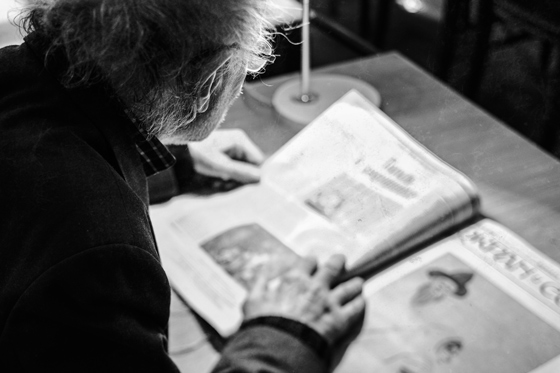
Usually, when you are called for the performance in a restaurant, or a park, or another public place, you have to use it somehow in a special way, not as normal people do. This time Aleksandrovsky acts differently - he is not introduced into someone else's environment as a scout, but accepts her rules as a guest. The viewer should use the library for its intended purpose - find a card with the name of the performance in the catalog, rewrite the article to a special form and get a real archival folder with a small player and headphones at the issuance stand. By the way, in a single copy - that is, the performance can only watch one person at the same time.
If you think about it, the reading room is the most natural place for a “secret performance”, since any library is a collection of “secret performances” in itself: you call a password-and you are discovering access to a special experience that other visitors will not receive (they will receive any other, which you will not have). It turns out that the director was simply obliged to make a project in the library sooner or later - after all, his favorite theatrical format “Ready Location + Headphones” has so much in common with the book: this is also a tool of public loneliness, a way to cut himself off from others, to be with them and not with them.
 © Alexandra Muravyova
3.
“Time, which” is a performance about the resistance of time: not only an era, but also time as such. In the introductory monologue, Vita discusses how differently the diaries and social networks have replaced them: they say, Facebook posts are for now, and diary notes are for history. The director himself is puzzled by the same question: in fact, he decided to reconsider his own relationship with time. To transfer your work from the category of momentary to the category, if not eternal, then at least durable.
The new work of Aleksandrovsky challenges the main law of the theater - the law "here and now." She can live for decades, not changing: after all, nothing will happen to the sound path, and the library is a relatively stable place (“Mecca of constancy”, as the interlocutor of Vita, the reader-zeal, voiced by Nikolai Marton).
To get a library card for the performance was a brilliant idea. A piece of yellow paper, tightly strung on the pin of the catalog box, is practically a ticket to eternity: the imagination draws the theater, who, after some twenty years, is looking for “time that” among other names on “BP”. I am sure that the director had the idea that cards in the library catalog - the complete opposite of theatrical posters, which simply, because of their nature, never lingered for a long time.