
Original Material
A military expert explains what could have led Syria to shoot down a Russian warplane
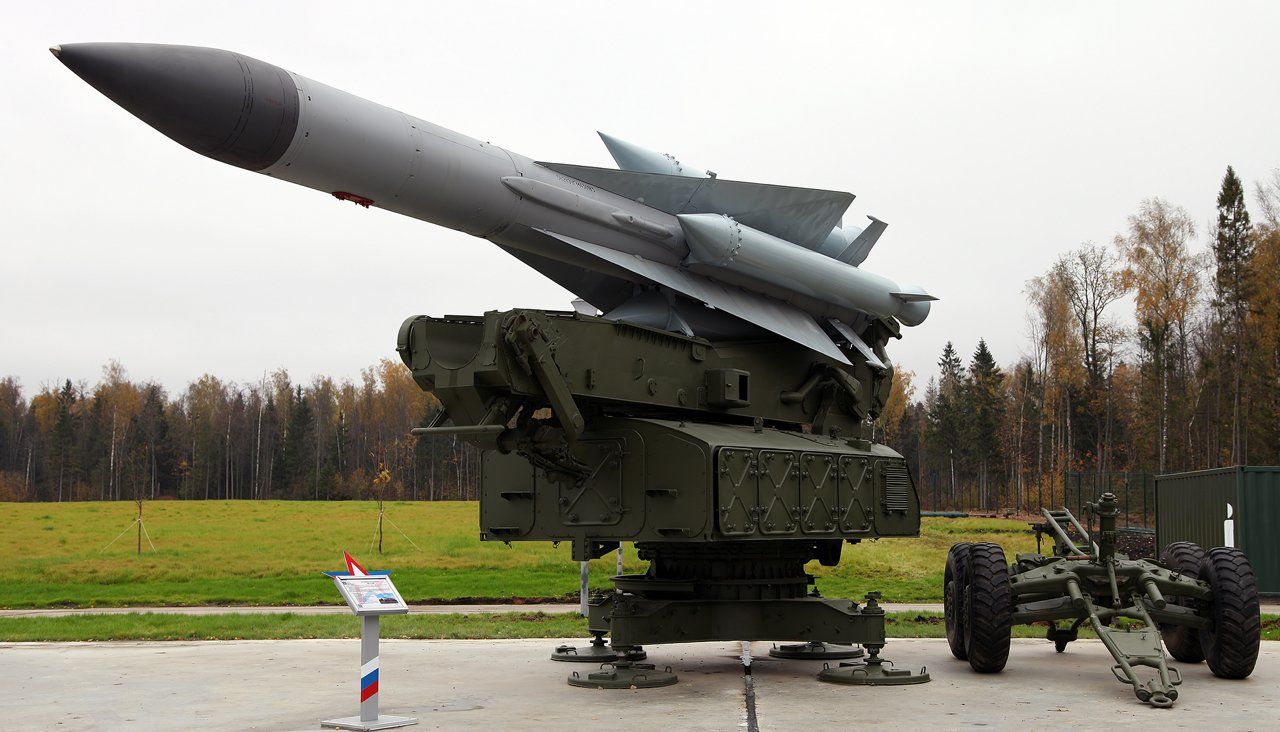
Before dawn on September 18, Syrian air-defense forces shot down an Ilyushin Il-20 Russian military surveillance plane over the Mediterranean Sea, killing all five servicemen aboard. Russia’s Defense Ministry later blamed the incident on the Israeli Air Force, which earlier that night carried out airstrikes against multiple targets on the Syrian coast. According to Moscow, the Syrians were aiming for an Israeli F-16 jet and accidentally hit the Russian aircraft. Israel, meanwhile, says its planes were already back in Israeli airspace when the Ilyushin Il-20 was shot down. At Meduza’s request, Gazeta.ru military analyst, air-defense specialist, and former Joint Staff employee Mikhail Khodarenko explains how the Syrians could have destroyed an allied warplane.
All this happened because Syria’s combat crews didn’t actually know the situation in the airspace above the battlefield. And it was of course due to the fact that they committed a whole series of live-fire mistakes. Most importantly, when acquiring a target, they should have carefully determined its nature and statehood. Apparently, this wasn’t done. They also should have determined its coordinates, and obviously they didn’t do this, either. Carrying out live fire without this data is impossible.
Because the S-200 missile system has certain features, we can hypothesize about what might have happened. For example, these missile systems are perfectly capable of firing based on what is called monochromatic-radiation mode, which does not determine the distance to a target, and acquisition and destruction occurs entirely through angular coordinates. The target-indication screens on S-200s are very small — no bigger than a matchbox. Without precise information about the distance to a target, mistakes are possible. To change the firing mode to determine the target’s distance, you must select the “range ambiguity” option. But this takes a certain amount of time, and the Syrians apparently were in a hurry to fire their weapon, so they didn’t bother checking the range. They opened fire without understanding whom they were targeting.
It’s also possible that the rocket’s homing-system failed, sending it into frequency-search mode and leading it to lock onto a nearby object with the largest reflective surface — in this case, the Ilyushin Il-20. We can’t speculate about a friend-or-foe identification system, because we don’t know if one was installed. And we have absolutely no clue if the combat crew activated it.
At the end of the day, we simply lack sufficient data to form any serious hypothesis. In fact, other than anti-aircraft fire and the plane’s destruction, we know nothing. But this was likely a mistake by specific people on the combat crew: the group’s commander, the target-acquisition officer, the guidance operator, and the launch officer. The equipment, as a rule, was probably not at fault.
Whose version of events is more believable? Russia’s or Israel’s? Well, let’s start with the question: Who shot down the plane? It wasn’t Israel, after all, but a Syrian combat crew that made a mistake, didn’t understand what it was doing, and destroyed the wrong target. But if Israel had warned Moscow earlier about its actions, [Russia] would have probably withdrawn its aircraft from the active combat zone. So indirect fault lies with the Israelis, as well.
Comments recorded by Irina Kravtsova, translation by Kevin Rothrock