
Translated material
The amount nine times exceeding the GDP of Estonia
The head of Danske Bank resigned due to a scandal with money laundering from Russia and the former republics of the USSR
On Wednesday, in the main office of Danske Bank in Copenhagen, a press conference was held, where the results of an internal investigation were published. According to the leadership, about 200 billion euros passed through the Danske Bank branch in Estonia - mainly from Russia and the former republics of the USSR. Bank CEO Thomas Borgen announced that he resigned and would leave as soon as he was found a replacement.
Background
Claims to Danske Bank from the Estonian financial inspectorate began in 2014: according to law enforcement agencies, many transactions did not correspond to the “risk control procedures”. After that, the bank began to gradually close suspicious accounts - this led to the fact that in 2015, Danske Bank, in principle, stopped serving non -residents.
At the end of May of this year, the financial inspectorate published a report, which stated that in 2011-2016 more than 13 billion euros were washed through the country's banks. Basically, the money was withdrawn from Russia, as well as Moldova and Azerbaijan - as a rule, they went through non -residents and settled outside Estonia. The names of specific banks did not appear in the report, but that Danske Bank at least partially participated in the mentioned schemes was known from previous investigations.
Two months later, at the end of July, the Prosecutor General’s Office of Estonia began a criminal investigation at the request of the head of the Hermitage Capital investment fund William Brauder against Danske Bank. According to Brauder, more than $ 9 billion was washed through the Estonian branch of the Danish bank: 26 bank employees participated in the scheme, who “covered” illegal transactions.
New details in the history of Danske Bank appeared in September: The Financial Times, with reference to the audit company, Promontory Financial, wrote that in 2013, $ 30 billion Russians and residents of former republics of the USSR passed through Danske Bank. The interlocutor of the publication from the auditor noted that not all transactions from this volume are suspicious, but the amount itself is “amazing for such a small compartment” and “raises questions”.
The results of the investigation
In the summer it was also announced that Danske Bank is conducting his own internal investigation, the results of which will be announced in September. During the current press conference, the Bank CEO Thomas Borgen said that about 200 billion euros (or $ 234 billion) passed through 2007 to 2015-mainly from Russia and the former republics of the USSR.
For comparison: this amount exceeds Estonia GDP by nine times, which can no longer but cause suspicion.
However, which part of these funds was washed, and which was the usual transactions, the report that summarizes the results of the investigation is not said.
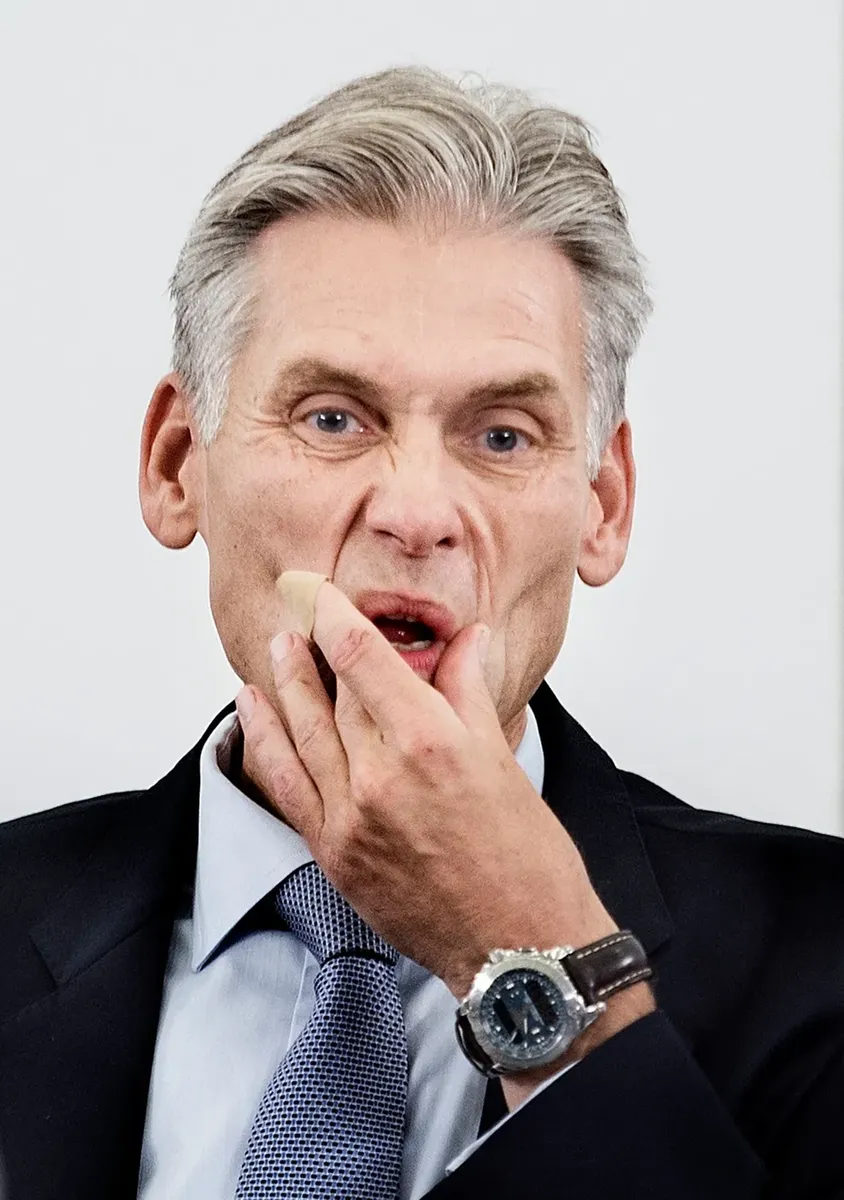
According to the report, about 15 thousand accounts opened in the Estonian department participated in these transfers, of which 6,200 have “high risk indicators”. It is also noted that the Estonian law enforcement agencies were informed about the suspicious activity of the owners of these accounts.
“It is obvious that Danske Bank failed to cope with the responsibility in the fight against money laundering in Estonia,” said Thomas Bergen during the press conference. “I am deeply regretting it.” According to Bergen, during the investigation it was found that he personally competently performed his duties. At the same time, he believes that in this situation his resignation will be “better for all parties”.
According to the investigation, the leadership of Danske Bank also decided to send revenue from all dubious transactions of the Estonian branch (this is about 200 million euros) to a special fund, which will be established to combat money laundering and financial crime.