Translated material
Eg and Requiem
A review of the book Lyali Kandaurova “Half an hour of music. How to understand and love the classics "
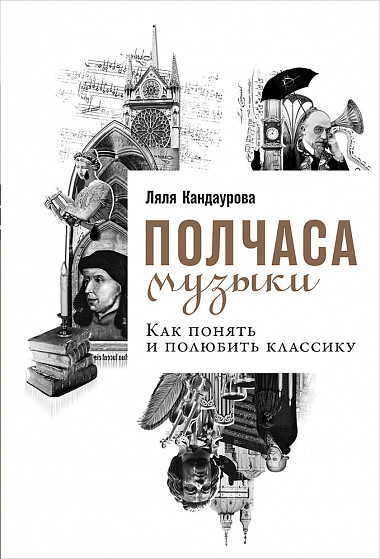
There are not so many good scientpop, dedicated to classical music in Russian - and a new book with the nasal name “Half an hour of music. How to understand and love the classics ”is just one of those publications that can be safely recommended to those interested in this topic. At the request of Gorky, Maria Nesterenko tells about her.Lyalya Kandaurova. Half an hour of music. How to understand and love the classics. M.: Alpina Plisher, 2018
 The work of the popularizer is not easy, unless, of course, this is the case when the public is offered a retelling of an article from Wikipedia. Real popularizer article or lecture - subtle work, which involves familiarization with a large array of research and Translation s scientific language on available to everyone. In addition, this is the ability to adapt to the audience. Especially when it comes to Such a difficult object as music, the understanding of which really needs to be studied on purpose.
Books by music stories generally do not come out as often as I wanted would. AND Most of them (if we We say about Books for adults) are intended for a more advanced listener: the books of Alex Ross, the Muzprosvet Andrei Gorokhov, who instantly became the rarity of Olga Manulkina's book about American music, magnificent biographies of Beethoven, Haydna and Gluck Larisa Kirillina in series ZhZL. However, where to go to those who only get acquainted with history and language of music? On Memory comes the monologue of Irakli Andronikov “ The first time on stage " , a fragment where Ivan Ivanovich Solletinsky tells young Andronikov about his predecessor: “ Recently, a symphony matinee for Leningrad schools was planned ... but By The mistake of the tickets fell into Academy of Sciences, and Instead of the smallest, our dear Mafusailes came. About my assistant found out about this Five before concert. And no Having < ... > the ability to take into account the requirements of the new audience, he He told the academicians and Corresponding members that the creak - This is a box, on which tenses are stretched, and By they drive them with hairs, and They squeak ... "
Jokes in side. New book of a music journalist and Popularizer Lecture Lyali Kandaurova “ Half an hour of music. How to understand and To love the classics ” is the best suited to make up for this gap. It is intended just for those who already know what a violin is, but to Academicians are not yet Perminent.
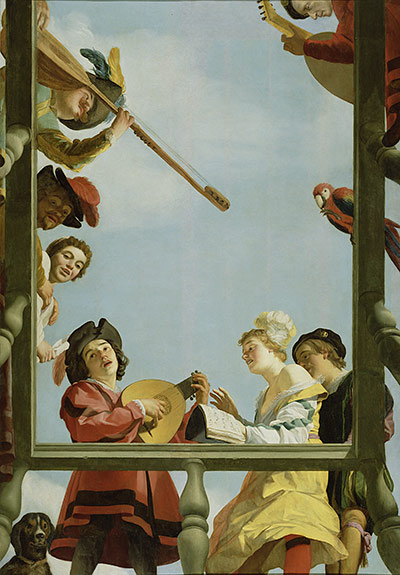 Herrit Van Honthorst. Musicians on the balcony, 1622
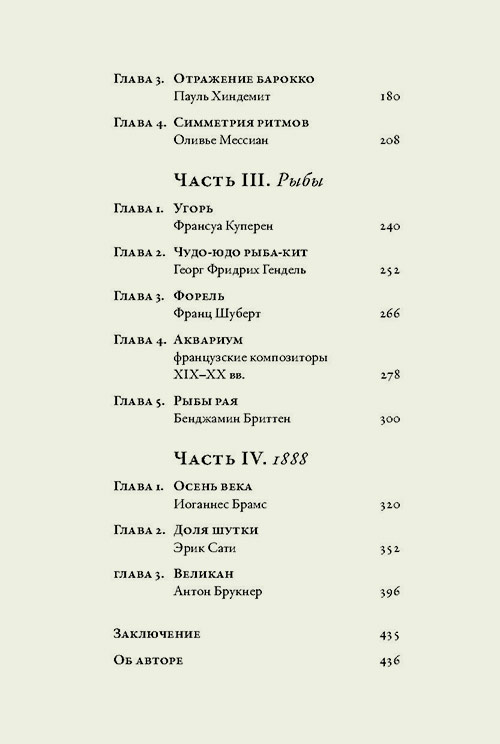
The heads of the book are collected in four thematic parts; Inside each of parts of the work follow in chronological order. Topics of parts - the story of one genre ( “ details ” ) or one image ( “ fish ” ), one and that the structural feature in music of different eras ( " symmetry " ) and Three opus-one ( " 1888 " ). Although the author is stipulated in preface that this is not Textbook by music stories, but All chapters together represent a voluminous picture of the history of music through the genre, structure, history of the occurrence of plot music.
Take, for example, the chapter about Requiem. Kandaurov is not Afraid of strange, on First glance, rapprochement. Talking about the stories of the requiem, she is not just sets out the history of the genre and His difference in Different eras, but And Makes significant chronological jumps. So, nearby turn out to be Okeghem (ancestor of the genre) and Avangardists xx centuries: “ They Dear love to constructive beauty of music, uncompromising intellectualism, gambling interest in polyphony and The effects of musical time. Austrian avant -garde player Ernst Ksestek in 1953 wrote a brief biography of Ocegema, for which was followed by a number of publications and executions of his works. " Sudden rapprochement show the reader that genres and Forms of music - The essence is not frozen forms, outdated their own. IN article " Word and Culture ” Osip Mandelstam wrote: “ Often you have to hear: this is good, but This is yesterday. A I I say: yesterday's not yet was born. He is not yet It was truly < ... > . It seemed would - read, and OK. He overcame, as they say now. Nothing of the kind. Silver Pipe Katulla: AD Claras Asiae Volemus urbes. " The poet says about literature, but That the same can be safely said in this case and O music.
These adhesions of different eras are extremely important for the book, and Sometimes the author makes long retreats to talk about one work. For example, about Require " Avangardist-single " Hans Werner Henze: Kandaurova makes a great retreat about serial music, without which it was it would be impossible to understand the place of Henz and His requiem. Author, no Pushing in Technical details, explains what, the pioneer of this method Arnold Schenberg was made: he “ rebuilt the very design of music and Estimated from her piles driven into XVII V. And stood so unshakable that in our minds The presence became equivalent to the concept of “ music” as such. Melody s accompaniment, harmony and rhythm, “ Theme of love” and “ The theme of rock”, dramatic climaxes and The reprisals seem to us for the indispensable criteria for the “ normality” of music. But It turned out that you can make sure that neither one of These categories are not will be, a music “ There will remain, fastened tightly to a set of completely different patterns. ” It turns out a successful translation from language of music on It is clear to everyone.
Further, Kandaurova tells about famous " summer courses of new music " , all in order to show the amazing ups and downs of the musical movement of Henz, his complex relationship with romantic music and Finally get to Requiem itself. The author quotes the words of the composer himself: “ In This essay is my theory and my ideal interchangeability of vocal and Instrumental music found the most complete implementation. ” So, through the story about formation, apogee and the reader will learn the mutations of the genre and O context (not Only musical, but And historical).
The second part of the book is devoted to the structure - Symmetry in music: “ Symmetry involves the proportionality of parts by Both sides of a certain center, a So we are We are already reasoning about " Middle axis", " sides" and " Borders". Interestingly, the musical symmetry is particularly involved in Works, non -gram in strict sense of the word, then There is no having a plot canvas. " On simple examples of Kandaurov explains what polyphony, counterpoint and how is the Renaissance music different from All that was later, she " is more difficult to " whistle ". This is not happening because it is better or worse: the difference in the principle of her devices. Renaissance music is predominantly polyphonic. This means that “ running lines” in There are several at once - Three, four, five, six or even more, - and each Your text, and, besides them, often there is nothing. ” On Such simple examples explain the complex mechanics of music. Among the heroes of this head of Bach (where in This case without him!), Chopin, Hindemit, Messian.
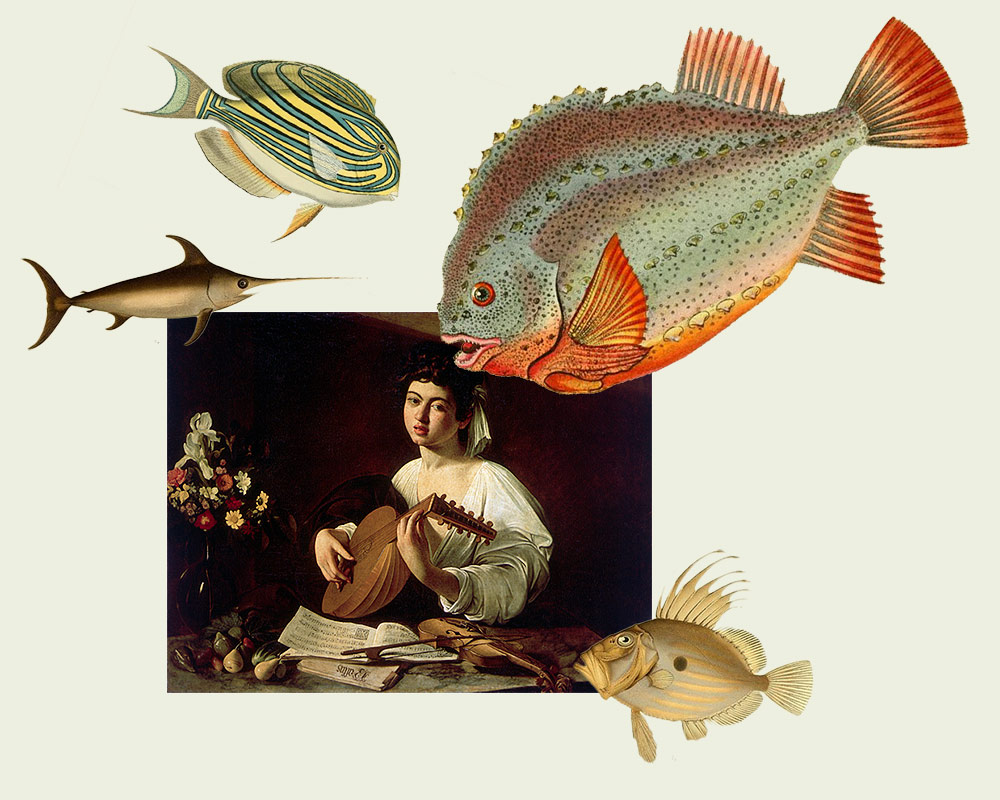
The most intriguing chapter for the reader will surely become “ fish ” : “ Inhabitants of the abysses, transparent lakes and Aquariums: K. The music has repeatedly turned to the heroes of the water element, then Watching their exotic beauty, then Using as a horror story or allegory. IN this chapter - opera, song, harpsichord fish of all species, from French baroque before Xx centuries " . So Kandaurova carefully begins a more specific story about program music: “ Cooperen claims that “ always had in species a certain plot ”, composing their plays, - That Each has a program and for she is a certain image that is made in title ". The author tells about some technical features of the Baroque music: “ The main feature of the harpsary music of French Baroque - And Music Curls in particular - There are lemon balm: sound " jewelry" from Very small notes, swearing the main sounds of the melody. ” How This is due to " Ugra " Cooper? Kandaurova writes that “ a comparison of snaking melodic moves in " Ugra" p flexible fish body, ribbon curly among stones and silt "can be extended to All Baroque music.
1888 is interested in the author of the abundance of what happened in the world of events, but the heroes of this chapter were composers, completely not Similar friend on Friend: " Antipodes-symphonists " -Johannes Brahms, tragic Anton Brookner, known primarily as the creator of the “ fatal ” 9th symphony, and Also Eric Sati - The forerunner of minimalism, together they are the predecessors of " almost everything that happened to music in Not yet coming XX. "
An indisputable plus of this book in that Lyalya Kandaurova avoids attractive and famous plots (even in Stories p Mozart the author writes about " Under " of this myth, and Not Refereing about genius and villainy), focusing on names may not so well known to the ordinary listener, not Bypassing at the same time the “ milestone ” like Schenberg is important. It seems extremely correct episodic input of the chronological " nonlinearity " of the narrative, this makes it unlike textbook. However, in an amazing way, the chapters together reconstruct the overall picture of the history of music.
______________________________________________
1/2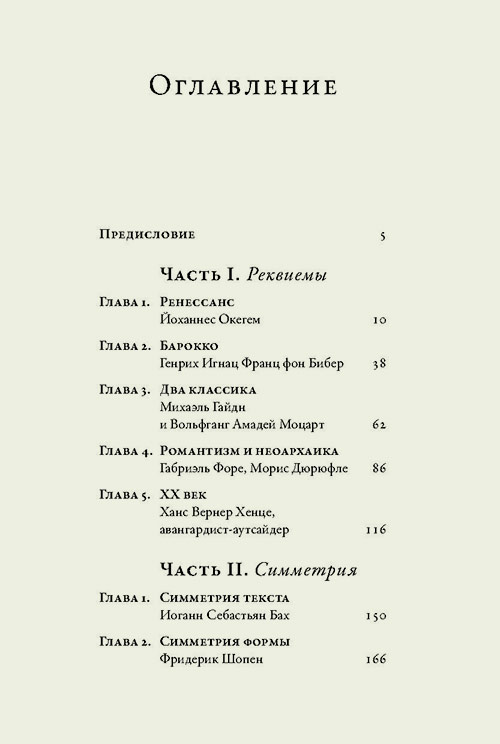 2/2
2/2