
Translated material
Skripal handed over to the British foreign intelligence of the MI6 compromising evidence for senior officials of Russia from Putin, including Patrushev
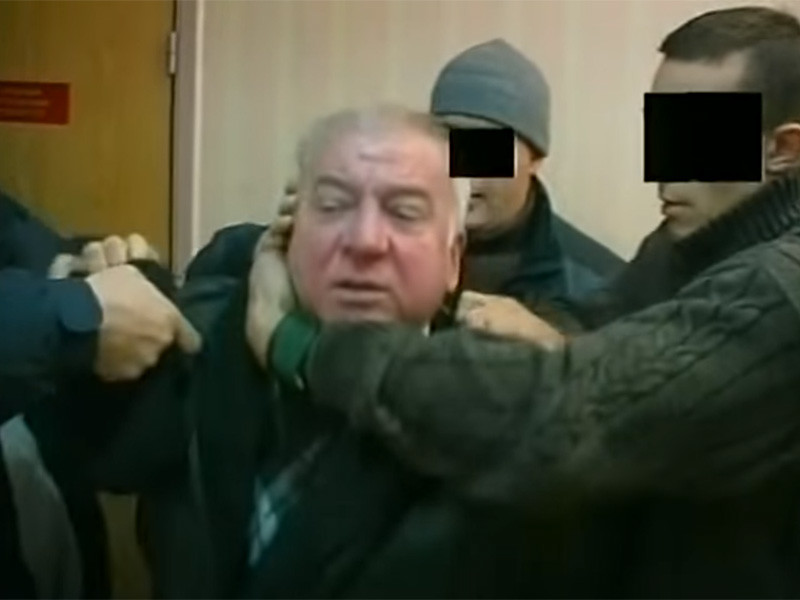
The former colonel of Russian military intelligence (GRU) and the former double agent Sergei Skripal, who in March 2018 tried to poison the novice "Novice" in the British Salisbury, transmitted information about the corruption scheme that operated in the highest echelons of Russian intelligence by British foreign intelligence.
According to The New York Times , referring to a new book about espionage, which goes out of print on Tuesday, October 2, Skripal spoke about this scheme in last year’s interview and military observer of the Air Force Media Corporation Mark Urban, who wrote a book about spying after the Cold War.
According to Skripal, information about corruption at the highest level was strictly classified. He said that the Navy officer, who served with him in Russian military intelligence and, like himself, was caught when transferring information to Western special services, was found dead in 2004 in a military hospital after interrogation by Russian intelligence.
Apparently, he was strangled. The official version was suicide, but several of his fingers were cut off, which unmistakably guessed a terrible message.
As Deutsche Welle notes, British intelligence concluded that Skripal escaped the same fate, because during interrogations in Russia he did not mention the corruption network, which leads directly to Nikolai Patrushev, the former director of the FSB of the Russian Federation, the current secretary of the Russian Security Council and the close ally of Russian President Vladimir Putin.
Excerpts from an interview with Skripal are given in the book by Mark Urban “The Skripal business. Life and almost the death of the Russian spy” (The Skripal Files: The Life and Near Death of a Russian Spy). They do not contain an answer to the question why Skripal tried to poison, but draw the most complete picture of his life as a Russian spy and British intelligence informant, writes The New York Times.
Skripal was deeply disappointed with the collapse of the Soviet Union and felt aversion to President Boris Yeltsin. He told Urban that he managed to avoid taking the oath to allegiance to the Russian Federation.
In 1992, he asked for a meeting with the GRU Russian military intelligence general and tried to transfer a resignation statement, explaining this by the fact that "does not want to serve the new government." However, this agency needed qualified officers so much that the Skripal’s statement was not accepted by offering him a “warm place” in Madrid, the article is indicated.
In Spain, Skripal was supposed to support the sleeping cell of agents that could be needed in case of war. In 1993, after the accelerated course of the Spanish language, Skripal and his family left for Madrid and took there the conditional position of the Secretary of the Embassy in Science and Technology. It was there that he became the target of Mi6, desperately trying to find the ways in the GRU. In 1996, at the end of Skripal’s stay in Madrid, a young British intelligence agent under a fictional name Richard Bagnell came to him. According to Skripal, in Madrid he had already thought about living abroad, establish business contacts, earn money and then, perhaps, leave the GRU. Therefore, he agreed to become an informant Mi6.
Soon, Skripal handed the British information about systematic corruption at the GRU headquarters in Madrid, which arose when the discipline of the Soviet era was weakened.
He revealed the MI6 of the individuals of some officers who purchased at high prices or invented fictitious costs of expenses, after which they distributed the funds received among senior officers who covered them.
The British authorities used the information received from Skripal to help Spanish intelligence recruit an Navy officer - the same person who was found strangled in a hospital bed in 2004.
The book claims that Skripal curators in Mi6 offered him refuge, but he decided to return to Russia, where he was arrested two months later.
During several interviews with Urban, which lasted about 10 hours in total, Skripal said that he was afraid of his safety after the book was published. “This is because of Putin,” he said to Urban. “You see, we are afraid of Putin.”