
Translated material
Russians will pay more energetically
The government proposes to introduce the social rate of payment "For the Light"
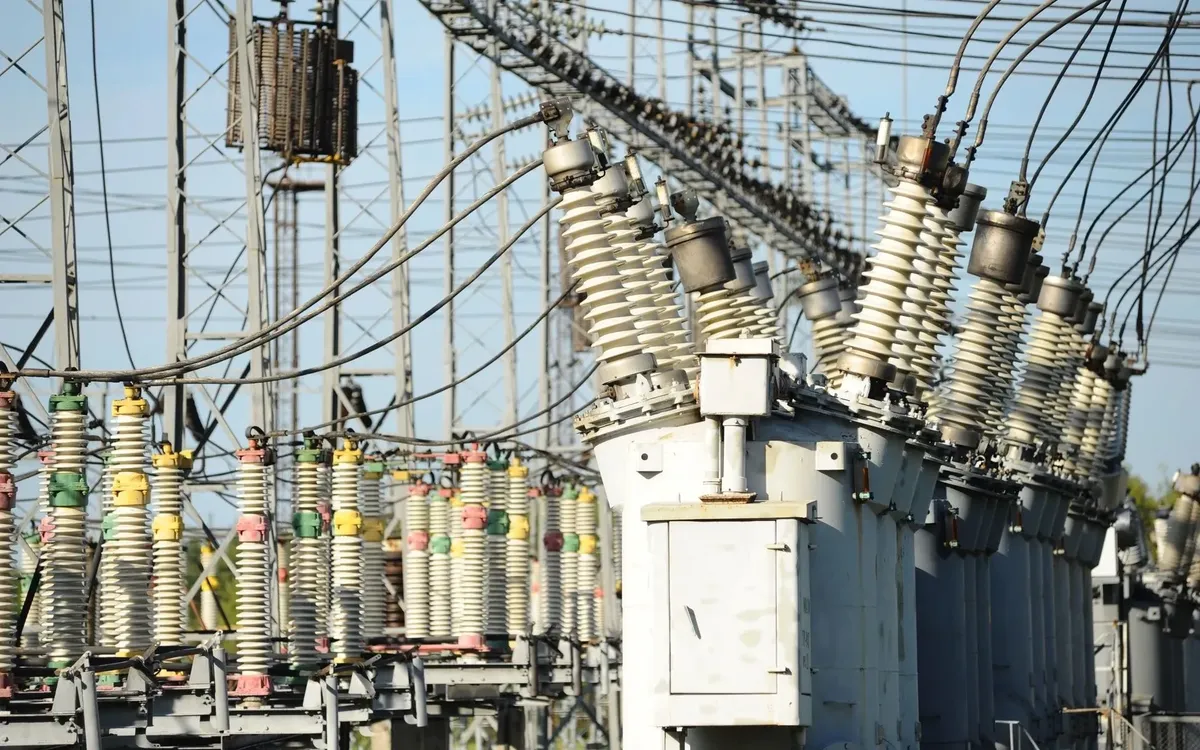
The government returned to the idea of reform of tariffs for electricity, which introduces the concept of “social norm” of consumption for citizens. Exceeding this norm will lead to a sharp increase in tariffs. The supporter of the reform is the Deputy Prime Minister Dmitry Kozak, who oversees the TEC and industry in the current office. “The Deputy Prime Minister Kozak supported the proposals of the Ministry of Economic Development and the Ministry of Energy regarding the consumption rate, however, specific parameters of differentiation of tariffs are still being worked out, the relevant order is given,” Ilya Jus quoted, press secretary of Kozak, TASS.
The fixed norm will be 300 kWh per month and will be paid according to the standard tariff, and the excess of this limit will transfer the consumer to an increased tariff. The norm will be calculated by household, and not per person, as is done now. Attempts to introduce a social norm have already been made in 2013-2014, says economist Sergei Kondratyev, head of the industry and infrastructure sector at the Institute of Energy and Finance.
“For several years in a number of regions, for example, in the Nizhny Novgorod and Oryol regions, there are already energy consumption standards for the population. They are differentiated. Local authorities have the opportunity to choose what norm of social consumption, ”he says.
According to Kondratyev, increased tariffs outside the social center are close to the fact that small businesses pays, and is really significantly higher compared to the current electricity price.
Economist Natalya Zubarevich sees in the draft reform both the pluses and obvious disadvantages for the population. “From the point of view of the consumption of the rich and the poor, this is rational. Those who have large cottages or large houses and apartments will not be subsidized at the expense of the rest. On the other hand, for the poor and for less wealthy now, it’s not the best time to introduce such a fixed norm, because the income of people fell for four years, the majority of the population with money is bad, and additional expenses for excess energy consumption are a cargo for households, ”she says.
In addition to the number of people living in the region, an important factor in the differentiation of tariffs is the presence of an electric stove in the household, Kondratyev notes. Zubarevich also says about this: “It all depends on the fact that people in the kitchen: gas or electric stove. This must be taken into account, because, of course, electric stoves consume more electricity. If the tariff does not consider this, it will be wrong. ” The difference in tariffs, depending on the region, also affects the size of payments for residents of different regions. Today's division of tariffs into the socialist and excess affected only some regions and “actually means that there is additional inter -territorial subsidies,” Kondratyev believes. That is why the desire to introduce a single tariff for the whole country can be the right decision.
However, in this regard, a number of difficulties arise: if in some regions the socialist can be 60–70 kWh per person per month, then in the same Oryol region this norm is in the region of 200 kWh per person per month, Kondratyev explains. Due to such differentiation in some regions, almost the entire population will fall under the social norm, and in others the majority will have to overpay. “In fact, this means simply an additional increase in payments for the population,” the economist claims.
Natalya Zubarevich considers this problem “differentiation for territories and even houses using electric stoves and gas plates”, since residents of many regions simply do not have access to gas: in the same Krasnoyarsk Territory, an extremely low level of gasification. “Residents of houses with electric stoves do not have much choice: they usually do not have access to gas in an apartment building or in rural areas. If tariffs are increasing for them, this will mean a very serious increase in electricity payments, ”Subarevich Kondratyev was in solidarity.
The project of the energy tariff reform also provides for the gradual abolition of the lowering coefficient for residents of villages and households with electric stoves or energy -fluid, which means the loss of benefits for these residents. Residents of rural areas, usually earning much fewer citizens, will be forced to pay at the same tariffs. Often residents of the villages fall under the category of households using heating devices, which additionally increases their payments.
In addition, many regional budgets have no great opportunities for the provision of subsidies for citizens who need them. “This is a difficult problem that can reach the federal level. I think that the changes in the current regulation system should be approached very carefully, ”Sergey Kondratyev concludes.