
Translated material
Society for everyone
The government develops a draft reform of tariffs for electricity, primarily for the population. We are talking about the idea of introducing the social norm of energy consumption, which was already discussed in the first half of the 2010s, but has not been introduced. Deputy Prime Minister Dmitry Kozak, as Kommersant writes on Tuesday, has already suggested that interested departments prepare regulatory documents until mid-January.
In accordance with the scheme, which is now being considered in the government, the social rate of energy consumption is recorded at the mark of 300 kW per month. If it fits into this value, it is paid at the basic tariff, and if not, then for increased. And if consumption exceeds 500 kWh, payment occurs at an “economically reasonable” tariff.
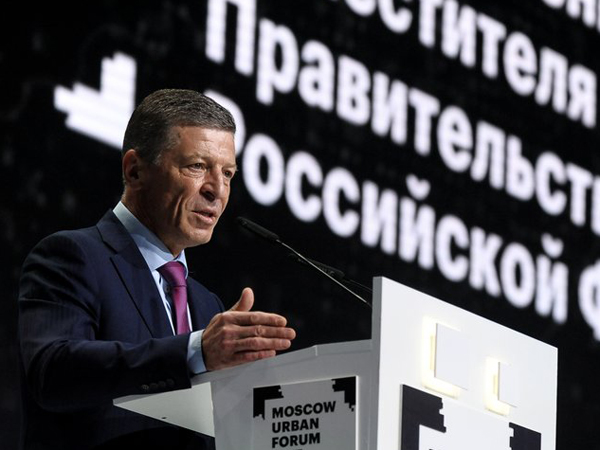 Dmitry Kozak Avilov Alexander/ AGN "Moscow"
If such a reform option is adopted, then in the socialist will almost automatically lay down, for example, single pensioners and generally small families. With an average size of households of 2.5 people and average consumption of 220 kW · h per month, most households should be in the socialist.
In 2013, during the discussion of the previous version of the reform, it was supposed to introduce the consumption rate not on the “connection point”, but to the person. True, the norm was much lower, in different pilot regions it amounted to 50-190 kW per month per person.
The office of ministers also discuss, for example, a possible gradual abolition of preferential tariffs for residents of rural areas, as well as for apartments with electric stoves or electric shifts. Also, benefits can lose gardening and gardening partnerships, garage cooperatives, households (for example, sheds and cellars), religious organizations, housing with military units, places of deprivation of liberty, etc.
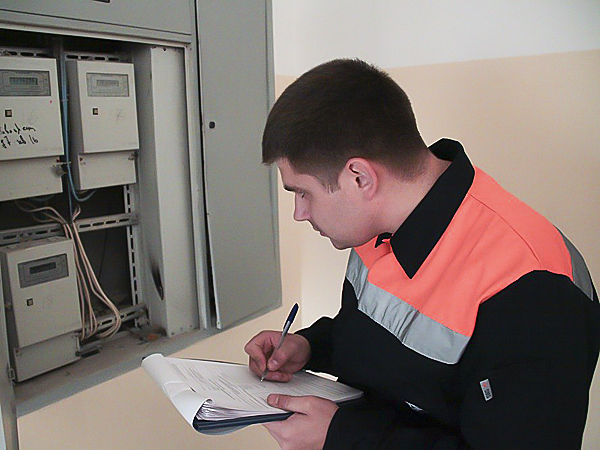 Removing the readings of electric meters Lyubimov Andrey/AGN "Moscow"
The main meaning of the reform is to reduce cross subsidies. This is a real problem for the electric power industry: tariffs for the population are now set at the level below the economically substantiated, but so that energy consumers, energy networks and electricity manufacturers are not ruined, increased tariffs are set for industry. As a result, it turns out that the reduced tariffs for the population pays for the industry, which is why the goods produced by it are more expensive than the same population itself.
In the summer of the Ministry of Energy, it estimated the volume of cross-subsidies in 2017 at 368 billion rubles, and with a growth forecast by 2022 to 417 billion. To reduce it by 2022 to the planned 89 billion rubles, an increase in the population of the population was required by 13.9% per year, which is almost impossible for inflation of 3-5%.
Now socialities operate, for example, in Crimea - tariffs vary depending on the volume of consumption. In cities (and this, in addition to large settlements, almost the entire southern coast of Crimea) in consumption of up to 150 kWh, the tariff is 2.70 rubles per kWh. For 150-800 kW you have to pay 3.38 rubles, over 800 kW-4.95 rubles.
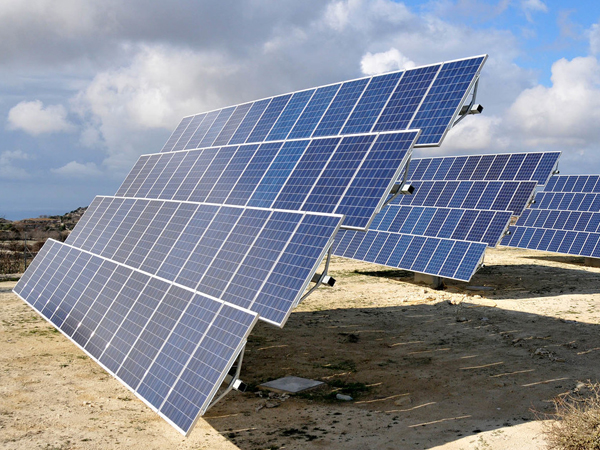 Solar panels in Crimea Set.rk.gov.ru
But according to the results of 2013, when socialities were introduced in several regions of Russia, the experiment was recognized as a whole unsuccessful. Then the local authorities were afraid that the innovation would be perceived as a step towards a sharp increase in electricity tariffs, and as a result, the federal center abandoned the reform (more precisely, transferred its introduction for two years, which is almost equivalent to a refusal).
This time, however, in the Federal Antimonopoly Service (FAS), as Kommersant writes, on the contrary, they praised the experience of applying the social norm in the Crimea. The deputy head of the department, Vitaly Korolev, noted that on average there are 89 kW per month per person in Russia, although in a number of regions there are much more (in the Irkutsk region - about 225 kWh, there are cheap electricity and many use it for heating houses). According to Korolev, the socialist "stimulates the energy conservation measures and reduce cross subsidies."