
Translated material
Not only the first part. What posts you will still be able to plant you after Putin's amendments
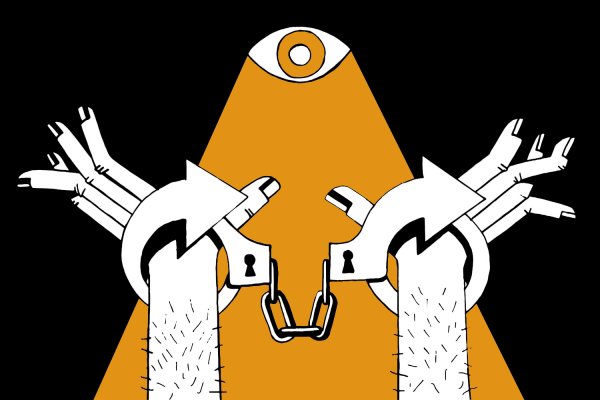
Vladimir Putin proposed partially decriminalize part 1 of Article 282 of the Criminal Code on the initiation of hatred and enmity. But for publications on the Internet, they can condemn not only on it. We talk about seven articles of the Criminal Code, which will not be affected by the mitigation of the law, and about seven people who are persecuted on them.
That amendments are changing
According to the Judicial Department , last year 460 people were convicted of part 1 of Article 282 of the Criminal Code in Russia - the absolute majority among articles that can be incriminated for words on the Internet. If you add up sentences in both parts of Article 280 (calls for extremism), you will get 108 convicts. In third place, part 1 of Article 205.2 (public justification of terrorism) is 67 sentences. That is, in fact, Putin’s initiative is a real change in the situation with persecution for posts, reposts and likes.
It is assumed that criminal liability under 1 part 282 will occur only after a repeated violation committed during the year. The first violation will be punishable under the Code of Administrative Offenses. To do this, the Code of Administrative Offenses must introduce a new article - 20.3.1. But even after the approval of the amendments in the Criminal Code, there will be many more articles on which you can be attracted for written on the Internet.
Article 148 of the Criminal Code
Violation of the right to freedom of conscience and religions is an insult to the feelings of believers. The punishment varies from a fine of up to 200 thousand rubles and forced labor to imprisonment for three years.
The reason for the initiation of a criminal case can be, for example, the video “Posemon fishing” in the temple or the image of the watches of Patriarch Kirill. The Irkutsk anarchist Dmitry Litvin turned out to be accused because of the image with the “Fac” against the backdrop of the Church and pictures with jokes about Jesus Christ, published on VKontakte.
In April 2017, security forces with pomp and Sobr fighters conducted searches in the houses of Irkutsk activists who were in this case with witnesses. Recently, after a long lull, Litvin was charged with a new edition, where out of 15 “insulting” pictures there were four. Litvin himself considers the case as fabricated and does not plead guilty. According to him, he did not post these images on social networks, and several more people had access to page in VK.
Article 280 of the Criminal Code
Public calls for extremist activity. It is punished with a fine of up to 300 thousand rubles, forced labor for up to three years or by deprivation of liberty up to five years.
Under this article, for example, the sixth criminal case against the poet from the Oryol region Alexander formerly was brought up . He is pursued for publications of pro -Ukrainian poems on the Internet. Previously, the poet’s poetry qualified according to the 282 article of the Criminal Code (excitement of hatred).
For some accusations, Fizhev was already sentenced to 400 hours of compulsory work and the prohibition of engaging in pedagogical activities for three years. Before the first criminal case, the former worked as a German teacher at school, but then he was fired.
Article 280.1 of the Criminal Code
Public calls for separatism. The sanction under this article may be a fine of up to 300 thousand rubles, mandatory or forced work or imprisonment for up to five years.
The investigation may calculate the violation of the territorial integrity of Russia and the fake “ march for the federalization of the Kuban” and the statements of the Crimean Tatars that Crimea is Ukraine may calculate.
Member of the Majlis of the Crimean Tatar people Suleiman Kadyrov was condemned on charges of separatism for two years conditionally. The reason was the repostation of a video with a person telling about the need for the armed resistance of Russian aggression in Ukraine, which Kadyrov accompanied with a comment: “Suleiman Kadyrov agrees! Crimea is Ukraine. It has always been, is and will be! Thanks to the author for the video! I support! "
At the trial, experts of the prosecution said that they did not find in the words of Kadyrov calls to encroach on the territorial integrity of Russia. According to them, a full -fledged linguistic analysis of phrases was not carried out. According to experts by defense, their colleagues from the FSB did not have the right to give a legal assessment of the words of Kadyrov. Nevertheless, the court considered it possible to pronounce a conviction.
Article 205.2 of the Criminal Code
Public calls for terrorism or public justification of terrorism. It may be punished with a fine of up to a million rubles and deprivation of liberty for up to seven years.
A characteristic example is the history of the persecution of Boris Stomakhin. Stomakhin is a radical publicist of the liberal sense, a supporter of Chechen separatists who posted in his blog publication with aggressive rhetoric against Russians. In 2006, he was first sentenced to five years in prison under articles 280 (calls for extremism) and 282 (excitement of hatred) of the Criminal Code.
In 2012, a new criminal case was opened on Stomakhin. The final prosecution featured Articles 280, 282, as well as parts 1 and 2 of Article 205.2 of the Criminal Code. In addition to the publications of "Memory of Shahids", "To the ax!" And the “second civilian”, which the investigation considered extremist, Stomakhin was charged with “justification of the activities of the terrorists who killed Alexander the Second” in the article “The anniversary of the regicide”. At the same time, the court considered the Samizdat Bulletin “Radical Policy”, which issued a blogger, a full -fledged media, which allowed him to condemn him according to a heavier part 2 of article 205.2 (justification of terrorism using the media). The basis for recognition of the "radical policy" of the media was that "all publications have the same name."
Later, a third thing was brought to Stomakhin under Article 205.2, for the text “or a couple of stations to blow up the railway here!” Published on his blog when he was already in custody. The defense indicated that this fact essentially testifies to Alibi, but the court took the side of the prosecution. In total, Stomakhin received seven years in prison. Given the first term, in total, the time he will spend in prison for publications on the Internet should be 12 years. Due to the actual decriminalization of Part 1 of Art. 282 Criminal Code Stomakhin can come out a little earlier.
Part 3 of Article 212 of the Criminal Code
Calls for riots. Punishment may be restriction of freedom up to two years, forced labor or imprisonment for the same period.
An employee of JSC Energomer Vladislav Kuleshov, placed in a pre -trial detention center on charges of calling for riots and terrorism, will also not touch the legislation. In this case, mathematician Dmitry Bogatov was held. At first, he was accused only of calls to the riots, but after the judge refused to place Bogatov in jail, the investigation added serious articles to the charge for the organization of riots (part 1 of Article 212 using part 30) and a call to terrorism (Article 205.2).
The reason for initiating the case was calls for radical actions during the action on April 2, 2017, published at the Sysadmins.ru forum under the nickname "Ayrat Bashirov". The investigation took a year to understand that Bogatov did not post publications, but was only the operator of the output node of the Tor network.
Now the pursuit of Bogatov has been terminated for the lack of corpus delicti. But Kuleshov pleaded guilty. Of course, he was sent under arrest due to the presence of calls for terrorism in charge-with one part 3 of Article 212, he would probably remain at large. But it is also worth considering that the calls to the riots without additions in the form of Art. 205.2 and part 1 of Art. 212.
Part 2 of Article 282 of the Criminal Code
The excitement of hatred with an organized group or with the threat of violence. It is punishable by a fine of 300 to 600 thousand rubles, or forced labor from two to three years, or by imprisonment for a term of three to six years.
In the “community of the indigenous Russian people of the Samara region”, pensioner Lyubov Kuzaeva, the investigation charges the second part of Article 282. According to the prosecution, the woman struck hatred in an organized group. She is accused of exciting hatred in the group, organizing an extremist community (part 1 of article 282.1), rehabilitation of Nazism (354.1), calls for separatism (280.1) and extremism (280). Only ten episodes in five articles of the Criminal Code.
The organization of the group was that Kuzayeva allegedly indicated to other members of the group to place extremist posts on VKontakte. According to investigators, she wanted to “prepare and organize unauthorized mass shares in order to destabilize the situation on the eve of the elections to the Togliatti Duma and the post of governor of the Samara region.”
According to a lawyer who protects a woman, two videos were based on the case, which are talking about a “certain nationality” and Auschwitz. Kuzayeva is in custody.
Article 354.1 of the Criminal Code
Rehabilitation of Nazism, denial of the position of the Nuremberg Tribunal or the desecration of symbols of military glory of Russia. A fine of up to 500 thousand rubles can serve as a punishment, or forced labor for up to three years, or imprisonment for up to five years.
This article was included in the Criminal Code relatively recently - in 2014. Since then, things have been excited on it against unknown destroyers of monuments to Soviet soldiers in Ukraine, and against the vandals that painted the sculptures of Soviet soldiers in Krasnoyarsk. A denial of the position of the Nuremberg Tribunal can be , for example, an article on the joint attack of the USSR and Germany on Poland on September 1, 1939.
The reason for the persecution of the coordinator of the Volgograd headquarters Alexei Navalny Alexei Volkov was the image of the sculpture of the motherland with green paint on the face, which appeared in the headquarters group after the next attack on Navalny with Zelenka. The investigation conducted searches in the staff of the headquarters, as well as at home at Volkov and his deputy. The activist was accused of desecrating the monument of military glory (part 3 of article 354.1 of the Criminal Code). True, the court demanded that the prosecutor did not agree with the charges, which, in turn, did not agree, filed a complaint with the Supreme Court. Now the parties are waiting for consideration of objections of representatives of the prosecution.