
Translated material
Memory. Alexey Orlov-Chemmensky
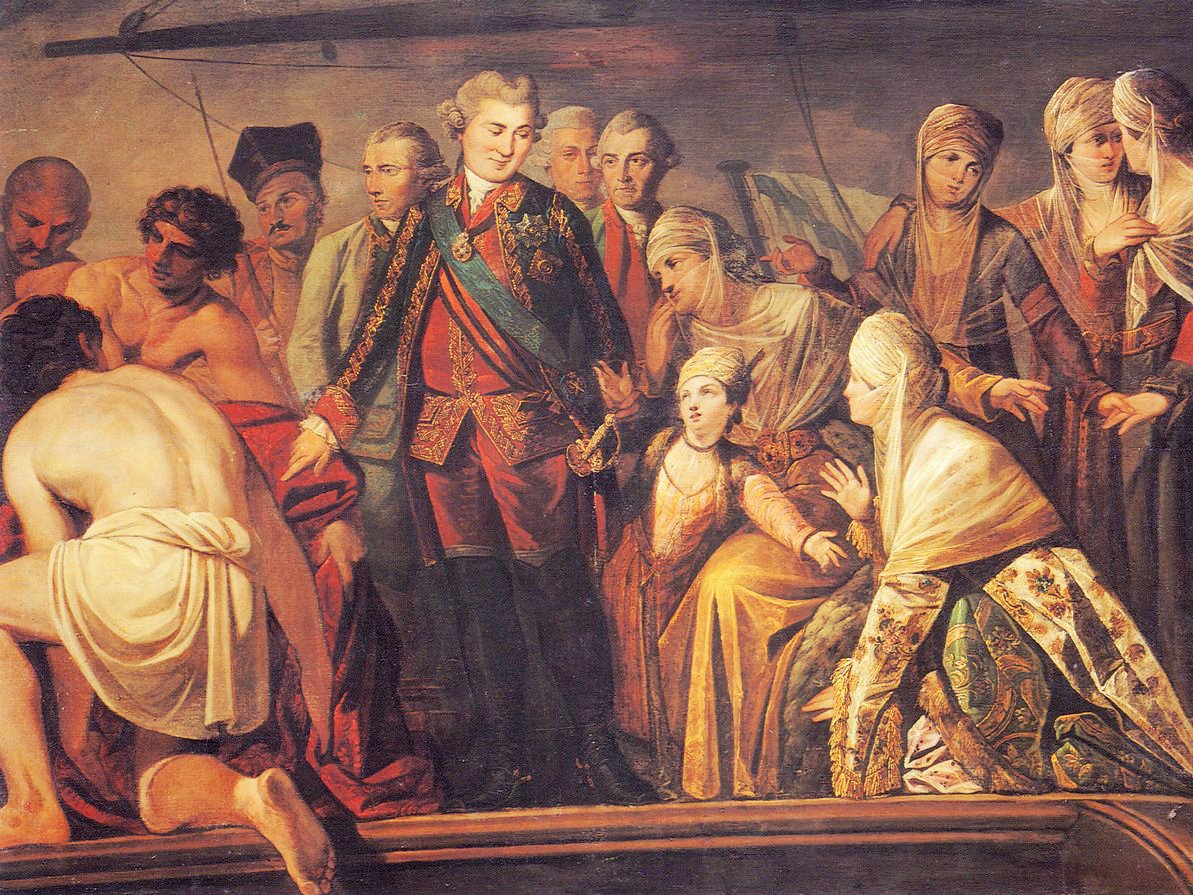
On October 5, 1737, the navy and statesman of the Catherine era, Count Alexei Orlov, was born.
Personal business
Alexey Grigoryevich Orlov (1737-1807/1808) was born in the village of Lutkino Tver province in the family of Major General, Novgorod General Governor Grigory Orlov. He was the third of his sons. At the age of 12, the Semenovsky Regiment was recorded in the Life Guards. He studied in the land cadet gentry corps in St. Petersburg. In 1755 he received the rank of sergeant. With the outbreak of the Seven Years of War, in 1757 he was enrolled as a volunteer in the observation corps, guarding the rear of the army. Upon his return to St. Petersburg, he served in the Grenadier company of the Life Guards of the Preobrazhensky regiment in the rank of lieutenant. He was known for excellent health, enormous physical strength, explosive character and a “violent way of life”.
He was among the participants in the conspiracy aimed at the overthrow of Peter III and the construction of his wife Catherine to the throne. He played a key role in the events of June 28, 1762. When it became known about the arrest of one of the conspirators, Peter Passek, it was Alexei Orlov who came to Catherine in Peterhof and convinced her that the events accepted critical circulation and could no longer hesitate. Orlov delivered Catherine from Peterhof to Petersburg to the location of the Izmailovsky Regiment, who swore allegiance to her as an “Empress and Author's Employer”. Then the oath was brought by other guard units, as well as the Synod and the Senate. The guards went from the capital to Peterhof, where Peter III was located. On July 6, Peter, contained under the protection of the guards in Ropshe, died under unclear circumstances. According to some assumptions, he could be killed by Orlov or Fedor Baryatinsky.
Alexey Orlov and his brothers, who also participated in the conspiracy, were showered with the mercy of Catherine II . Alexey was promoted to Major General and the second-major of the Life Guards of the Preobrazhensky Regiment. In Moscow, on the day of the coronation of the Empress, he received the Order of Alexander Nevsky, as well as 800 of the souls of serfs. In addition, he, along with the brothers Grigory and Fedor, granted the village of Obolenskoye (Ilyinskoye) in Serpukhovsky district with 2929 souls and a large sum of money. All five brothers were erected into count's dignity.
In subsequent years, Alexei Orlov received the ranks of the Adjutant General, the general general and, finally, the Anthef General (1769). He had a great influence at the court, although he refrained from interference in state affairs.
In 1765, Count Alexei Orlov was sent to the southern provinces to prevent the excitement of the Cossacks and raids of the Crimean Tatars. At the end of 1767, he was dangerously ill, and after his health improved slightly, he asked for permission to travel abroad. At the beginning of the Russo-Turkish war of 1768-1774, he, being treated in Italy, proposed a plan for naval operations in the Mediterranean Sea and was appointed commander of the Mediterranean squadron. For the wins, the Order of St. George the first degree and the right to be called Orlov-Chemmensky received, and in Tsarskoye Selo he was erected a monument.
Alexey Orlov also fulfilled the secret order of Catherine II to deliver a woman from Italy, who called herself Princess Tarakanova - the daughter of Elizabeth Petrovna and Alexei Razumovsky. Orlov received a letter from her with a proposal to press her side and help her take the throne. He announced this to Catherine, after which, from the Empress’s knowledge, he entered into negotiations with Princess Tarakanova and invited her for a personal meeting in Pisa. He managed to gain her trust and even offered to marry him. Orlov managed to persuade the princess to go with him to Livorno, where the squadron subordinate to him stood, and climb the side of the ship. There Tarakanova was arrested.
After his brother Gregory lost the location of Catherine, Alexei Orlov resigned and lived in Moscow and his estates. On May 6, 1782, he married Evdokia Lopukhina. In 1785, their daughter Anna was born, and in 1786 the son of Ivan. During childbirth, Evdokia died, and the son lived for only a year.
After the death of Catherine, Paul I forced Alexei Orlov to carry the royal crown during the transfer of Peter III remains from the Alexander Nevsky Lavra to the Peter and Paul Cathedral. Then Orlov, fearing the revenge of the new emperor for participating in the overthrow of his father, went with his daughter abroad and spent all the time of the reign of Paul.
After the accession to the throne of Alexander I, Orlov returned and settled in Moscow in the Neskuchny estate, which his brother Fedor bequeathed to his daughter Anna. Muscovites remembered lush holidays with fireworks, which Orlov arranged in Neskuchny for his daughter.
Alexei Orlov-Chesmensky died on December 24, 1807 (January 5, 1808) in Moscow.
What is famous
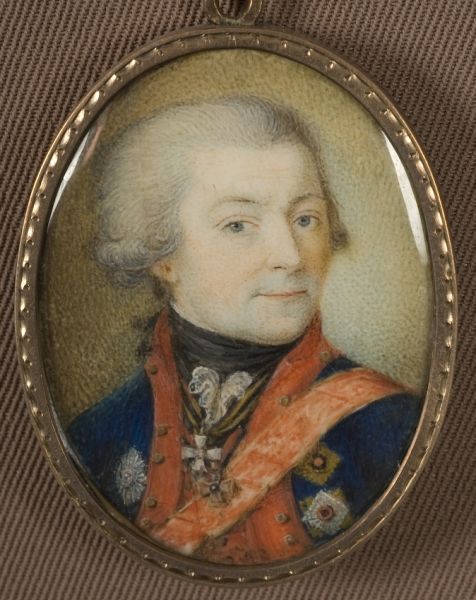 Unknown artist. Portrait of Count Alexei Grigoryevich Orlov-Chesmensky 1780s. NGOMZ
Having achieved a career take -off as an adventurer and conspirator, Alexei Orlov later proved himself as a talented commander and diplomat. It is doubly amazing that, having no experience in leading the fleet, he successfully held a complex naval campaign, standing in the history of the Russian fleet along with such an outstanding admiral as Ushakov.
During the military operations in the Mediterranean Sea, on April 10, 1770, Navarin took this fortress with the base of his fleet. On June 24, he attacked the Turkish squadron under the command of Kapudan-Pasha Hassan Bey in the Hiosk Gulf and forced to hide in the Chesmensky Bay, where with the help of the branders he completely destroyed it. The units subordinate to him were landing in Southern Greece, supporting the Greek rebels. Orlov captured a number of the islands of the archipelago and blocked the Dardanella Strait, cutting off the supply of Istanbul. About three dozen Greek Islands were even going to accept in Russian citizenship, calling the "Archipelagic Grand Duchy."
During the war, the Orlov Fleet captured 365 Turkish ships and 300 courts of neutral countries that smuggled with Turkey. The Ottoman Empire completely lost control of the Aegean Sea, and its fleet could not act actively throughout the war.
What you need to know about
Orlov also went down in the history of Russian horse breeding as the creator of the Oryol Rysak - the famous Russian breed of light -straightened horses with a hereditarily fixed ability for a frisky trot.
According to Orlov’s idea, the new breed of horses was supposed to be large, elegant, comfortable both under the saddle and in the harness or in the plow, equally good in the parade and in battle. But the main requirement for these horses was a frisky, clear lynx, since the horse running around for a long time does not get tired and the crew shakes a little. In those days, there were extremely few frisky horses and they were very expensive, and there were no individual breeds that would run a stable, light trot at all.
In 1776, in his estate in the Voronezh province, Orlov founded the Khrenovskaya horse factory. The count sought to create a breed of horses, combining the best qualities of Arab horses and European breeds. He wrote out 38 stallions and 53 mares from England. He acquired Arab horses during the command of the fleet in the war of 1770 - 1774.
In 1776, Count Orlov bought from the Turkish sultan of the Arab stallion for a fabulous amount - 60 thousand silver (for comparison - the groom in those days received 3 rubles a year). For a light gray, almost white suit, the stallion received the name of the source. Having spent about two years on the road (he was taken by land), the stallion arrived in Russia in 1776. However, here he lived for less than a year and already in 1777 fell, leaving four sons and one daughter, from which horses of the Oryol trot and Russian horse breeds come.
Direct speech
Mother, he is not in the world, but no one thought of this, and how to think of raising our hands on the sovereign. But, the states, the trouble happened: we were drunk, and he, too, he argued with Prince Fedor [Baryatinsky]; We did not have time to tear, but he was gone.
Note by Alexei Orlov Ekaterina about the death of Peter III
They [the Orlov] were the first of those faithful sons of the Russian, who this empire from the strange and unbearable yoke and the Orthodox Greek confession of the Church from ruin and the all -tech falling by the construction of us [Catherine II] for the All -Russian imperial throne, which was freed, which the Orthodox business and their vice is truly their insight, mind, courage and murder to benefit and murmur to benefit and murmur to benefit and murmur. The well -being of the Fatherland and to the joy and pleasure of the natural allies of the entire empire, to their immortal glory, is really and safely brought to perfection.
From a rescript of Catherine on the construction of the Orlov brothers to the count dignity
If we go, then go to Constantinople and free all the Orthodox and pious from the yoke of the Grozy. And I will say that in the letter, the sovereign Peter I said: and their infidels Mohammedan to drive sandy to their former dwellings in the steppe. And here again, piety will start, and let's say glory to our God and the Almighty.
From the letter of Alexei Orlov to brother Gregory
Our squadron is from axim to ten battleships and on which several troops will be planted, great fear will cause the Turks if it reaches our places; The sooner the better. Hearing about the malfunction of the marine Turkish power, about the weakness of them from this side, I can reliably convey that it will not only cause great interference to them in military preparations, will share great ruin, will be horrified by all magometans, in the courage and approval of the Orthodox, and more terrible may be more terrible than the Ground Army.
From the report of Alexei Orlov Empress Catherine II
Contemporary Count S.P. Gikharev says about him that when he lived his loud glory in Moscow, some charm surrounded the hero of the great Catherine, who was resting on his laurels in the simplicity of private life, and attracted folk love to him. The Chesmensky hero was a type of Russian man: a mighty strength of a body, a powerful power of spirit and will, he was available, welcoming, friendly, fair; He led a lifestyle in Russian, and the taste had a folk one. These properties of Count Orlov had to conquer the hearts of all those around him, and all Moscow citizens surrounding him - they insensively accepted his direction both in lifestyle and in tastes.
M.I. Pilyaev "Fashionistas and fashionistas of the old time"
... an eagle from a flock of that high
Kotora sailed in the air
Simple the Miner Svetloo,
When she came from Olympus;
Eagle under scam
Before the fleet of Russians flew ...
..........
Alas! Where, where is it soaring it under the sun?
Where are its traces along the seas?
Where the thunder is stormy
And the flames between the clouds of the brothers?
Where are the fasts fast all eyes
And the chest, courage is full?
Everything, everything hid the darkness of eternal night
There was only one glory left!
G. R. Derzhavin
About the loud age of military disputes,
Witness of the glory of Russians!
You saw how Orlov, Rumyantsev and Suvorov,
The descendants of the formidable Slavs,
Perun Zeusov was kidnapped,
Their daring feats, fearing, was divorced by the world!
Derzhavin and Petrov to the heroes of the song Ground
Strings of puffy lire.
A. S. Pushkin
10 facts about Alexei Orlov
- For many years, Alexei Orlov lived in an actual marriage with Maria Bakhmetyeva , who fled to him from his tyrant-husband.
- The illegitimate son of Alexei Orlov was Major General Alexander Alekseevich Chesmensky (1763-1820).
- Alexey Orlov made gypsy singing popular in Russia when he brought a gypsy troupe from Wallachia in 1774.
- According to the historical joke, Alexei Orlov on the question asked in Berlin in Berlin "What is the image of the reign in Russia?" He answered: "Autocracy limited by regicide."
- According to legend, the tincture on the herbs "Erofeich" was invented by a barber named Erofei, who cured her Alexei Orlov.
- The Orlov’s estate in the Don field in Moscow was called the Dove. Its modern address: 2nd upper Mikhailovsky passage, house 2.
- The Mineralogical Museum named after A. E. Fersman is located in the building, which Alexei Orlov built in Neskuchny as an equestrian arena.
- After the victories at sea, Orlov received the right to include Kaiser-Flag in his coat of arms-the flag of the squadron commander.
- During the Russian-French war of 1806–1807, the elderly Count Orlov commanded the Zemstvo police detachment formed exclusively at its expense. Was awarded the Order of St. Vladimir of the first degree
- Alexey Orlov founded horseback riding, which were held in the summer on the Don Field, and in winter on the ice of the Moscow River. The tradition was preserved before the war of 1812.
Materials about Alexei Orlov
Article about Alexei Orlov in the Encyclopedia "Circumspices"
Article about Alexei Orlov in the Russian Biographical Dictionary
Alexey Orlov in the project "Chronos"
Article about Alexei Orlov on Russian Wikipedia
Alexey Orlov on the site "Military History of the 2nd Half of the XVIII century"