
Translated material
140 hours
Daniil Turovsky tells the story of the climber Alexander Gukov, who was stuck in the mountains in Pakistan at an altitude of 6145 meters
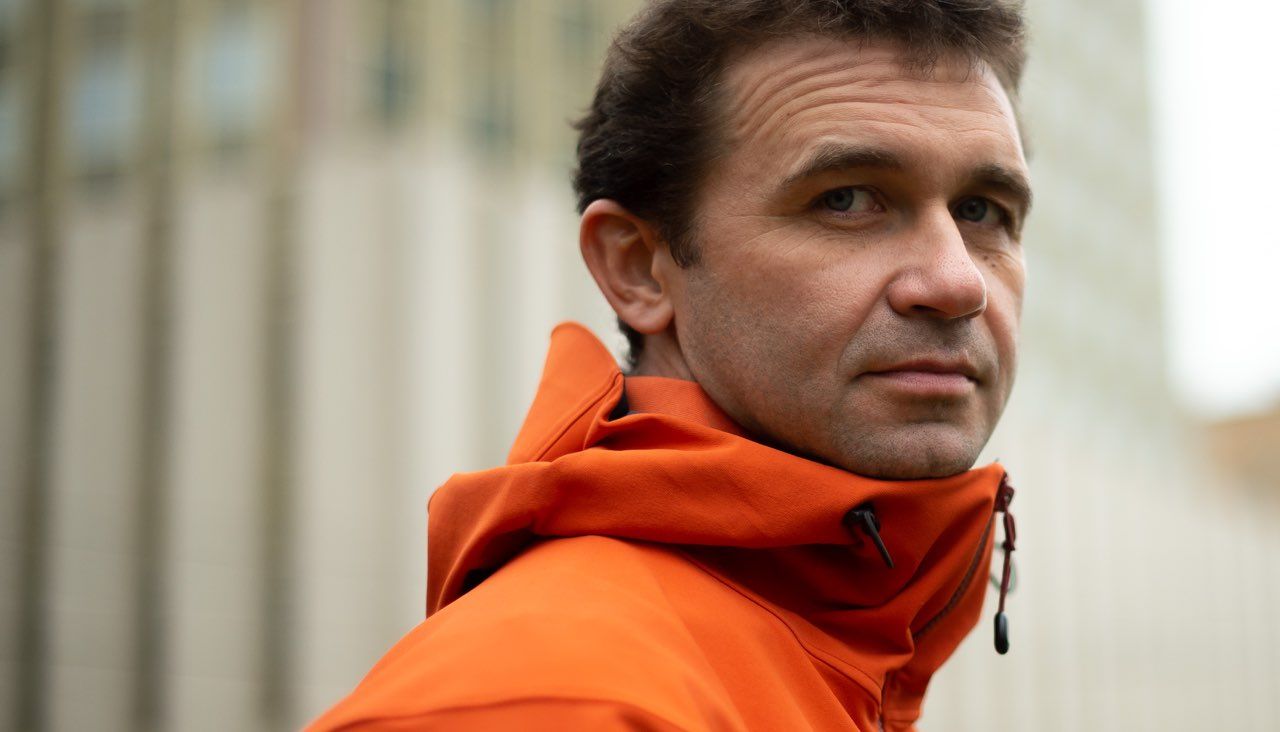
Alexander Gukov opened his eyes and saw that a helicopter had flown behind him. The pilots and rescuers with a stretcher ran out of there - and they reported that now he was finally saved.
It was July 31, 2018. The 42-year-old climber was stuck on the Pakistani mountain Latk-1 at an altitude of 6145 meters-this was six days ago. All this time he was a small area on an almost sheer rock. Gukov lost his ability to move and thought that there was no longer a way out. Sometimes it occurred to him that it was time to try to go down on his own - without equipment that flew into the abyss - and, possibly, die.
Several times Gukov had already heard a helicopter fly nearby, but he never rose to the height where he was. Now the salvation was very close.
Gukov closed his eyes. And when he opened them - there were only mountains and snow around. And no helicopter.
He blinked again - and saw the rescuers. "Everything is fine!" - answered one of them when the climber asked what was happening.
He blinked again. Mountains, snow and ice abyss of several hundred meters.
Gukov no longer understood where the reality is, and where is sleep or hallucination. To stay in his right mind, he recalled the past and tried to reconstruct dialogs with friends in memory. He also thought about his images to follow-about people who tried to conquer Latk-1 forty years before him, in 1978. And that he managed to rise further than they.
Chapter 1
Ice wall
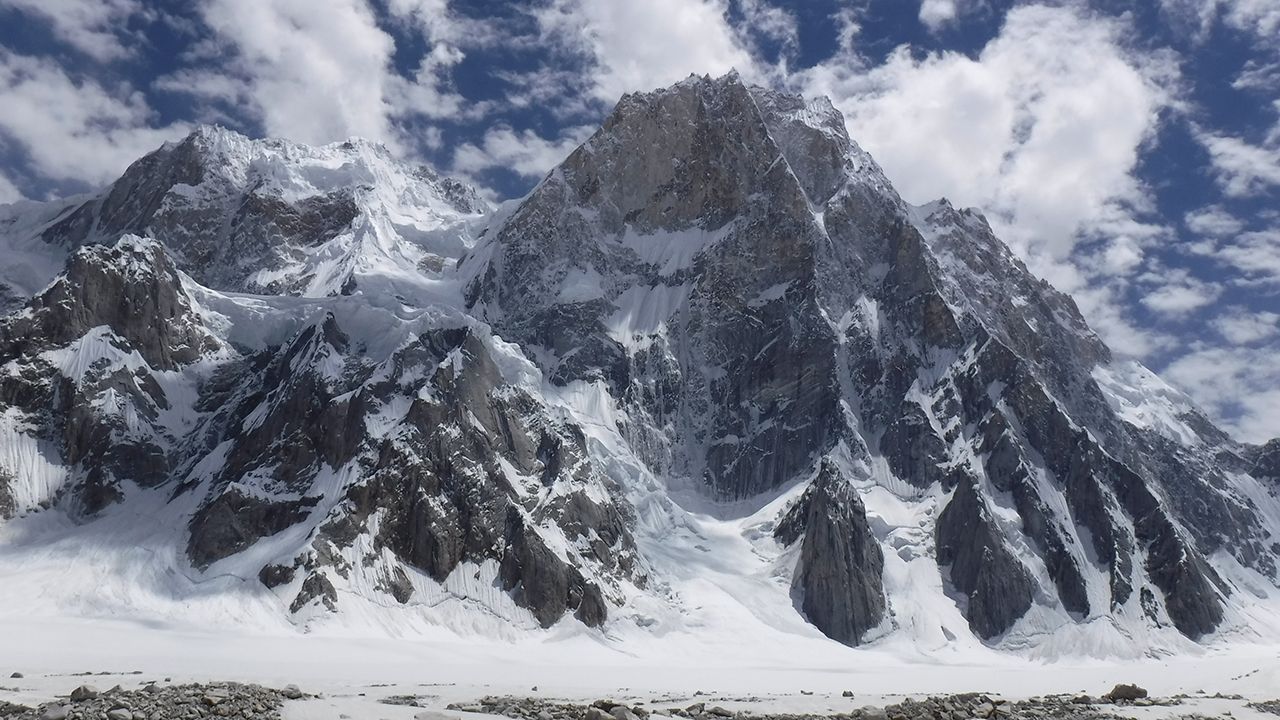
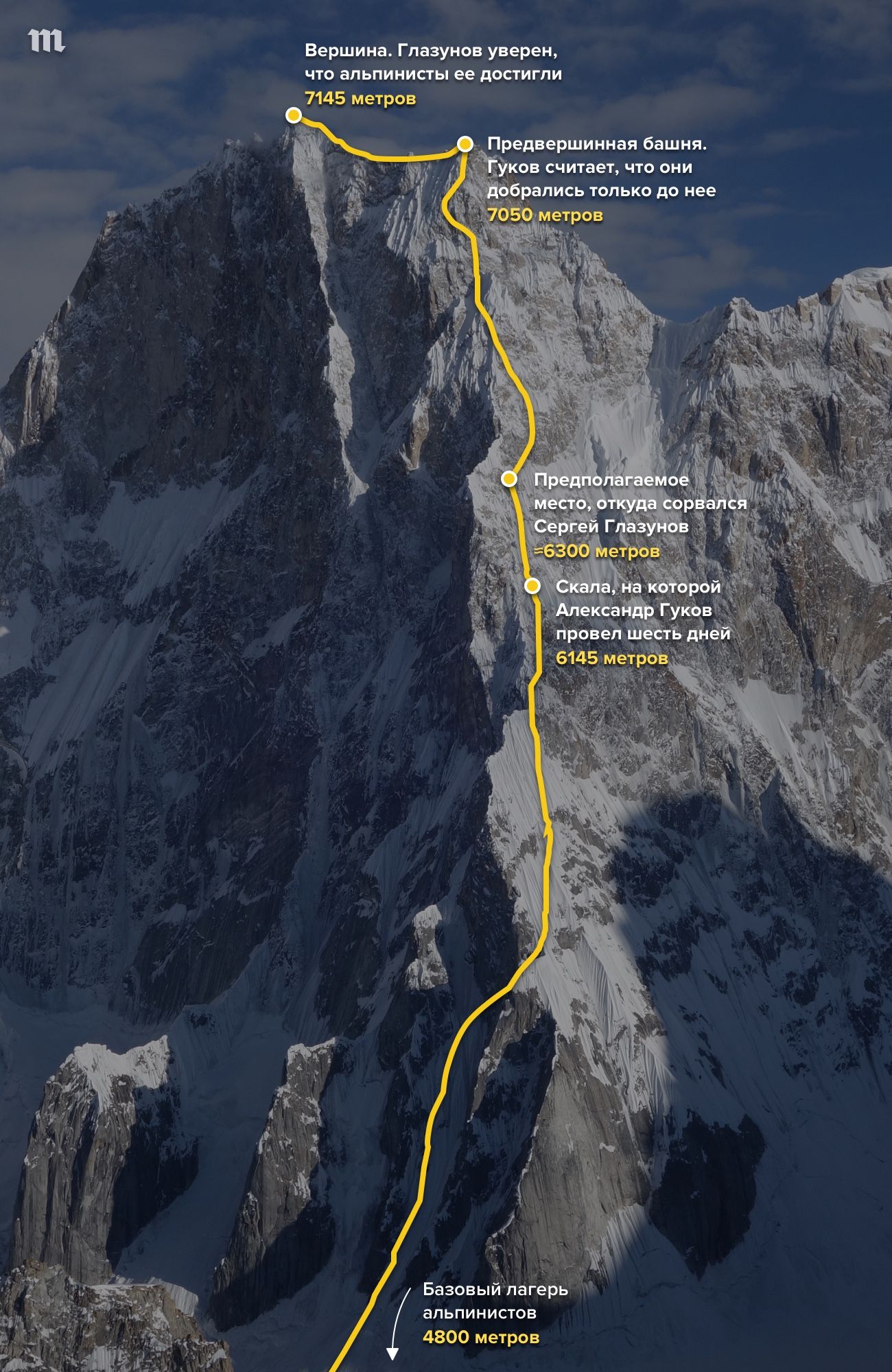
The northern side of the Latk-1 Mountain (it is included in the Pakistani Mountain System of Karakorum) is considered one of the last undeveloped climbing routes: a peak of 7145 meters heights repeatedly conquered, rising from the south side of the mountain, but never from the north. Unlike many other highest points of the world, commercial expeditions do not come here-a lover who has paid tens of thousands of dollars of the guide, not to rise to Latok-1: this is not only a hardy organism, but also a very good climbing technique. The steep slopes are covered with ice, and there are almost no sites suitable for nights - those who dare to go to the top have to spend several hours daily, just to cut down a place for sleeping on the edge of the abyss.
It is difficult to acclimatize on Latka-1. The weather is very unstable - to wait out adverse conditions, it often takes a lot of time, and with it - products and gas. There are rockfalls all the time. There is an extremely inappropriate relief: in fact, the slope is a steep wall on which snow settles. The climber Valery Shamalo, who tried to conquer the northern slope of Latka-1 in 2017, considers this mountain the most interesting of the unresolved climbing tasks. And one of the most risky: the climber Viktor Koval told how his group, when they, without reaching the top, descended from Latka-1, "miraculously did not kill stones"; One person from his team almost died under an avalanche, which took him three hundred meters down. In 2001, a Russian climber died during climbing the mountain.
Further, others managed to go to the pioneers-the invading Alexander Gukov to four Americans: Jeff Lowe, George Lowe, Michael Kennedy, James Donini, who went to Latka-1 in 1978. The base camp, where climbers, having purchased the necessary supplies, got from the city of Scard, was at an altitude of 4700 meters. “The steep, narrow and ice-covered northern rib lanchis-1 closed the horizon,” one of the participants in the expedition recalled .
Then they walked four. Two rose with the help of ice axes and “cats”, holding out a rope behind them; The two followed, catching the rope by Zhumar , dragged most of the things behind them. On the third day, they decided to relax; The fourth began a hurricane with a thunderstorm - and did not subside for almost a week. The climbers had to sharply reduce the diet.
The higher they climbed, the less flat spaces became. Sometimes I had to sit on small ice ledges. I really wanted to drink, but for this I had to melt the snow for hours and boil water.
Despite all the difficulties, the beauty around was fascinating. “The view of the glacier excited. We were on the mountain for so long that it seemed that nothing more in our life, ”one of the Americans later recalled. - The memories were dissolved in the distant past. Every day we did the same thing: we woke up, cooked food, shocked, dressed in warmer, collected equipment, climbed, pulled the cargo, raked the place for the night, ate, and slept. ”
On the nineteenth day, reaching a height of 6900 meters, they dug a small cave in the snow-to hide because of the next hurricane. They never managed to climb to the top - it was very windy, very cold, and two climbers could no longer go anywhere. Jeff Lowe was so weak that others began to fear for his life. In the cave, they spent six nights without food - and when they finally reached the base camp, they ate until their stomachs began to hurt. Jim Donini then recalled that he had half a year for the full restoration.
Over the next forty years, they tried to conquer Latk-1 almost thirty times. A short break happened only in 2013 - when all the ascents to the mountains of Karakorum were officially canceled after one of the most tragic incidents in the history of mountaineering. On June 23, 2013, the base camp at the Nanga-Parbat Mountain was surrounded by Islamist militants with knives and automatic machines. They stated that they represent the Taliban, and began to open the tents in search of Americans. The American was found alone - Chinese origin; Together with another ten people - three Ukrainians, two Chinese, two Slovenians, Lithuanian, a porter from Nepal and a Pakistani cook - he was knelt down and shot, saying that this was revenge for Osamu Bin Laden. After that, the mountain season was over, Russian climbers were urgently evacuated from Karakorum.
It was in 2013 that Gukov was first going to climb Latok-1-together with three Russian climbers Oleg Koltunov, Vyacheslav Ivanov and Alexander Rushkin. They also had to cancel their ascent, and when Gukov again thought about the conquest of Latka, he had to look for new partners: Koltunov crashed to the Crimea, Ivanov and Rushkin to Peru.
In 2014, climbing Karakorum resumed. However, the Record of conquering the northern slope of Latka-1 until 2018 continued to belong to the expedition of Lowe, Kennedy and Donini-they almost managed to get to the mark of 7 thousand meters.
Chapter 2
The power of the call
When Alexander Gukov was a teenager, his parents gave him several adventure novels of American writers - Jack London, Fenimore Cooper and Mine Read. It was not easy to get them: Gukov’s parents were in the company of books lovers, but for such literature they still had to stand in lines. After reading these books, Gukov also began to dream of adventures - and decided that when he grows up, he would become a traveler.
Gukov was born in Rostov-on-Don in 1976. When he studied in high school, a club of young sailors opened in the courtyard of their house. Gukov’s father, who dreamed of becoming a sailor, but could not (due to poor vision), sent his son there. The next three years, Gukov studied the sea business and walked under the Don and Volga. After school, he entered the Rostov Marine College.
In 1995, having already moved to Novorossiysk, he went on his first single campaign - through the Caucasus. There were almost no other tourists there because of the war in Chechnya-but Gukov did not think about possible dangers. “Young [was] and was not particularly worried,” he says. - True, on the first night the locals came to me on horses, asked what and how. Then they asked everyone to convey to come more often. ” He spent the night most often in coshars for sheep - field trifles.
Then Gukov first saw Elbrus. The mountain seemed huge to him. “Would I climb on him? But this is so long and so much effort ... ”he recalls his impressions. As a result, he did not dare to climb the mountain - but he soon returned there. In Novorossiysk, he met people from the tourist club, and they began to climb together on nearby cliffs. Following Gukov went to Elbrus, enlisting the help of the Krasnodar Federation of mountaineering, and conquered the peak the first time. As the climber recalls, having reached her, he felt euphoria-but because of his too fast ascent, he immediately began to feel very sick.
Gukov received higher education at the Novorossiysk Maritime Academy - with the expectation that he would earn at sea for long travels. Having launched, he moved to St. Petersburg, from where it was convenient to work for one of the Riga shipping companies-according to the schedule for four months in the sea, two on land. At first, Gukov worked on tankers, after moving to the gas fleet.
Over the past 20 years, Gukov, according to his estimates, rose to hundreds of mountains. Already when he became interested in mountaineering, he met Julia - his future wife. At first, she was very offended when he went to the next ascent - the day before departure, she stopped talking with her husband, but now she was already used to it. Two children of Gukov constantly draw or sculpt from plasticine a composition about how he travels in the mountains.
Gukov is trained on the rocks near Novorossiysk, in addition, he walks at a climbing rifle twice a week and runs 10 kilometers each. In the spring of 2017, he fled in Novorossiysk a full marathon in a T -shirt with the symbols of Alexei Navalny.
Gukov has never been on the eight -thousandths - mountains, the height of which exceeds 8 kilometers (in the world there are only 14: eleven in the Himalayas and three in Karakorum). “I don’t want to walk along classical routes, I want to be a pioneer,” the climber explains. In addition, he is sure that it is unsportsmaning to climb there with oxygen cylinders, like participants in commercial expeditions, and therefore he trains endurance at lower heights.
Gukov explains his craving for the conquest of complex peaks by the fact that he wants to experience himself. “This is a way out of the comfort zone, the opportunity to see other aspects of yourself, and then return to ordinary life,” he argues. - In ordinary life, you do not know how you behave with such loads as you make decisions. When you return to ordinary life after, all the little joys are perceived more acutely: the house, and friends, and wife, and children. ”
““ You will find victory over yourself in the mountains, ”, in the words of Vizbor,” Russian climber Maxim Bogatyrev explained his motivation. -It is especially important for a man to remain a man, to achieve something, to go to something, to overcome difficulties. And mountaineering is one of the ways to realize oneself and self -expression. But this is about contrast. Here we have a warm house, a hot kettle, comfort, and harsh conditions teach you to appreciate these simple joys. When I did not wash a week, even a bucket of warm water is happy. When I did not get tired that you barely dragged your legs, and did not freeze through - you do not appreciate the simple bed and the warmth of the house. ” Soviet and Russian climbers have talked many times about why they were drawn to the mountains. “There is a mountain. Thousands of people see her, ”one of them explained. “But something special happens to some.” Some voice tells them-this mountain is waiting for her to rise. From that moment they are in the power of a call. ”
Chapter 3
Scary, but we will cut
For the first time, Gukov tried to climb Latk-1 in the summer of 2017-together with two more Russian climbers. Then the weather prevented-"something poured from the sky all the time."
At first, the climbers were scared. “So many attempts, but there is no success. What is the matter? - reasoned Gukov in the report of the ascent. “But fear has passed, it’s just a difficult mountain on which you need to work for 10 days in difficult conditions.”
The expedition of Gukov recorded the course of the expedition on the video . It can be understood by how such an ascent occurs: it is difficult for climbers to speak, they fall asleep with snow, have to spend the night in the crevices - or on the crests of a meter wide, on both sides of which the abyss. Once thick snow begins to go - and three Russians spend all day in a wet tent all day, because half a meter from it is no longer visible. For one of the nights, they, almost like Americans, dig a cave in the snow - but it’s still cold inside. Sometimes Gukov notices that snow goes from the bottom up. At some point, he began to describe the weather exclusively with the words “shit” and “ass”.
“Scary, scary, scary, but nothing - we will crawl,” he says in the chamber on the seventh day of climbing. “Where to go, where we are incomprehensible.” They did not chopped long: soon another climber, Valery Shamalo, fell ill. Every day he was getting worse, at some point during the ascent, he dropped a backpack into the abyss, in which there was the only tent. When it remained to go to the top for about four days, they decided to turn back - there was almost no food, the climbers themselves were “half -dead”. When they turned back, they left 100 meters vertically before the 1978 record.
After the expedition at Shamalo, due to frostbite, several phalanges of fingers on the arms and legs were removed. Gukov, however, decided that he would try to conquer Latka-1 again, considering that the route is “safe”. When it turned out that his former fellow travelers could not go with him, he offered to go to the mountain by a climber, whom he met in 2013.
Then Gukov participated in mountaineering competitions in Ingushetia - such are needed, for example, in order to get the title of master of sports or candidate. Gukov did not like - it was necessary to rise along the routes for a while, and he believed that for such methods it was an inappropriate sport: “If you observe all safety measures, it is difficult to run to speed. You run, it means that you neglect something. ”
But two brothers from Irkutsk - Evgeny and Sergey Glazunovs ran well at speed. Gukov liked them - he offered to give them to, talked and found out that they were never at sea. Then Gukov invited them to visit Novorossiysk - they went there immediately after the competition. There they discussed ascents and walked. Gukov showed them his machine for pulling out fingerboards-wooden planks that climbers use to train their fingers, he became interested in in the 2000s and at some point even began to pull them out on the machine and sell them.
In the following years, Gukov maintained contact with the eldest of Glazunov - Eugene. The brothers had a lot of climbing successes: they were the second in history rose to Chon-Tort in Kyrgyzstan, and in 2016 they won the championship of Russia in mountaineering. Glazunovs liked Gukov-and he suggested Eugene together to go to Latok-1. It turned out that the brothers were thinking of offering him the same.
Together they never went to the mountains - although usually complex peaks conquer trusted groups (climbers should trust each other and be confident in their partners insureing them). Gukova and Glazunovs, however, did not embarrass. They decided to meet on the way to Pakistan. Gukov sent advice to the brothers how to issue a visa, and a list of the necessary equipment; They discussed the route and difficulties of acclimatization without halts-there is nowhere to do them on Latka-1.
Over the next months, Gukov corresponded with Evgeny Glazunov. Throughout the winter of 2018, the brothers trained almost daily at a climbing clock; Shortly before the expedition, they went to the mountains in the Crimea and in the Alps. Gukov also trained - and for acclimatization he traveled along the mountains in the USA.
Evgeny Glazunov on Latok-1 as a result decided not to go-there was not enough money, besides, a 30-year-old climber was about to enter a physical education institute. This meant that it would be harder to climb to the top - but Gukov still decided to go. With the younger brother of Eugene, 26-year-old Sergei Glazunov, they began to communicate tight only only a week before the trip. She had to cost climbers 10 thousand dollars for two.
The day before departure to Pakistan Gukov, his 42nd birthday was celebrated with his family and friends. His wife escorted him to the airport. “She says this: if I said that I will be without communication for 10 days, then these 10 days are not particularly worried, and if it has already passed more, then, of course, it starts,” says the climber. “In fact, I think she is always worried.”
Chapter 4
Toothbrushes without handles
On June 30, 2018, Gukov and Glazunov met at the Abu Dhabi Airport-at a transfer to a flight to Islamabad. Both had 32-kilogram backpacks with them: tent, “cats”, ice axes, ice blocks, thermal underwear, flashlights, glasses, ropes, hooks. From a trip to the United States, Gukov brought with him a special climbing food: it was laid out on packages that were enough to fill with cold water for five to eight minutes. It was convenient because gas was not used and a pot was not needed - at the same time, the dishes were very tasty and not at all typical for climbing: climbing, cottage cheese, fried eggs, pasta with chicken.
Столица Пакистана Исламабад Гукову еще в прошлый раз не понравилась — «новопостроенная деревня с кучей военных», где ему особенно запомнилась пиццерия: он попросил не сыпать ничего острого, и ему принесли пиццу, засыпанную специями. Выходить в город совсем не хотелось — альпинисты переждали несколько часов до самолета в Скарду в аэропорту.
Через Скарду — небольшую деревню с сотней домов и мини-гостиниц — проезжают большинство альпинистов, собирающихся подниматься на главные пакистанские вершины: на восьмитысячник К2 (выше только Эверест), на «гору-убийцу» Нанга-Парбат и на Латок-1. Прилетев туда, Гуков и Глазунов выехали на джипах в ближайшую к базовому лагерю деревню — часть ее жителей зарабатывает на жизнь помощью альпинистам, часть трудится на рисовых полях. Россияне поставили палатки на травяной площадке неподалеку от местных гостевых домов и повстречали коллег-альпинистов из Европы. Купив нужные для восхождения баллоны с газом и шоколад, они весь вечер сидели в социальных сетях.
На следующий день, 1 июля 2018 года, Гуков и Глазунов встретились с гидом и поваром — их предоставила компания, сопровождавшая их восхождение. К лагерю они ехали по дороге, проходившей прямо над пропастью, — как рассказывает Гуков, в 2017 году водитель, отвозивший их к Латку-1, на обратном пути разбился вместе с несколькими пассажирами.
К базовому лагерю — он находится на высоте 4580 метров — приехали под вечер. Прямо от него уходила резко вверх стена Латка-1 — можно было разглядеть лавины и еще раз продумать маршрут. На месте выяснилось, что нанятый альпинистами повар не умеет готовить. За еду взялся гид — разделал привезенных с собой живых куриц и козла и смешал с макаронами и рисом.
Следующие два дня Гуков пролежал с высокой температурой, — видимо, из-за плохой воды. Выздоровев, они поднялись на 1300 метров вверх — чтобы акклиматизироваться, — а потом спустились обратно в лагерь. Так обнаружилась другая группа российских альпинистов — они попытались покорить Латок-1 по своему маршруту, но теперь спустились из-за сильного камнепада. Одного из альпинистов Гуков давно знал, они вместе не раз ходили в горы. Он хотел предложить им совместное восхождение, но когда стало понятно, что тогда придется ждать, пока другая группа отдохнет, Гуков с Глазуновым решили все же идти вдвоем.
Перед восхождением они максимально разгрузили рюкзаки — даже укоротили ручки у зубных щеток — и около часа ночи 13 июля вышли в путь. «Ночью погода стоит, солнце не жарит, камни не сыплются», — объясняет Гуков. Повар и гид остались в лагере.
Днем потеплело, снег стал мокрым, а с ним и одежда альпинистов. Они остановились, чтобы устроить сушку, пока есть солнце. На том же привале Гуков с Глазуновым решили оставить часть продуктов, рассчитав, что на восхождение им понадобится пять дней. Гуков отправил в общий чат с семьей и координаторами восхождения сообщение: «Берем еды на пять дней и уходим в отрыв».
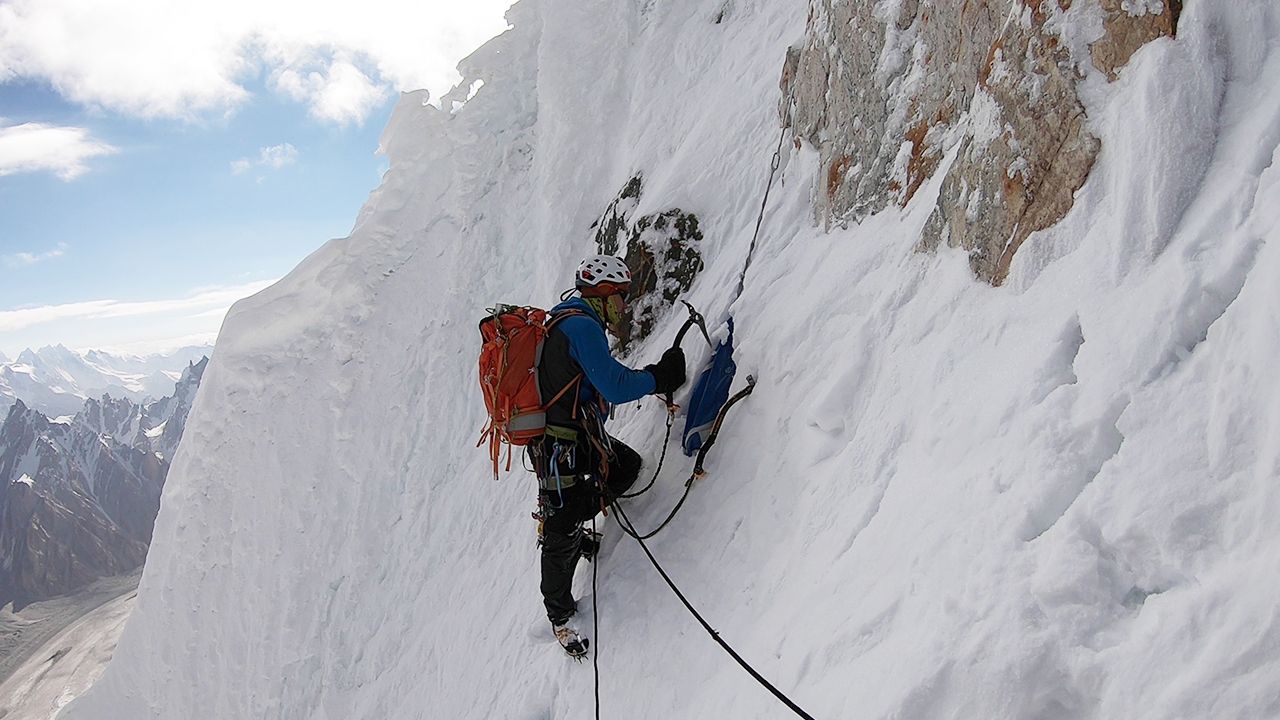
Большую часть пути они шли молча — разве что матерились друг на друга, когда у одного были претензии к альпинистской работе другого. На четвертый день подъема они обнаружили синий мешок, принадлежавший первой экспедиции 1978 года, — на нем было имя одного из американских альпинистов; внутри лежали перчатки и снаряжение.
Chapter 5
Vertex
В таких экспедициях люди достигают собственного предела — и физического, и психологического. В один из дней Гуков сорвался и пролетел около восьми метров вниз, повиснув на веревке. В другой день так сорвался Глазунов — он ударился головой, с его шлема отвалилась закрепленная на нем видеокамера.
Альпинисты ожидали, что взятой на пять дней еды хватит до вершины, — но на четвертые сутки началась непогода, и им пришлось два дня и три ночи просидеть на одном месте в палатке. Внутри было теплее, чем снаружи, — ноль градусов против минус пятнадцати; можно было сидеть в кофтах.
В ожидании хорошей погоды Гуков и Глазунов точили «кошки» и разговаривали. Они вспоминали предыдущие восхождения. Сергей рассказывал, что недавно женился на девушке, живущей во Франции, — и что он подумывает туда переехать. Гуков поддержал намерение — во Франции и горы рядом, и вино хорошее. Еще оказалось, что им обоим симпатичен Алексей Навальный. Как вспоминает Гуков, разговоры были из тех, что обычно ведут на кухнях, — только без алкоголя.
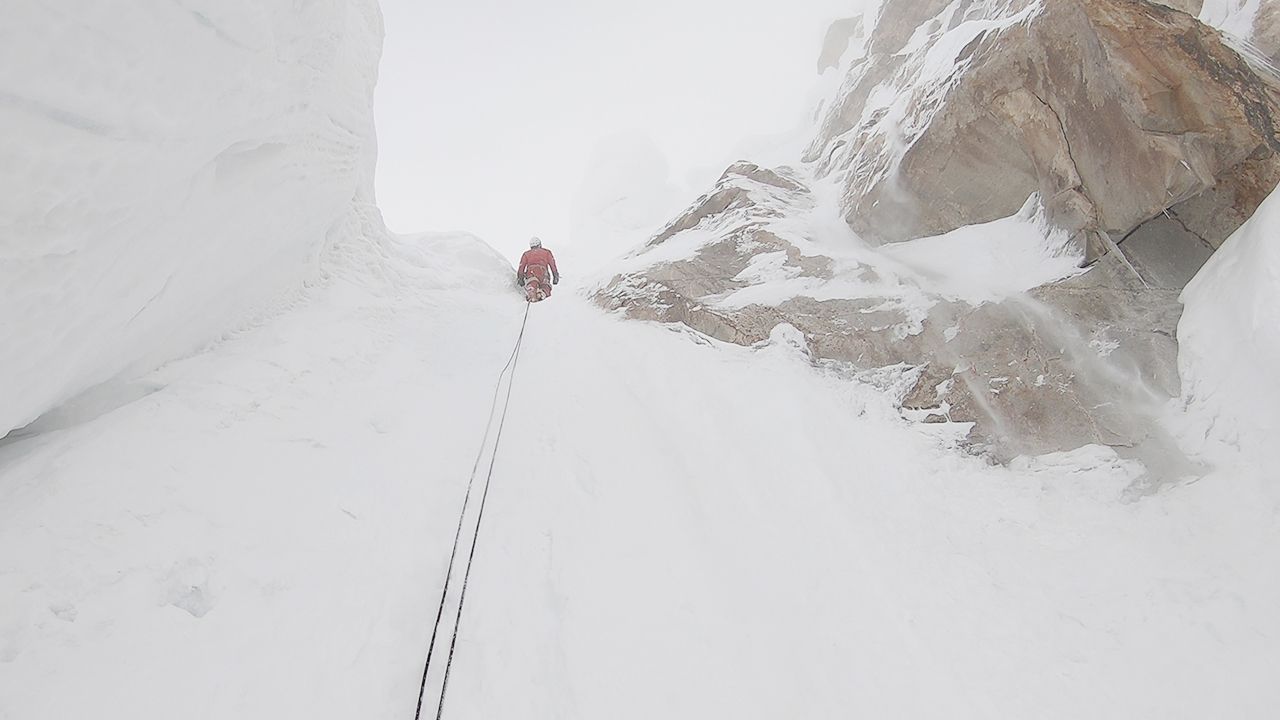
Когда погода улучшилась, они снова вышли в путь. Вскоре они нашли место для последней ночевки перед восхождением на вершину — на высоте 6800 метров. Дальше были места, до которых никто никогда не добирался. Несмотря на плохой прогноз погоды, поворачивать назад альпинисты не собирались.
Из еды у них остался только один завтрак — cухая малина с тертым шоколадом и сливками. Сергей предложил идти налегке, не брать даже палатку. Гуков так обычно не ходил и предложил взять с собой хотя бы коврик, на котором, если что, можно будет пересидеть. В итоге решили ничего с собой не брать.
Они начали подниматься в полной темноте, в три часа ночи, освещая дорогу фонариками на голове. Через полтора часа рассвело, в два часа дня трекер показал высоту 6945 и заряд аккумулятора в 2%. Они шли еще как минимум пять часов — и уже не понимали, на какой высоте находятся. Оба чувствовали, что уже давно пора спускаться: погода портилась, снег мешал двигаться, еда закончилась.
Вскоре Глазунов, шедший чуть впереди, сообщил Гукову, что выше уже ничего нет. «Вершина, Саня!» — крикнул он сверху. «Прими меня», — ответил Гуков, стоявший на 10 метров ниже. «Это нереально, Саня, тут все в [снежных] грибах и сбросах». После этого Глазунов спустился к Гукову. Альпинисты решили, что они достигли вершины; дальше — только снег, на котором не закрепиться. «Такое практикуется, что ты не заходишь на самый верх вершины, если она снежная, — объясняет Гуков. — Стоишь ниже и считаешь, что это вершина».
Позже Гуков решил, что это все-таки была еще не вершина — и до нее было еще несколько сотен метров пути. «Я не чувствовал вершины, мы не стояли и не радовались на ней, как я мечтал, — вспоминает Гуков. — Шли, вымотались. Уже не было никаких эмоций. Обычно вся радость уже, когда спускаешься вниз».
Так или иначе, искать другую вершину не было ни сил, ни смысла. Альпинистам хотелось отдохнуть и заночевать, но не на что было даже присесть — все осталось на стоянке. Обессиленные, они спустились к палатке. Следующий день Гуков не помнит, — видимо, они отсыпались.
Chapter 6
«Серега улетел»
Они находились наверху значительно дольше, чем предполагалось. Связи не было — и 24 июля родственники и другие альпинисты начали их искать. Они попросили компанию, отвечающую за восхождение, вызвать вертолет — там неохотно согласились. Вертолет быстро обнаружил Гукова и Глазунова — те удивились, но Гуков подумал, что было бы неплохо, если бы их сейчас забрали. Им скинули сверток — внутри был газовый баллон, сникерсы и сырокопченая колбаса. Они поделили шоколадки и начали спускаться.
Глазунов спускался первым, из-за непогоды его не было видно. В какой-то момент Гуков понял, что партнер уже давно не появлялся. Он ждал его около получаса, кричал, плакал . «Сергей, Сергей, ты в порядке или нет?» He asked. Когда Гуков спустился ниже, там никого не было. «Возможно, вес был слишком большой, его крюк сорвался, и он упал вместе с ним, — вспоминает Гуков. — Обязан ли я был спуститься вниз и поискать Сергея? Да, у меня были такие мысли. *****, как же так, Серега…» Гуков до сих пор не знает, что именно произошло с Глазуновым.
Альпинист нажал на трекере SOS — тот включился, несмотря на почти севшую батарею. Гуков отправил в общий чат с семьей и координаторами восхождения несколько сообщений: «Серега улетел», «Я вишу на стене», «Мне нужна помощь. Мне нужна эвакуация». С собой у него остался только один ледоруб — остальное снаряжение для спуска было в рюкзаке Глазунова. Его охватила паника. Он начал кричать, не понимая, что делать дальше.
Вскоре на сообщения пришел ответ: ему написали, что спасательный вертолет скоро прилетит. «Найди какую-нибудь полочку и подожди там», — написала жена Гукова. Он сел на пару камней, лежащих на склоне, привязал к ним палатку и залез в нее, как в спальный мешок.
Погода испортилась, вертолет не прилетел. Начался снег — и шел не переставая. Рядом спускались лавины и случались камнепады. Иногда большие массы снега и камни перелетали через Гукова; ему приходилось выбираться из палатки и откапываться. В лежачем положении он провел следующие шесть дней.
Из еды у Гукова с собой была только колбаса, которую им с Глазуновым скинули из вертолета. Он пытался ее есть, но его сразу тошнило. На третий день он обнаружил, что у него в кармане лежит кусок сникерса — он съел его, немного утолив голод. При этом ему постоянно хотелось пиццы — он вспоминал, как несколько дней назад они с Сергеем обсуждали, не заказать ли ее на вершину.
Два раза в день он пил воду. Это было непросто: растапливать снег в палатке опасно, от запаха горения можно задохнуться; когда он открывал палатку, его засыпало снегом. Пару раз огонь вспыхнул так сильно, что палатка чуть не загорелась.
Иногда Гуков делал себе массаж ног, но не снимал ботинки, только расшнуровывал, — боялся, что не сможет надеть обувь на распухшие ноги, когда прилетит вертолет.
Больше всего он думал о Сергее: «Почему это произошло? Как произошло? Почему он, а не я?» Думал и о том, что будет с семьей, если он не выберется, ведь они живут в доме, в котором постоянно что-то нужно ремонтировать. «Не скажу, что я как-то боюсь смерти, — говорит Гуков. — Я не хотел умирать из-за жены и детей».
На третий день у Гукова начались галлюцинации. Сначала ему показалось, что он оказался в квартире друга-альпиниста Валерия Шамало (с которым ходил в первый поход на Латок-1). Они сидели за столом, ели пельмени и разговаривали. Он был уверен, что смог спуститься сам и спасся. В процессе разговора Гуков понял, что его наверняка будут искать на горе спасатели, потому что он никому не сообщил, что вернулся. «Нет, Валер, поехал я назад, а то меня там ищут», — сказал он другу. И проснулся.
На шестой день похолодало, и Гуков решил, что если вертолет не прилетит, то он начнет спускаться без снаряжения: «Там хоть как герой умрешь, а не просто замерзнешь».
К тому времени о том, что Гуков застрял на горе, начали рассказывать мировые СМИ. На странице альпиниста в «ВК» стали появляться сообщения от незнакомых людей, которые называли его «чудаком на большую букву М!». Выкладывали и мемы — на одной из картинок мужчина прыгает с горы в мире видеоигры «Майнкрафт».
Chapter 7
sdn opa zavtra ewe xye
Спасательную операцию ее московские координаторы назвали «Спасением старпома Гукова». Они не только связали между собой чиновников двух стран, но и смогли собрать деньги на оплату дорогостоящих вылетов спасателей.
С Гуковым они общались через трекер, который заработал после того, как он нажал на нем кнопку SOS. Ему приходили сообщения, которые иногда было очень сложно разобрать. Одно из них выглядело так: «sdn opa zavtra ewe xye no pogoda bydet nado prosto eё» («сегодня погода жопа, завтра еще хуже, но погода будет, надо ее просто [дождаться]»). В последнем сообщении ему прислали инструкцию о том, что делать, когда прилетит вертолет. Он ответил: «Рюкзак можно взять?»
Проснувшись утром 31 июля, Гуков увидел, что стоит хорошая погода, и подумал, что вертолет, наверное, сможет до него добраться. And so it happened.
Около 6 утра к нему подлетели два вертолета, с одного из них спустили веревку. Гуков поймал ее со второго раза, но пристегнуться сразу не смог — карабин замерз. Он поднес его ко рту и начал на него дышать. Ему показалось, что вертолет зашумел иначе, поэтому он поторопился скорее зацепить карабин. Вертолет сразу же начал движение, хотя Гуков не успел отстегнуть страховку, на которой находился последние шесть дней. Альпиниста перевернуло; вертолет дернулся и его резко бросило вниз, но страховка лопнула. Раскачиваясь из стороны в сторону на тросе, Гуков несколько минут летел до площадки рядом с базовым лагерем. Он провел лежа на маленькой площадке на отвесном склоне 140 часов.
В базовом лагере альпиниста обернули в спальный мешок и снова занесли в вертолет, чтобы отвезти в ближайший госпиталь. Гуков был крайне слаб, но серьезных повреждений и обморожений у него не нашли. В спасательном вертолете он с улыбкой сказал : «Трудно говорить. Верил, конечно. Особенно поначалу. Потом уже надежда терялась». Из Скарды его на старом советском МИ-8 отправили в госпиталь в Исламабаде.
В больнице Гукова навестили пакистанские военные; вскоре за ним из Москвы прилетел самолет МЧС. Следующие несколько недель он провел в больнице имени Вишневского, где ему ставили восстанавливающие капельницы. Сейчас у него осталось небольшое онемение ног и общая усталость.
«То, что он просидел неделю с такими минимальными повреждениями, говорит, что он незаурядный человек», — сказал на пресс-конференции врач Амиран Ревишвили. Гукову действительно повезло: обычно застрявшие на такой высоте альпинисты замерзают насмерть и за одну ночь. Когда жену Гукова спросили, отпустит ли она его в следующий раз, та сказала, что не может ему запретить, ведь «горы — часть его жизни». Сам он сказал «Медузе», что обязательно отправится в новые восхождения и хочет выучиться на международного гида-проводника, чтобы водить других.
Когда Гукова спасли, Джефф Лоу — тот самый американец, сорокалетний рекорд которого побили два российских альпиниста, — написал координаторам спасательной операции: «ФАНТАСТИКА. Передайте ему слова поздравления и любви. Не могу дождаться услышать его историю целиком».
Chapter 8
Лучший обелиск
Пока Гуков находился в больнице, поиски Сергея Глазунова приостановили. «Достать тело Сергея будет практически нереально, — заявила Анна Пиунова, одна из координаторов спасательных работ. — Если будем проводить эту операцию, будем должны понимать, что мы можем пожертвовать жизнями других людей. Сергей нарушил азы альпинизма. Он спускался первым, спустился на полку и не пристегнулся. Но они были уже 19-й день на горе, и оба очень устали. На фоне усталости, видимо, Сережа допустил ошибку».
Тело Глазунова пока остается на горе. Никто не знает, где именно. По словам Евгения Глазунова, они с Сергеем часто разговаривали о смерти. « Нас обоих всегда тошнило от вида наших [российских] кладбищ, от наигранных речей и слез, — рассказывал он. — Мы договорились, что если что-то произойдет с одним из нас, не поднимать паники, не делать действий, которые могут подвергнуть необоснованному риску еще чьи-то жизни».
Евгений хочет попробовать найти брата с помощью дрона — это намного дешевле вертолетных поисков. Если найти его не удастся, то, по словам Евгения, «Латок-1 станет для него лучшим обелиском».
Каждый год в разных частях планеты гибнет несколько десятков российских альпинистов (в 2017 году их было 27). Их тела иногда находят только спустя десятилетия. Примерно через месяц после пропажи Глазунова, 30 августа 2018-го, на перевале Гумачи на Кавказе обнаружили останки Евгения Лебедя, который пропал там еще в 1994 году. Опознавать мужчину поехал его брат.
Daniil Turovsky