
Translated material
#Director
Director of Moscow School No. 1476 Elena Pimenova on the new project of Matvey Shparo: a campaign as a mirror for the hero
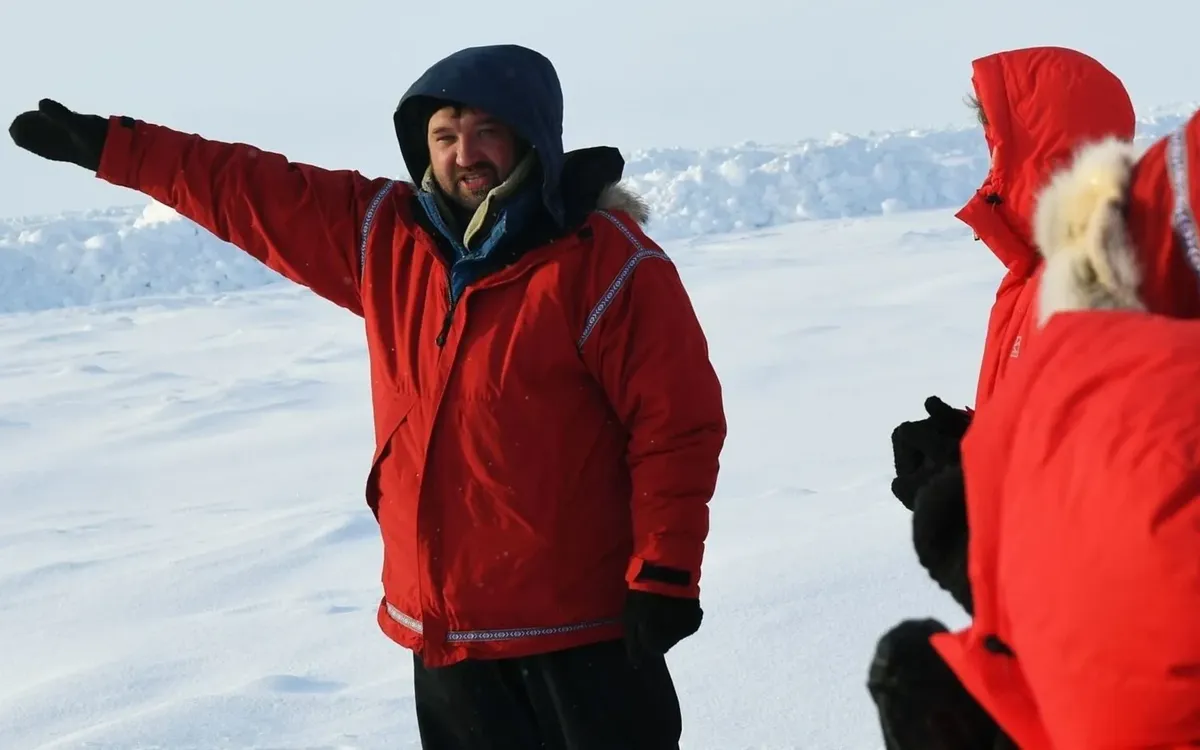
At the end of summer, when everyone is returning from vacations, a lover of paradoxes and non -standard situations, the famous traveler Matvey Shparo announced the start of the new project #director of the director. He suggested that the directors of Moscow schools go on a campaign with a group of high school students from their own schools. Moreover, he said that everything will be carried out in the format of managerial training. What has begun here! The Facebook of the traveler exploded with comments in the style of "I am with you!" And "take me!". More than 30 directors signed up for competitive selection on the first day. It turned out that the modern director of the Moscow school is not a “cracker”, not an official, it is an energetic, easy -to -rise person, greedy to everything that can benefit both him and his students.
To understand the reasons for the excitement, we decided to talk with the director of the Moscow school No. 1476 Elena Vladimirovna Pimenova - on the one hand, because she was one of the first to respond to the call of Matveia Schparo, and on the other hand, because she knows what tourism is, not firsthand.
- As a child, I went on hiking, participated in competitions, in the Moscow championship in pedestrian tourism. Even then, I liked that we were included in the process long before the campaign: we were preparing for the championship, investigating the region where we went, planned our budget. I even remember that it was on me - common money, and we distributed what and how much to spend. I could not get such an experience in the family: my brother could consult with me about expenses, but still planning is the next stage. It was necessary to compile a menu, purchase products, distribute everything by backpacks, thanks to this activity, the guys acquired very important life skills ... And in general it was cool, romantic, interesting!
I had such an episode in my life: we planned a summer campaign in June for a year, and suddenly parents were given a “burning” ticket to the sea ...
I still remember - this is a wound that has been non -healing for so many years. I did not need the sea, the sun, excursions, I wanted there - in the rainy suburbs.
This resulted in a serious teenage protest: I did not go to the sea, did not sunbathe, I learned to play the guitar and read it - it was my contribution to that campaign ... That's so serious. Of course, the parents understood everything, we all talked - the culture of partnerships was very developed in our family, but I made conclusions for the future - regarding relations with my children.
- Since then, a lot has changed, now the older generation has a lot of complaints to youth ...
- Claims to youth - they are notable. Take at least the ancient Greeks or Romans, read the written sources of those times. We do not think that the children are different, because the world has changed. We changed their lives, now they are different and they need to do with them differently. And if the school, for example, has been transformed little, despite serious external changes, our daily process is very similar to what was 20 and even 100 years ago - then new approaches, education through joint activities, through overcoming difficulties - it seems to me that it is very valuable.
By the way, a campaign for the director is a great opportunity to better understand the new generation. The opportunity to be at least a week in communicating with young guys is cool.
I am absolutely sure that there will be an unexpected effect-we will have near another generation, we will be able to not only read someone’s analyst, but really understand the values of this particular generation, their priorities. Because we, perhaps, try our best for them to do everything, but we proceed from our ideas about values and priorities. And they may have a different request, and we have no time to stop, ask ... And, most importantly, when you ask them, they very cleverly give the correct answers. Especially in adolescence. And here in direct communication there is a chance to find out everything as it is. The fact that Matvey Shparo conceived and organized such a generational interaction is very cool.
- Can't the director talk with children in the lessons - to understand them, to feel?
- The position is responsible, the volume of activity is large, the scale of the tasks is also very large, even purely territorially. And it is difficult to conduct lessons. We switched to the format of circle work, but this is not enough.
-That is, the subject director is rare now?
- Yes. There are those who continue to conduct objects, but these are most likely those who have objects with a minimum number of hours a week - economics, social studies, biology (depending on what level). But those who lead mathematics or Russian language and literature (like me) do not work out. You took one class, and this is at once for many hours a week. We do not undertake, just so as not to let anyone down. Therefore, I, as soon as I heard about the #director’s program, I immediately realized that I really want to participate in it and I would declare it. Even if I can’t go, I am ready to take part at any stage of the program - in the development of the program, in information support, in reflection, in preparing the next trip - in any case, to be near. There is a need. This is related to both vocation and full implementation.
“So you understand why many directors so violently reacted to the program announcement?”
- Certainly. It is absolutely voluntary, it is an opportunity to touch nature, turn to your childhood, feel a team, a sincere team-these are adolescents, you definitely can’t deceive them, they cannot be different with them. If you pretend, this team will push you away right away, in the campaign you are in the palm of your hand. So, of course, bold people responded.
“Are you scared to go closer to rapprochement?”
- I really want this. I thought about it. I would not use such a word - "scary." There is excitement, I will not hide. This is very responsible. Children are like a litmus piece of paper, like a mirror. There is such a technology, exercise, called a "mirror for the hero." It is aimed at receiving feedback.
The director who is decided on such a trip, he is a hero. After all, it seems to me that we do not even actually imagine all the risks.
I think for many there will be an unexpected effect from this program. We learned to set goals, learned how to design our path, our movement to the goal, but it is important to get feedback - how people with us in this?
- But it seems that the directors have now become more open: pages in social networks, e -mail on the website of each school ...
- Undoubtedly. But the possibility of personal communication - it enriches. This is what is missing now - both adults and children. To be accepted, to be needed by someone, to feel the shoulder-in the campaign it is possible, like nowhere. To hear the words addressed to you, looking into the interlocutor in the eye is so important! There are many opportunities for communication now, but it goes into virtuality. The same likes - there seems to be communication, but very formal. And in adolescents, in general, the need for communication, empathy is very high.
I myself recommend adventure camps and programs to parents who find it difficult to find a common language with a teenage child. This is difficult not because parents cannot or do not want to - such an age. Those methods, technologies used by the organizers of the campaigns, in my opinion, are most consistent with the needs of this age. Teenagers want to communicate, want to try, want recognition, want to feel their strength ... And on the one hand, they want all this, and on the other hand, they are afraid, and when such safe conditions for self -realization are created - it is very valuable.
Ekaterina Kolesnikova - especially for "New"