
Translated material
The Russian Orthodox Church broke off relations with Constantinople-because of Ukraine. Main
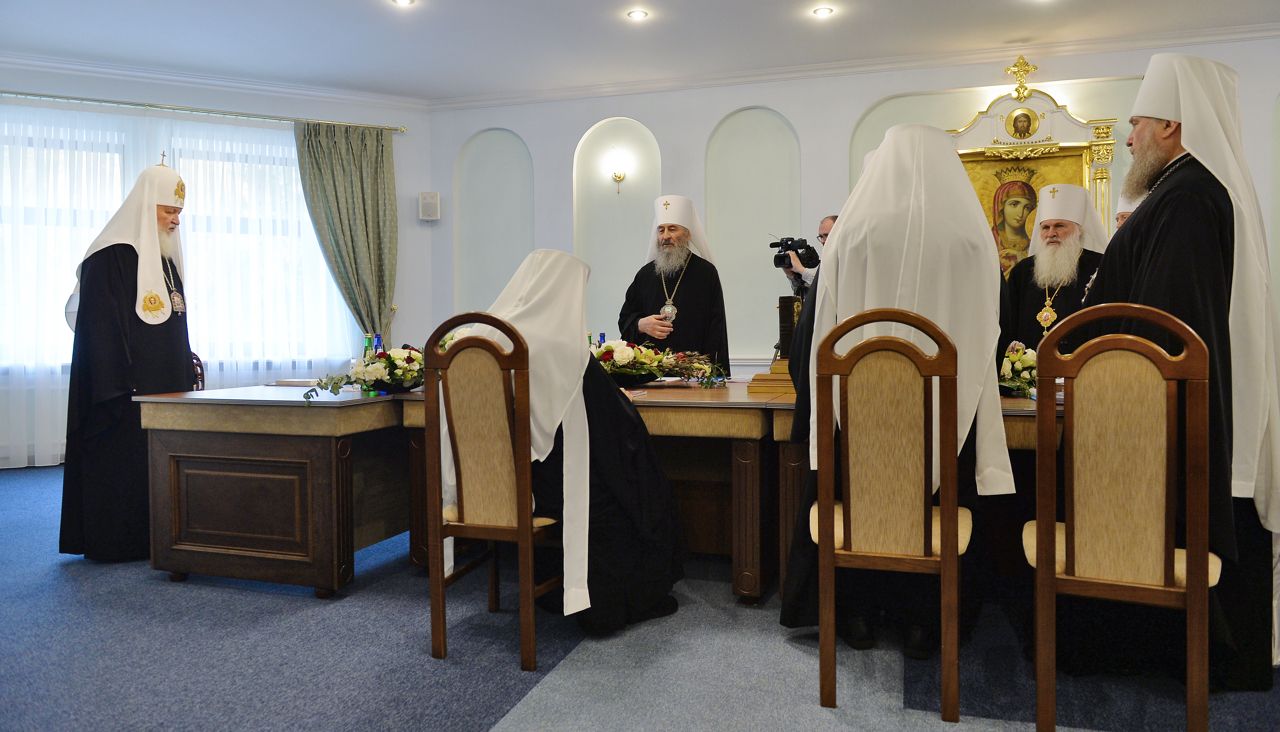
The Russian Orthodox Church interrupted Eucharistic communication with the Patriarchate of Constantinople. The decision was made at a meeting of the Holy Synod of the Russian Orthodox Church, which took place on October 15 in Minsk. The reason indicates the "anti -anonic actions of the Patriarchate of Constantinople, who entered into communication with schismatics in Ukraine and encroaching on the canonical territory of the Russian Orthodox Church."
The Patriarchate of Constantinople is “the first in honor” among all local churches. The official title of Patriarch Bartholomew sounds like this: Archbishop of Constantinople - New Rome and the Ecumenical Patriarch. As the church publicist and the former responsible editor of the “Moscow Patriarchate Journal of the Moscow Patriarchate magazine” said , all the local Orthodox churches recognize the championship of Patriarch Constantinople - including his right to cancel the decisions of the heads of other local churches and give independence to the new departments. “The most serious rivalry and calls not to recognize the special status of Constantinople come only from Moscow,” Chapnin explained.
The rupture of Eucharistic communication is almost an extreme measure in inter -church relations. The break assumes that the clergy of the Russian Orthodox Church will not be able to perform joint services with hierarchs and clergy of the Patriarchate of Constantinople. Orthodox believers from Russia will not be able to take communion in temples included in the jurisdiction of Constantinople and participate in other sacraments. Usually, with the rupture of the Eucharistic communication, the patriarchs of the quarreling churches cease to remember each other behind the liturgy, but from the Russian Orthodox Church, such a decision was made before a complete gap: Patriarch Kirill has not been remembered for a month for a month for the Primate of the Constantinople Church Bartholomew. The commemoration begins immediately with the Patriarch of Alexandria Theodore.
The Russian Orthodox Church has already compiled a list of temples for tourists where you can’t pray . Secretary of the Department of External Church Relations of the Moscow Patriarchate, Archpriest Igor Yakimchuk, noted that the temples of the Patriarchate of Constantinople are located, in particular, in Istanbul, in Antalya, Crete and Rhodes. The Archpriest also recalled that "for refusing to follow such prohibitions for the clergy, punishments (Prejection) are provided for, and for laity - repentance of confession in the disobedience of the church."
The Russian Orthodox Church says that Mount Athos is now also closed to the Orthodox from Russia. The press secretary of Patriarch Kirill, Priest Alexander Volkov, recalled that Mount Athos is part of the jurisdiction of the Patriarch of Constantinople "with all the ensuing consequences." Later, the department of external church relations explained that the breakdown of relations does not mean a ban on worshiping the shrines in Athos - as well as the ban on bringing shrines to Russia from there.
Mount Athos is a self -governing territory in Greece, on which there are 20 monasteries. This mountain is one of the main Orthodox shrines, where many pilgrims seek to get, including from Russia. This is a popular place of pilgrimage to Russian politicians, officials and businessmen . Vladimir Putin was here twice, in 2005 and 2016.
The decision of the Russian Orthodox Church was supported by the Belarusian and Ukrainian churches, obeying Moscow . The chairman of the department of external church relations of the Moscow Patriarchate Hilarion said that the Metropolitan of Kiev and All Ukraine Onufry “participated today in a meeting from beginning to end and, like all members of the Synod, supported its decision”, and that the Belarusian Orthodox Church joins the decision. The Ukrainian Orthodox Church of the Kiev Patriarchate, in turn, called the ROC’s decision “self -isolation in response to legal decisions of the international community”.
The Russian Orthodox Church is not the first time to break relations with the Patriarchate of Constantinople. In February 1996, the same Patriarch Bartholomew announced that the Patriarchate of Constantinople was taking the Estonian Orthodox Church under his jurisdiction. Three days later, the Russian Orthodox Church interrupted Eucharistic communication with Constantinople, but after a few months it was restored. Now in Estonia there are two Estonian Orthodox churches - the Patriarchate of Constantinople and Moscow.
The conflict with Constantinople began because of Ukraine. The largest canonical Orthodox Church in Ukraine is the UOC of the Moscow Patriarchate. Two more Orthodox churches - the UOC of the Kyiv Patriarchate and the Ukrainian Autocephalous Orthodox Church - do not depend on anyone, but are not recognized by anyone, they are non -canonical. After the 2014 revolution and the beginning of the conflict in eastern Ukraine in Kyiv, they began to actively discuss the creation of a new, canonical Ukrainian Orthodox Church, which will be autocephalous - that is, independent. The Patriarchate of Constantinople decided to provide autocephaly with the new church, which is planned to be created on the basis of the UOC of the Kyiv Patriarchate, the UAC and the accumulated parishes of the UOC MP. The Moscow Patriarchate is categorically opposed, because he does not want to lose its influence in Ukraine.
Alexander Borzenko, Grigory Levchenko