
Translated material
Let's sit on the track
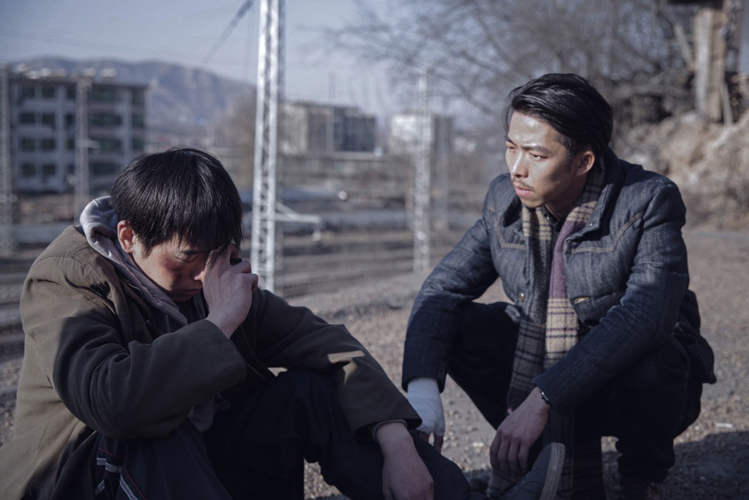
On October 20, at the Moscow Cinema “Karo 11 October” they will show “Elephant sits calmly” Hu Bo (screening is organized by the online journal Cineticle ). After graduating from the Beijing Film Academy and writing several novels (Hu Bo became famous just as a writer), the director committed suicide at the age of 29, even before the premiere of his only picture at the Berlin Film Festival - 2018, which approved the Elephant as the main film defeat of the year.
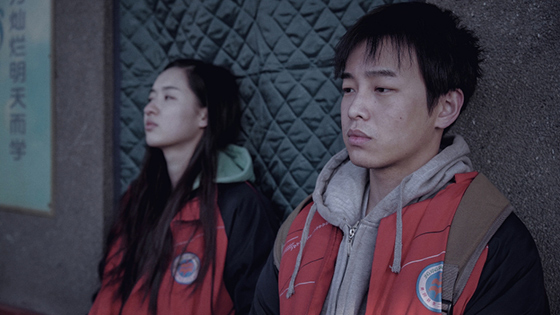
The measured four -hour narrative of the “Elephant” covers the events of one day during which the paths of four heroes intersect, by the will of the case of the case of despair from a seemingly non -proper life. A schoolwoman Wei Boo lives with an evil, shaving from idleness, a former official, dismissed for bribes, plays Volan Chinese and goes to school, about whom everyone knows that she is the worst in the city. The human feeling makes him stand up for a friend, whom the school bully Shuay accuses of theft of the phone. Bu unsaida is unsuccessfully pushing, he falls from the stairs, falls into intensive care and dies. For BU, the elder brother of Shuai, the local bandit Yu Jong, who does not eat, however, to the youngest, does not feed any fraternal feelings.
Yu Chen himself is also not sugar: from there is nothing to do, he sleeps with his best friend’s wife and becomes a witness to the suicide of the latter. On the same day, Juan Lin, a classmate Wei Bu, will have to part with illusions. From the fasting household and quarrels with a mother always driven at work, the girl is saved in the arms of the deputy director of the school, who is “very kind to her”. At least at home is clean! However, their connection is opened, and the scandal cannot be avoided.
 © Dongchun Films
In the same restless situation as young people, there is a retired military man living in the neighborhood, whom adult children have long wanted to hand over to the nursing home. The need to move is explained by the future beloved granddaughter - only in another area it will be able to arrange a better school, but there will not be enough space in a new apartment (although a persistent grandfather is already sleeping on the balcony) for everyone. For the time being, the old man is covered with a small dog (they don’t take the elderly with animals to the house), but when the dog is more closely biting it, he will inevitably collide. The universal existential base, on which, like on a checker board, are drawn to the trajectories of the characters - material poverty and spiritual poverty of the inhabitants of an unnamed city in the north of China. The viscous stream of life around the life of life is permeated with cynicism, equal and cowardice. The refrain from the scene to the stage in the dialogs sounds: "What is your business?" The main rule is to stay away from other people's problems (“no matter what happens”) and not get into troubles yourself.
It is worth a reservation immediately: the debut of Hu Bo would be no less loud, even if such tragic circumstances did not accompany him. Of course, the author’s death certifies the picture of the world created by him, enters it into eternity, gives it the property of manifesto, which you can’t argue with, especially when it comes to a four -hour film, the theme of which is literally - hopelessness. However, here, in addition to resonant introductory factors (the duration of the film and the fate of its author), the state of festival cinema played an equally important role, the very historical moment in which the Elephant was represented by the public.
 © Dongchun Films
We are talking about longing for the new. It is longing - that is, a feeling connecting the memory of a sweet and already understandable with the desire of new forms. Unexpectedly for many critics, the film Hu Bi became the embodiment of aspirations of this kind of fresh films that would logically grow on the territory of the usual and familiar. The Elephant satisfies this request for several reasons at once. On the one hand, the film continues the realistic trends in the author’s cinema of the last fifteen years, Bela Tarr, the Dardenn brothers, the Romanian “New Wave”, the realism of the Chinese Polo -Office Cinema in general and Jia Zhanke in particular are read and recognized in it. On the other hand, this is a work, evenly sustained in a single tempo and at the same time withstanding the weight of complex literary dramaturgy with its inherent ambition to speak about the unshakable laws of being. The hopeless prose of life in the film, however, has a lot in common with literary prose - the writer's background of the director is clearly felt
The plot of the “Elephant” is a kind of labyrinth: the path of each of the heroes is an arbitrary run on the plane, just running is very slow. All of them somewhere heard a story about an elephant from the Manchu zoo, which just sits day and night calmly. This is not in a world, completely devoid of miracles (an elephant is an absurd metaphor not only of the sought-handed peace and hope for something more, but also of this resting world itself), it becomes the only reason to continue to live, clearly understanding that everything will be exactly the same in the new place.
Each of the main characters passes along the route that includes loss, crime and Odyssey in the city (as if the rich world of Ulysses was flattened by a heavy elephant entrance). In return, all of them is the story of an elephant, embodied hope for hope itself. The film Hu Bo is a movie on the verge of suicide. But the protagonists against the general background distinguishes not only the presence of conscience and the ability to act, but also an unstable choice in favor of life. When the bandit Yu Jong still overtakes the fugitive Wei Bu, he will ask him the question, most of all, who excites him: “If we were now on the high -rise balcony, what would you think about?” The guy’s answer: “I would think about what else I can do.” The characters rotting from the inside continue to swim slowly with the flow, those who are weaker, voluntarily leave the game. The same in whom was a drop of human dignity, literally there is nothing left but to go to the elephant.
 © Dongchun Films
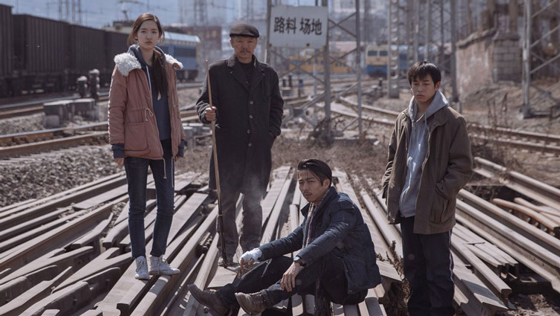
The plot pattern corresponds to a planar cinema solution, consisting of a very limited set of techniques. A hand chamber, as if glued to the heroes, the whole film holds them in the foreground - large or medium. The background is blurred. The distant plan, which has the value of a certain intermediate result, we will see only once, in the final itself. The scenes, as a rule, are shot by epizodes (it is worth paying tribute to the operator Fan Cao to the distance, the camera behaves very unobtrusively, but very sensitively). As in the life of the heroes, in the frame-nothing bright: the entire visual row is passed through a cold filter, the streets are gray (colors of elephant skin), and the rooms are immersed in a bluish-green twilight; Even the blankets on the doors are the same - green. All these signs, of course, can also be understood as a consequence of the unified public life of ordinary residents of China. The narrative drum spins calmly and evenly - in Chinese culture, as you know, time is conceived by longer distances. Periodically, each new round of action is accompanied by an insertion of an electronic melody, also looped into the square of refrain. It not only reminds of the inviolability of the world order, but also makes the film fashionable .
“Elephant” to some extent is such a series “School”, where despair has become so everyday that it ceased to be playful. As if Dardenna was shot in the rhythm of Bela Tarra or Germanicus to suffer the degree of new Romanian cinema. The literary basis of the narrative - in particular, the line of the unhappy in love, tired and reflecting bandit - makes us recall classic criminal dramas. What we see and what is not boring to look at for four hours is a well -tempered despair that the characters of Hemingway, Synods, Melville can separate with the heroes of the Elephant. “You can go anywhere, but everything will be the same there,” says the restless pensioner to the student without the future, and he will: “We will go, we will see?”