
Translated material
"Who does not yell, he is not treated"
The third story of the Casket of the 90s is the memories of a girl from Tarusa, who found himself in the nineties one on one with the Soviet traditions of medicine in a small city on the Oka. Mandatory pain, huge scars, impotence of parents and the Nutella bank as an occasion to learn how to walk, dance and wear a swimsuit.
We agreed to see each other a few weeks ago and confirmed the meeting this morning, but Yana is still lingering. I am sitting in the farthest corner of the institutions filled with people, the tables and chairs are very tight, visitors all the time go between them and collide with each other, the doors now and then open with noise, and I do not immediately notice it: low, thin, she goes through the obstacles to me through the obstacles, and immediately apologizes: and immediately apologizes:
“I got carried away with work and therefore was a little late,” Yana smiles, carefully pushes back a chair, sits noisily and then adds: “Only is it possible to make it too painful in the text?” I do not want to spoil it.
Yana is 29 years old. In recent years, she lives and works in Moscow, visits a neuropsychiatric boarding school as a volunteer and goes to rehabilitation courses. Initially, we plan to talk with her about the healthcare system in the nineties, which completely formed her life, but in the end we talk about the inability of parents to fight against the system.
Yana has a very good memory. According to her, she remembers every day of her life and talks about her, consistently moving a year after year into the past. It seems that they usually talk about life the other way around, but in fact, the closer it is approaching the beginning of her life, the closer approaches the end of history.
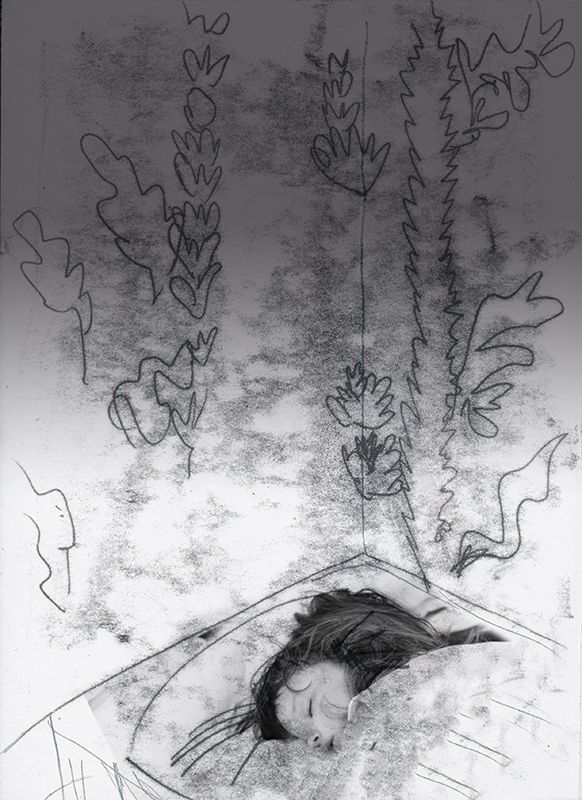
“On the hill of the Musatovsky slope on the grave of one artist, a sculpture of a boy lying on the back is installed,” says Yana. -According to the sculptor’s plan, the boy is sleeping, but for some reason we are all sure in Tarus that this is the very dead boy whom the artist once pulled out of the water, but did not have time to save. I love this place, from there you can see the whole of OKU and the whole sky. And it seems that because of this grave we say that death in Tarusa lives along the river. But in the summer of 1989, she made his way to our only maternity hospital, and there, after a day of the heavy childbirth, the child is taken from her mother directly to the morgue.
 The friend recommends
2018
Tarusa is a beautiful small city where everyone believes that he has the right to comment on the life of another. My mother and I are walking, and women in colorful robes look into the stroller, lament, pity, cry and assure that they better know how to live, and even more so how to treat:
- The cat has pain, the dog has pain, the mouse has pain, and the baby has no pain. Give me a kiss in the lobby, I pour on the wound - and everything will heal. A cat, sleep, dog, sleep, mouse, sleep, and a baby - stand up and dance.
In children's photographs, except for those where I am a tiny infants in giant swings, I am always in black wide trousers. Now I understand that the clothes then performed one function - to hide.
But now, when I allowed myself to be happy, I buy beautiful things: pink sweatshirts, jeans shorts, red dresses and even heels. Very slowly, but still I go up to the mountains, alone I eat the entire rum cake at a social event, I go in a bikini along the beaches of Cyprus with these huge scars on the calf muscles and with an hundredth attempts I climb the upper shelf of the Moscow-St. Petersburg train.
People still think that I just have weak legs, and I try poorly and regret myself, instead of getting up and going. But the problem is not in the muscles, but in the brain that does not know how to use my legs.
It’s not easy for me in the subway. If you push me, I will definitely fall and I will definitely grab someone next, and I will rise funny, ashamed, clumsily, booty up.
2017
I’m sitting in the kitchen, leafing through the photos in social networks and seeing the advertisement of the next rehabilitation center: a child screams on the couch, and his mother stands next to the detached look. On top, it is written in capital letters “successfully worked hard”, a phone number and an invitation to a free first reception.
I drop the phone and I can’t raise it from the floor for a long time. I thought I had already forgotten how this scream sounds, but it turned out that he was always inside me. This is a certain type of scream. Non -calling moan. Not bored nagging. This is a cry of a person who is unbearably painful.
Recently, I have been living in blessed confidence that everything has changed, that a lot of years have passed and the progressive treatment methods have been replaced by aggressive methods, but I did not wait for them at one time.
In the 90s, the main tactics of treatment-put a person on a bed with an iron headline, push a terry towel in his mouth, take his crooked hand or crooked leg and “give a load”-start pulling. It is difficult to compare this pain at least with something: the sensations are like they beat you, twisting joints and tearing tenders. If you compare with sounds, then this pain is similar to a violin taking notes sharply. With a tear. This is a very strange nature of pain. You think all the time: danger. Danger. A little more-you will be torn!
You constantly feel violence against yourself, and not only because it is very painful, but because the only thing you can do is come to terms and wait for these torture to end.
I well remember how doctors, adults stand at me, each of them is the same person as you. They carry the values of Soviet medicine on their shoulders. They inspire mom that whoever does not yell is not treated. They have iron logic, which works without fail: if your child has not broken anything in the morning, then they will not tear anything again in lunch, and in a year, too, he will live. But if I could be nearby then, then I would go to me, looked into my eyes and said:
- Imagine, this is not only hellishly painful - it is also completely in vain.
2016
Together with me, a 12 -year -old girl goes to the rehabilitation group, who knows about modern, soft rehabilitation methods:
“Once,” she says, “I personally brought my daughter to the doctors who brought her to the capillaries bursting from the scream.” I grabbed her and never returned there again.
Actually, it is not common for me to envy, but a lump is still approaching my throat. I leave the room and sob the way the children cry. I choke. I howl. I would really like then, many years ago, so that I would also be taken to the handles and take me away.
I know the story of the family well. All my childhood doctors tell my parents that nothing good will come of me, that it is easier to get rid of the way I, but my mother and dad not only did not abandon me - they taught me how to walk.
It is difficult to demand from the parent that he becomes a reformer and a hero, especially at those moments when he is left alone with a problem when he is afraid to challenge the doctor’s opinion when there is no access to free information, but fear is plenty: if you refuse to do what you say, you will automatically send your child to a wheelchair. It is very scary for mothers and dads to take responsibility, but even worse - by the end of your life to understand that all the time, while it seemed to you that you fought for your child, you did everything wrong.
And the wagger is that this is still happening: some doctor from Kaluga now inspires some mommy that they have to straighten the tendons of their six-month child wildly with painful methods, and this, they say, are the only chance to avoid disability. At the same time, he most likely knows that there is also the third option, but the doctor from Kaluga, in addition to knowledge from the 90s, needs to change Soviet thinking, and this is much more complicated.
2003
The operation is unsuccessful. My future is a wheelchair.
I remember how I turn my head - and I see the blue sky outside the window. The walls in the wards are white, the pillowcase is white, the duvetel is white, the sheet is white. I lie, having buried my face in the hole of the sheet, and I think that there should be something in this life for which I will need to rise: at seven in the morning the thermometers will be stuck in the armpit, they will bring breakfast, then the inspection, then the dinner, then the procedures, then the dinner; The food is fresh, the walls are white - there is nothing. And then I recall that in the corner, in the refrigerator of our ward, lies the Nutella bank, which my mother managed to find in some incomprehensible way on the empty shelves of the stores of our city.
I am lying: the face is still in the hole of the sheet, in my head all the thoughts are only about one thing-about the chocolate-male oil, for which it is worth learning to walk.
1999
As a child, my favorite game is to hide behind the balcony curtains, be nervous before going to the carpet and dance for an infinitely long time. Mom returns again and again to turn the cassette, because I still do not reach the tape recorder. She explains how to properly put the composition, how important it is to maintain music with a movement and that there is nothing wrong with the fact that I break the rhythm every time.
Then I guess to come up with a little people: my imaginary troupe consists of mainly blue crooked and translucent dancers. They are impeccably in the rhythm. I myself am hiding behind the scenes at this time.
During single dances, I fall a lot. Sometimes, if I fall from fatigue, and the ceiling rotates, I feel absolutely happy. It seems to me that at these moments I am the most beautiful. Only my mother, which never falls more, can be more beautiful than me.
1997
I am sitting on the balcony and playing, warm, fun - very good.
“In this house,” I hear the conversations of children on the street, “a ugly girl lives, a real monster.”
I listen because I am curious and I also want to know who we are talking about.
They chat with each other, groan, laugh - and only a few minutes later it reaches me that the very ugly, which is a real monster who lives with them in the neighborhood, is me.
Children, in fact, do not want to be healthy so much. Most of all, they want love and happiness.
1996
It seems to me that my mother stopped dancing at home because of me.
I often remember her - light, smiling - in the middle of the hall. At home, she could cry, get angry, hide from people, worry about everything and for everyone, but in the hall she is engaged in the best that she is in this world: she dances. The dance holds it, amuses, brings it up. Children adore her. And music too - she never breaks under her feet.
My mother and I have a word to designate beauty - “bird'sness”. The magical compliment is about those who are not very tightly holding the Earth, but whose body lets them fly.
1994
I envy again: in the classroom, mom and students rehearse new rotations. I am sitting on the floor and, in order to stop peeping behind them, trying to twist a bolt with a smooth cold hat from the old Soviet chair. At the end of the classes, I stop and look in surprise at the fingers wiped into the blood.
My attempts to crawl to the dance hall will end at the age of five when I will take the first steps. And before that, there are only memories of the doors slaughtered in front of the nose.
1993
Of all children's memories, this day is the happiest in my life.
Dad rarely leaves me from home, usually mom is nearby.
But today everything is wrong: we are two, I sit on his shoulders, he jokes, sings, jumps, and I hug his neck tightly and firmly.
To walk with the dad, it is not necessary to walk on his feet.
1991
Under the knock of wheels, a neighbor on the wagon looks at me for a long time, and then says to my mother:
“Something is wrong with your girl.”
He puts me on a bed seasoned with my mother, twists, twists. Mom makes a deep breath and exhale relief. For the past year and a half, she offends the thresholds of the local clinic, where everyone assures that everything is in order, but she feels: something is wrong.
“What do you want, mommy: Do you remember what kind of she was born?” Hard development is a natural consequence of complex genera.
But now almost everything falls into place.
My name is Yana, I have children's cerebral paralysis.
1989
In one small Russian city, a dead child is born. A dead child is all blue: legs, pens, stomach, head.
No one has a doubt that this girl, who did not have enough air during the protracted births, no longer a tenant, that her next stop after the uterus and birth canal is the morgue. But on the way to the morgue of 600 grams of a dead body, a voice is given: the child is pumped out, I begin to breathe.
I am in intensive care: I live in tiny boxing and is connected with this world with small tubes and power through the probe.
For another three days, no one tells my mother that I am alive: according to doctors, there is little chance of a successful outcome, there is no hope. She died so died.