
Translated material
How the country was broken by wings
Sikorsky twice called the Kalinin aircraft designer to America. He understood that such people are rare and valuable. But Kalinin did not go
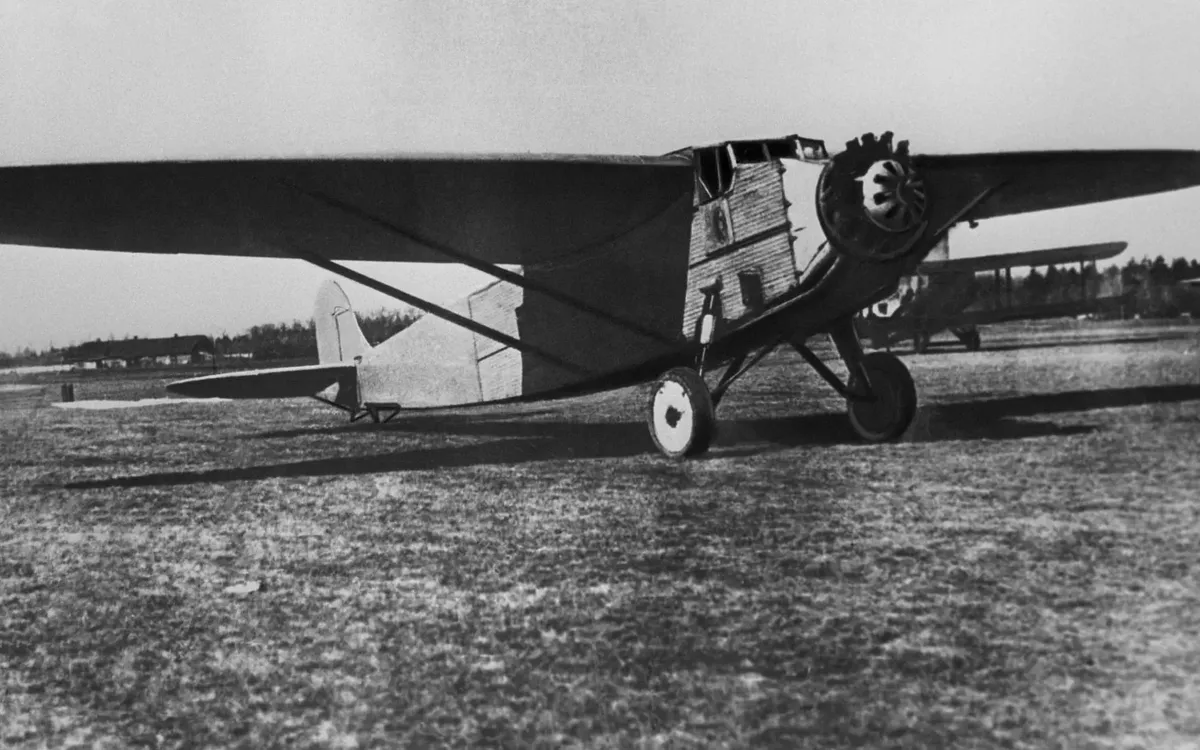
On October 22, 1938, exactly seventy years ago, in the basement of the internal prison of the Voronezh NKVD, Konstantin Alekseevich Kalinin (born in 1887, was born in Warsaw, the main designer of the KB of the air factory No. 18) was killed in the back of the Voronezh NKVD.
The man was killed, the body was thrown into the pit, and he himself was thrown out of history. Today, Kalinin and his amazing aircraft are known to aviation historians, and everyone else does not know.
The famous designers of the thirties and forties - Polikarpov, Yakovlev, Lavochkin, Tupolev, Ilyushin, Petlyakov ... Kalinin among them are not proudly.
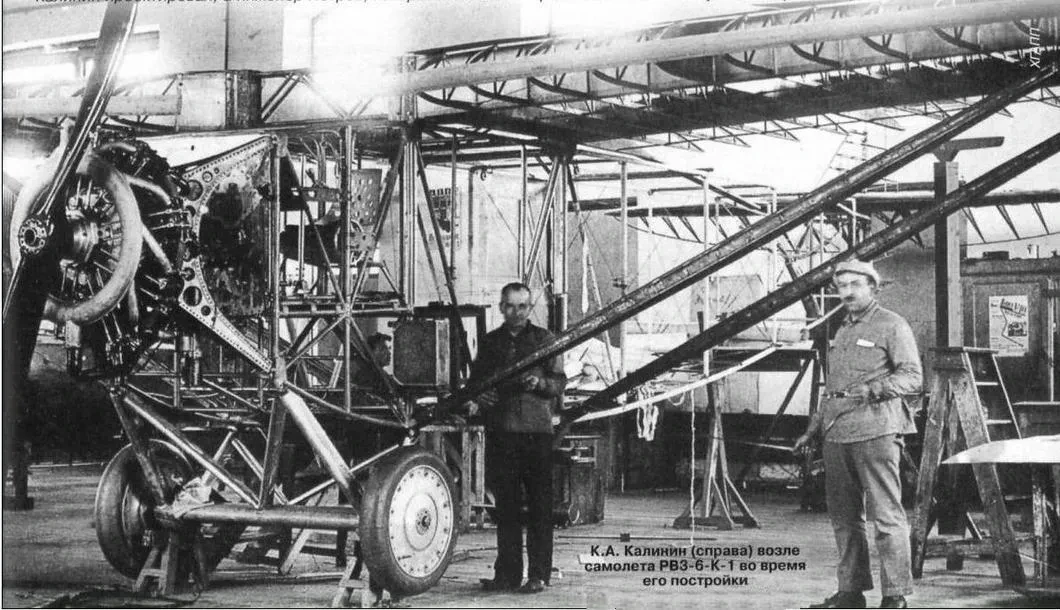
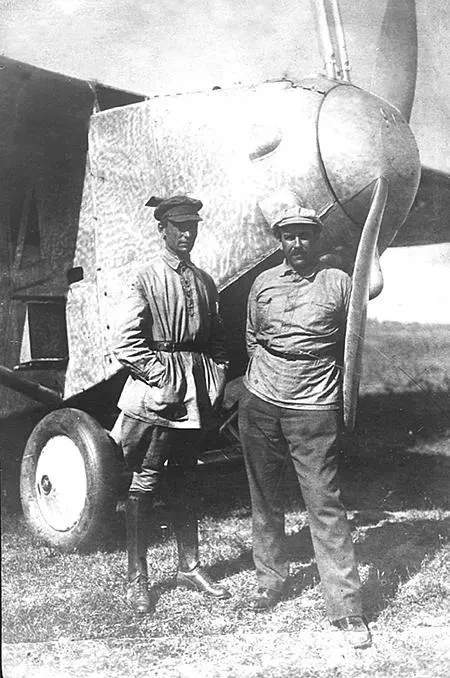
But he was! He, existed, thought, invented, acted this calm, modest, stubborn man with a short brush of antennae above the upper lip, carrying workers with a neat tie and rhomboid caps. So we see him in a few surviving photographs in hangars and workshops, next to our planes.
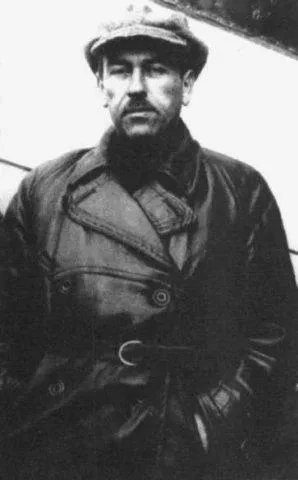
The military pilot of the First World War Kalinin was an enthusiast of aviation. He lived by aviation. He had little to fly on airplanes, he wanted to invent and build them. His life was not easy and bumpy, no one was laid in front of him, he was expelled due to improper social origin from the Institute of Red Air Fleet engineers and was driven from the factory to the factory, from Kyiv to Kharkov, from there to Voronezh, and his provincial KB did not give the engines forever scarce at that time. But nothing could stop him even, strong thought, his engineering calculation, his ideas. And even in the NKVD chamber Konstantin Alekseevich Kalinin came up with his last plane-K-15. But we know almost nothing about him.
Under the peppy march “We were born to make a fairy tale by the past”, striking with weak licensed engines, the first Kalinin planes were cut into earthen airfields. He knew how to build ordinary planes, workhorses, hardy and simple. Such was his K-1-the first Soviet passenger plane, accepted for serial production, but not launched in the series; And K-3 is the first Soviet sanitary plane in which it was possible to transport bed patients.
K-4 Kalinina was so good that he was sent to the international exhibition in Berlin as the highest achievement of the young Soviet aircraft industry.
K-6 was again the first-the first postal plane in the USSR. And there was also a K-5, built in the amount of 260 copies, the main aircraft of Aeroflot until 1940, flying in the middle of the forties and transported eight passengers in eight soft chairs, which had such a luxury as a toilet. Then it really was a luxury for the plane.
There was no longer Kalinin, and his name itself disappeared from articles and books about aviation, and the reliable K-5 of duralumin and fabric, from steel beams and wire stretch marks all flew and flew in the sky that forgot the designer of the country.
But Kalinin was not and did not want to be a designer of ordinary aircraft. The soul of a inventor and science fiction lived in it. The future of triangular wings and comfortable liners was not yet visible from the dusty airfields of those years, and were not at all visible from the bed workshops converted to artisanal aviation faces, narrow aircraft that break through the sound barrier. But Kalinin was already running forward ahead, was already there, outside the day and routine.
He created a small K-9, an amazing machine with detachable wings, in which some see the prototype of the aircraft for an aircraft carrier.
But Kalinin, creating the K-9, thought not about the aircraft carriers, but about the sheds! He unfastened his wings and rolled the plane into the barn.
It was a plane for executive committees and collective farms, for flights from the village to the district center and from the field to the plant. The landing speed of 50 km per hour was so small that any chairman of the collective farm in the Kirazovaya boots could plant it, and he could sit on any Piglet and on any country.
And K-7 Kalinin was a giant. That was the range of his thoughts and the engineering horizon - from a small machine to a cyclopic one. K-7 had a wingspan of 53 meters, that is, more than some modern Boeing. But not only this car surprises the wings. In the era of Biplanov, Kalinin thought of the flying wing. "Everything is in the wing!" In the thick wing, which had a height of 2 meters 33 cm in a centroplan, there were cabins of passengers. The semhomor giant was supposed to transport 128 passengers by 5 thousand kilometers. Or at the same distance 64 passengers in the cabins of the luxury class. On board there were wardroom, buffet, kitchen, radio room, telephone communications worked. The mechanics in flight had access to the engines directly from the wing.
In order to save the pilot from prohibitive loads in the helm of a weighing 40 tons of an aircraft, Kalinin came up with the steering power steering. That is, he came up with what was not there then. The time of boosters in the thirties has not yet arrived. The industry could not create the steering wheel power steering for the Kalinin aircraft, I had to cost the servus. This was the main problem of the two most famous Kalinin aircraft: the K-7 giant and the wise K-12 bomber-they were ahead of the time and demanded knowledge and technologies that were still to be created.
K-7, the giant plane, like many aircraft of that time, suffered from Flutter, that is, from spontaneously arising vibrations that shook a huge machine. The theory of struggle with Flhatter has not yet been created. She had only to create a young mathematician Keldysh. Therefore, the test pilot Snegirev intuitively fought with Flhatter, changing the operating mode of seven engines. But this did not save the plane and 15 out of 20 people on board during the flight at maximum speed. The plane crashed.
Look at the K-7. He still excites and attracts with his powerful forms and brutal power. Before this, a grandiose aircraft I want to take off his hat.
Ilyushin, then not the world-famous creator of the IL-2 attack aircraft, but only the head of the Central Design Bureau, wrote in a recall of one of Kalinin’s aircraft that there are so many new components that they would behave together. But Kalinin could not do new. It was his nature.
The K-12 bomber Kalinin had no tail. The world's first hairless plane was painted under a firebird and flew in Moscow at an air parade. Time was changing, now it was not aircraft for collective farmers, but fighters for graduates of air schools, not luxurious giants with cabins of the luxury class, but high -speed bombers capable of diving almost to the ground. The absence of a tail made the plane quickly, and the air shooter at the end of the fuselage received an ideal position and a complete review.
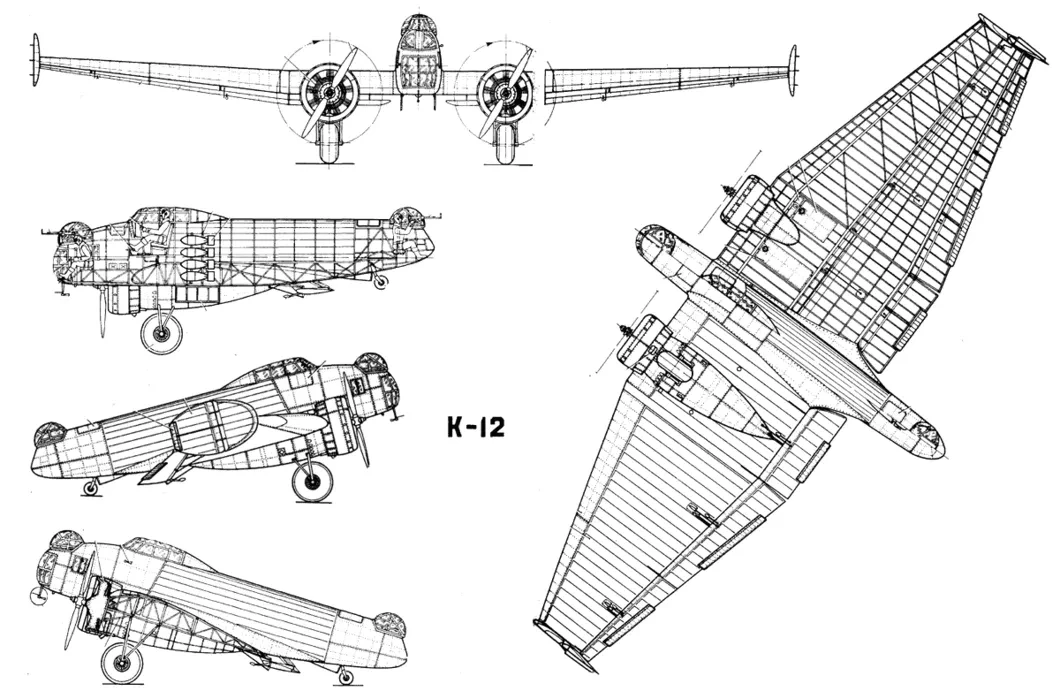
The plane was launched in the series on the same days when the Talinin warrant was issued in the NKVD.
Two from the NKVD came to arrest. The youngest, leaving, told his wife: “Excuse me. We understand who we are leading. ” Or is it just a beautiful legend?
And today we understand who we lost seventy years ago, on October 22, 1938, when the executioner raised a gun in a long apron and crags and shot a calm, quiet, exhausted by the investigation, recognizing himself an enemy of the people of man?
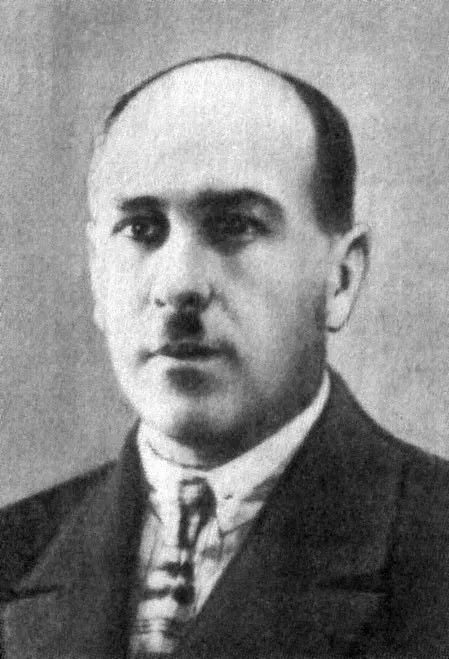
Sikorsky twice called Kalinin to America. He understood that such people are rare and valuable. They lay new industries, create new directions. But Kalinin did not go. He was full of faith in the future and the desire to make domestic aircraft. Time passed, Sikorsky and Kalinin lived differently and ended their lives, and the question of whether to leave or not is still facing thinking people in Russia.
Not a single Kalinin aircraft has been preserved.
He was killed by Stalin, Molotov and Zhdanov - these three, personally. Their signatures on the first page of the shooting list of September 12, 1938, in which Kalinin costs the eighteenth. From above, in red pencil, Stalin abandoned his signature in a businesslike way. A little lower, smaller, with a black pencil signed Molotov and Zhdanov. In their small squiggles, their beloved position is felt, their servility in front of a mustachioed leader.
There is a story of Bradbury, in which people make an excursion into the past. In the past, you can’t touch anything, change anything, because it can irreversibly change the future. But one of the guides accidentally steps on a butterfly and thereby causes a historical catastrophe. Everything will now be different, because the butterfly has died.
And then a man was killed. Three criminals, three tongue -tied criminals, killed a man who thought and invented, built and created. Three killers in the Kremlin office waved pencils, and everything that this person did and created, everything that he could still do and create, all his thoughts and words, all his calculations and ideas, all his plans and drawings - everything went to the hole.
And the world has become different.