
Translated material
I'm going to it
The state began to build a planned-woven-type economy in Russia
The news that Sberbank can be included in the capital of Yandex and de facto gain control over the country's main IT company reflects the general vector of the Russian digital transformation. Its main motive is to transfer that hybrid and oriented to the public sector an economic model that has long been implemented in all other areas of the national economy.
Although there is no confirmed information about the transaction - the negotiations were refuted in Sberbank, and the Central Bank promised to conduct an investigation into the incident for manipulating stock quotes - this is the case when the market reaction is notable for itself.
Instead of the synergistic effect of the potential merger of the “domestic Google” (more precisely, the entire silicon valley in miniature) and the most progressive state bank, Yandex investors saw a threat to their investments.
In just a few minutes, the capitalization of the IT company collapsed by $ 1 billion.
After a slight correction, the fall continued the next day. At the lower point of the Yandex campaign on the NASDAQ exchange in New York and on the Moscow Stock Exchange, they fell into 20-30%.
According to the sources of The Bell, Sberbank's interest in acquiring a share in an IT company is due to noble motives. Herman Gref, who is part of the Yandex Board of Directors, allegedly sees himself as the “White Knight”, saving ITishnikov from full absorption by the state according to the scenario of the VKontakte social network, from which its founder Pavel Durov was expelled in 2014.
It is predictable that the tentacles of special services once had to reach Yandex, who is a major player in a media market, actively processes the data of Russian citizens and has close ties with foreign partners. At the same time, the IT company has always behaved quite complacently and satisfied the basic requirements of the authorities. A year ago, President Vladimir Putin visited the headquarters of Yandex, and Prime Minister Dmitry Medvedev swept a few days ago on her branded drone.

Nevertheless, the desire for complete state control could outweigh the sympathy of the country's leadership to various miracle technologies. If so, then Sberbank is a completely suitable candidate for the role of a reliable guardian. Back in 2009, the largest state bank received the Golden Promotion Yandex - it does not give the right to manage the company, but allows you to block the sales of large stakes and thereby limit the appetites of foreign investors. Since then, Sberbank and Yandex have been actively cooperating, especially through the Yandex.Money line (75% of the payment system shares belongs to the State Bank), and recently their integration has significantly intensified. The largest step was the creation of a joint enterprise in the field of an online retail, which analysts dubbed the Russian analogue of Amazon.
At the Open Innovation Forum, Gref said that he is a supporter of the concept of “radical truth” and calls for all his employees to openly share bad news. Most likely, these principles do not apply to the bank’s press service. Forbes source, for example, claims that the parties have been discussing a potential transaction for six months. A long drop in the capitalization of the company (from $ 11.7 to $ 9 billion within two days) also suggests that investors consider this scenario quite likely.
It is possible that the shareholders have more specific grounds for their fears, unknown to the general public, says Timur Nigmatullin's discovery analyst:
“The largest minority sites are clearly discussing something with the management of Yandex, and it seems that they don’t really like it.”
Until today, Yandex has been one of the most highly appreciated exchange companies in Russia: the ratio of capitalization and net profit (one of the main indicators for which the investment attractiveness of the company is determined) by an order of magnitude exceeded the average values in the Russian market. Yandex also does not feel the need for additional financing - the growth rate of the company's revenue recently was about 25%. “There were expectations that Yandex would grow by exponent. All the necessary technologies are already there, it remains only to scale products and enter other markets, ”says Nigmatullin.
Now optimism has diminished. Western funds that try to avoid the slightest affiliation with Russian state -owned banks began selling shares of Yandex. Sberbank is already under sector sanctions, and in November they can be expanded to any dollar calculations. If the sale takes place, then the discount on the cost of Yandex papers can be comparable to the risk of risk to the shares of Russian state -owned companies.

In addition to sanctions, there are fundamental reasons that make this deal unwanted from an economic point of view. The negative impact of the state on the joint -stock value of the absorbed private companies can be seen on a recent example - the purchase of the VTB of the share in the Magnit product network by the State Bank. The retailer already at the time of the conclusion of the transaction experienced certain difficulties with the business model, but with the new owner the situation only worsened.
The point is not only in the absence of a convincing strategy, but also of the opaque actions of management and the board of directors of Magnit, who are trying to buy a pharmaceutical company burdened with huge debts from one of the shareholders of retailer.
State companies exist in a special world where the interests of officials and contractors are more important than any commercial considerations.
Everyone knows the sad fate of Gazprom, which 10 years ago was one of the most promising companies in the world, and today loses customers and is forced to implement unprofitable politicized projects. Now the Russian state directly controls the banking sphere and mining. But times are changing - the largest added value is now produced in other sectors of the economy, and foreign policy clashes are increasingly unfolding in the information space.
And here is the leadership of the country, "sick with a digital economy."
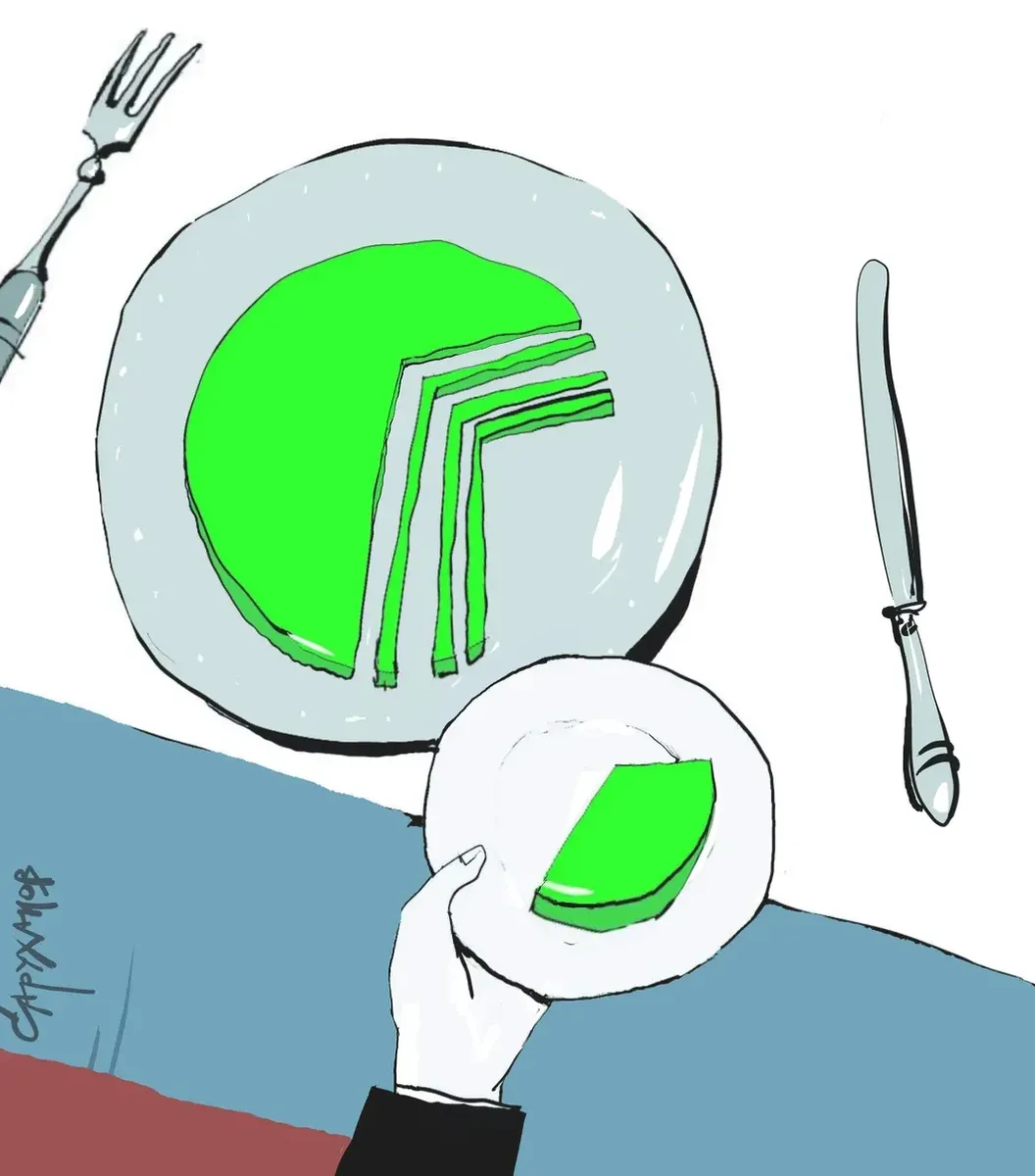
For Yandex, whether it is part of a giant financial and technological state company on the basis of Sberbank, the government plans to find many infrastructure projects of a national scale. One of the centers of digitalization is already the businessman Alisher Usmanov, under the control of which is the second largest technological company in Russia Mail.ru Group.
Under the slogans of the introduction of innovation in Russia, a trend for the nationalization of the economy is developing, which was radicalized after the 2008 crisis. It is not for nothing that Vladimir Putin compares the national program “Digital Economy” with the Bolshevik plan on the electrification of the country in the 1920s (GOELRO). Venture capitalism in Russian really gives the Soviet planned model: the companies from the “Belousov List” under the threat of fiscal seizures finance technological startups selected by the special state fund, while the special services increase control over citizens' communications and master budgets for the import substitution of “critical information infrastructure”.
With the directive approach, the specificity of the IT business is completely overlooked, which doubly suffers from the flaws of the Russian investment climate. A high-tech company, the entire market value of which is concentrated in a team of developers and lines of the source code, cannot be “squeezed” as an oil tower and force to play according to corruption and bureaucratic rules. Sberbank, despite the efforts of Gref to turn the once backward state structure into an advanced digital platform, is perceived by the market primarily as a conductor of interests of government officials.