
Translated material
Faith and time
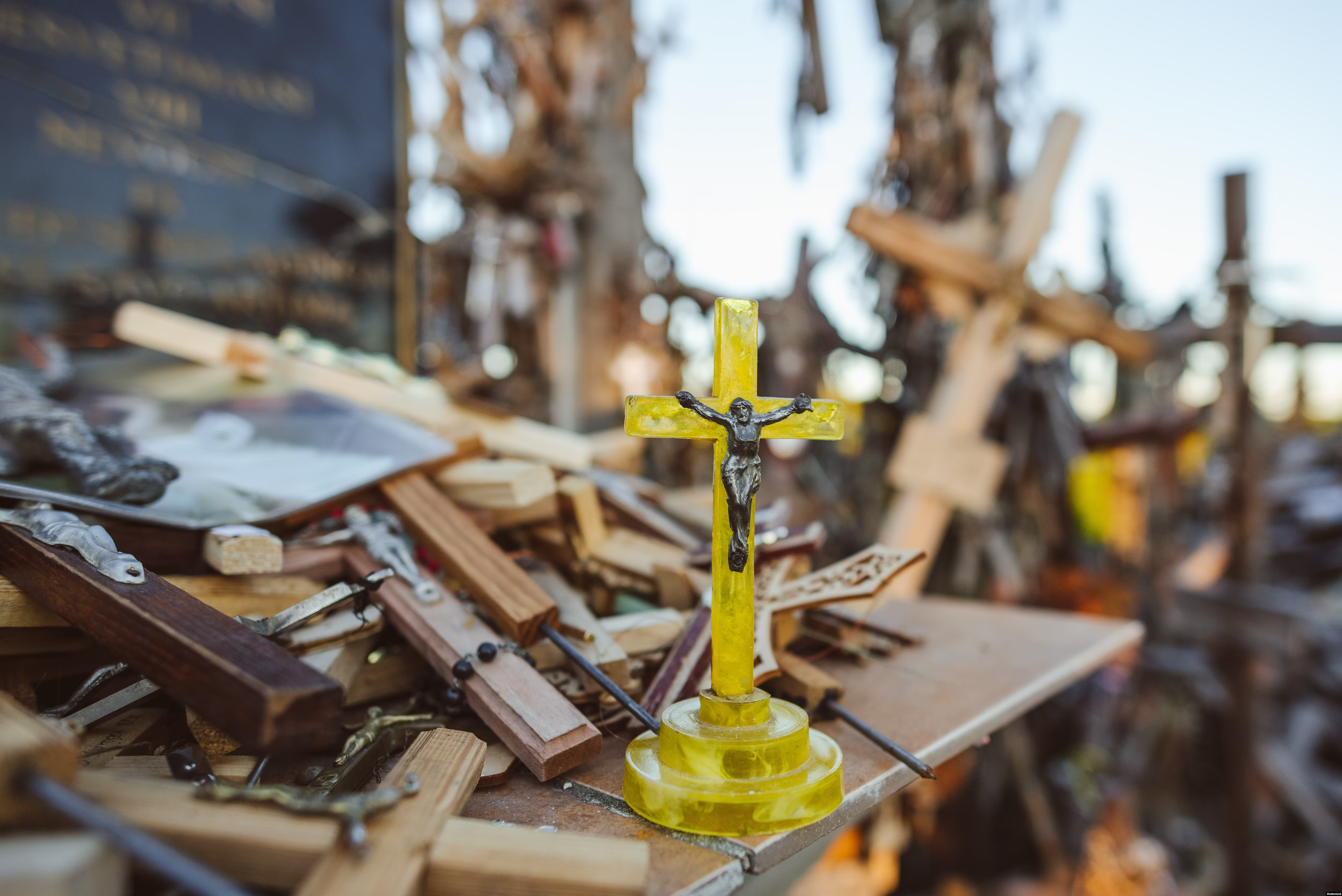
How does faith change over time: time wins faith or faith - time?
- Vera is more than once and for all the specified volume, it either develops and changes or turns into a shadow of itself.
- Belief in the god of the Bible inevitably goes the path from lethalism to understanding the complexity of revelation, and here doubts are a means of self -cleaning and deepening faith.
- As love turns (not always) into love, so blind faith turns (not always) into sober trust and then helps to crawl up along the slippery slope of infinity. This is freedom.
Yakov Krotov: Our guest is Fedor Lyudogovsky , a priest of the Russian Orthodox Church of the Moscow Patriarchate.
Recently, in one of his texts in one of the social networks, Father Fedor said the words that put me on the hind legs: looking back a quarter century ago, he found that faith had changed.
About five years ago, everyone discussed the topic of distinguishing. It seems to me that what you wrote is a more accurate formulation of what then cared for people. Faith has changed, and a person intuitively has some fright: if faith has changed, is I identical to myself in 1992 today, for example, and if it is not identical, maybe Vera is really a product of biochemistry, and not a living and loving God, who is next to me? How is the faith, which, by definition, is some communion of the personality, correlates to the fact that Derzhavin designated as a river of time, which burns everything in its course?
Let's start with an interview with psychologist Natalya Skuratov and the main question: does faith change over time, is it normal, how can it and should change?
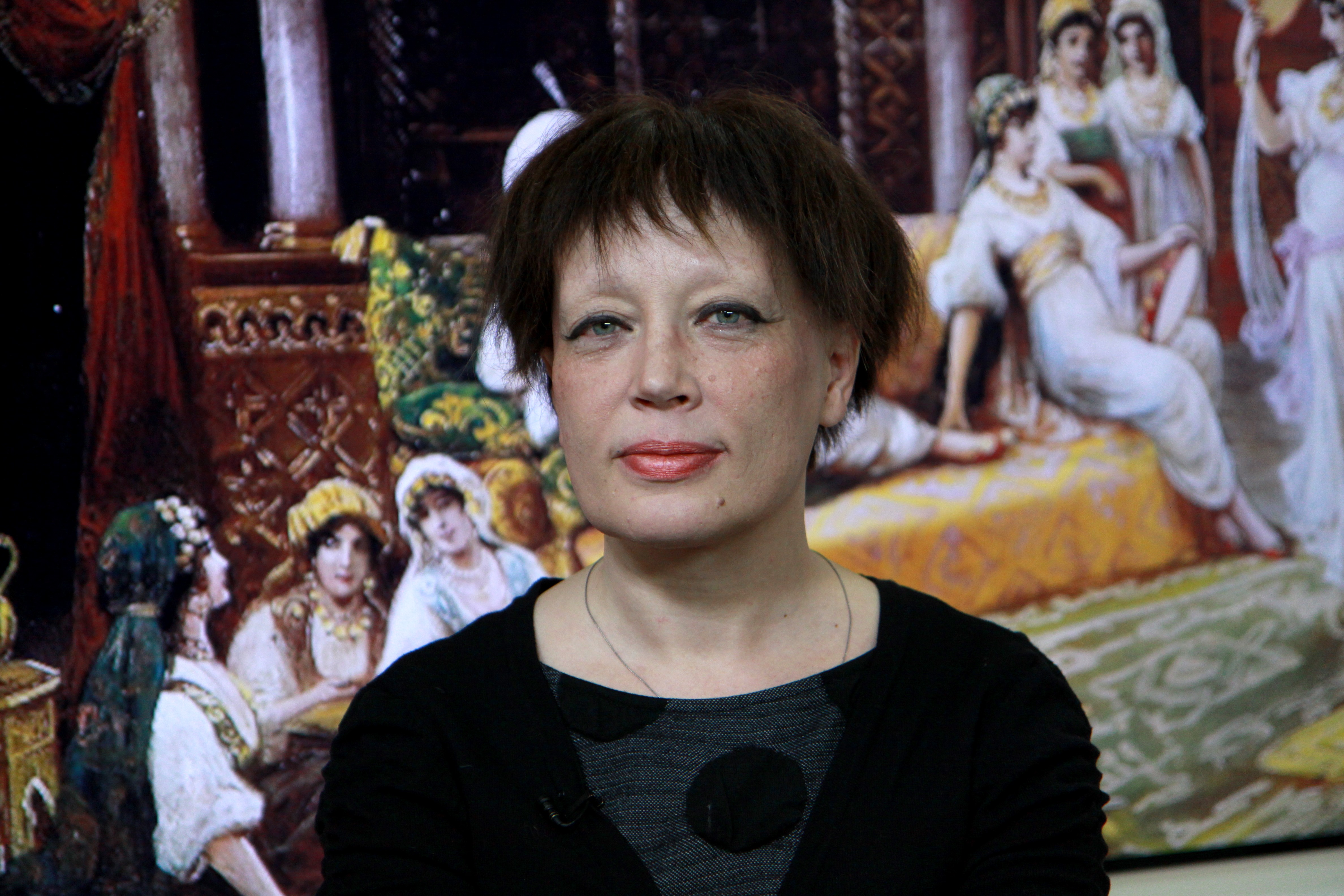
Natalia Skuratovskaya: The transformation of faith is as natural as human growing up. The child, born, first assimilates something from other people, then tries it on his own experience, then it turns out to be his own, something is acquired from other sources. The same is the same with faith. A person comes to the temple: whether he has brought his grace either philosophical thoughts, but at first he tries to learn from others. Or, if it grows in a church environment, he absorbs this from his environment, education.
Then something does not go through the test by personal experience, something does not go through an understanding, since at some point in imitation it becomes not enough, a person begins to look for meanings, in some ways he sees meaning, does not see in something, and then there is a transformation, of which there may be not one or two throughout his life. This is a normal process of growing up: through transformation, both human relations and our whole life pass through crises. Why should faith be an exception?
Faith transformation is as natural as human growing up
As for what transformation is healthy and which unhealthy, it is often difficult to judge from the outside, because we see a person at a given moment in time and do not know what will be with him tomorrow, in which direction this transformation will unfold. Therefore, I, perhaps, have one answer to this - by the fruits, as the apostle Paul advised us. Now only one thing is wrong for me - when the transformation of faith weakens a person.
Yakov Krotov: Father Fedor, do you agree that everything starts with imitation? Is there an element of imitation in faith?
Fedor Lyudogovsky: Yes, so it usually happens. For example, I came to church in 1990 (I was 14 years old), I was baptized and gradually, as they say, got involved: worship, church life, reading Orthodox brochures, which I bought up to my scholarship when I became a student.
Yakov Krotov: Was the family unbelieving?
Fedor Lyudogovsky: Initially, the family was not a believer, but I was baptized, in general, not quite of my own free will, but at the insistence of my mother. It was in the temple of the Sunday of the Word. I remember we walked along Tverskaya: mother, younger brother and relative, our godmother, from whom, in fact, all this went. We are walking past the stop, a trolley bus drive up to her, the door opens, and I think: now I will jump and leave all of you. But I did not jump, and we went baptized. And, despite how exactly I came to the church, after two or three years I realized myself as a zealous, conservative, strict Orthodox Christian.
Yakov Krotov: Did the word "believer" still appear?
Fedor Lyudogovsky: This word is not from my vocabulary. In my perception, "believer" is a word from the Soviet vocabulary.
Yakov Krotov: When everyone around is unbelievers, you will involuntarily be a believer.
Fedor Lyudogovsky: Yes, without clarification, in whom, in fact, a person believes: there are certain believers. Of course, I was aware of myself as believers, but Orthodox, and it was important.
Yakov Krotov: But in this text you did not write “My Orthodoxy has changed”, “But they wrote that“ Vera has changed. ”Can you say that you moved to faith from Orthodoxy?
Fedor Lyudogovsky: You can say so and this, but we must clearly determine what we call Vera, Orthodoxy, and so on. It so happened that I became a philologist, but in my soul I am a mathematician, so the clarity of definitions is important to me.
Yakov Krotov: In science fiction, one of the most popular subjects-a person meets himself in a loop of time and tries to warn himself of a younger one, often-unsuccessfully. That is, you compare yourself and discover inequality. What is it?
Fedor Lyudogovsky: Inequality is in the general picture of the world, in relation to himself, to people, to the arguments of the mind. And, most importantly, another perception, understanding of God. Now, it seems to me, such a period of doubt: it throws one way or the other, and where the curve will take, it is difficult to say so far. But maybe such a period is just interesting.
Yakov Krotov: There was another period, it was called fanaticism, Pharisees.
Look, here's the question of the words: "Perception of God." For an unbelieving person, the meaning here is one - knowledge, imprint, mirroring of God. In an Orthodox person, the perception of God, it seems to me, should immediately cause a completely different association - "the perception of the Israel of his lad", that is, the perception of God: does not "he shine, but I am a mirror", but "I accept it." God is, and He shines. You are a married man, you have four children. You can say that your love has changed in 15 years?
Fedor Lyudogovsky: Of course, it has changed.
Yakov Krotov: And this does not bother you. And the fact that faith has changed was embarrassed.
Fedor Lyudogovsky : Yes. But we know that relations with people are changing, developing, deepening, it is in the order of things, and it does not scare, but rather pleases. And here sometimes it feels like the soil goes from under the feet.
Yakov Krotov: You compared yourself to yourself, but here you are in the Church ... For an atheist or agnostic, the very first question: how do you know that your faith is equal to the faith of another? How did you determine this equality or similarity to yourself for yourself? When this happens, it is, as it were, by itself, and in retroactively it is completely incomprehensible. How did you understand that you are the same faith as Patriarch Pimen ?
Now is the period of doubt: it throws one way or the other, and where the curve will take, it is difficult to say so far
Fedor Lyudogovsky: Well, it’s hard for me to compare myself with Patriarch Pimen ...
Yakov Krotov: One of my most striking religious impressions in the period of neophytake - I went to the great Elokhov canon. I must say that I, as a church historian, know a lot of unpleasant about Patriarch Pimen in his pre -war years and so on, but his only recording of reading the Great Canon is still on the Internet and in stores, and I understand why: this is incredibly piercing. Here you are standing and understand that it comes from the heart. This is not so often in the church when reading comes from the heart ...
Fedor Lyudogovsky: As for Patriarch Pimen, for me this is a kind of historical period. It is clear that we can read the books of memoirs, but I was baptized on May 31, 1990, that is, three weeks after the death of Patriarch Pimen, with Filaret, he was then a loco.
Yakov Krotov: And yet, it happens with you so that a person comes, and you feel that faith is different or that your differences are great? Perhaps this is the whole point in the stories in the Gospel about the clashes of the Savior (and in the end, he was crucified for this): suddenly it turned out that people of the same religion, but of different faiths.
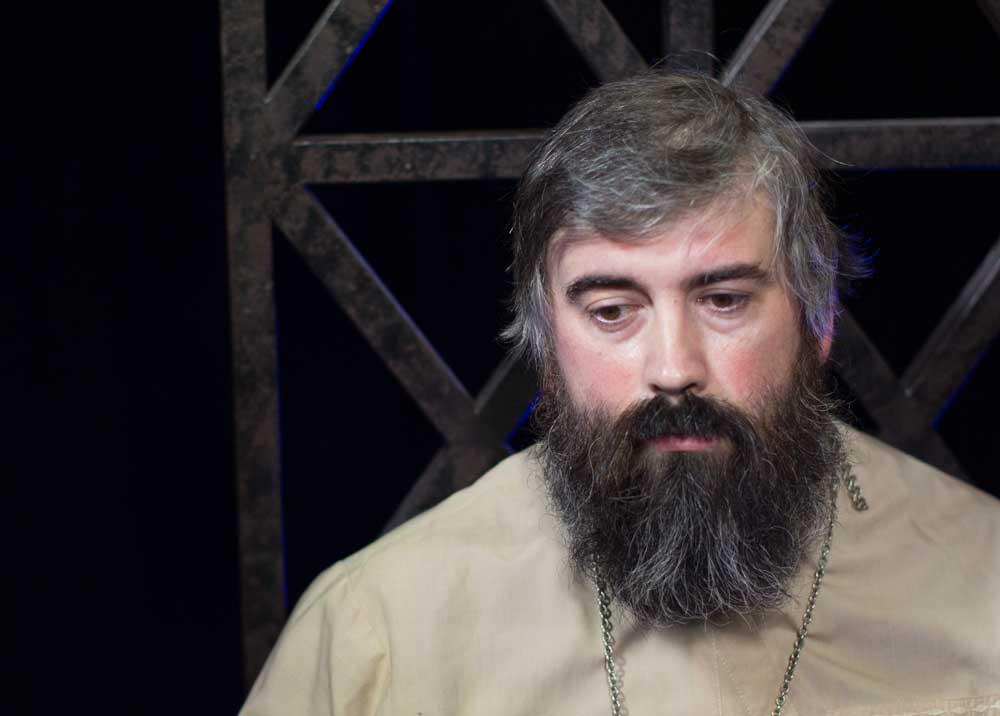
Fedor Lyudogovsky: I am more and more convinced that faith is just his own. And here, in general, the dogma is not even very interesting, because if you ask both the clergy and laity, just go through the catechism, at least the symbols of faith, the most fantastic things will probably be revealed. For example, according to some polls, we have two-thirds of the Orthodox population quite accept Filioro and do not think. From my point of view, what the dogmas write in textbooks is good or bad, but is not related to life.
Yakov Krotov: Where we say - "believers", Catholics say - "true" (in any case, in the texts). But here is the difference. Can you be true in different ways? For example, you can be a faithful wife in different ways? Maybe in a relationship with God it is positive - you have switched to another from one fidelity.
Fedor Lyudogovsky: I hope this. Another thing is that the usual picture has blurred or even collapsed. On the one hand, there was a feeling of some freedom and joy, and on the other hand, some kind of squeezing, fears, because it is not clear where ... what was unshakable to me was, to put it mildly, in question.
I want to give a specific example in our abstract conversation. Many do not see any problem in this, but the issue of human origin is extremely important to me. Since childhood, I loved to read science fiction, popular science books, was interested in mathematics, natural science. And just by the age of 14-15, when I was baptized, I had some kind of picture of the world, not ethical, but in terms of natural philosophy. And then for many years I tried to somehow combine in my head a biblical story about creation with what I knew before.
Yakov Krotov: That is, you did not read the "History of Religion" by Alexander Father ?
Fedor Lyudogovsky: No. I read Father Gleb Kolyad, Vladyka Vasily Rodzianko, father of Seraphim Rose. At one time, I was in a very conservative parish, and my views were appropriate. I loved such authors who tried to combine one with the other, and almost worked out. But, from my point of view, it did not work, because the scientific picture of the world involves a constant change and complication of structures. If we read the biblical narrative, then we see a constant flow. Here were Adam and Eve in Eden, Bach - and they are no longer in Eden, but on sinful land.
Yakov Krotov: So everything has become more complicated!
Fedor Lyudogovsky: Yes, but at the same time everything became somehow worse and sadder. Only the brothers gave birth, one brother killed another, then the corruption on the ground was multiplied, then everyone had to be drowned in the waters of the World Flood. Just got ashore, then Noah cursed his grandson ...
Yakov Krotov: But the words are metaphor, symbol, myth ...
Fedor Lyudogovsky: That's it all, but look at me and wonder: for the time being, I understood all this literally. But now I have a question that no one can give me an answer to: where are the boundaries in our approaches in the interpretation of the Bible, and where are the boundaries in the biblical texts themselves, that we can understand metaphorically, and what should we literally understand? It is very easy to say that the first chapters of the Book of Genesis are such a Middle Eastern myth adapted for a monotheistic worldview, and then? Suppose Adam is a legend, but was Abraham? Was David? But when we open the New Testament, the resurrection of Christ is a metaphor or literal truth? And the miracles that the apostles and Christ himself did, is this a metaphor? And so on.
I think I'm not alone in these matters. Where is the boundary of what should be unshakable for a Christian, and where does the space remain for these multi -result interpretations, different approaches? And over the course of recent years and even months, the border of permissible interpretations is constantly expanding for me, and this scares me somewhat.
Yakov Krotov: This is where faith begins! In English, this is called a "slippery slope": when we begin to say that these are myths, we seem to find ourselves on a very slippery slope, because we can fall into the denial of everything. So I think that faith begins at the moment when we begin to climb the top from the horizontal confidence and believe that there is truth, and it is expressed in a word.
In the twentieth century there was a revolution in physics, and what you are now describing is approximately like mechanics and physical revolution Bora, the cat of Schrödinger and so on. We ended up in the world of uncertainty, but this is a more divine world. And the question is not in the origin of man, everything is clear with him, but in the origin of humanity. Over a hundred years, biologists have found that there is no person, but there are different types of amino acids, and there is absolutely no need to conduct a high -quality line between the hedgehog and a person, because there is no qualitative face. There is a quantum sensor of random numbers, it clicks ... And what you described is the transition from faith to God to faith in God to humanity. In addition to the image of a monkey, a hedgehog and so on, there is an image of God. But this is growth, not the diminution of faith.
Fedor Lyudogovsky: Yes, but we started with this: Vera is changing.
Yakov Krotov: It does not change, but grows! We are afraid of her growth, which Natalya Skuratovskaya was talking about.
Fedor Lyudogovsky: Yes, maybe this is a more successful formulation.
And doubts about faith and fright is a response to grace: they are not so responding to gracefulness
Yakov Krotov: The teenager is growing, the body develops, the voice breaks, and all this is very inconvenient physiologically. The same with the growth of faith - it cannot be convenient. When the faith is comfortable, it is pharisaism. You, as a preacher of faith, must knock people out of the status of believers in the status of seekers of faith.
Fedor Lyudogovsky: I try.
Yakov Krotov: Here is God the same with you. This is positive!
Fedor Lyudogovsky: (laughs) If we talk about preaching, there is not always feedback. Sometimes you say some even risky things, you are afraid in advance how people will respond to this, but sometimes, not often, they fit and thank you at the end of the service. And sometimes vice versa: "What is it you, Father, they said here?" But for the most part there is no reaction, so you somehow sow at random, even with all your doubts.
Yakov Krotov: Listen, but you act like God! It's like creating a world, we can say: I sow, but where is the answer? Some prayers, some requests. Both doubts about faith, and this fright is a response to grace, because it is not so responding to carelessness. And if a person is doused with a bucket of cold water, so he replies: "I got wet! I stopped being dry!" And this, it seems to me, is a deep step forward.
Fedor Lyudogovsky: 20–25 years ago, God was omnipotent, demanding, I owed him a lot of things, and now I somehow allowed myself to be practically nothing to be proper, except in order to act with people for love, and even with myself, not to spread to me, not to do what seems meaningless to me.
Yakov Krotov: That is, you have grown to freedom in God. My congratulations!
Fedor Lyudogovsky: Yes, it has grown or almost dear. At least I want to believe that I am moving in this direction.
-
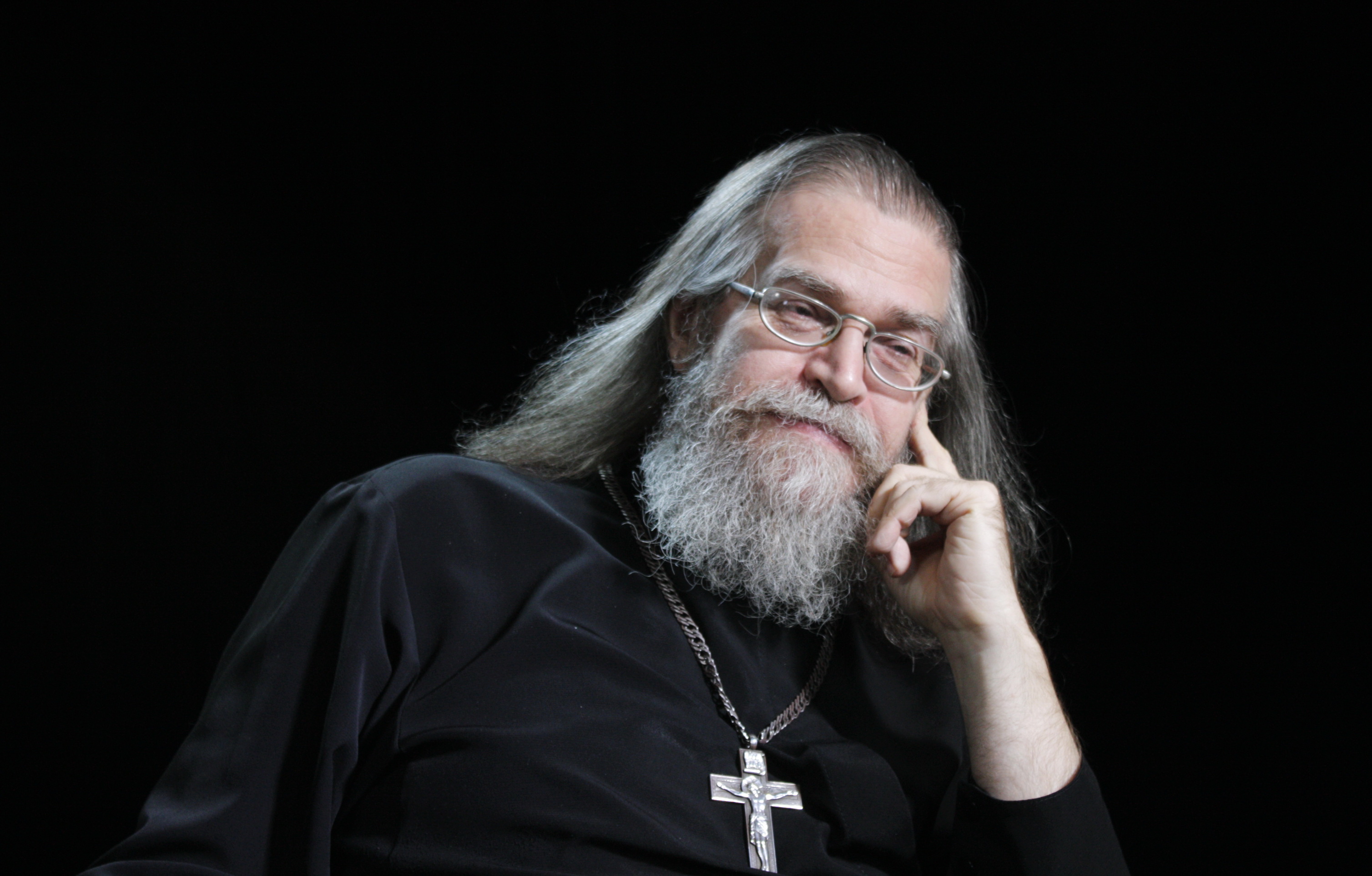

Yakov Krotov
Historian and priest, leading Radio Freedom Radio "Between Vera and Belief"
ykrotov@yahoo.com