
Translated material
"Amnesty" or a trap?
The Prosecutor General’s Office did not find among criminal cases against businessmen from the “list of Titov” completely in vain excited
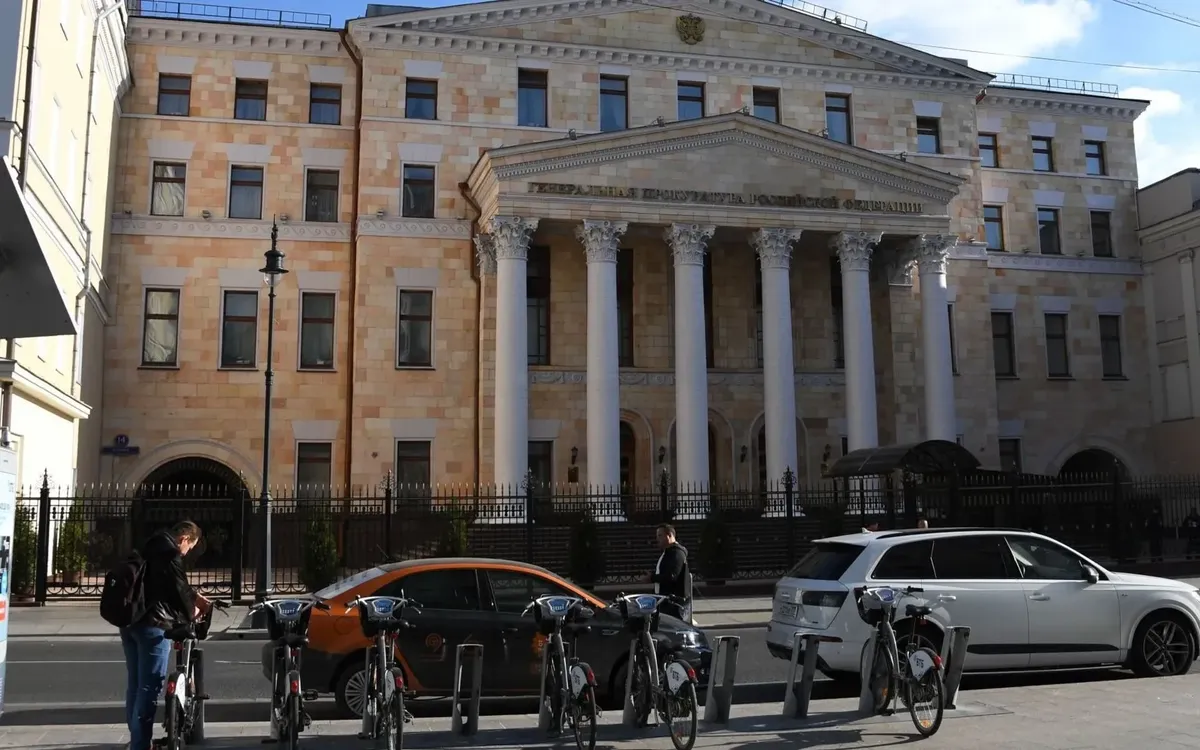
The official representative of the Prosecutor General’s Office, Alexander Kurennoy, responding to a request from RBC about the fate of entrepreneurs who left Russia from the so -called “Titov List”, said that a check of 25 criminal cases on persons from the “list” did not reveal very vain cases, although “certain issues on the quality of the investigation were.”
To clarify the fate of these businessmen, we turned to the lawyer Dmitry Grigoriadi, who worked with Boris Titov, the Commissioner for the Protection of Entrepreneurs' Rights, in the structures of Titov, he is in charge of issues related to extradition, deportation and international search of Russian entrepreneurs.
Grigoriadi believes that the statement of the Prosecutor General’s Office is not entirely understood or interpreted by the media. The initiation of a criminal case only indicates the presence of signs of a crime, and then in the framework of a specific case according to the rules of the Code of Criminal Procedure of the Russian Federation, investigative actions should be carried out, which will show whether there is a corpus delicti in the actions of specific persons. Of course, such investigative actions cannot be complete without the participation of the suspects themselves. But often, entrepreneurs, taught by the bitter experience of colleagues, are afraid to immediately be detained and in a hurry to go abroad, if they find out - often from their own sources - about the only impending initiation of the case.
The program for the return of such fugitives to Russia, which Boris Titov’s business ombudsman has been conducting from the beginning of this year with the beginning of this year, had its fruits, and some of them have already returned under the guarantee that they would not apply a preventive measure in the form of detention, ”Grigoriadi explained. And let the criminal cases be investigated by their turn, but with the hope of their termination at the investigation stage or in court. He also clarified that those “issues on the quality of investigations”, which the representative of the Prosecutor General’s Office mentioned casually, in some cases cost investigators disciplinary responsibility to investigators.
“On our part,” says Grigoriadi, “we will continue to provide legal support to returned entrepreneurs, we will facilitate the establishment of the truth in their affairs, and also try to eliminate general excesses in law enforcement, especially in the regions.”
The Commissioner for the Protection of the Rights of Entrepreneurs has a tested mechanism of “pressure on the court” (and investigation) in the form of a center for public procedures (COP), at the meetings of which lawyers and entrepreneurs themselves publicly discuss cases against the latter, and then the business committee talks about them on the working group specially created for this in 2012 in the General Prosecutor's Office of the Russian Federation. But, firstly, the “list of Titov” regarding the return of “refugees” coincides with the list of those cases that were discussed within the framework of the COP, only partially.
Secondly, and this is much more serious, the prosecutor’s office and the Investigative Committee do not always adhere to the same opinion on specific affairs. On the contrary, the failure of the UK may be perceived with satisfaction in the Prosecutor General, and vice versa. The Investigative Committee, as well as its management in the regions that categorically do not like to recognize their mistakes, are unlikely to release prey from the teeth even under the "program approved by the president." In the best case, for those who agreed to return to Russia, businessmen may end in the termination of their cases on non -rehabilitating grounds or even sentences without real imprisonment.
In this case, they will have to compensate for the “damage” calculated by investigators in their cases. Not all “fugitives” will agree to such conditions.
In the end, in the framework of an ongoing investigation, any investigator will always find a reason to change the preventive measure to a more stringent one - and the courts agree with them more than 90 percent of such cases. The problem is that for the economy as a whole, that no one can give any “guarantees” against the arbitrariness of security forces in today's Russia-even the president, not to mention the Ombudsmen.