
Translated material
The Theodore Kurentzis Orchestra released a disc with the sixth symphony of Mahler. This is an important event for classical music - and not only in Russia
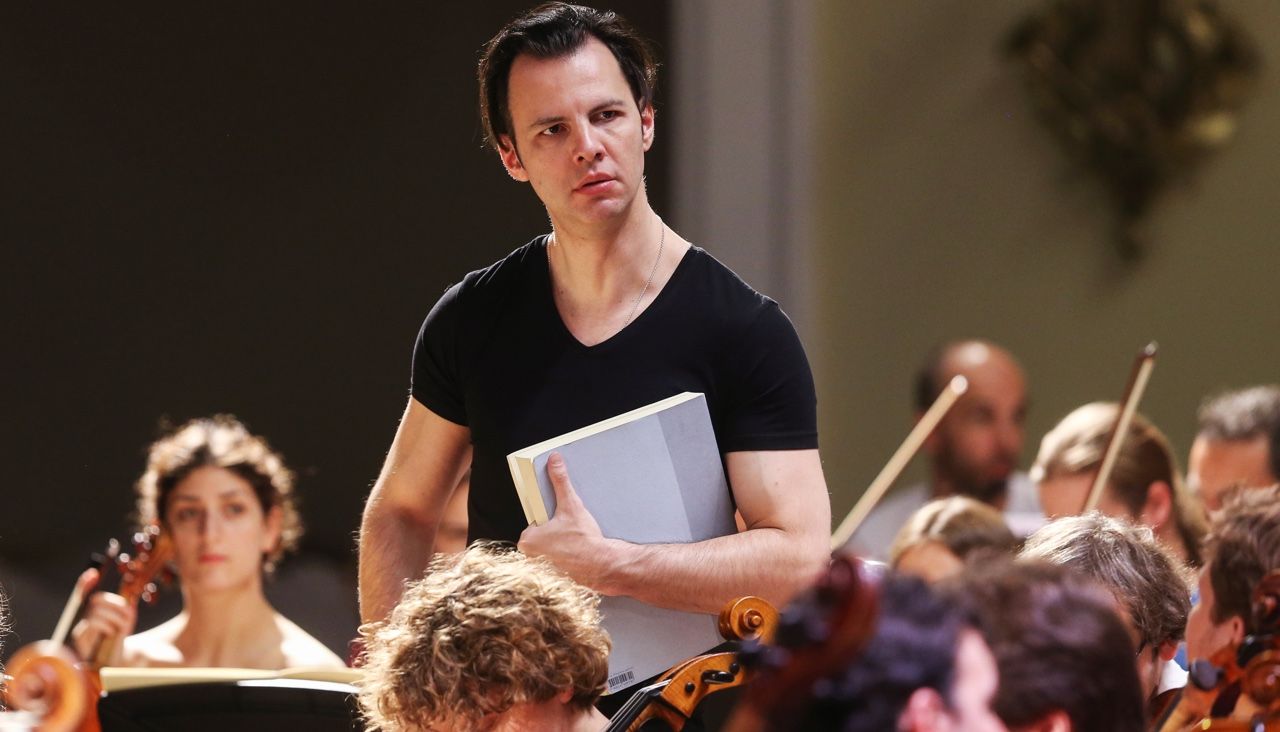
On October 26, a new disk of theodor Kurentzis was released on the Sony Classical label - with the orchestra of the Perm opera Musicaeterna, the Greek conductor recorded the sixth symphony of the Austrian composer Gustav Maler. At the request of Medusa, music critic Dmitry Renansky explains why this album will become the most discussed classical release of the year.
Why is this entry - a breakthrough (for Krentzis and not only)?
As of 2018, the Perm Musicaeterna, under the leadership of Theodore Krentzis, remains the only Russian orchestra who signed an exclusive contract with one of the “Big Troika” labels of the musical industry. None of the closest “competitors” of Theodore Cuentsis can boast of this position. The Hudor of the Mariinsky Theater Valery Gergiev has been collaborating for almost twenty years with Philips Classics, a subsidiary of Universal, but since 2009, the Mariinskie orchestra has been published under his own independent brand Mariinsky. Russian National Orchestra Mikhail Pletnev , which began on Deutsche Grammophon (another one another "Daughter" Universal), in the mid-2000s went to the small Dutch label Pentatone.
Against this background, ten albums recorded by Krentzis for Sony look especially impressive: all these years, the leadership of the label trusted Musicaeterna projects one ambitious more ambitious, and in some four seasons of the Perm opera residents have come from the debutants of the Western musical scene to its newsmakers.
Krentzis began work with Sony with three key operas of Mozart: that came out from 2014 to 2016 “Figaro's Wedding”, “All Women do” and “Don Juan” became the hallmark of the Greek conductor, opening him and his wards of the doors of the most prestigious opera festival of the world, which takes place in the homeland of Mozart in the Austrian Salzburg. Then the sixth symphony of Tchaikovsky and the “sacred” Stravinsky were published, and in the summer of 2018 they began to record a cycle of all nine symphonies of Beethoven.
Classic operas and symphony (Mozart and Beethoven), the most iconic Russian orchestra score of the 19th century (Tchaikovsky) and the icon of musical modernism (Stravinsky) - in this list that forms the catalog of any serious sound recording company, has not yet been enough only for mature European romanticism. The sixth symphony of Malera is the top of this style, so the recording is of exceptional importance for the cuentsis: it confirms the status of both the conductor himself and the Musicaeternakak of the station wagons, equally confident in the music of any eras and styles.
The new Sony Classical release was an event in the history of not only performing art, but also the sound recording industry. In the era, when academic musicians have long lost the taste of work in the studio, when the lion's share of the records is “live”, right during concerts (it is easier, cheaper and more practical), Kurentzis recalls: in the studio you can achieve such an acoustic result that is purely physically unattainable on live performances.
Of the large conductors, almost no one works like this now: at first - a leisurely entry in the studio, then a painstaking post -production, when a sound engineer (Damien Cuintar) actually becomes a co -author of the interpretation. In terms of thoroughness of work with sound, the result can be compared only with the records of the legendary Canadian pianist Glenn Guld, a perfectionist who abandoned public speeches for reclusion in the studio.
What is this symphony?
The grandiose cycle of the composer Gustav Malera of nine symphonies, written between 1884 and 1909, is nine large musical novels about the sunset of old Europe, reflecting the tragic attitude of a person who lived at the turn of the 19th and XX centuries. After passing out of life three years before the outbreak of World War I, Mahler predicted the upcoming disaster, sang it and mourned it - and became the main Philharmonic author of the twentieth century. Its symphony is that repertoire peak, without the conquest of which there can be no talk of entering the club of leading conductors of the planet.
Mahler wrote the sixth symphony in 1904, and first performed it in 1906 under the leadership of the author. The composer's contemporaries provided this symphony with the subtitle “tragic”, he himself did not explain to anyone. “There is nothing music that the listener needs to first inform, what feelings are concluded in it, and, accordingly, that he himself is obliged to feel,” he wrote in one of the letters.
Who performed it in Russia and in the world?
In the USSR, Malera’s music almost did not sound-rare exceptions like the legend of the cycle of conductor Kirill Kondrashin, who performed and recorded in Moscow the early 1960s, the seven symphonies of the composer only confirm this rule. Valery Gergiev really returned to the domestic concert everyday life of Malera: at the turn of the 1990s and 2000s, he conducted several times a full cycle at the Mariinsky Theater in order to record it with the London Symphony Orchestra in the 2010s.
The Kurentzis and the Perm opera were the first in Russia to violate the Gergieval monopoly on Malera-since the beginning of the 2010s, its symphonium execution has become the central event of the local Diaghilev festival annually. The Maleovsky “series” exit to the international rental drops Musicaeterna a serious challenge: in Russia, the sixth symphony even in the capital's halls sounds at best once every few years, so that any appeal to this score inevitably looks like an educational feat, against which the nuances of the interpretation are even somehow awkward.
Meanwhile, the meanings of reading the symphony by Krentzis become especially intelligible in the centuries of the Western Malera tradition. The new sixth record reconciles the most polar approaches to the execution of the composer's music. Mahler in the Perm record recalls both the hyperromantic interpretations of the great conductors of the mid-twentieth century, and the modernist, analytically perfect interpretations of Pierre Boulez, the late 1990s, and the experience of musicians of the younger generation-Ivan Fisher, Vladimir Yurovsky and Paavo Yarvi, who played Malera’s symphony in modern instruments, but given Historically Informed Performance skills.
How does it sound at Kurentsis?
Nothing of the kind with Mahler's symphony has still happened. The sixth is written for the gigantic composition of the orchestra, and Musicaeterna is saved, only it sounds like a chamber, flexible and clear, like a score of Mozart or Beethoven, and this is despite the fact that Kurentsis has no “relief” of symphonic tissue. The conductor obviously enjoys the luxury of an orchestral letter, in which there is a lot of everything and everything is clearly audible. The usual relief of the sixth symphony has changed beyond recognition: the gloomy expressionist fresco, the 80-minute symphony-catastrophe at Kurentsis shines with even classic light: perfectly built balance, pure and transparent texture, mobile pace.
Where can I listen to it?
The album is already available in iTunes , in Apple Music and Google Play . A large tour is being prepared for the output of the disc and Musicaeterna, which will begin on November 24 in the Great Hall of the Moscow Conservatory and will end on December 5 at the Berlin Philharmonic. True, the program will not sound the sixth, but the fourth symphony of Malera is the most chamber and lyrical of the composer's scores, first performed by Cuentsis in the summer of 2018. In the near future, the fourth will also be recorded for Sony - so that the concert execution of the symphony can be compared with the studio version, and they, as a rule, are radically different from Kurentsis.
Dmitry Renansky