
Translated material
Dissants in the late USSR and adolescents in the terrible world of the future
Galina Yuzefovich - about two interesting Russian novels that you could miss
The Literary observer of Medusa Galina Yuzefovich talks about two books of Russian writers who have published in the summer of 2018 - and which should pay attention to. This is Oleg Radzinsky’s autobiographical novel “Random Life” and the fantastic anti -utopia Olga Fix “The Smile of the Chimera”.
Oleg Radzinsky. Random lives. M.: AST, Corpus, 2018
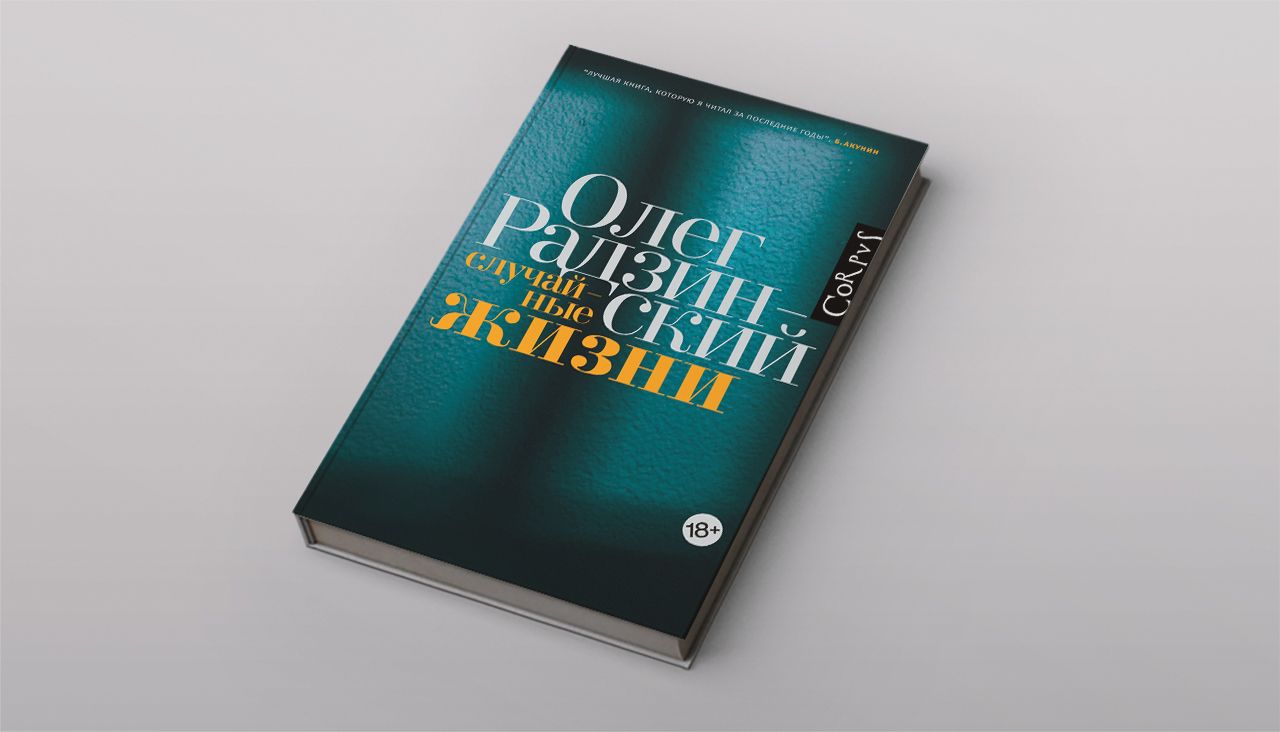
The biography of the writer Oleg Radzinsky, the author of the remarkable (and strongly underestimated) novels “Surinam” and “Agafonkin and Time”, breaks up into several separate episodes - not that completely ordinary, but definitely not unique. In total, they give the effect of phantasmagoria and even some artistic redundancy, which is poorly compatible with the common ideas about vitality and believable.
The privileged and cultural Moscow family (father and grandmother are successful “CHOST” , MOM and stepfather - television workers), prosperous Soviet childhood (with accuracy to regular showdowns with school hooligans), Majorian youth, Philfak of Moscow State University, and then, suddenly - dissident, arrest, Lifor prison, court, stage, forestry, link, and reference, and reference, and reference, and reference, and links, and links, and reference. A logical multi -plate in the final is emigration in the United States. In a word, separately, everything seems to be more or less typical of the Bohemian Muscovite born in 1958, whose childhood was on the core of the Brezhnev stagnation, and youth and maturity - at the troubled time of the broken eras. The whole is a great workpiece for a peppy novel in an adventurous spirit.
Nevertheless, “random lives” are not an adventurous romance, and not a novel at all. In essence, these are thorough memories with excursions into the past of the family and leisurely thoughts about “what will happen to the homeland and with us”. Moreover, the memories of the intentionally and reflectively built into the Russian literary and memoir tradition, taking the source in the “past and thoughts” of Herzen or “Notes from the Dead House” by Dostoevsky. Childhood, two-thirds spent inside the books, philological youth and lifelong infection of classical Russian literature determine both the hero-story-cabin to what is happening to him and his narrative manner.
“So enthusiastically, I wrote a novel about my own heroic life, not on paper, but in this very life” - this idea as a leitmotif sounds throughout the book. During the preliminary conclusion and psychiatric examination at the Serbian Research Institute, at the trial, during interrogations and meetings with the most terrible criminals, the author preserves for a marvelous rebuilding from reality. His own biography is seen from outside, through the prism of literature, which forms a protective layer between him and the outside world and allows you to replace fear with sincere curiosity: what will happen to the hero further? And how will it all end? Wow! The pathos that arises for a moment is instantly extinguished by a charming self -irony, and the author’s look throughout the book remains sharp and attentive, but at the same time surprisingly friendly and serene.
It is thanks to this literary pillow of safety, reading Radzinsky, you will rather hear the voices of Vladimir Korolenko, Peter Kropotkin, Viktor Chernov and other political exiles of the XIX century vegetarian, and not the prisoners of the Gulal, Varlam Shalamov or Evgenia Ginzburg.
But do not think that external “plush” makes “random lives” by a book of emotion-nostalgic or, worse, apologetic in relation to the Soviet regime. On the contrary, on the contrary, the absence of a strain and the ability to concentrate on the details makes Oleg Radzinsky’s memoirs a reliable (and, which, I must say, repulsive) the cast of the late Soviet era, exhaustively characterizing the system of combating dissent under Brezhnev, Andropov and Chernenko. And the fact that throughout the book the author does not forget to remind us from time to time that not everything is in the world, allows you to read his book as thoughtfully and carefully, not suffocating along the road from pain shock.
Olga Fix. The smile of chimera. M.: Time, 2018
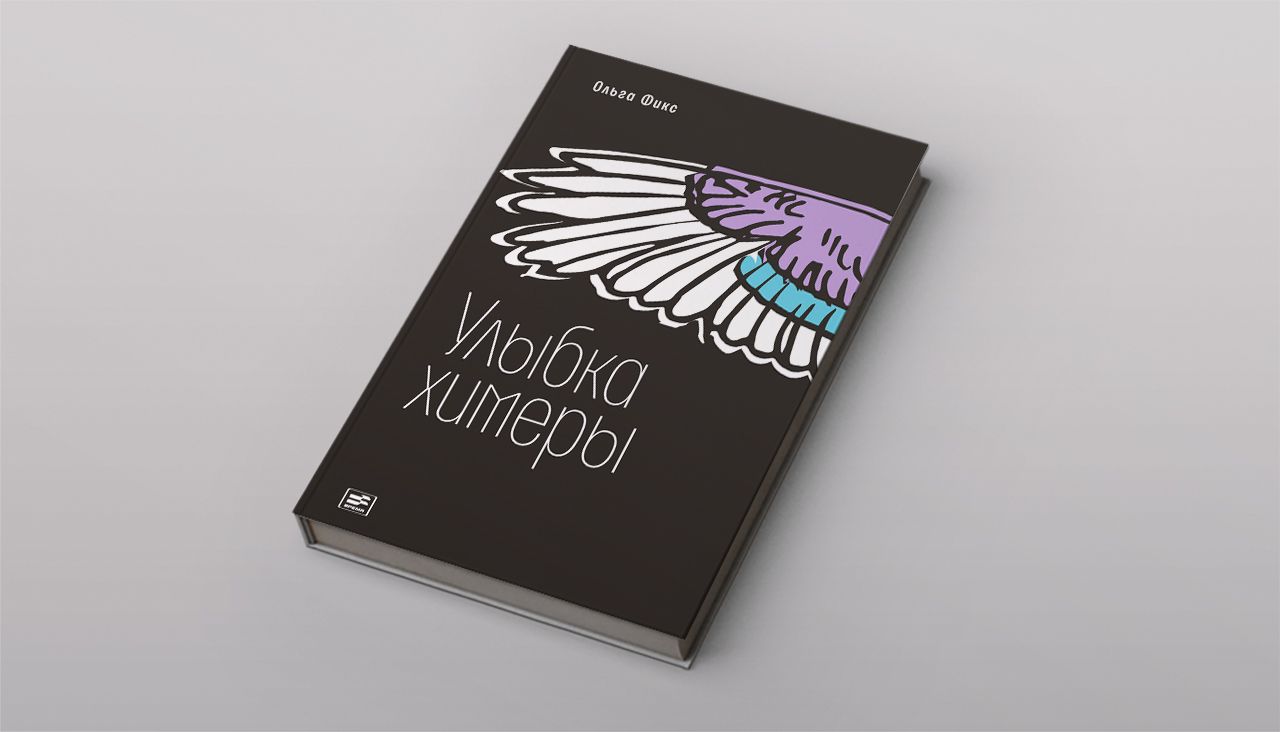
The fact that the whole modern Russian -speaking science fiction came out of the Strugatsky brothers, even repeat it - and so everyone knows. The more valuable texts look formally lying within this tradition, but at the same time it is not exhausted and able to enter into meaningful dialogue with it. This is the novel by Olga Fix “The Smile of the Chimera”, which is initially pretended to be a cute book for teenagers, and then suddenly and insidiously turns into a frightening anti -utopia.
The action of the “smile of chimera” unfolds either in the near future, or in some alternative universe of the victorious communism. People live in abundance and peace, realizing their natural talents for the benefit of society. In order for the children to grow up in the most harmonious and responsible adults, at ten years they are mandatory on boarding schools, from where they return to their parents for only a few weeks a year. However, in boarding schools, life is arranged very well and reasonably: students are respected, starting from the age of fourteen, they can practice in their profession and have sex, and from sixteen they are allowed to start a family and give birth to children. And although the rules forbid adolescents to leave the school territory, the administration through their fingers looks at their reconciliations and non -hazardous adventures, which, in essence, also prepare the children for independent life in the future.
“The Smile of the Chimera” begins as a typical “school” romance. The girl Masha is ardently (and, it seems, non -blessed) is in love with the young teacher of social science Max. Max is difficult to worry about a recent divorce and does not feel ready for a new relationship. Machine friend excellent student Anya is preparing to become a doctor. The future cunning of Lera is expecting a child from the future machine operator Seryozha. The boy Sasha, whose mother contrary to the law, tried to keep her son to her, quietly rebels against the boarding schools. Romanes, disagreements, night sorties behind the fence, difficulties of professional self -determination, difficulties with parents, sensitive and understanding mentors - in a word, normal kind teenage prose.
But the school idyll gradually begins to crack and sag. Not far from the school, an ominous classified object with outlandish inhabitants are found. The innocent game, in which Masha plays on the roof of her house, turns into uniform witchcraft, and not the brightest sense. Having seriously engaged in medicine, Anya finds out unpleasant details about a terrible disease - secondary scoliosis, from which many teenagers suffer. Gloomy omissions, dark secrets are multiplying, and indeed the facet of reality is unpleasantly unsteady, and the darkness of the future is truly impressive. The boarding school, which at first seemed to Hogwarts, upon closer examination, turns out to be a school for clones from the novel by Kazuo Isiguro “Do not let me go” , or even something worse.
Do not allow yourself to deceive the deliberately unpretentious manner of the author’s letter and youth of the main characters: not all books about children are at the same time books for children, and in this case, the glossy shell of Young Adult's prose is completely different. Taking as a basis, inhabiting and detailing the sunny “world of noon” (it is from there origin and Don Rumat from “it is difficult to be a god”, and Maxim Kammerer from the “inhabited island”), the author of the “smile of chimera” at the same time leads a meaningful polemic with the Strugatsky brothers, exposing the dark inside out and demonstrating the inevitable costs of absolute good in their understanding.
However, as already mentioned, Olga Fix’s book is not exhausted by a polemic with the Strugatsky - moreover, it can be read without suspecting this context at all. Having referred to other “school” stories, from Harry Potter to the “House in which”, Fix deliberately and skillfully deconstructs the canon, filling it with new - gloomy and unexpected - meaning.
Galina Yuzefovich