
Translated material
Show, money and mode: how "synergy" has become the largest private university in Russia
The Bell found out how the Synergy group became the largest private university in the country. According to all the laws of network marketing, the company sells its educational programs by the forces of its own students, gains new students wherever possible - from schools to correctional colonies, and actively absorbs competitors. And for the advertisement of its educational programs, the Celebrity battalion works-from the “best business car” Tony Robbins to writer Nassim Taleb and boxer Mike Tyson.
Mom Mask, Kaneman, Tyson and others: why does Synergy spend millions on world stars
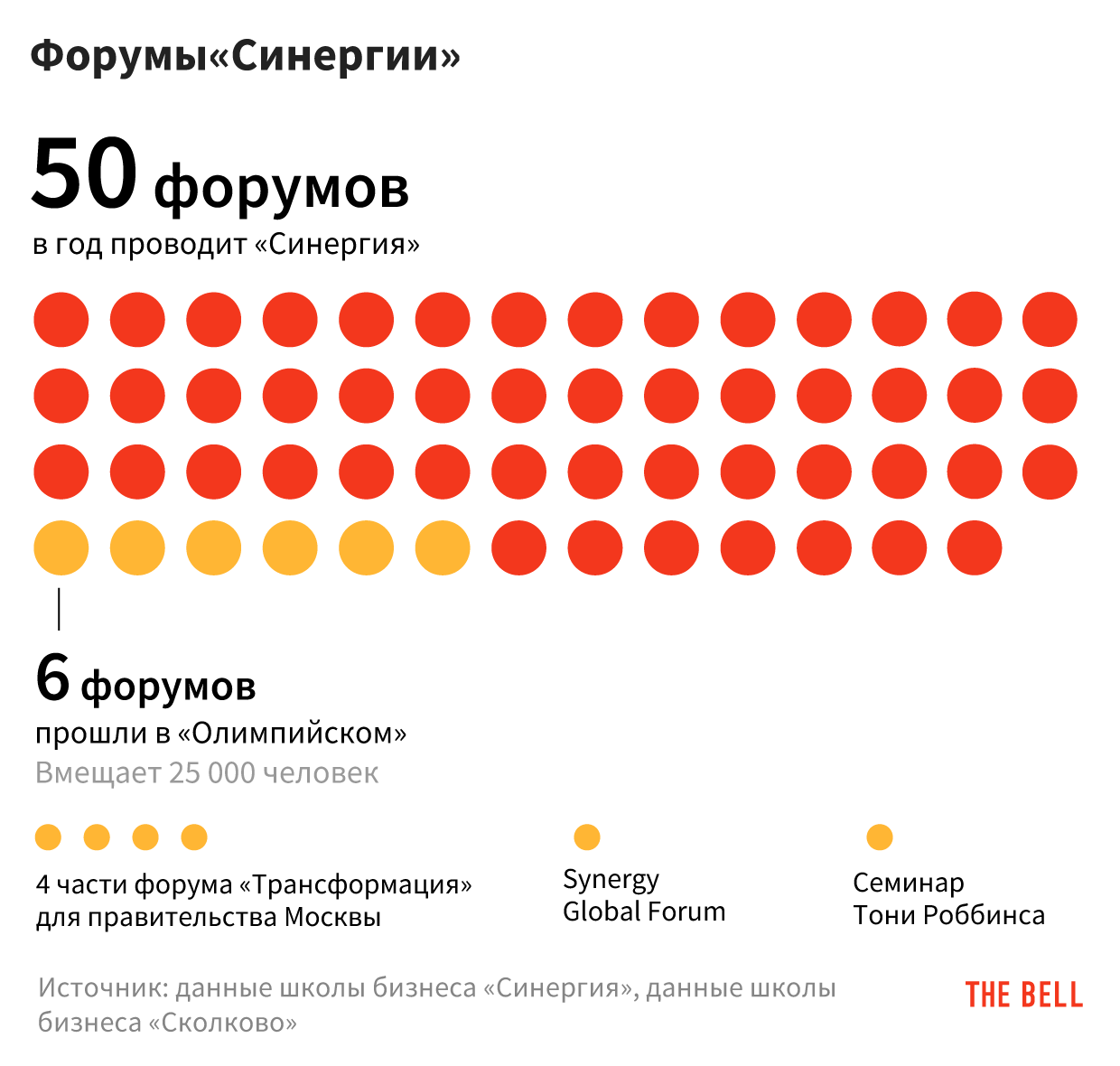
The Synergy business school this fall was going to bring the founders of the Chinese giants of Xiaomi, Lay Zyun, Baidu Robin Lee and Tencent Ma Huaten, and also the Nobel laureate Daniel Kaneman and the model, nutritionist and mother, Ilona Mask Mask. All of them were declared as guests of the Synergy forums, which will be held in October-November, but as the events themselves approached for various reasons, they disappeared from star speakers. “This happens when you spend 50 large forums per year, the direction is actively growing, and one of the designers or managers makes mistakes,” the Rector of Business School Grigory Avetov, the Chinese business leaders from the list of China Business Forum guests.
The general public learned about “synergia” afterbusiness training Tony Robbins , but in fact, the company has already gathered four Olympic ”this year. The first large business show-Synergy Global Forum-"Synergy" spent back in 2015. Then, specialists in the field of personal growth and success - the motivator Brian Tracy, “Mr. Body Language” Allan Piz, “The man who turned non -performance into art” Kate Ferrazzi, and the forum’s headliner became the Hurian of Management Guru Itskhak Adizes, entered the stage of the Moscow Crocus City Hall. And last year, Dalai Lama addressed the guests of the Synergy forum. It was not possible to bring the spiritual leader to Moscow, but the organizers themselves flew to Tibet and recorded the handling with him. In it, the Dalai Lama talked about the potential of Russia as a leading world power-thanks to this, the largest Russian media wrote about the event. On foreign stars, Synergy spends $ 1-2 million each time.
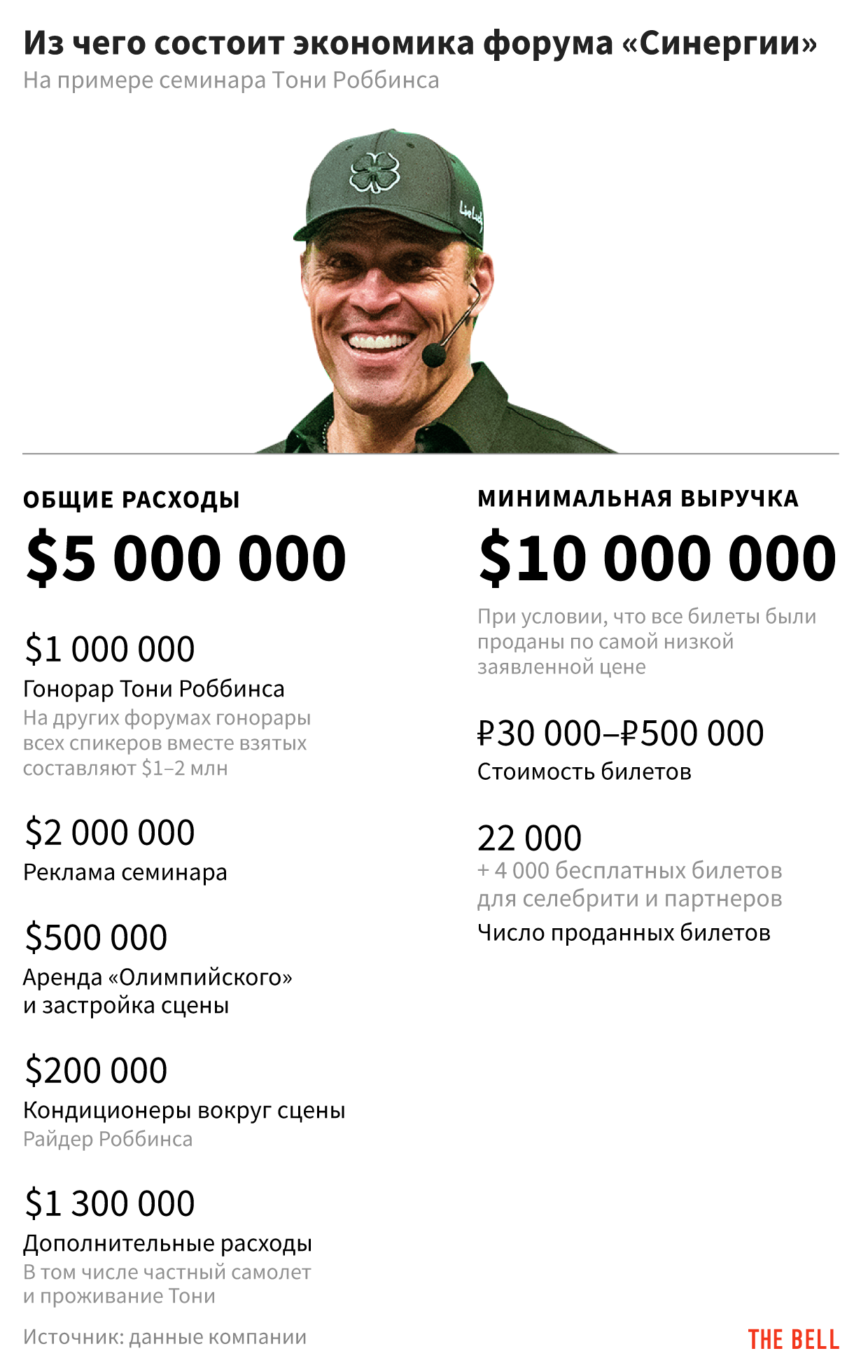
The celebrity is a “necessary measure”, explains in an interview with The Bell the Rector of Business School Grigory Avetov: “People buy tickets and come to the forum because of Tyson and Oliver Stone's T-shirt, and they receive Nysima Taleba and Tony Busen-speakers focused on the intellectual audience. If you remove the first, I will receive the hall for one and a half thousand people from people who are already quite developed. I will not expand the market with this, I will not make from the zombies that has watched “Dom-2” all my life, back to man. ”
In Olympic, Synergy collects 25 thousand people each, tickets for its forums cost from 15 to 500 thousand rubles. But not on each of them the company manages to earn money, the Avetov recognizes (the group does not disclose accurate figures about its events). Forums for "synergia" are expensive, but effective advertising for the assessment of the same name in the field of education.
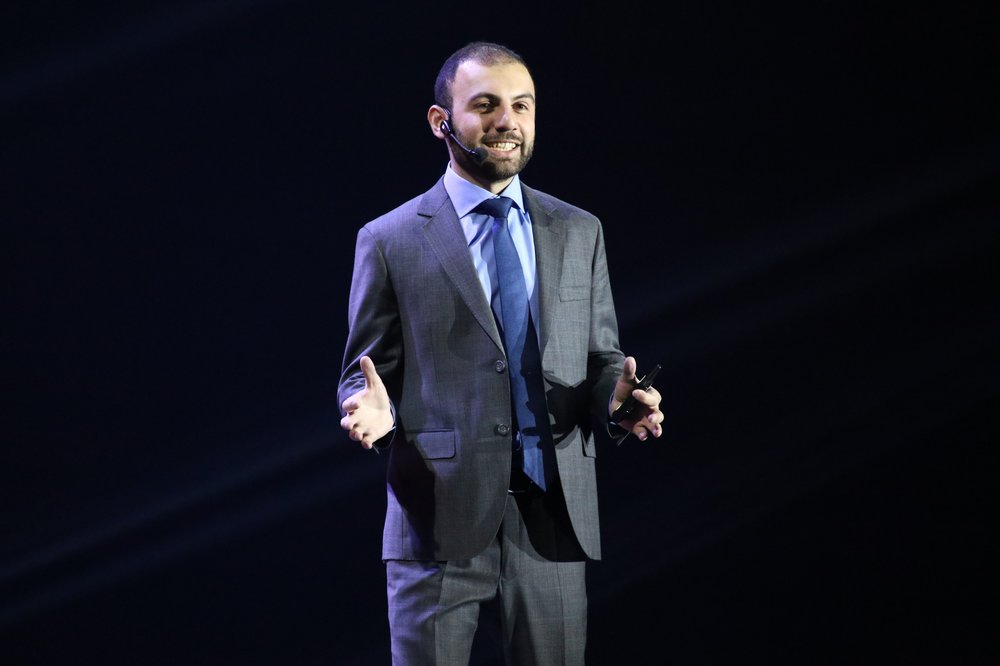
The rector of the Synergy Business School Grigory Avetov. Agency Moscow/Andrey Nikerichev
"Personnel reserve": how "synergia" has grown "to the size of the Moscow State University"
“At the construction, you have to stand smoothly shaved, did not shave - they give you three minutes, the rest take the emphasis lying down and wait. She was late at the university - lost breakfast, ” - this is how one of the students describes the everyday life of students of the“ personnel reserve ”educational program University“ Synergy ”, where he himself entered in 2015.
The Bell recorded an interview with eight graduates and participants in this program of different years. About how this program is arranged, we were also told by a person who has worked in Synergy for more than ten years. The editorial staff also has copies of student and employment contracts of students and legal proceedings.
“Personnel reserve” is a machine for a set of new students. Including, thanks to her, Synergy in several years has become the largest in the number of students in private university in Russia. The Synergy itself in this indicator is already comparing itself with Moscow State University.
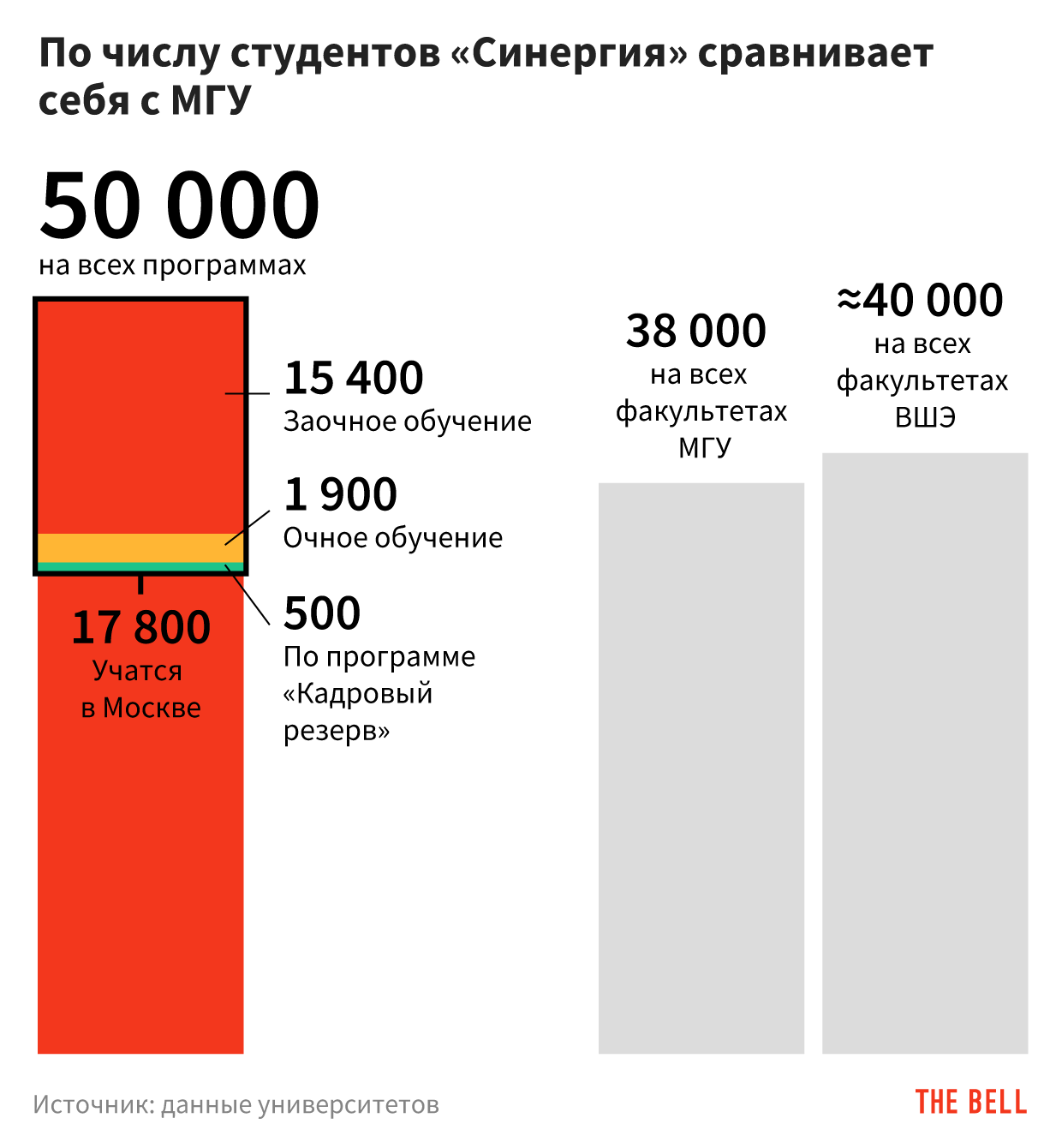
There are no budget places at the University of Synergy. The only opportunity to study “free” is the “personnel reserve” program, which is now being held about 500 people. The cost of training - 90 thousand rubles per semester - its participants work without interruption from the educational process. The work is different, but most of the students, according to their own stories, are occupied in sales: they account for 15–20% of the annual set of new Synergy students in Moscow.
The "personnel reserve" is designed primarily for adolescents from the province. “Moscow, budget, exam results - not the main thing, yes it is paradise on Earth!” - Talks about the first impressions, one of the students entering the program in 2013. Synergia, who came from Moscow to her Siberian school, promised schoolchildren free education and practice at the same time - knowledge can be applied right away by working in “synergy” in his free time.
The set in the “personnel reserve” consists of three stages - the first interview can be held right at the school, then - a full -time interview in Moscow and a weekly “School of Leadership” in one of the Moscow Regional Plants near Moscow. Rise at 6 in the morning, jogging, dousing with cold water, seminars, hang up - all by the clock. Those who withstood are entered by automatic. “After school, we were immediately loaded into buses - boys and girls separately - and took us to the hostel. It was the end of August, I had several pairs of panties, jeans, a toothbrush, ”recalls the student who received the New Business Technologies faculty (the previous name“ Personnel Reserve ”) in 2009. The recruits were not released home until the end of summer, and on September 1, armed with the brochures of Synergy, our interlocutor had already gone to congratulate the school on the outskirts of Moscow on the outskirts of the school year.
Upon receipt, you need to sign two contracts: labor and student. In 2013, students were invited to work an hour a week (rate 0.025%) with a salary of 305 rubles a month and studying in Synergy. In 2015 and 2017, working hours on paper increased to four per week, the salary - to 1650 rubles. In reality, students received more, but worked 6-7 days a week, from morning to evening, the interlocutors of The Bell assure. Three students who study on the “personnel reserve” now said that they earn about 15 thousand rubles a month, but they are fined for punctures, and they have only one school day: Sunday.
The representative of the Synergy claims that the salaries of students of the "personnel reserve" range from 15 to 50 thousand rubles - depending on the course. The load with each course also increases, senior students can work several days a week, says the founder and main owner of Synergy Vadim Lobov.
Almost all students of the “personnel reserve”, according to students, are somehow busy in sales: they call potential buyers, go to schools and colleges or advertise profile programs like “hotel-restoral business” in Synergy partner companies-for example, in 2009, the university had a chocolate and holding network and holding "Rosinter".
You can leave the program without loss only after its completion (in 2016 and 2017, students were invited to work after it for another year). Otherwise, the student is obliged to pay compensation. In the base of Moscow courts, you can find dozens of cases in which Synergy is trying to recover from students hundreds of thousands of rubles due to early termination of student agreements for "disrespectful" reasons. Compensation in such cases, judging by the case materials, is about 80–90 thousand rubles per year of study.
“The big illusion is that in the first two or three years, a student, to whom Synergy pays for training, accommodation and food, can make a serious contribution to business, it would simply be cheaper to hire employees,” says Lobov. The main goal of this program, according to him, is to find future stars and involve them in the ranks of "synergy."
The discipline in the “personnel reserve” is monitored by the “regime service”, which is headed by Alexei Sukhorukov, the founder of the Vityaz Military-Patriotic Club. The students that The Bell spoke with are complaining about the lack of sleep and the army atmosphere. “I didn’t wipe the nightstand, things in the closet are uneven, dressed incorrectly - they can force to wash the entire floor in the hostel after the evening construction,” recalls one of the freshmen of the “reserve” of 2017.
“Moscow city is like that. He doesn’t like sour ”: who owns“ Synergy ”
Vadim Lobov himself looks like a military man - now he is 39 years old, fit, with a very straight back - despite the multi -billion dollar business, he still avoided communicating with journalists. “Lobov came to Moscow very young and studied in completely Spartan conditions,” one of his acquaintances explains the entrepreneur’s love for discipline.
The Synergy owner himself says that he moved to Moscow in 1997 and entered Moscow State University of Economics, Statistics and Informatics (MESI). He was 19 years old, but in his native Azov, he said, he already had a small business. In the city market, Lobov was first traded flowers - “grown with a friend of roses”, then used by cars - “Mom worked in the district intercourse and helped to negotiate with the elderly and redeem this junk from them.” And when a hosiery factory closed next to the market, Lobov with friends bought “for a penny” machines and organized sewing a stocking, socks and bedding. “Azov is a port city, it went especially good when I agreed with the port administration that we will be exclusive suppliers of linen on ships, where it is changed strictly according to the regulations,” he recalls. Business, says Lobov, is still working.
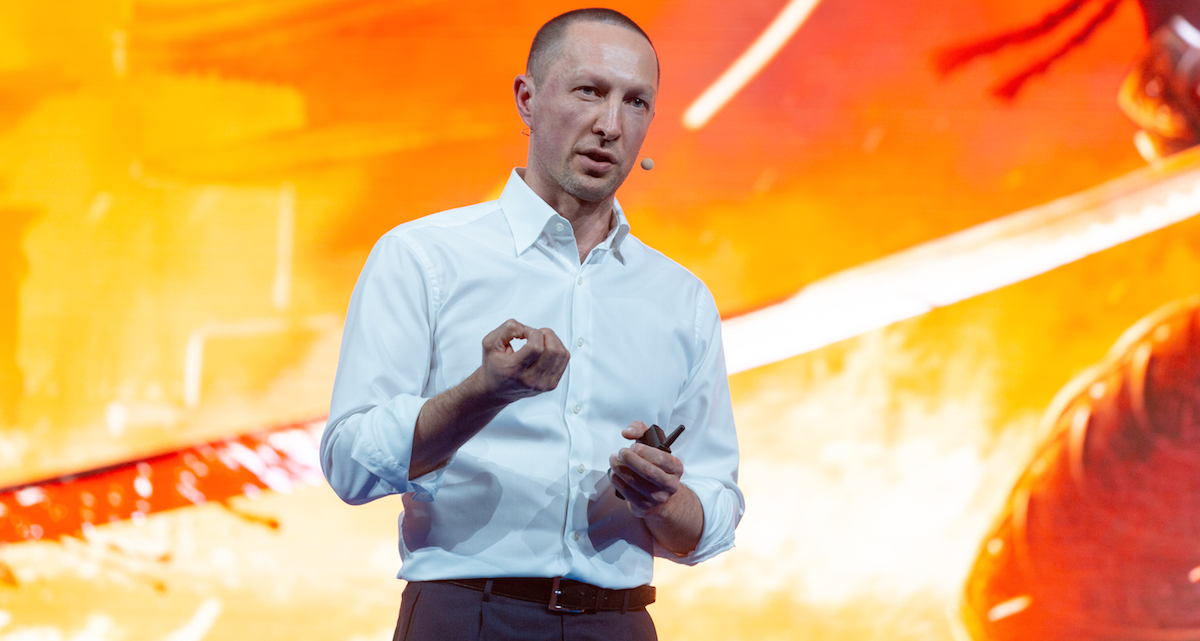
The founder of the Synergy group Vadim Lobov (photo of the company).
Lobov decided to go to study in Moscow for a company with a friend. In 1997, the faculty opened in Masi, which undertook to finance the creator of the company “Doka Pizza” and Dovgan vodka Vladimir Dovgan. The selection for the program "Dovgan Passionarians" was in the regions, in total 105 people entered Masi this year. Only boys were recruited, simultaneously with training it was proposed to undergo practice in Dovgan companies. The program, carefully choosing words, recalls Lobov, “combined elements of civil and military training”, specially for it in Masi invited consultants from military universities.
The young men arrived in Moscow in October 1997, and after the New Year the money from the Dovgan Corporation ended, and “They told us: thanks, it was nice to meet you, you can leave home,” Lobov laughs. But getting rid of the "passionaries" was not easy. “They gathered an initiative group and went around the leaders of all the Duma factions and those companies that they could reach,” says Yuri Korotkov, an ideologist of creating a “personnel reserve”. Now he, the founder of the “School of Reality Management of the“ Mirror of the World ””, lives in Anapa and arranges on -site trainings , where he teaches to realize the “duality of the world” and master “non -traditional knowledge that affect the result of sales”.
Vladimir Zhirinovsky agreed to support the students: he called the Minister of Education Alexander Tikhonov, and he agreed that Mace be allocated by another hundred budget places. The businessman Marina Soboleva, the founder of Vimpelcom, Dmitry Zimin, was allocated with the payment of the hostel - the owner of the Vestor alcohol company helped $ 20 thousand, Lobov recalls. Even earlier - in the regional elections - he met the future Ombudsman Tatyana Moskalkova. She still performs in Synergy with master classes and “Lessons of Eurasian Integration”. Among other acquaintances of that time is the ally of Vladislav Surkov, the former head of the Rosmolodezh and the Movement "Our" Vasily Yakemenko. Even his name “personnel reserve” borrowed from the United Russia organization, with which Synergy tried to agree on cooperation. Nothing came out of this project, but Lobov’s companies are still actively helping in various patriotic events.
As a result, Lobov graduated from the Economic Faces of Mesi with a degree in Finance and Credit. Together with him, out of 105, 65 reached the end of their studies: “Someone was deducted by poor performance, someone lost the rhythm of life. Still, Moscow does not like the city, does not like sour. "
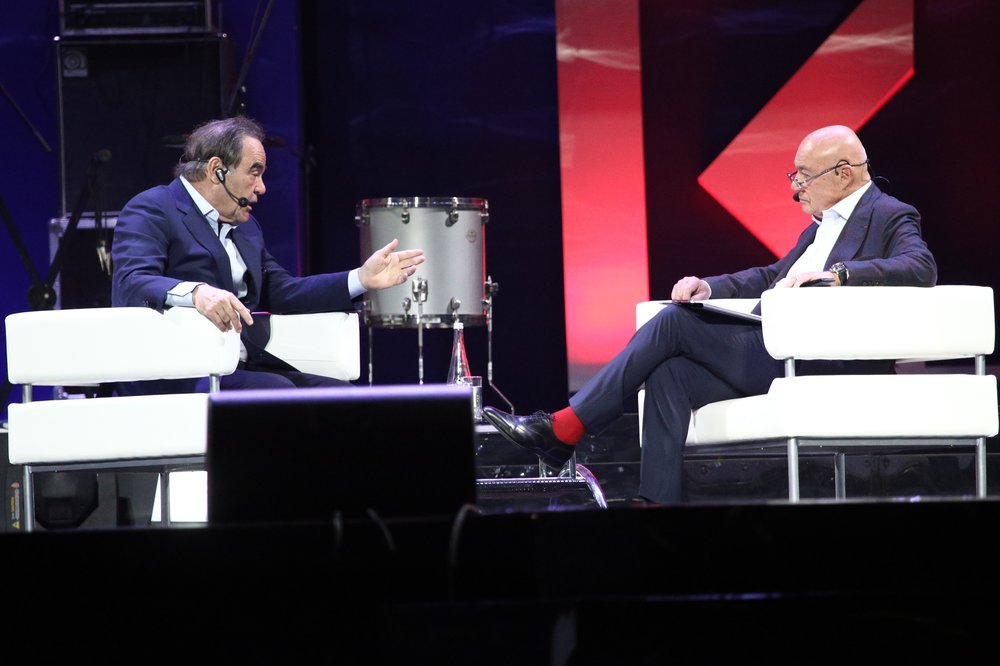
Photo: City News Agency Moscow / Nikerichev Andrey
Many of Lobov’s classmates went to work in the LDPR, and he remained an assistant to Vice -Rector Masi Yuri Rubin. Together they decided to organize a recruitment agency, which first existed as a commercial structure inside Masi, and in 2002 they began to build their own paid university. In the first year, the partners scored 2 thousand students. The idea was actually taken from Dovgan, guaranteeing graduates the future employment - for this they agreed with large companies, primarily with banks, says Lobov. He did not remember how much money needed to launch, but he says that he had enough personal funds with Rubin.
Initially, the university, which was then called the Moscow Higher Banking School, controlled Rubin, but after a few years control over all the main structures of Synergy passed to the younger partner. “Just agreements of the parties,” the Lobov leaves the answer. Rubin is still listed as the rector of the university, but “does not communicate with the press,” the representative of Synergy told The Bell.
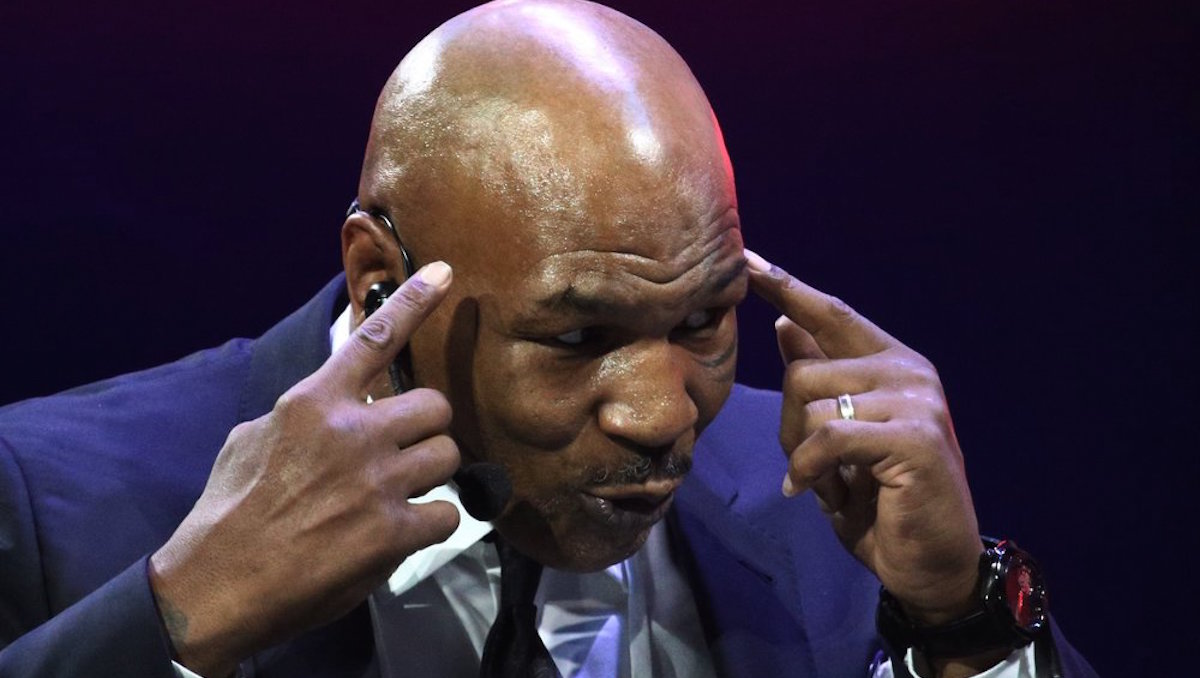
Photo: City News Agency Moscow / Nikerichev Andrey
"Benefit for both sides": how "synergy" buys competitors
The “personnel reserve” is a specific, but not the main supplier of students for Synergy. In the company's commercial services, about 200-300 people are involved in the involvement of new students, in addition, the company has a large network of branches in the regions. In Moscow, Synergy has agreements and a system of remuneration of employees of Moscow colleges. The company representative says that the company agrees with them only about the presentation in educational institutions of its materials. You can enter the university even from the army or from places of imprisonment. We checked this, calling the call center of Synergy-they confirmed that many conscripts are studying at the university, and here we can familiarize yourself with the student’s claim from the colony in the Sverdlovsk region.
Competitors of Synergy consider it the most aggressive player in the market and say that its agents always appear on the horizon at the right time. In 2014–2016, the state actively cleaned the education market, and the university became one of the main beneficiaries of this stripping, absorbing 15 large universities in recent years along with part of students, teachers and real estate. The number of private universities in Russia in the last two years has decreased from 400 to 170, Lobov says: "The normal process of market consolidation." He is sure that in five years they will remain 25-30.
Since 2013, Sergey Rukavishnikov, a former deputy deikan of the faculty of law in Synergy, was responsible for checking private universities in Rosobrnadzor. It is likely that thanks to this acquaintance, the leadership of Synergy is aware of how things are in other universities, the leaders of the other two private universities, with whom The Bell spoke, and the former top manager of Synergy. Lobov objects that he does not use this acquaintance: “Rukavishnikov worked at the university 10 years ago, was a good employee, then he began to develop a separate career.” Until 2016, Elena Ulitina, who now serves in the analytical department of the Rukavishnikov management department, worked at at least 2016. Even this week, on the Synergy website, it was listed in the head of the business statistics. But the representative of Synergy objects that this is a mistake: Ulitina has not been working in Synergy since 2016. The press service of Rosobrnadzor did not respond to our request.
The first vice-rector of Synergy, Artem Vasiliev, is sometimes involved in the inspections of Rosobrnadzor as a third-party expert-he has been working in the company since 2003, and in 2009 he defended his candidate dissertation on the Russian defense system in the arms market: competitiveness management. “When we were deprived of accreditation, Vasiliev was in the commission, he campaigned our students to move to Synergy,” says a person from the leadership of one of the regional universities. Three The Bell interlocutors in the education market say that Vasiliev is the son of a senior immigrant from the FSO. The representative of Synergy replies that the leadership of the university with Vasiliev’s father is not familiar.
Artem Vasiliev, according to SPARK, is also the general director of the company through which Lobov owns the Moscow Academy of Entrepreneurship (Mosap) under the Moscow government. Synergy decided to buy it in 2014 - and it was a loud story. The owner of Mosap, the former Minister of the Moscow Government from the team, Yuri Luzhkov, Vladimir Malyshkov, according to Lobov, independently and “completely sincerely” suggested joining “Synergy”, but for some reason he changed his mind in the process of the transaction.
У бывшего подчиненного Лобова Ильи Шутова, который до 2014 года работал проректором «Синергии», а потом ушел в МосАП, — своя версия: на владельца МосАПа Малышкова давили. Когда он передумал продавать академию, в ней начались внеплановые проверки Рособрнадзора, а потом у вуза и вовсе отозвали аккредитацию, рассказывает Шутов. Проверки шли и в региональных отделениях академии, а параллельно сотрудники «Синергии» убеждали студентов переводиться в ее университет, утверждают двое собеседников The Bell, работавших в разных филиалах МосАПа. Малышков, по словам Шутова, в итоге сдался и в 2016 году продал академию Лобову за $5 млн. Сам Лобов называет сделку абсолютно прозрачной. С Шутовым у «Синергии» затяжной конфликт.
После кризиса 2008 года «рынок образования сильно просел, нам не хватало ресурсов — ни человеческих, ни маркетинговых, и мы поняли, что надо искать инвесторов или партнеров», — рассказывает Елена Ласточкина, бывший гендиректор старейшей московской бизнес-школы «Арсенал», купленной «Синергией» в 2010 году. Лобов говорит, что сам учился в ней с 1998 года и прошел едва ли не все образовательные программы. Владелец школы Виталий Булавин «поделился с несколькими людьми» желанием продать школу — и хотя среди них не было Лобова, именно он первым предложил сделку. Ее сумму стороны не разглашали, но руководство «Арсенала» в разговоре с The Bell назвало ее «выгодной для обеих сторон». После продажи ни Ласточкина, ни Булавин надолго в «Синергии» не задержались. Бывший владелец говорит, что ушел, потому что его авторский тренинг, который много лет проводил «Арсенал», новой бизнес-школе стал не нужен: «Изменилась корпоративная культура, “Синергия” переориентировалась на масс-маркет».
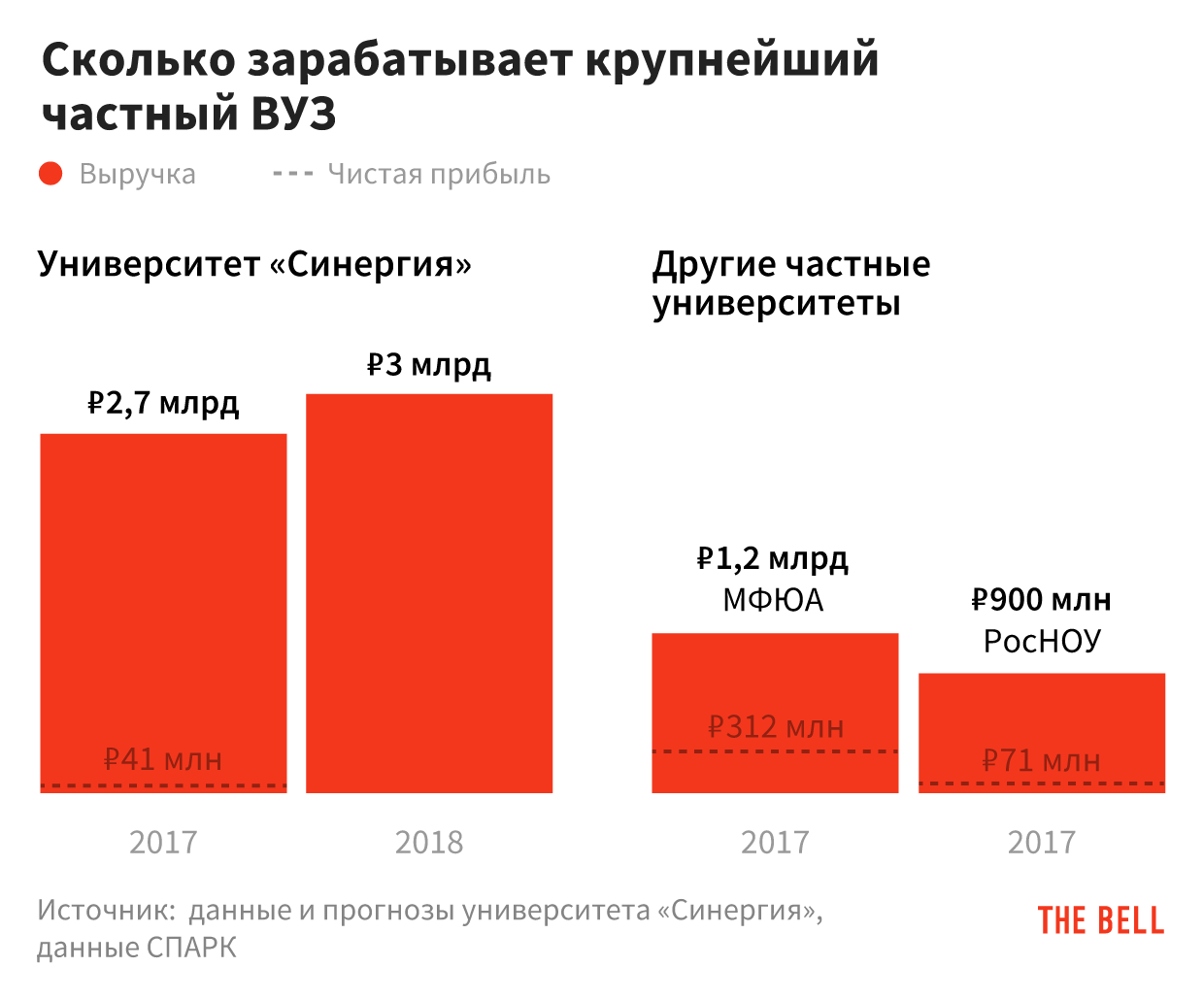
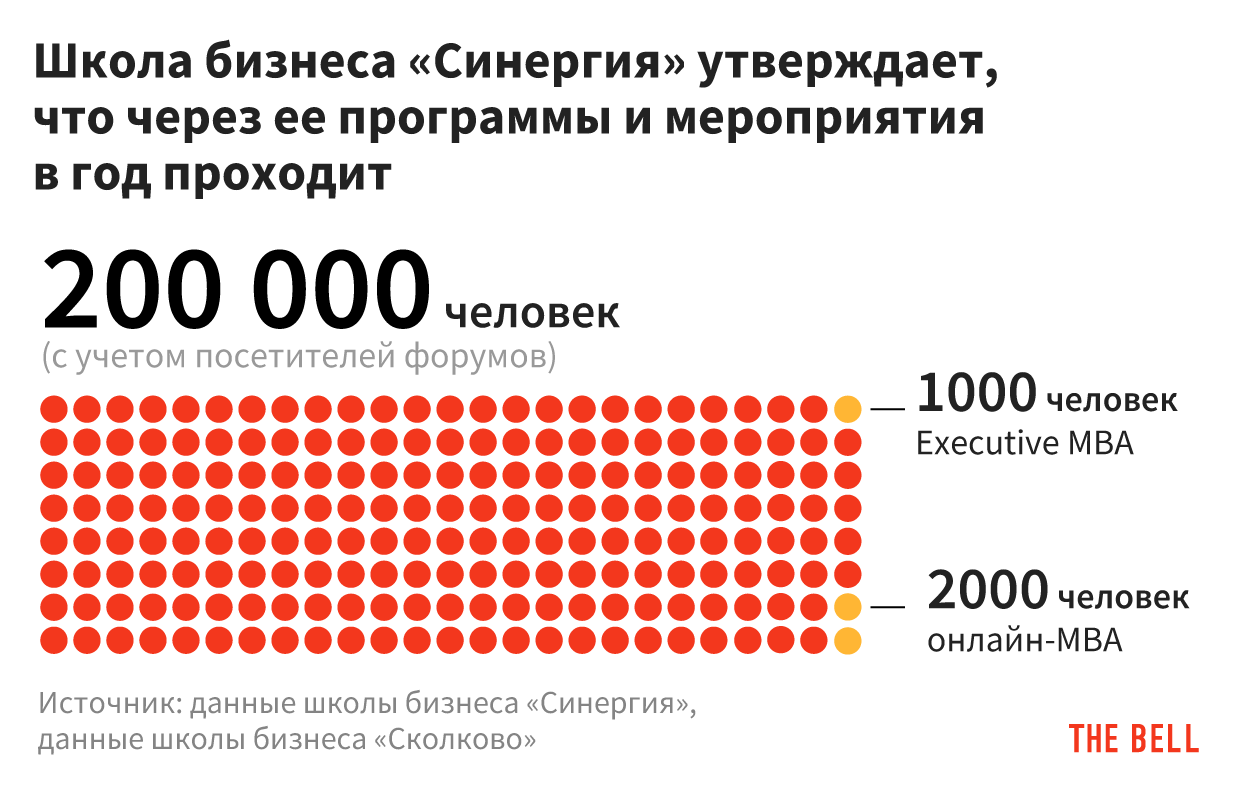
С 2010 года в составе «Синергии» есть и собственная школа бизнеса. Тогда Лобов купил Институт экономики и финансов, у которого уже была аккредитация Международной ассоциации MBA. Теперь в школе бизнеса «Синергия» за год проходит подготовку и обучение по разным программам около 200 тысяч человек, утверждает ее ректор Григорий Аветов (но это с учетом посетителей форумов). Выручка бизнес-школы, по его прогнозу, в этом году превысит 1 млрд рублей. Большая часть образования — это онлайн-курсы. Стоимость MBA «Синергии» варьируется от 195 тысяч рублей до 1,5 млн рублей (для сравнения: пройти программу MBA в «Сколково» стоит около 4,5 млн рублей).
Для того чтобы учиться в школе бизнеса «Синергия», не обязательно даже хорошо знать английский: все лекции зарубежных преподавателей переводятся. В народном рейтинге российских бизнес-школ, который составляют выпускники программ MBA из 41 бизнес-школы, «Синергия» занимает девятое место из 12.
Университет «Синергия» в Национальном рейтинге университетов от агентства «Интерфакс» занимает 266–267-е место из 288, в топ-50 экономических вузов по версии RAEX — 46-е место. «Чем больше масштаб вуза — тем сложнее контролировать качество образования», — говорит директор института развития образования ВШЭ Ирина Абанкина. Большой размах, по ее мнению, — главный риск для «Синергии». Популярность вуза она объясняет удачным набором программ: он постоянно меняется, подстраивается под сегодняшний, а не завтрашний рынок труда и ориентирован на профессии, где знания по факту нужны в меньшей степени, чем диплом.
«Мы помогаем другим школам, мы благотворители»: как «Синергия» собирается завоевывать мировые столицы
«Сейчас мы проводим 50 мероприятий в год, а хотим 500», — рассказывает Лобов. В планах у «Синергии» — глобальная международная экспансия, проведение форумов в «мировых столицах» — Нью-Йорке, Шанхае, Лондоне и других и открытие за рубежом филиалов с курсами MBA.
Можно считать это фантазиями, но Лобов действительно очень деятельный, рассказывают его знакомые. «Он из тех людей, которые, когда предлагаешь им какую-то хорошую и даже сумасшедшую идею, отвечает не «я подумаю», а «давай сделаем», – рассказывает управляющий партнер First Nation Societe Bancaire и сооснователь благотворительного фонда «Друзья» Ян Яновский. – Благодаря этому его свойству едва ли не на всех форумах «Синергии» теперь есть сессия про благотворительность».
В Дубае работает кампус «Синергии», он небольшой — всего 300 студентов, но образование там только очное, рассказывает Лобов. По его словам, там получают MBA и выходцы из СНГ, и студенты из Северной Африки и стран Персидского залива.
Первый опыт масштабных мероприятий международного масштаба у «Синергии» тоже есть, правда не слишком удачный: в прошлом году компания провела двухдневную конференцию в нью-йоркском Madison Square Garden — она должна была стать кульминацией в работе бизнес-школы. В качестве звезд на ней выступали Ричард Брэнсон, бывший глава General Electric Джек Уэлч, основатель Википедии Джимми Уэйлс, футуролог Рэй Курцвейл, венчурный капиталист Гай Кавасаки и многие другие, а диджеем на афтепати конференции стала Пэрис Хилтон.
Сколько компания потеряла на этом форуме, руководители «Синергии» не раскрывают. Но признают, что им не удалось продать все билеты по заявленной цене — от $2 тысяч до $10 тысяч. К концу продаж цены пришлось снижать — вплоть до $100, а за неделю до мероприятия их даже раздавали бесплатно в университетах, библиотеках и кофейнях, рассказал The Bell собеседник из команды организаторов. Лобов в ответ демонстрирует на своем смартфоне проморолик с полным залом. Главная проблема, по его словам, была геополитической. В разгар визовой войны с США многие сотрудники «Синергии» не смогли выехать на место: вместо команды из 200 человек вся организация легла на 20 человек. Запланированный на апрель этого года и не раз переносившийся Synergy Inspiration Day в Нью-Йорке с участием мотиваторов Ника Вуйчича и Леса Брауна пока так и не состоялся.
«Мне в жизни доводилось много всего делать, что поначалу выходило не очень хорошо. Но я так просто не сдаюсь» — к следующему мероприятию в Нью-Йорке Лобов собирается провести в США несколько месяцев, а в будущем — поставить зарубежные бизнес-шоу на поток.
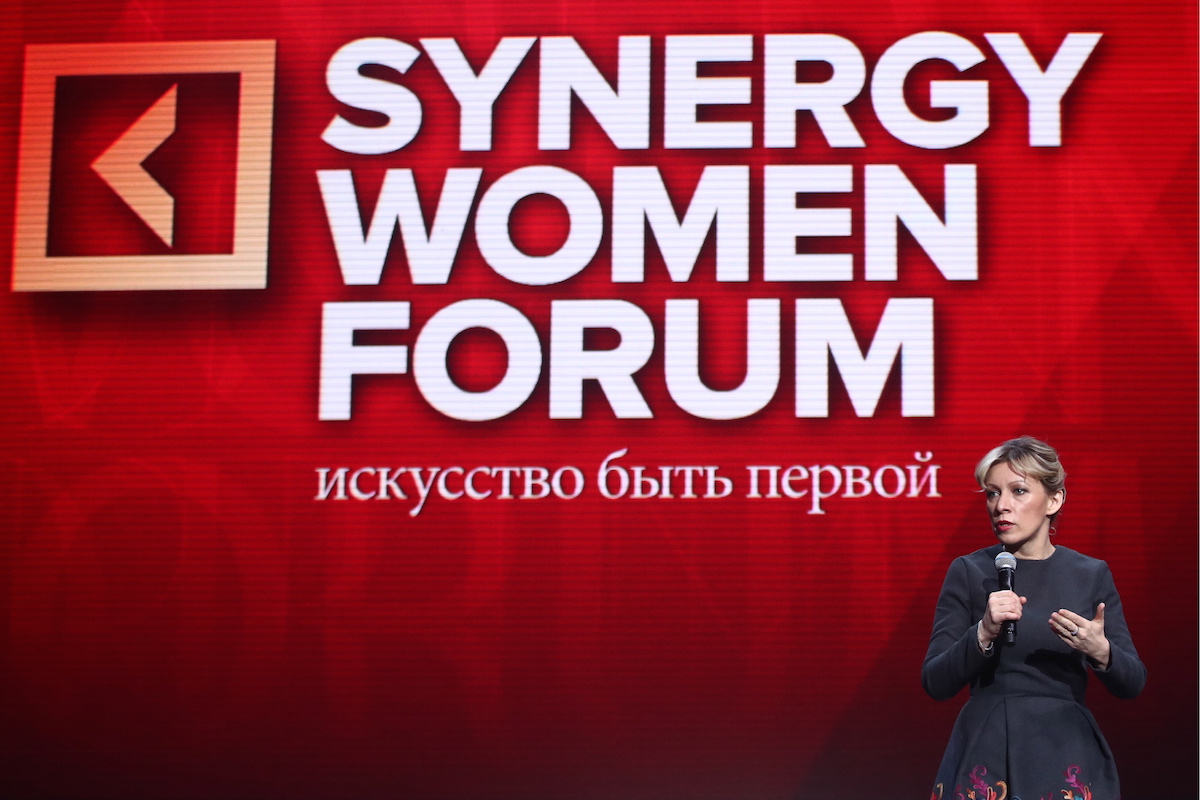
Пресс-секретарь МИД Мария Захарова. Valery Sharifulin/TASS
В России у «Синергии» тоже есть стратегия роста, к масштабным мероприятиям, на десятки тысяч человек, компания решила добавить новые форматы: для департамента предпринимательства и инновационного развития Москвы «Синергия» устраивает форумы под названием «Трансформация» — за первый двухдневный семинар для предпринимателей город заплатил 18 млн рублей, следует из материалов госзакупки. Следующие три «Трансформации» обошлись еще дороже, но Аветов говорит, что себестоимость такого мероприятия — 30 млн рублей. Для правительства Московской области «Синергия» делает форумы «Территория бизнеса», а в Казани они называются «Перезагрузка». На все господряды в структуре доходов группы приходится не больше 5%, говорит Лобов. По расчетам The Bell, только от Москвы университет «Синергия» за последние два года получил подрядов на 27 млн рублей. В некоторых тендерах с «Синергией» соперничала другая компания Лобова, фирма его бывшей сотрудницы и компания полной тезки дочери ректора университета.
В этом году «Синергия» начала устраивать и специализированные мероприятия: SMM Forum, Woman Forum, Art Forum. А весной команда Аветова проводит Synergy Insight Forum — бюджетный вариант глобального форума, без мировых звезд, но с российскими бизнес-тренерами и селебрити вроде Андрея Малахова, Гарика Мартиросяна и Владимира Соловьева.
Руководители компании верят, что их модель масс-маркета в образовании и ее продвижение посредством бизнес-шоу будет востребована — и в России, и за рубежом. «До того как мы начали работу, на рынке ничего не было, — рассуждает Аветов. — До нас форумами называли конференции, где собиралось две сотни человек, а самое крупное событие насчитывало максимум полторы тысячи. И рынок MBA был совершенно другим: школы набирали по две небольших группы в год и были довольны. Теперь мы собираем четыре “Олимпийских” в год и несколько тысяч человек на MBA, а за нами по проторенному пути идут другие игроки. Мы помогаем всем школам, мы благотворители».
Anastasia Stog More
в подготовке материала участвовали журналисты «Секрета фирмы»