
Translated material
VEB for the president
Igor Shuvalov will be responsible for economic growth
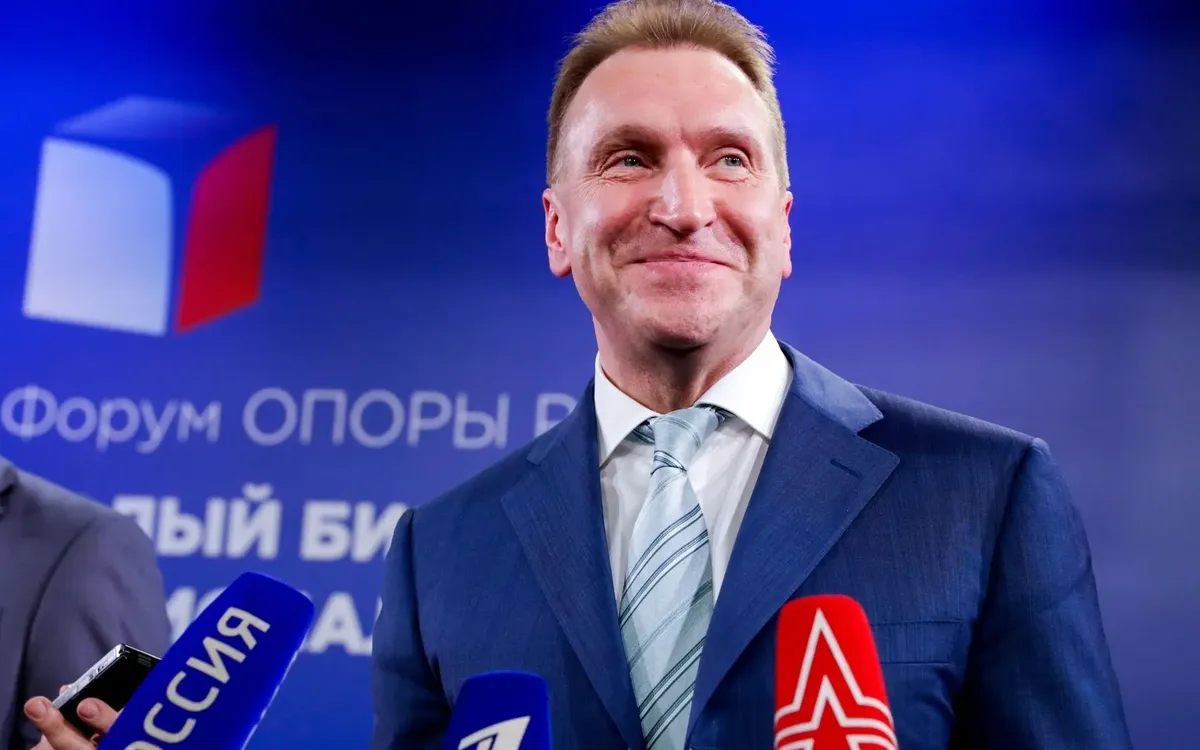
The May appointment of Igor Shuvalov in Vnesheconombank was easy to take for honorary resignation. The post of chairman of the state corporation with the reputation of the holder of bad debts in comparison with the role of the first deputy prime minister and curator of socio-economic policy is a clear decrease in the service. But the features of the new economic plan of the government show that such an interpretation is erroneous.
From the very first days, Shuvalov launched active activity in VEB. A large-scale optimization of the state of the state, the transfer of headquarters to a new building and the preparation of a new development strategy with the participation of a consulting company from the "Big Three". Recently, it became known that the financial basis for the reform will be about 1 trillion rubles of budget money for the pre -capitalization and repayment of the external loans of the development bank, and its symbolic conclusion is the renaming of Vnesheconombank to the “National Development Institute“ VEB.rf ”.
The restart and strengthening of VEB is not explained by the personal ambitions of the new leader only. The expansion of the functionality of the Institute for Development is closely related to the specific configuration of the financial and economic block of the government, from which the link was completely responsible for the issues of accelerating economic growth.
The fact is that the successor of Shuvalov as the First Deputy Prime Minister Anton Siluanov is simultaneously the Minister of Finance with many years of experience. His "accounting beginning" is in conflict with the task of launching economic growth. There is no doubt that the guardian of the treasury wins: for the next 3 years, at least 14 trillion rubles will be accumulated in reserve funds for the next 3 years - instead of working for the benefit of the population.
Maxim Oreshkin could be taken over the problems of starting growth - the investment model of development most actively promoted the Ministry of Economic Development. But with regard to the practical implementation of this strategy, the role of Oreshkin is almost invisible.
This management vacuum ensured the growth of VEB powers: an economic “breakthrough”, if you use the terminology of the May decree, it is he who will be engaged in.
The VEB should become not only the main executor of the presidential instructions, but also the coordinator of other development institutions with the function of “comprehensive support for projects”, and formally independent of the will of the government.
In the next five years, the VEB will finance projects totaling 3 trillion rubles. Shuvalov emphasizes that the project financing factory will work in close partnership with commercial banks. This is an attempt to move away from the “credit monoliner” model, in which the VEB acted as the only lender in 90% of the projects.
At the same time, the category of “national projects” will be preserved, the participation in which does not imply a breakest criterion. What part of the portfolio will be given under them under Shuvalov is still unknown, but in the past years the VEB was already a waste of hundreds of billion rubles on non -profit politicized projects (Olympic construction projects, buying up industrial enterprises in the Donbass, and so on).
The last two years, Web's activities have been actually frozen to solve the problem of bad debts.
Last year, the Web received a record clean loss of 288 billion rubles. By 2018, the development bank was supposed to get into profit, but today the “clearing” of the balance is still far from the completion. Even getting rid of problem assets, which VEB has almost half, the state corporation will have to look for cheap funding to resume investment activities. The government will take part of the necessary money out of its cubes, and the other part, presumably, will provide pension accumulations of 36 million “silents”, which will dispose of the VEB as NPF.
However, even if the government pours the updated VEB with cheap money, this will not help the real state of affairs in the economy. Experts of the Institute of Development Center in the latest issue of the ballot “Comments on the State and Business” make the Russian economy such a diagnosis that is not treated by building investment in fixed assets. Stagnation began back in 2010-2012, when the growth rate of investment was higher than the target indicators of the government. Now Russian industry has entered the next investment pause from the general braking of the economy. Investment growth is not a reason, but a consequence of GDP growth, HSE experts believe.
Behind this discussion are competing theoretical approaches to the economy. One of them sees the reason for the low growth rate in insufficient infrastructure construction, the other in weak internal demand and poor investment climate. It makes no sense to argue which of these views is closer to the truth. The government will implement the program that looks the only feasible: directively will increase state -private investments, and postpone structural problems for later. In the end, as the May decree says, the dogmas of which will not dare to challenge even the most progressive institution of development in the country.