
Translated material
Roser liquid
Prices for gasoline will not be raised until the New Year: instead of large oil workers will deal with the displacement of small refueling people from the market
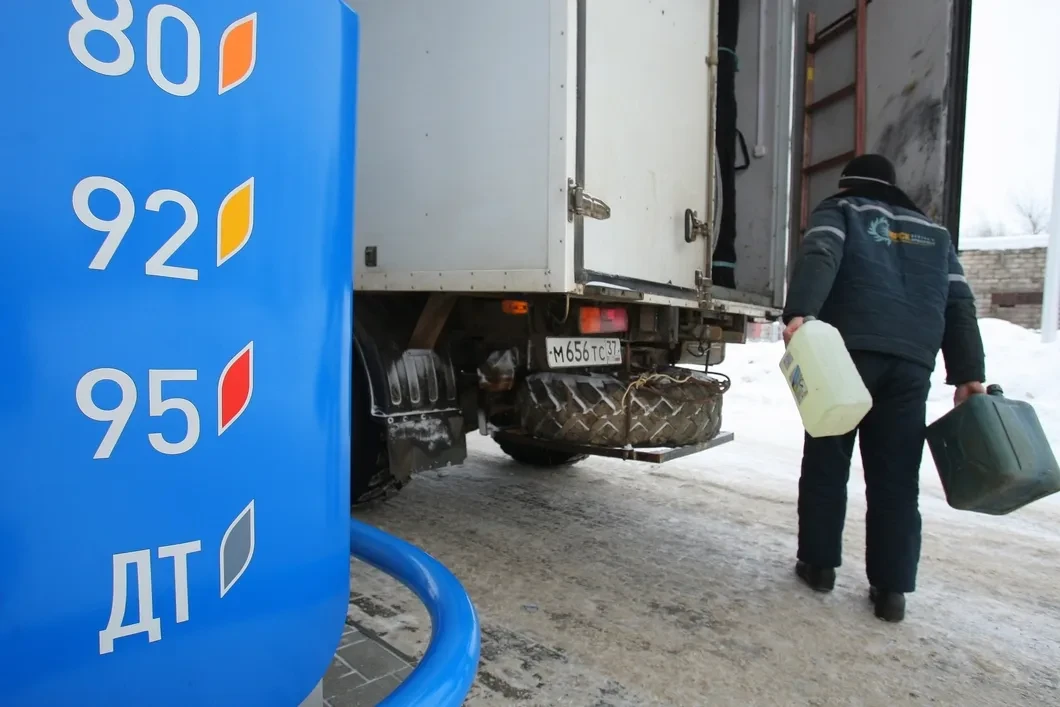
The largest oil companies agreed to restrain both retail and wholesale prices at the beginning of the beginning of June at least until the end of the year, and until the end of March 2019, to adjust them, taking into account inflation. In order to avoid reducing the excavation of fuel, which can cause freezing prices in the domestic market, and high prices for export, they were also obliged to supply 3% more to the domestic market than last year. So they decided on October 31 after the meeting in the Rosneft, Gazprom, Gazprom Neft, Lukoil, Surgutneftegaz, Tatneft, Neftegazholding, New Stream and Irkutsk Oil Company, as well as Deputy Prime Minister Dmitry Kozak. The Kozak additionally threatened that if at least one company violates the agreements, everything will be punished - up to the introduction of barracks export duties, which Dmitry Medvedev previously spoke of.
These measures are believed to help independent gas stations, the source of oil for which is only wholesale purchases. If the prices of their “columns”, large oil companies, after spring growth in prices, at the request of the government, are kept since June, then wholesale prices for oil products, following the prices of crude oil, have increased significantly - only in September gasoline, according to the Federal State Statistics Service, went up by 10%. In October, the dynamics of growth was just as disappointing.
The owners of small gas stations, whose share in the industry is more than half of the entire retail of gasoline, began to openly talk about threats to their business. “Independent gas stations from Primorye to Krasnodar cannot buy diesel fuel from oil workers with small and medium wholesale. Prices for goods in wholesale are set above retail - those by which large companies themselves sell gasoline and diesel at their own gas stations, ”Pavel Bazhenov complained last week in a conversation with RBC.
The fact that the oil workers, together with the government, have decided now, is, in fact, an attempt to “gently” in 2019 without a rise in the cost of one of the most socially significant resources, and after the New Year, oil companies, supplying independent gas stations at frozen prices, will be able not to increase sales on the exchange. According to Kommersant, this was the only relief of the oil industry, and it was accepted at the insistence of Rosneft - "to eliminate speculation from traders."
Against the traders, as well as against the independent gas stations, Rosneft also made an application on October 31 with a statement on its website issued a few hours before the meeting. The increase in prices for independent gas stations in the company was called the “provocation” and the desire to “extract superpituals for its owners”, which “often” - the eternal trigger - do not live in Russia. Rosneft proposed a number of decisions, the discussion of which in the government has been reported in the media since the summer. Among them is the proposal to introduce the minimum share of all produced crude oil for mandatory processing within the country at 17.5%.
The decision on the preparation of the relevant amendments in early October was signed by Prime Minister Dmitry Medvedev, and Kommersant reported the first discussions in the government in August. The sources of the newspaper noted that the author of the initiative was still the same Rosneft - suddenly! - The largest owner of oil refineries in the country (more than a third in primary processing). Thus, Igor Sechin's company could load its least effective factories.
First of all, such a proposal can hit independent oil transactions selling their oil immediately for export with exhort benefits.
However, the main goal of the Rosneft plan to rescue the “socio-economic situation” is not independent oil producers with their five percent share in general oil production, but all the same independent gas stations, Mikhail Krutikhin, partner of the Rusenergy consulting agency, believes. In addition, in order to extend to them the obligations to freeze prices, Rosneft was also proposed to transfer to gas stations - instead of oil refineries - the payment of excise taxes on oil products.
“For a large company that has its own gas stations, the transfer of excise tax from the plant will not give anything. And if suddenly the excise tax is levied not from the processing plant, but from the owner of the gas station, which does not have its own plant, this will be an additional tax burden for small fuel sales on the market.
That is, this is the crowding out of small companies and the enlargement of the same Rosneft. This is a cunning trick that will simply add taxes to competitors "
- says Krutikhin "New".
So far, large vertically integrated oil companies will be able to compensate for export incomes trade losses in the domestic market, new costs will be unbearable for independent gas stations. However, the crowding out of small competitors from their position in retail will open, according to Krutikhin, new obligations to the same Rosneft. “We will have to fulfill a certain social order: to build and open gas stations in very remote places where large companies have no interest to get. And the government, of course, will demand: since you will replace small players on the market with your own large networks, then if you please replace them completely, and not concentrating gas stations in only a few large cities, you will have to reach the villages, ”Krutikhin explains. However, as already noted, nothing interferes with this “social order” of Sechin's company to ask for new benefits - not to do everything at his own expense.