
Translated material
The Great War is not over
A hundred years after the end of the First World War in European countries, archaic mechanisms of hatred are again triggered
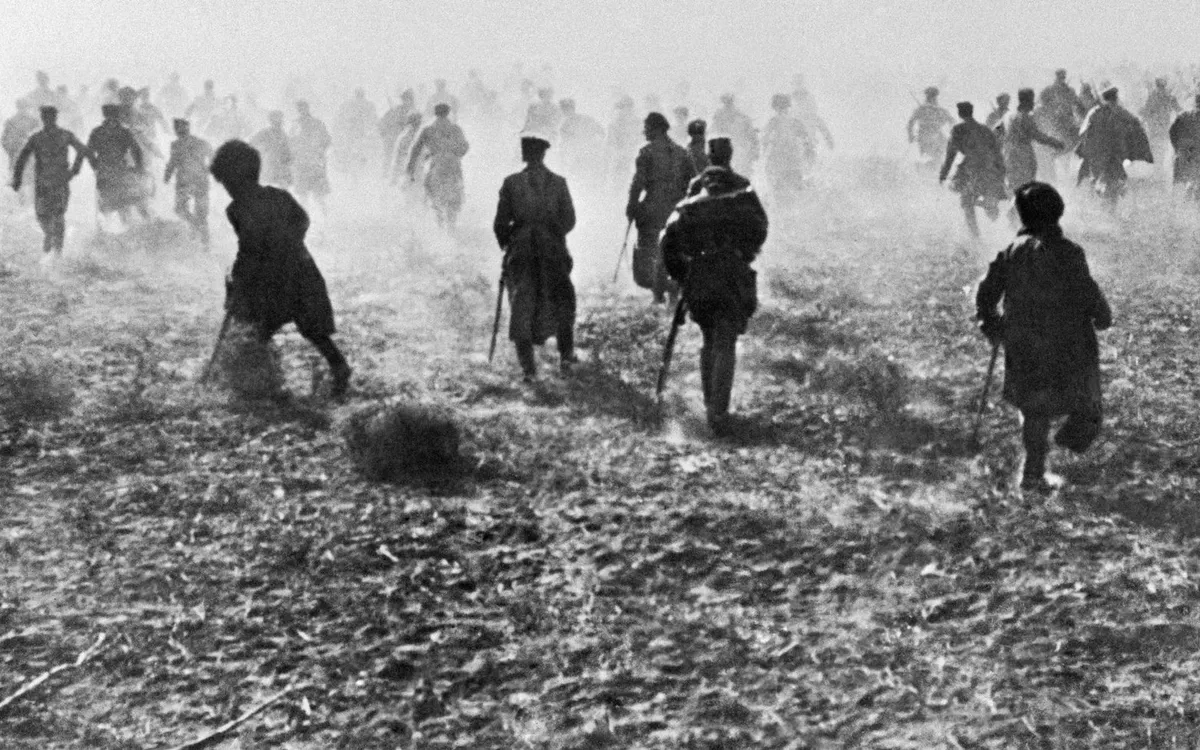
The expression "Cleaning the watch" was born in the First World War. Before the war, many completely did without hours. The gentlemen preferred expensive pocket chronometers on the chain, for which a special pocket was made in trousers.
And in the war it was necessary to know the exact time - the hour of attack or the beginning of artillery preparation. I made a mistake for a few minutes - I fell under the destructive fire of my own guns. But there is no time to get into a pocket for a massive chronometer with a lid!
And the pilots needed a clock that you can look at during the flight without letting go of the helm. So the wristwatch appeared on the strap, and they immediately became fashionable. The clock on the wrist does not interfere, both hands are free. It is enough to bend the sleeve of the tunic or tunic. In the First World War, many ideas were successfully implemented that were rejected from the threshold before the war.
Red pants
They died on the battlefield, died of wounds and missed more than two million soldiers of the Russian army. But the Bolsheviks called the war "imperialist" and crossed it out of history.
And in Europe it was this war that is called the “great”, because over these four years, Western Europeans suffered the largest losses in their entire history. In the First World War, twice as many British died, three times more Belgians and four times more Frenchmen than in the Second World War.
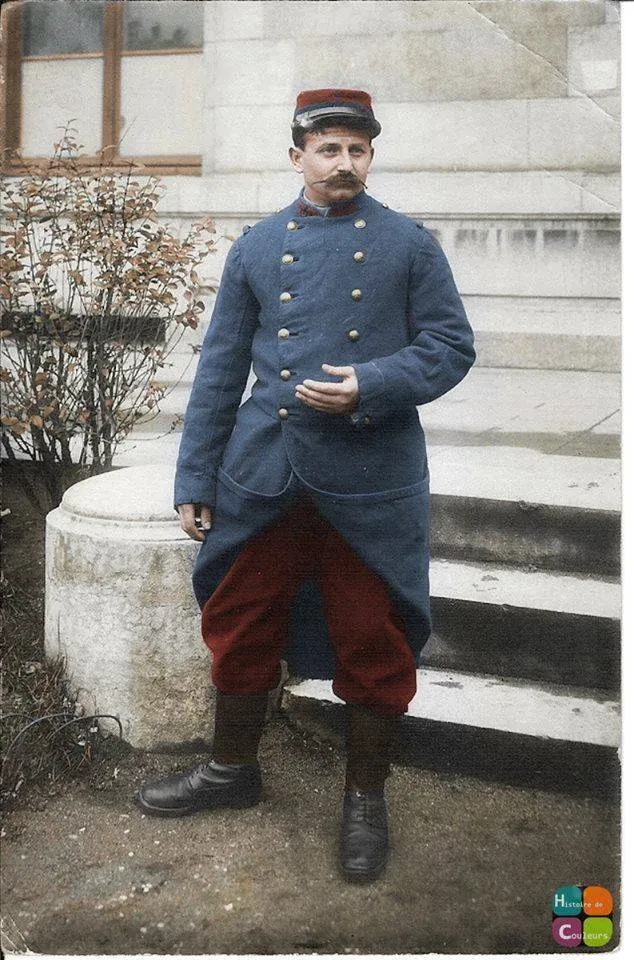
The French went to war in red uniforms. The generals claimed that red trousers - a distinctive feature of the army - rally infantry and give them the necessary morale. The transition to Khaki's color fabrics, masking fighters on the battlefield, looked like undermining national security. As a result, the French infantrymen became an excellent target for German machine gunners.
The German generals had special hopes for cavalry attacks. Cavalry Kaiser Wilhelm II especially admired by Cavalry. The main task of the cavalry is to break the enemy with his pressure and finish off with cold weapons. But the cavalry could not break through the rows of barbed wire, and artillery shot it ruthlessly.
The army is conservative by nature. Due to some kind of blindness, the military leaders refused to take seriously the rapid development of military equipment. They were preparing not for the war that was ahead, but for the one that was.
The novelty of Hyirem Maxim
The first satellite flamethrower was developed by the Berlin scientist Richard Fidler back in 1901. But production was established only in war. Under Verden, clearing the road to their infantry, the German flamethrower burned out fencing from barbed wire and burned machine -gun calculations hidden in concrete bunkers. A stream of flame beat 35 meters. The calculation consisted of two people. One carried the canister with a combustible mixture, the other directed the incinerating everything and all the stream.
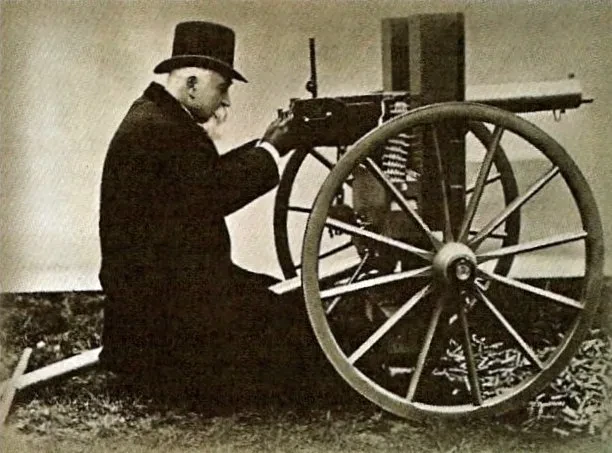
The American designer Khamme Maxim, who developed the world's first combat -ready machine gun, proposed his invention to the British. They did not appreciate the novelty. The invention of Maxim was bought in Russia.
The gunsmiths from Tula processed him. The queue from Maxim cut the human body in half. The rate of shooting is 600 shots per minute.
On July 1, 1916, British soldiers took an attack on the Somma River. An hour later, half of the advancing British were dead or wounded; They were mowed by German machine guns. By the end of the day, 20 thousand British soldiers were killed - this is the most gloomy day in British military history. The battle on Somma lasted four and a half months. After paying the lives of six hundred thousand soldiers and officers, France and England conquered ten kilometers. Three hundred thousand were killed under Verden, and the front line practically did not change.
Young officers, the German Friedrich Paulus, the future Field Marshal of the Wehrmacht, who will reach the Volga and will be captured in Stalingrad, and the Frenchman Charles de Gaulle, who will lead the anti-German resistance, and eventually become the president of the country, fought under Verden.
General Henri Philip Peten, who became a national hero, commanded the defense of Verden. In the Second World War, he is frightened by the repetition of the same bloodshed, therefore he will decide to capitulate before the advancing Wehrmacht and cover himself with disgrace.
Helmets and caps
The soldiers entered the First World War in cloth caps or in cap. The famous German spicy helmets were leather. Metal helmets seemed a relic of the past, an attribute of Spartans and Vikings.
But the soldiers died - both from the direct hit of the bullet, and from the fragments of shrapenzha. The use of glycerol in the anti -leaving mechanism of artillery weapons saved the gunners from the need to aim again after each shot; This turned the gun into a quick -firing weapon - it erupted twenty shells per minute.
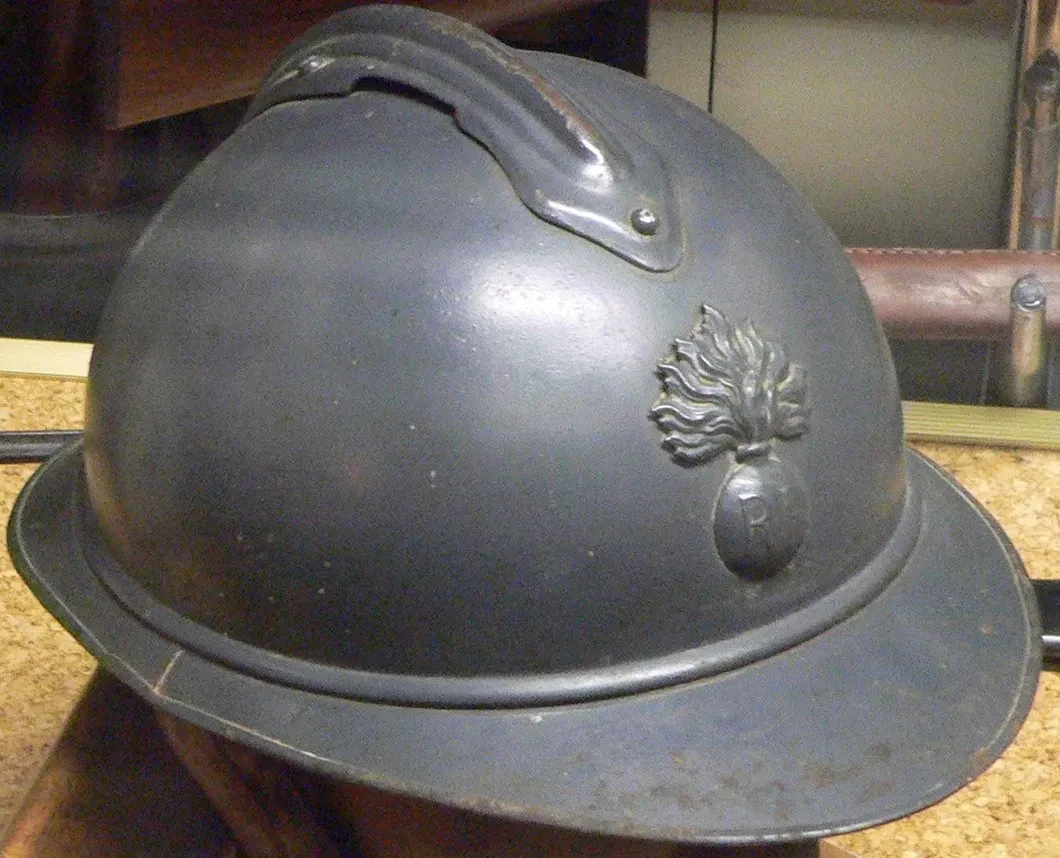
France caught the first. In 1915, soldiers received helmets of thin steel. England released a pot of thicker steel. A similar design was chosen by the United States. In 1916, a German steel helmet appeared. It was preserved in the Wehrmacht and in the Second World War. Nowadays, the Americans are used - not from steel, but from a more reliable Kevlar. They regret: a long time ago it was necessary to use a successful German invention, but I did not want to look like the Germans.
A modern coat also appeared during the First World War. I liked the shape of the British officer - waterproof, free cut, with a belt. This style was developed by Berberi by order of the military department. The appearance of a man in the form of a fuse in the souls of civilian, after the war, they wished to look just as courageously.
In 1913, the Swedish engineer Gideon Sundbek, who moved to America, patented the clasp without hooks. In the war, the sailors liked it. And after the war, lightning began to be widely used in civilian clothes.
Leather jackets spread widely in the First World Wide, because lice did not start in them. In those years, it was very important: lice are the carriers of typhoid, who mowed people both at the front and in the rear.
Cartier tanks
The rapidly developing military equipment struck the imagination. In 1917, the jeweler Louis Cartier proposed a new watch model called “tank” - the first armored car he saw he saw this impression.
The British were the first to throw tanks into battle. In September 1916, during the battle of Somma, 49 British armored vehicles reached the battlefield. It was a noticeable debut. Many of the Mark-1 cars broke or stuck in the mud, but the rest moved to the position of the German infantrymen. November 20, 1917 - the day of the massive use of tanks. More than 300 British cars participated in the battle for the French city of Cambra. The infantry was violently rejoiced at the appearance of these monsters, giving them confidence in battle.
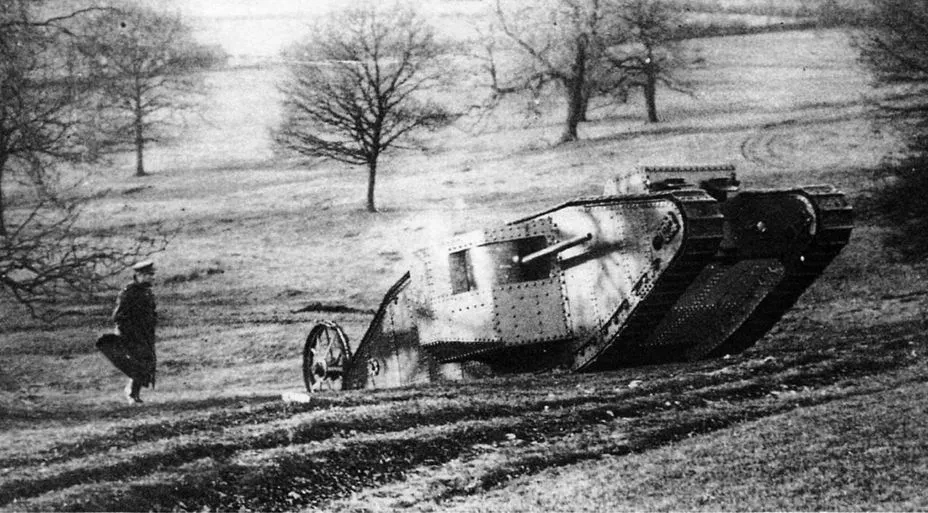
In the spring of 1919, the British prepared the first massive tank attack deep into the German positions, but the war ended.
The first mobile phones
Kaiser Germany was ahead of its opponents in the development of the sky. The first airships took to the air back in 1900. In the First World War, May 31, 1915, the German airship suddenly appeared above London and dropped several bombs. By 1916, the first air defense systems were created in England and shot down several low -speed and vulnerable cars.
The airships were replaced by airplanes. At first, aviation was used for intelligence. On airplanes installed cameras. The air intelligence changed the course of hostilities - the command immediately received accurate data on the location and movement of enemy troops.
Thanks to the development of aviation, the first “mobile phones” appeared, they weighed 50 kilograms. The pilots needed in connection, but they could only give signals with gestures. Since the end of 1916, planes were equipped with radiotelephones, but the noise of the engines has prevented something to make out. Then they came up with a helmet with built -in headphones and a microphone.
The smell of mustard
On April 22, 1915, at half past seven in the evening near the Flemish city of IPR in Belgium, a suffocating gas cloud covered enemy positions. Taking advantage of the wind, which blew towards the enemy, the Germans released 150 tons of chlorine gas from cylinders. The French soldiers did not understand that they were approaching the cloud: 1,200 people suffocated, 3000 fell into a hospital bed.
Germany was the first to get chemical weapons, as it had a more developed chemical industry. She owes the arsenal of poisonous gases to Fritz Khaber, the head of the Berlin Institute of Physical Chemistry named after Kaiser Wilhelm.
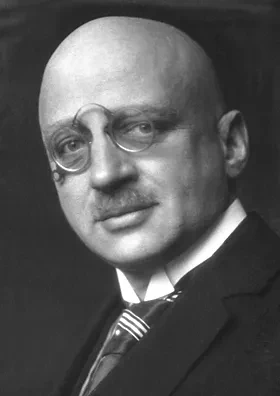
Fritz Habert watched the gas action from a safe distance. Three weeks before that, the creator of chemical weapons tested him on himself. At the training ground where the maneuvers were held, it passed through the yellow-green cloud of chlorin. The experiment confirmed the effectiveness of a new way of destroying people. Habber became bad. He went in a cough, turned white, and he was carried away on a stretcher.
Chemical weapons were launched late in the evening or before dawn, when atmospheric conditions favored this and in the dark it was impossible to notice that the gas attack began.
The soldiers in trenches, who did not have time to put on the gas masks, turned out to be completely defenseless and died in terrible torment.
Canned food and crackers
In some sections of the front, hostilities were not carried out, they did not even shoot there. The soldiers had fun. We played football. They arranged a rope tug competition. The soldier was fed meat. Few could afford it at home.
A soldier of the French army was supposed to be 300 grams of canned beef, 300 grams of crackers, 80 grams of sugar, and for sweets - 125 grams of chocolate. In the Russian army, before the war, the meat ration was one pound (four hundred grams), after the outbreak of war it was increased to one and a half (six hundred grams). In 1915, the Council of Ministers decided: replace beef meat with pork and lamb; Expand the production of canned meat.
But the warring Germany was missing. Especially acute - metal. The Germans took off the bells and handed over to the re -melting. They dug up wires from the ground, they made bullets from them. There was not enough coal. In the winter of 1916, schools were closed - there was nothing to drown them. To save on heating and lighting, on April 30, 1916, the government in Berlin ordered to move the hours of hours ahead. In England, on the summer, they crossed May 21. And on March 19, 1918, the Congress of the United States introduced the summer time - before the end of the war.
Quartz lamps
In Germany, the First World War transferred the food issue to the category of political. The German peasants were not able to feed the country. As a result of malnutrition, about six hundred thousand Germans and Austrians died.
Children suffered from rickets - the result of insufficient nutrition. Berlin Dr. Kurt Guldchinski took a mercury-quarry lamp and began to irradiate children. He soon noted that the state of the bone system of his patients improved. Throughout Germany, children were seated in front of quartz lamps. Ultraviolet radiation helps to produce vitamin D, participating in the synthesis and absorption of calcium, and this is a brick from which the bone system is built. So quartz lamps began to be used for artificial tanning.
Remembering the hunger of wartime, the Germans decided that Germany should be fed - even at the cost of the life of other peoples. Subsequently, the readiness of the Nazis to kill entire countries in order to ensure that the Germans receive everything they need, did not meet objections.
Knife in the blood
The First World War was meaningless; To justify it, the opposing sides gave the war an ideological dimension. This is a time of unlimited myth-making: about the atrocities that the ambassadors create, and about the nobility of their own miracles-gods in army overcoats.
In Germany, stories were conveyed from the mouth that the French and Belgians cut off their ears and noses to the captive Germans. So, no mercy to the enemy!
In the countries of the Ententes, they said that German soldiers, having captured Belgium, are injected with bayonets of children, and in Germany itself there is a factory in which sausage is made of corpses. Everything German was banned - Bach, Beethoven and German in schools. One British publicist called on the readers: "If you, sitting in a restaurant, found that the waiter serving you is a German, splash the soup directly into his dirty face."
Young writer Ilya Ehrenburg wrote from France to the poet Maximilian Voloshin:
“I read the local newspaper. Yesterday there was an advanced article on the topic of the smells of the Germans. The author assures that the Germans emit a special, unbearable smell and that the schools on which the Germans were sitting have to burn. ”
The enemy was painted ridiculous and miserable. This helped the soldiers get rid of fear, to fill confidence in their own superiority over the enemy. Or, on the contrary, the enemy was endowed with devilish features in order to arouse hatred.
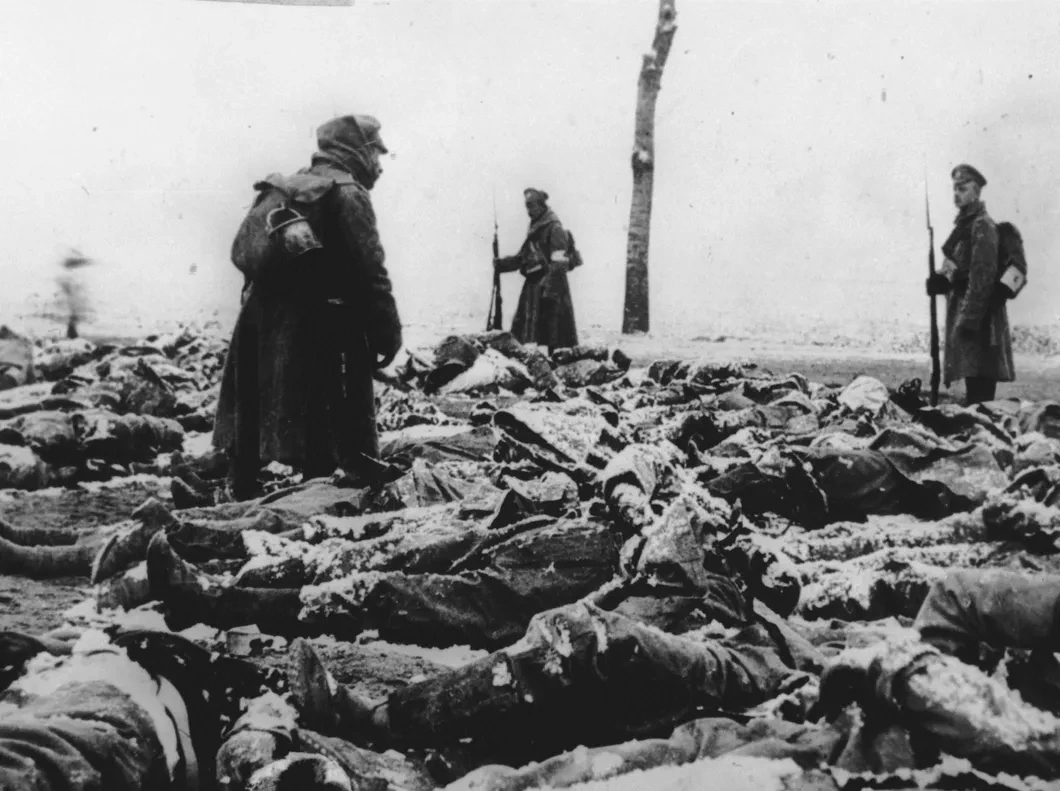
A lot of poison was injected into people's minds. The value of human life has fallen. “Better someone else's blood on the blades of your knife than someone else's knife in your blood,”-this phrase belongs to the German writer German Lenu, who in 1914 volunteered for the front.
When a truce was concluded in the fall of 1918, it seemed that the enmity was a thing of the past. Recent enemies sting their hands and treated them with cigarettes. They arranged the symbolic funeral of the last shell - in the belief that there would be no more wars in Europe ... It soon became clear that many veterans of the First World War were not encouraged. They thought about revenge. They thirsty for violence. And they were ready to accept fascism - the most tragic heritage of the Great War.
If not for the first world ...
The war lasted four and a half years. It spread throughout Europe, captured the Middle East, Asia and even Africa. And fundamentally changed the modern world. The kaisers, kings, kings and sultans, destroyed entire empires. Independence was received by the Central European states formed on the ruins of empires that did not survive the war. New countries arose in the Middle East with borders that were not recognized as neighbors.
The Great War became a disaster for Russia. If it weren’t for her, the revolution would not have happened, our country would have developed evolutionarily, and millions of people would not have died in the name of the construction of communism.
Of course, Friedrich Nietzsche predicted that the twentieth century would become the century of great wars that would be waged in the name of philosophical doctrines. But if the First World War, total ideologies would not play such a role, there would be no dictatorship.
The First World War was an unnecessary and meaningless massacre. It was a self -destruction of Europe, which led to the death of a considerable part of European youth.
The war put an end to Europe’s confidence in its own abilities, gave rise to mass disappointment, which for decades determined the mood of Western society, pushed the old European powers into the background. Two countries nominated: Bolshevik Russia, which considered the whole world around the world, and the United States, which turned into a world superpower. France and England, fearing a new war, adopted a policy of peacefulness of the aggressors: let them do what they want, if only they would not touch us.
Not a war changes the fate of peoples. They themselves choose their fate. But few states managed to learn from the tragedy of the World War. Humanity entered the XXI century as split as it was a hundred and even a thousand years ago.
Old wounds can open at any time. In 1914, nationalist delight, irrational madness covered entire nations. Then the meaninglessness and absurdity of this war, the powerlessness of a person in front of a state machine, sending him to death, will become clear. But then! ..
The Great War showed how easy it is to manipulate entire nations. Enough to shout: "Cross the vile enemy!" And no one will ask: why did the neighbor suddenly become an enemy? Everyone will arm themselves, experiencing a passionate desire to kill more - with conviction of their own rightness! It is not for nothing that after the First World War British writer Richard Oldington called his main novel “All people are enemies”.