
Translated material
Cuprine rehabilitation
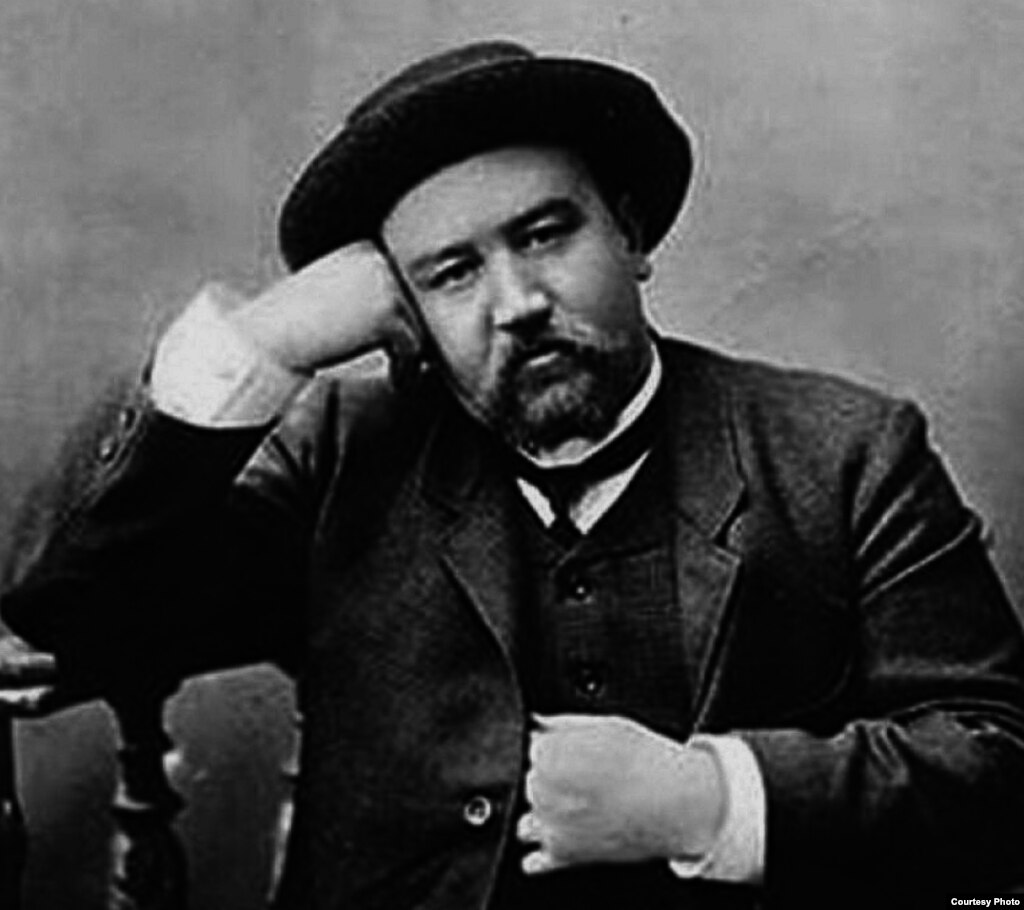
Boris Paramonov: Reading History
Alexander Genis: Remembering Alexander Ivanovich Kuprin in the year, which was on the 80th anniversary of his death, Boris Paramonov, in the framework of the author’s heading “History of Reading,” reflects on Kuprin's work in a modern context.
Boris Paramonov: I read Kuprin as a teenager, I remember in the publication of Marx Collected Works. There was a seduced laid imagination, the story "Pit", and I remember I did not like it.
Alexander Genis: Didn't you live up to expectations?
Boris Paramonov: Absolutely. An uninteresting thing, in general, this is the failure of Kuprin, as everyone unanimously affirms. But after this long -time reading, I did not turn to Kuprin, there was no, as they say, Drive. And over time, I began to remember him - if I remembered - as a mediocre writer. He was even surprised that for many he was an almost cult writer. Our colleague of Dovlatov put him very high.
Alexander Genis: He repeated more than once that he would like to remain in the literature as a narrator of the level of Kuprin.
Boris Paramonov: Yes, I remember, Sergey identified three categories of authors: writers, writers and storytellers. He considered Kuprin an ideal narrator and wanted to see himself in this kind of modest hypostasis.
And now, having re -read Kuprin for our program, I took out a much higher opinion about him. He is not only a narrator - although he was certainly endowed with such a gift, and not just a householder, as Chukovsky wrote about him at one time.
Alexander Genis: What exactly did he write?
Boris Paramonov: Chukovsky said that the current literature (the beginning of the last century, naturally) is in every possible way repelled from everyday life, strives to go into some symbolic fogs, into other dimensions, and Kuprin remains faithful to the truth of life, life in its things is recognizable.
Alexander Genis: Directly according to Chernyshevsky: literature is a reflection of life in the forms of life itself.
Boris Paramonov: Almost so. But, adds Chukovsky, the same way of life and destroys the heroes of Kuprin - and gives many examples. Well, let's say, engineer Bobrov from the novel "Moloch" destroys the factory life, Second Lieutenant Romashov - a military environment, and so on, many examples.
Well, Alexander Alexandrovich, having re -read Kuprin, I did not agree with this. Kuprin is not a household - mature, unfolding Kuprin and gravitates to a certain symbolism.
Well, this is how a vivid example will give. One of Kuprin's most popular things is the story “Headquarters Captain Rybnikov”-about the Japanese spy during the Russo-Japanese War. I insist: this thing is completely not realistic. Well, a person of Asian culture cannot - by no means Slavic - so master the Russian language so that a foreigner is not recognized in him. We, Alexander Alexandrovich, are well aware of such plots, we live in America for forty years, but we won’t get the American to the indigenous Americans. Moreover, because Rybnikov’s Russian language is not only without an accent - he has an idiomatic Russian, constantly leads all kinds of proverbs. True, every time stipulating: "As the Russian proverb says ..." is a very subtle detail.
And here is what Kuprin does to get a story from the real field: the second character, the Russian journalist-gazetchik, guesses that Rybnikov is a Japanese, and is trying to catch him all the time, to split him. But he does not crack in any way, does not succumb. Agree, this is not a realistic situation, especially during the Russo-Japanese War.
Alexander Genis: Well, this is not the Stalinist Soviet Union, where they only engaged in fishing spies, and, mostly not at all spies.
Boris Paramonov: Yes, of course, but still it is unnatural. Not a realistic situation, invented, artificial. But Kuprin does not write a realistic story, “The headquarters captain of Rybnikov” is a symbolic thing, and the symbolism of the story makes it clear that Russia was faced with a certain force that will eventually overcome it. That she encountered a stranger, but in some way the highest culture.
Alexander Genis: I remember, Rybnikov, despite the disguise, could not refuse to silk pants.
Boris Paramonov: The nearest symbolic context, of course, is talking about the yellow danger that philosopher Vladimir Solovyov began on the verge of centuries in Russia. And here is the first sign, the first call: the war with Japan, in which Russia suffers defeat. Kuprin was a bit to such symbolic content of life. He knew how to enlarge everyday situations, lead them to symbolism. And you believe the story of Rybnikov, because you accept the thing in such a symbolic context in which worldly plaity is no longer important.
Well, let's give another example. The extremely popular thing of Kuprin is a "grenade bracelet". I recalled this story as an example of Kuprin's mediocrity, even bad taste, if you want. Well, what a plot, so, a bad fiction: a poor official fell in love with a high -born beauty, lets down letters and gifts to her, and when his relatives shortened him - he ends with him. The retelling is really bad taste. But I re -read it - and changed my opinion. This is a strong thing, and not about social fragments in society, but about the super -social essence of love. The letter that the dying Zheltkov sends is a kind of song with a song.
Alexander Genis: But Kuprin has another thing built on this famous biblical text. In my youth, I read it, not having the original.
Boris Paramonov: Well, of course - “Sulamiff”, also in every possible way of a popular essay. I, remembering this thing, grinned: she remembered as tasteless. Some Moabites in the harem of King Solomon, who have not a single hair on the body, and so on in the same spirit and taste. Now I re -read it - and again rehabilitated. This is a very skillful thing, a stylization workshop. She reminded me of Salambo Flaubert. With that, of course, the difference is that Flobert treated archaeological exotic by means of a naturalistic novel, a sort of positivism facing the past. And Kuprin has taken a more suitable stylization tone for this. “Sulamif” is no less skillful in its own way than Salambo. That is, Kuprin withstands comparisons with the most classics. Simply put, he is a good writer. I am glad that, not liable to re -read it, I understood it.
Alexander Genis: Boris Mikhailovich, but one cannot help but recall that Kuprin went so far from everyday realism that he wrote even science fiction. And what!
Boris Paramonov: Well, of course! "Star of Solomon". This is the genre of pure fiction. A thing that resembles, if you like, the later Bulgakov: a person under the auspices of the satanic forces. And you know. Alexander Alexandrovich, it seems to me that Kuprin at that time (the story was written in 1917) experienced a certain impact of the writer, who was then in serious literature, Alexander Green. By the way, they were well acquainted, Kuprin patronized him in some way. The old Leningrad writer Leonid Borisov has the story "Wizard from Gel-Gyu", which at one time fell under the Zhdanovsky distribution. There is a funny chapter: Kuprin’s name day in his Gatchina house with a fantastic amount of drink: five hundred bottles of beer were prepared for one morning sob.
Alexander Genis: It would seem that life.
Boris Paramonov: What life is it, in today's times it is a real fantastic.
Alexander Genis: Boris Mikhailovich, but you won’t deny that the most well -known thing of Kuprin's “duel” is a fully realistic thing.
Boris Paramonov: How to say. Still, Shurochka Nikolaev, who persuaded Romashov not to shoot at a duel, knowing that her husband would shoot her is a real villain, that is, not a household character. The wife of a Russian garrison officer as a villain is not entirely realism and life ..
Alexander Genis: How did you, by the way, seemed to you “fight” when re -read?
Boris Paramonov: I immediately remembered him in all details. It turned out that in the reader’s subconscious he is always and entirely present. This is the property of classics. By the way, the "Quiet Don" lives in the memory.
Here I must say that in my reader memories the most alive was a different essay to Kuprin-"Libra", these are essays from the life of Balaklava fishermen-Greeks. Hence the name.
Alexander Genis: From Homer, that is. In the "Odyssey" Librigona are great-lubricers.
Boris Paramonov: Well, you see, again, the plot enlargement, this time the myth. Not a simple writer Kuprin, by no means a cherish realist. And in general a good writer.