
Translated material
The White House initiated new sanctions for Skripal poisoning
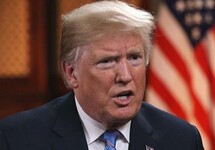
The White House was notified by the Congress of non -fulfilling the requirements of the American law to control the circulation of chemical and biological weapons, reports The Hill. This means that President Donald Trump will impose new anti -Russian sanctions for poisoning in Britain of the former GRU Colonel Sergei Skripal and his daughter Julia.
According to the law, the second, more serious part of the sanctions for violation of the 1991 law on chemical weapons is introduced by Trump after consulting with Congress. On Tuesday, a three -month period ended, during which the White House was supposed to inform Congress, whether Moscow continues to violate the law on chemical weapons.
A new portion of sanctions should include at least three of the six measures listed in the law: the voting of the United States against the provision of loans to the country by any international banks; a ban on lending to the country's government by private American banks; a ban on export to the country of any American goods; decrease in level or suspension of diplomitions; The ban on transportation by airlines, controlled by the authorities of the country (in the case of Russia, such a ban may affect Aeroflot).
“It is not surprising that Vladimir Putin refuses to exclude the further use of neuro -paralytic weapons,” said the Chairman of the Committee on Foreign Affairs of the House of Representatives of ED Roys. “It is unacceptable that the administration (USA. - Ed.) Has a plan or at least a schedule for the introduction of a second portion of sanctions binding on the Law.” The congressman called on the administration to act faster, since "fluctuations only encourage Russian aggression."
The first part of the sanctions for the poisoning of Skripal entered into force on August 27 . They include a ban on issuing loans or any other financial assistance to Russia by the US authorities, a ban on the supply of defense goods, licenses or design decisions to Russia, with the exception of licenses in the field of cooperation of the two countries in the space sphere, including private space launches. Any financing of the Russian defense industry is prohibited.
The sanctions also limited the export and resale of goods and technologies to Russia in a number of areas sensitive to American national security: this applies, in particular, avionics, underwater devices, some gas turbines and calibration equipment. The restrictions affected the provision of new export licenses, and the supply of delivery continued on the old licenses.
The exception was made for goods and technologies necessary to ensure flights in the field of civil aviation, Russian-American space cooperation, supplies to subsidiaries of American companies in Russia and transactions with Russian civil commercial companies to which technologies and goods are transferred for ultimate use.