
Translated material
Far Eastern Republic 2.0

The unexpected decision of President Putin to “tow” Buryatia and the Trans -Baikal Territory from the Siberian Federal District to the Far Eastern question and the natural question: why?
A formal occasion was Putin’s meeting with the recently appointed acting governor Transbaikalia Alexander Osipov, earlier - the first of the deputy head of the Ministry of Health. Osipov raised the question of the introduction of new economic instruments in Transbaikalia, which are still tested only in the Far East - the territory of advanced development , the free port of Vladivostok, the Far Eastern Hectare. The president went to meet, deciding to simply fasten Transbaikalia to the Far East.
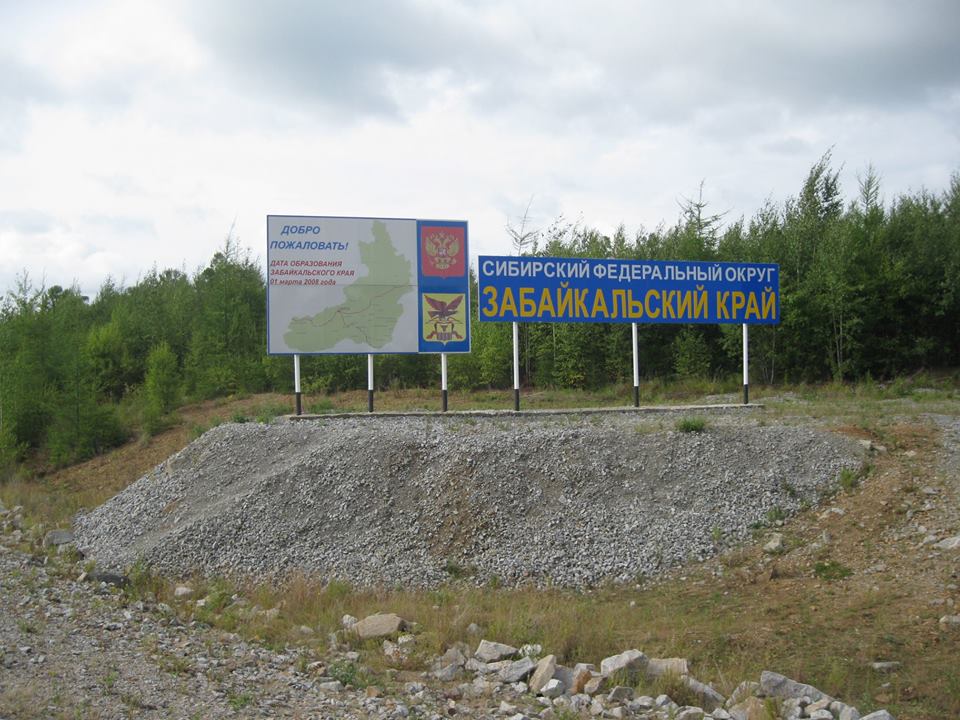
You can guess if there were any other, non-public reasons, initiators and secret springs; What other considerations were taken into account, how much time the decision was actually prepared.
Another thing is also incomprehensible: what prevented just to spread the action of the same tori in Transbaikalia? And if suddenly these experimental mechanisms show frantic efficiency - then will it have to be entered the whole country into the framework of the Far Eastern Federal District?
The Far East significantly approached Moscow, the Irkutsk region became the eastern edge of Siberia
So, now the Far Eastern region is all that Baikal, if you look from the west. It turns out, and the Buryat coast of Lake Baikal is now also the Far Eastern. The Far East significantly approached Moscow, the Irkutsk region became the eastern edge of Siberia.
Such decisions, as a rule, are largely arbitrary and energized.
But it cannot be said that the idea is taken completely from the ceiling. You can, for example, recall the federal target program for the development of the Far East and Transbaikalia, which later changed the development strategy of the Far East and the Baikal region until 2025. That is, de facto Transbaikalia or Baikalia and previously “attached” to the Far East earlier. More ancient times are remembered: say, existing in 1922–1926. The Far Eastern region (with the center, interestingly in Chita) included the Baikal and Transbaikal provinces.
On the other hand, administrative borders do not always correspond to cultural, historical and even geographical. So Transbaikalia will remain Transbaikalia, no matter what federal district he was attributed.
Moreover, the Far East is a rather conditional term. Too different, infinitely far from each other and weakly interconnected regions are combined within the framework of the Far Eastern Federal District. Yakutia and Primorye, Chukotka and Sakhalin ... - It is difficult to find more dissimilar territories.
And in general, the Far East has not been allocated from Siberia for a long time. The first references to this term date back to the end of the 19th century, but the Far East truly established itself in the Soviet period. The ancestor of the modern Pacific Fleet was called the Siberian Flotilla; In Jack London, poachers beat cats off the “shores of Siberia” - at Kuril, near Kamchatka, at the commander ... abroad, and now all of the Urals Russia is often called Siberia, the Amur Tiger, which mostly lives in Primorye, is Siberian Tiger and so on.
It is interesting that now the configuration of the Far Eastern Federal District is brought into line with the contours of the Eastern Military District.
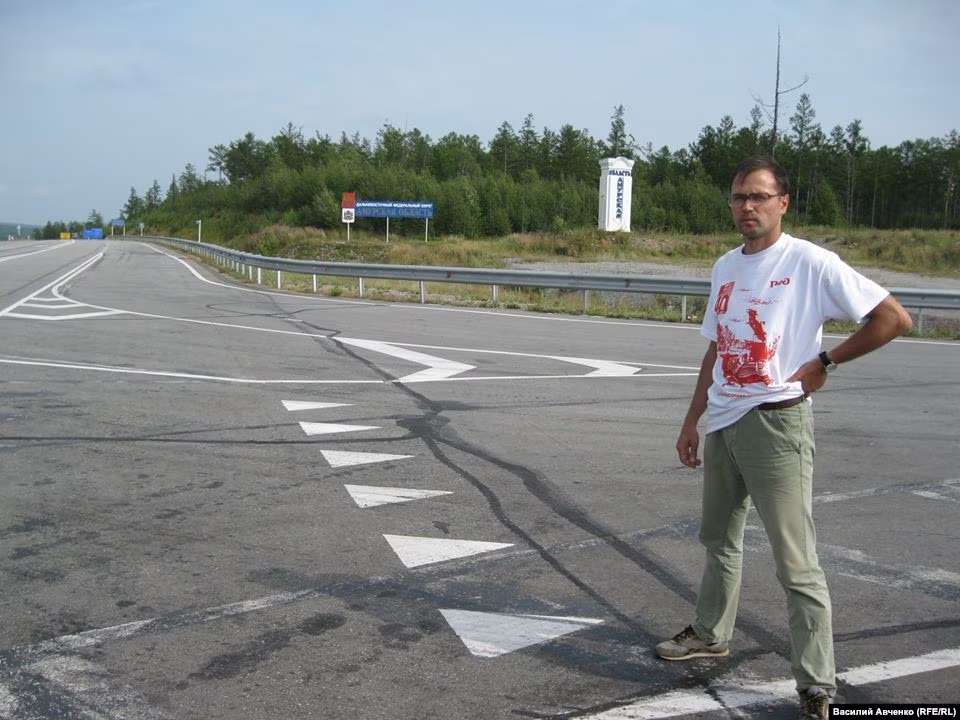
It is even more interesting that the appearance of the Far Eastern region approached the outlines of the Far Eastern Republic - a short -lived state education that existed in 1920–22. Like a "red buffer" between Soviet Russia and Japan. Both capitals of the Far Eastern Republic - Verkhneudinsk and Chita - were located in Buryatia and Transbaikalia, who were not yesterday not related to the Far East.
With the growth of the Far Eastern Federal District, to Baikal itself, it becomes even less sense in the transfer of the administrative center of the district to Vladivostok. The author of this idea is considered the acting governor of Primorye Oleg Kozhemyako, who will be in December to the elections. Having dragged the center of the Far Eastern Federal District from Khabarovsk to Vladivostok, he apparently intends to “cut down” the PR glasses on this. Moreover, Kozhemyako was already enlisted by the support of the Far Eastern envoy, Deputy Prime Minister Trutnev. But Vladivostok is located much further from the geographical center of the Far Eastern region, and even more so from its peripherals such as Kamchatka with Chukotka, and now Buryatia with the Trans -Baikal Territory, rather than the Khabarovsk. It is significant that both the office of the Amur Governor General and the Center for the Far Eastern Territory before its division in 1938 into Primorsky and Khabarovsk were located in Khabarovsk.
The Far Eastern Federal District, having received Transbaikalia, noticeably adds both in the square (from now on it occupies 40% of the territory of all over Russia) and in the population
In 1991, the population of the Far East reached the peak 8 million people. Starting next year, it began to rapidly melt, decreasing by 2017 to 6.2 million. The outflow continues, despite the aforementioned Far Eastern hectares and all that. But now - follow your hands - the Far Eastern Federal District, having received Transbaikalia, noticeably adds both in the square (from now on it occupies 40% of the territory of the whole of Russia) and in the population. The latter instantly grew to the same 8 million, and without billion costs, titanic efforts, long rubles and Stolypin wagons - with one stroke of the pen. The Vladivostok entrepreneur Kirill Potapenko formulated: "Now we can say with a pure conscience that the population of the Far East has grown significantly thanks to the actions of the authorities."
And you can’t argue.
Vasily Avchenko - Vladivostok writer and blogger
The "Opinion" expressed in the heading of the point of view may not coincide with the position of the editorial office