
Translated material
Monument to Stalin as a message
The fact that people can be neglected, and the message of the monument to Stalin, which may appear in the center of Novosibirsk, consists. You can build and kill. You can develop agriculture and starve people. You can wage war with a terrible enemy and destroy the elite of your army. You can lay railways along the bones, deport peoples. All the same, the descendants will erect a monument.
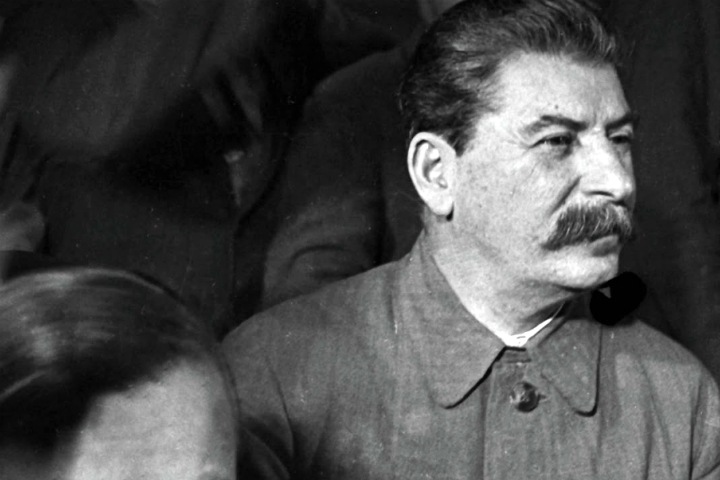
The philosopher Mikhail Germans discusses an attempt to establish a bust of Stalin in Novosibirsk.
Modern cities are difficult to imagine without monuments. In the center of Novosibirsk there are monuments to famous statesmen. For example, such wonderful inhabitants as architect Andrei Kryachkov and pilot-AS Alexander Pokryshkin. Now it is discussed exactly where the monument to Joseph Stalin will stand. This has been a close -knit initiative group for many years, ready to spend money, effort and time on it. If they achieve their own, the Novosibirsk residents will still have to live in the city.
Each memorial object (especially each monument) expresses some feelings and thoughts. Those who erect a monument, whether it is state authorities, municipality, active groups of citizens, public organizations, thereby approve of the activities of the people who depict. This is an example for contemporaries and descendants.
What will express the monument to Stalin? What does he tell the townspeople? I would like to say a few words about it.
143250
As usual, most citizens are indifferent to the future attractions, preferring to focus on the nearest matters and worries. And who is not indifferent, those are expected, either supporters or opponents. And from supporters you can find out that, as the letter of the initiative group in the city hall, “under the leadership of I.V. Stalin, has become a great industrial, nuclear and space superpower world, which was respected and with which they considered it. The victory of socialism in the USSR under the leadership of I.V. Stalin became the torch of the struggle in the eyes of the oppressed countries of the world ”( I quote a letter from the initiative group to the city hall).
And from opponents-that “in the 1930s 130 thousand Siberians were shot. And how many were missing, how many camps went through the camps! Living in the city with a monument to the executioner of their parents is at least ashamed. Yes, and the image of the city is contraindicated ”( I quote the local historian Konstantin Golodyaev).
And those and others do not even argue, but simply pay attention to different aspects of the activity of the same person. Both that, and another - modernization, repression, industrialization and terror - occurred simultaneously. It is even impossible to say that the second was a necessary condition for the first, because no one can explain how exactly the physical destruction of qualified workers, engineers and managers contributed to this industrialization. And how exactly the violent resettlement of peasants from the most developed agricultural areas to the barren tundra - the development of agriculture. Or as repressions against personnel officers strengthened the country's defense capacity.
Therefore, let's say simply: both that and the other happened at the same time. All this was conceived and organized by this first person of the state. He had his own reasons for this, and which historians have been arguing about this for many years. And, in the end, for the descendants the whole thing is the results. These results are an equation. On the one hand - built cities, a victory in the war, conquered half of Europe, and so on. On the other hand, the industrial use of slave labor, millions of “killed people”, destroyed families. And you can argue endlessly which side of the equation can be neglected.
The fact that this can be neglected, and there is a simple message to the monument to Stalin, which may appear in the center of Novosibirsk: this is possible. You can build, and at the same time kill. You can develop agriculture and starve people. You can wage war with a terrible enemy and destroy the elite of your army. You can lay railways along the bones and resettle entire nations over them. So you can.
In general, everything can be done with people. After all, they will still erect a monument - so to speak, offspring as an example.
129470
A few years ago, I interviewed the culturologist who came to Novosibirsk, the well -known theorist and the practice of museum affairs Nikolai Pryanishnikov. Touching on different topics, I asked him why the memory of the Gulag is so important for modern Russia. And he replied: “This is a platform for analyzing how ineffective slave forms of labor are ineffective. How inhuman they are. "
This answer seems very characteristic to me. If I took such an interview now, I would definitely ask: if the analysis shows that slave forms of labor are effective? Will they become more humane? Why don't we use slave labor? Because it is ineffective? And sometimes it can even be effective - in mines, on the construction of highways in the tundra. Maybe for some reason it is still impossible to use slave labor?
If a monument to Stalin appears in Novosibirsk, he will be a clear and convincing answer to this and many other questions about what is possible and what is impossible: everything is possible. In general, that's it. With you, passing by him, looking back at him, you can do anything.
Unpleasant? Humiliating? Well, apparently, you have to tolerate.
Mikhail Germans, especially for Taiga.info