
Translated material
Fantastically brave man
Oscar Rabin, Soviet non-conformist and organizer of the Buldozer Exhibition died, died
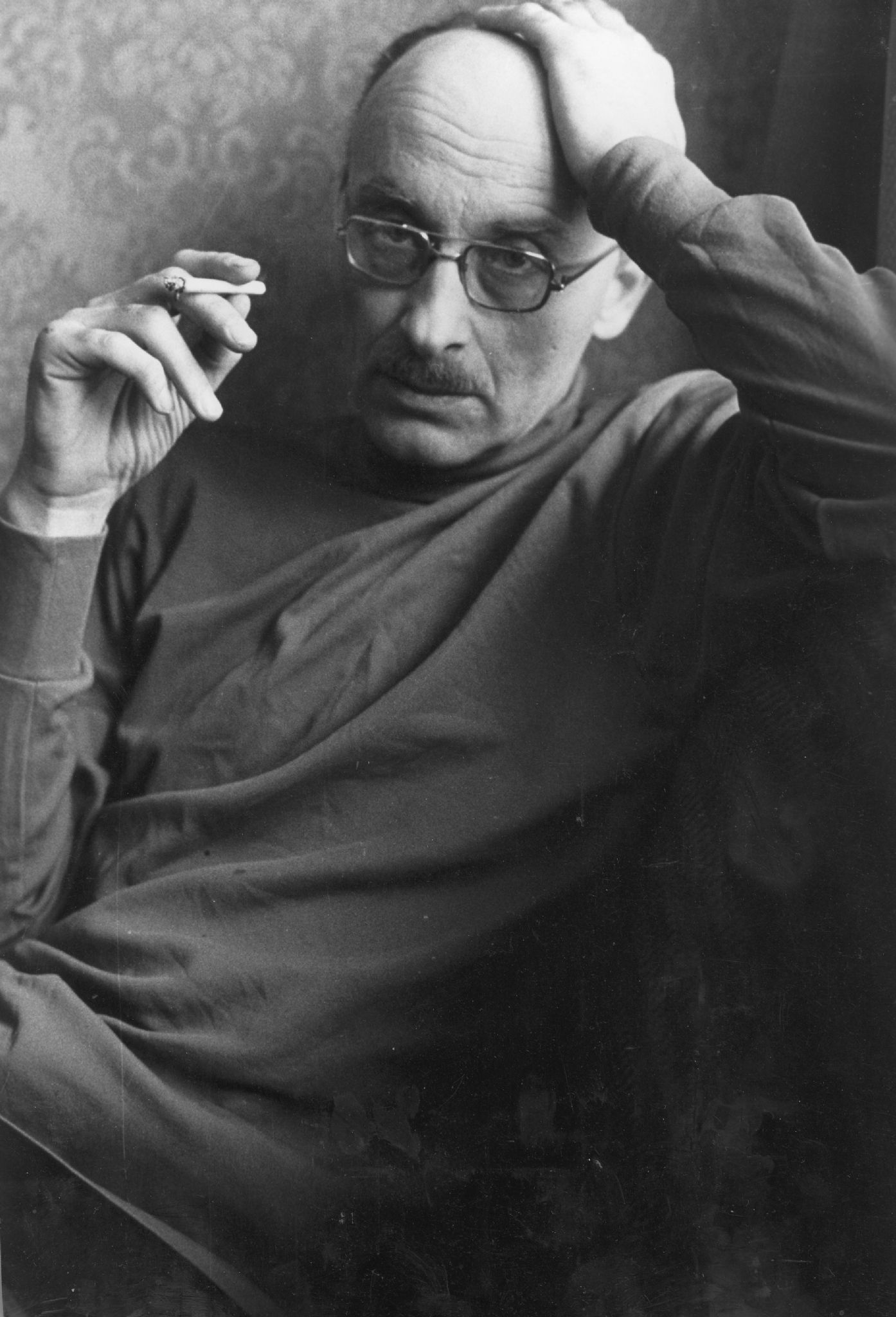
On November 8, Oscar Rabin, a Soviet non-conformist, died in Florence, deprived of citizenship in the 1970s and left for France. He was one of the founders of the Lianozovo group - an unofficial art association named after the village near Moscow, where Rabin lived. The artist wrote in a gloomy expressive manner; In his landscapes and still lifes, the same images and symbols of the Soviet era are repeated: huts, passports, newspapers, coins, vodka and herring. In the USSR, he was almost not exhibited: the official press criticized his work for reflecting "private, ugly, long -outstanding phenomena." Rabin’s personal exhibitions since the 1970s have been held throughout Europe; After perestroika, they began to be carried out in Russia - in particular, in the Tretyakov Gallery and the Pushkin Pushkin Mlime. At the request of Medusa, Oscar Rabin recalls the Russian artist, a member of the Collective Action group Nikita Alekseev.
Nikita Alekseev
Artist
Moscow is still a small city, and all circles of unofficial culture in the 1960s and 1970s crossed-not only visual arts, but also literature and music. There were simply few such people in the city, and all gradually went to each other through friends or acquaintances. So, a very small child, about five or six years old, I visited Oscar Rabin in Lianozovo. My mother was friends with the artist Dmitry Krasnopevtsev, he brought us there.
Oscar lived in a monstrous one -story hut of a completely camp look on the outskirts of Moscow, and I was such a Moscow boy from an intelligent family from the center. And this life completely struck me, I have not seen this before. As far as I know, there were no exhibitions there then: what exhibitions could be in this terrible hut?
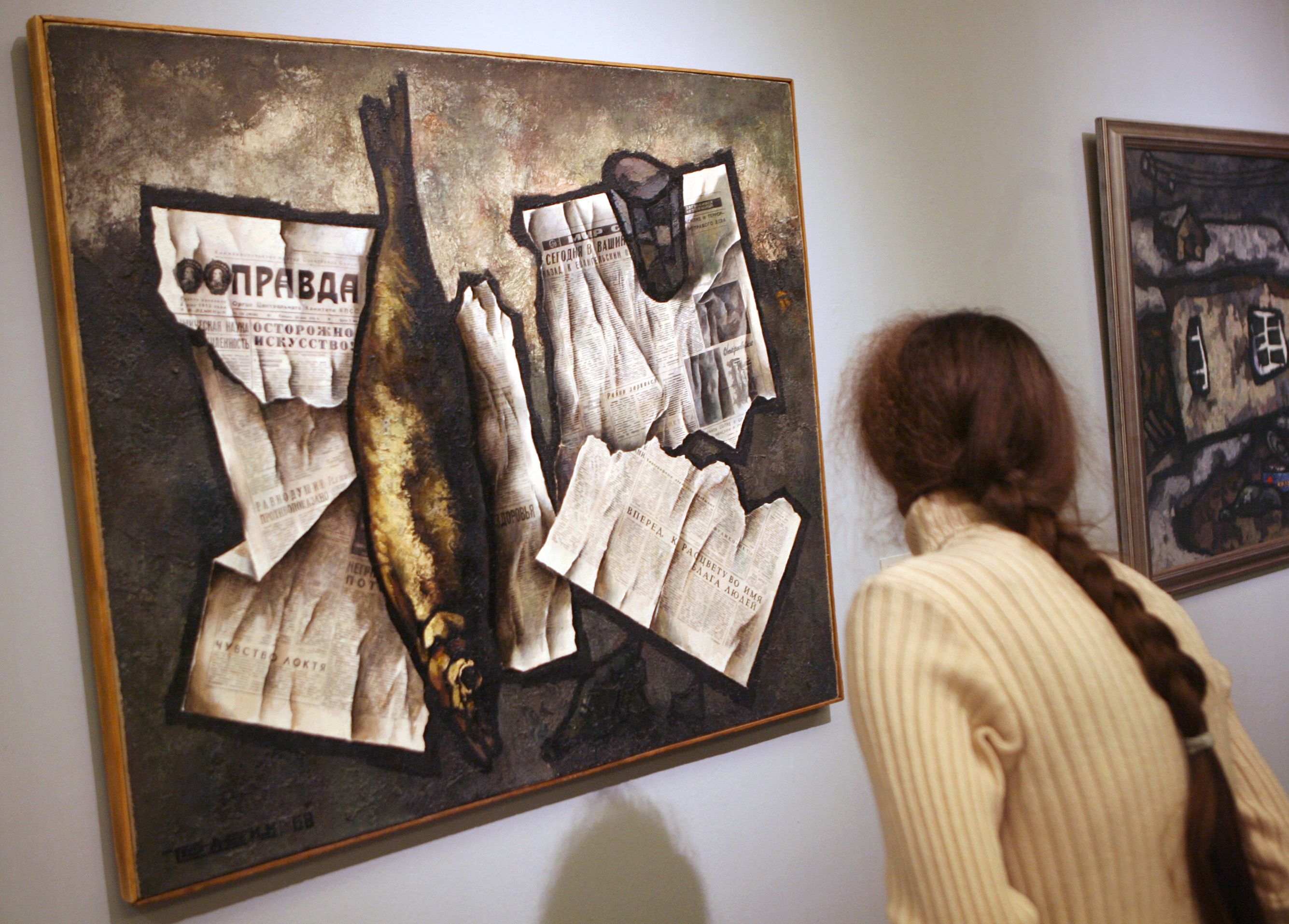
Oscar and I still have a big difference in age, it belonged more to the generation of my parents. Therefore, in childhood, I did not remember his works at all, but deliberately saw them for the first time, probably already in the early 1970s. And it turned out that his paintings, especially the early ones, completely reflect the barracks of Soviet life-the black life of the 1950s. These are his heavy, dark, brutal canvases with rickety houses, with scraps, herring on the newspaper Pravda - they all grow from the barrack of Lianozovo.
The Lianozov group, which he included, was generally one of the main structures in Soviet [unofficial] art. In addition to him, it included other important artists, like [Vladimir] Nemukhin or [Lydia] Maskova, and, among other things, [poets Henry] Sapgir and [Igor] Kholin - poetry there was no less important than fine art. But he was a leader everywhere, of course.
I don’t know to whom the first idea of this exhibition came to Belyaevo [in 1974], which later became famous as “bulldozer” , but, as far as I know, he was immediately the absolute center of this matter. He himself went to some negotiations with the authorities, called the audience.
At the Buldozer Exhibition, I was present as a spectator. And I saw all this: how they beat and dispersed the people like an Oscar to stop this, climbed on a bulldozer ... He was a fantastically brave person - so that some suspected provocation, because his behavior in those days bordered on complete recklessness. But then everyone was suspected of all of everything, and I am sure that he was absolutely, impeccably honestly.
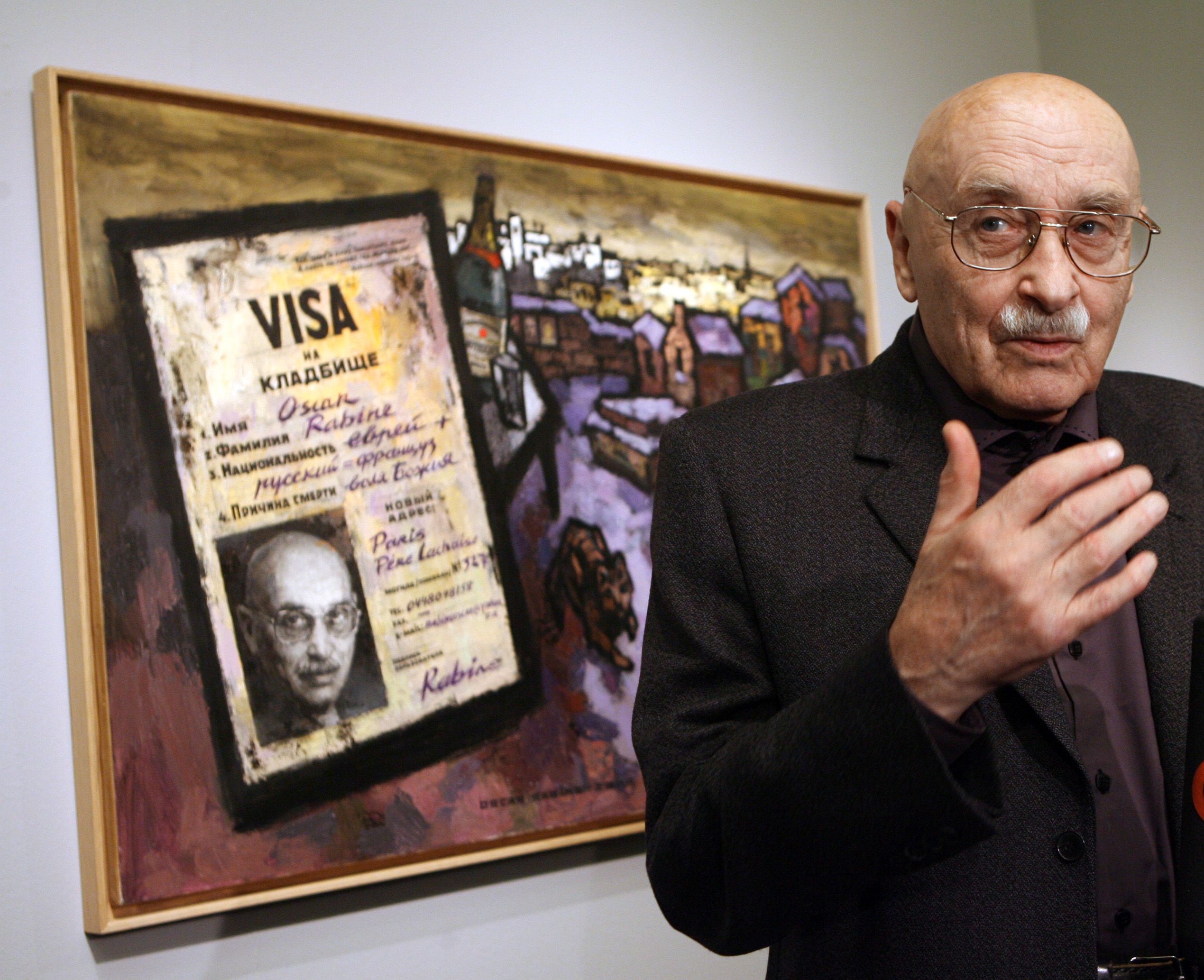
He struck me with some kind of amazing accuracy in everything, almost fencing. He looked like this: straight, dry, lean. The last time I saw him in 2007, when he had an exhibition in Moscow, in the Pushkin Museum. At that time, he had been for quite many years, but in the long years, who had passed since his departure abroad, as if he had not changed at all.
A year after the Bulldozer Exhibition, there was also an exhibition of [non-conformist artists] in the House of Culture at VDNH, in which I already participated. And there was one moment, on the one hand curious, and on the other, even heroic. Some kind of mess happened with the police and the KGB, and all the artists crowded in the backyard of this house of culture. And Oscar suddenly climbed onto the garbage tank and made a speech: I no longer remember what was about it itself, but I well remember that it looked just wonderful - almost like Lenin on an armored car.
Recorded Alexander Mirror