
Translated material
Law and Mova
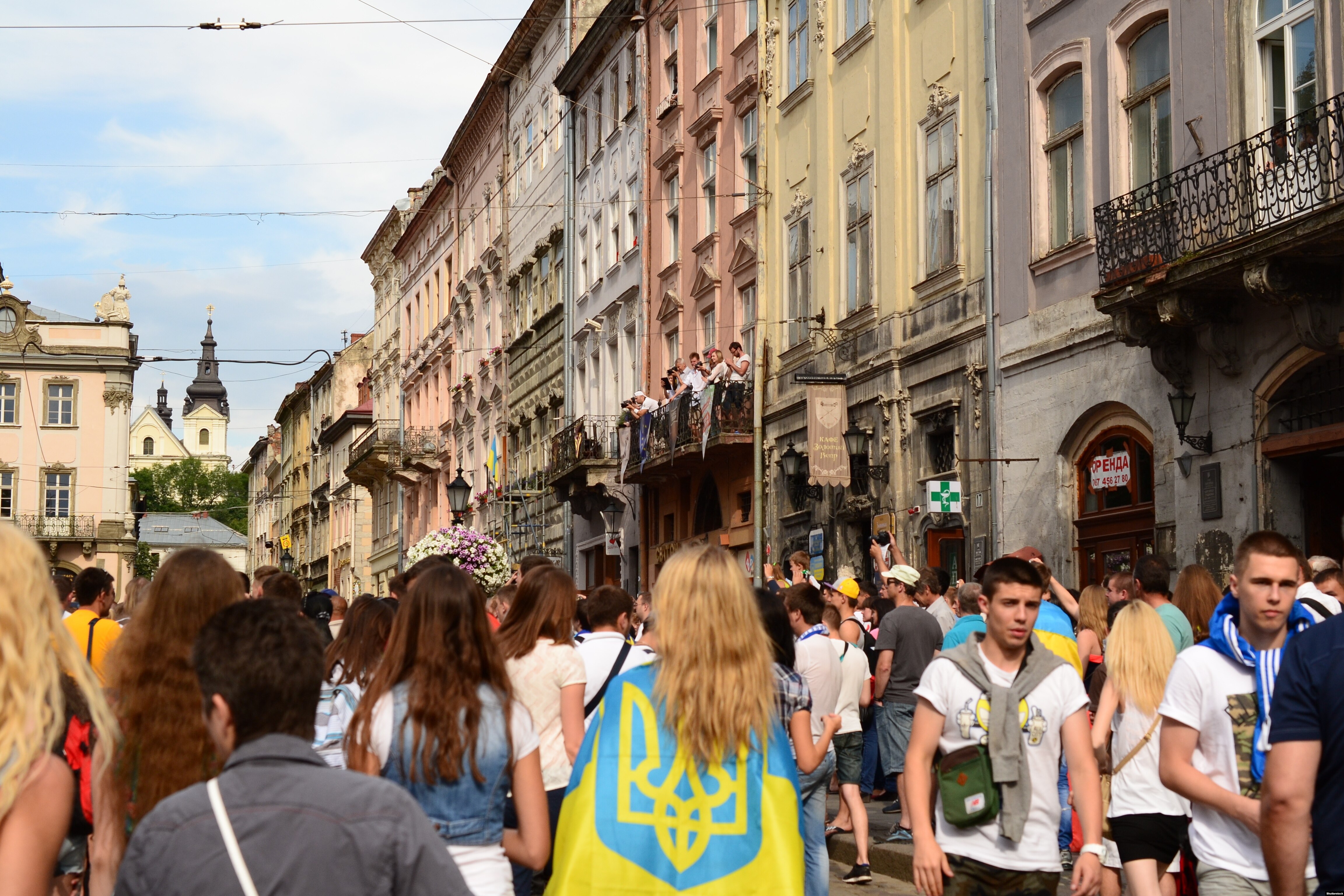
Ukraine is discussing the new law on the state language
Vitaliy Portnikov: Our guest in the Kiev studio is an adviser to the chairman of the Committee on Culture and Spirituality of the Verkhovna Rada of Ukraine Yuri Ugonyak , from Moscow in touch Elena Marinicheva , a well -known translator of literature. Before we start the conversation, I propose to get acquainted with the plot on this topic.
Vladimir Ivakhnenko, Radio Liberty correspondent: in early October, the Verkhovna Rada deputies in the first reading approved the bill "On ensuring the functioning of the Ukrainian language as a state language." The document states: "Attempts to introduce official multilingualism in Ukraine, contrary to the Constitution, are actions provoking a linguistic split, interethnic confrontation and enmity aimed at violent change or overthrowing the constitutional system." The bill caused ambiguous assessments: some called it a continuation of violent Ukrainization, others stated that without such a law the further development of the national language is impossible.
The law must fill out the legal vacuum that arose after the Constitutional Court with the Constitutional Court in February of this year "On the Fundamentals of the State Language Policy" . The document was adopted with violations of the parliamentary regulations against the backdrop of mass protests of Ukrainian activists in 2012 on the initiative of deputies from the ruling Party of Regions Sergei Kivalov and Vadim Kolesnichenko at that time. The law made it possible to introduce "regional languages" if the number of residents who consider them relatives exceeded 10% of the total population of a particular territory. The Russian language received regional status in 13 of 27 regions of Ukraine. To date, this status has been canceled, and in the territory of the Lviv and Zhytomyr regions, for example, local deputies even introduced a moratorium on the use of a Russian -language cultural product.
The new language law strengthens the position of the national language, in particular, obliging to pass the exam for the knowledge of Ukrainian those who intend to obtain citizenship of Ukraine. The laws of education and culture are primarily subject to the law. All films and performances should be duplicated in Ukrainian using subtitles or voicing. At the same time, many theaters for technical reasons cannot afford it, for re -equipping the halls, considerable funds from the budget are required. Changes will also affect business: sellers, consultants and maintenance personnel, after approving the law, will be required to communicate with clients only in Ukrainian.
The state language should also dominate the printing and publishing. Printed media will receive the right to publish versions in other languages only if there is a similar Ukrainian -speaking version.
Unexpected in the draft law was the requirement to use the names of its own and geographical names in its original form, through transliteration, not translation. That is, the printed Russian -speaking publications will have to write “kyiv”, “harkiv” and “Dnipro” instead of “Kyiv”, “Kharkov” and “Dnipro”.
The law should fill out a legal vacuum that arose after the abolition in February of this year "On the Fundamentals of the State Language Policy"
The bill also refers to the establishment of special bodies that will monitor the implementation of the law. The document involves fines for violators. For neglect of the Ukrainian language, it is proposed to punish with a fine of 850 hryvnias (more than $ 30), while malicious violators also provide criminal punishment, up to 3 years in prison.
The issue of the language, as sociological studies show, is not even included in the first ten questions that, in the opinion of citizens, are a speedy solution. Many are embarrassed by the time of the emergence of a new law - on the eve of the presidential and parliamentary elections of 2019. As the experience of election campaigns testifies, the theme of the language of politics is used as a tool for the split of the electorate. Obviously, the law in the current form can create tension in regions in which the share of Russian -speaking citizens is great, especially for Kharkov and Odessa. Problems will also arise in areas where representatives of national minorities live compactly: Bulgarians, Romanians, Moldovans and Hungarians.
It takes time to change the state language policy. The authors of the bill, the deputies of the Parliamentary factions "Popular Front" and "Self -help" admit that it requires adjustments. The document was called by the Verkhovna Rada and President of Ukraine Petro Poroshenko to finalize the document.
Vitaly Portnikov: Yuri, let's figure out what such legislation is for. It was said that Ukraine was left without a language law after the Constitutional Court of the country canceled the so-called Kivalov-Koroznychenko law, one of the most contradictory and odious laws in the history of Ukrainian legislation. But before that, the Law of Kivalov and Kolesnichenko in Ukraine did not have such legislation, and the country somehow lived, the Ukrainian language was state according to the constitution, the processes developed. What is the meaning of a separate legislative act?
Yuri Kraynyak: In fact, there was such a law before. First of all, there are constitutional norms that establish that the state language is Ukrainian. The Constitution also prescribes that the state status of language should be determined by law. Such a law was originally adopted by the Ukrainian Soviet Socialist Republic, it changed several times, modified and ultimately in 2012, when it was canceled, was significantly changed compared to the first edition. Then, in 2012, the Law of Kivalov-Korodnyachenko was adopted. He acted until 2014 for sure, because then one of the first decisions of the Verkhovna Rada after the flight of the previous president was the abolition of this law.
Vitaly Portnikov: The chairman of the Verkhovna Rada did not sign this decision.
Yuri Kraynyak: The Verkhovna Rada accepted, but the chairman did not sign it, and the law simply hung. Since then, a double situation has developed. The deputies always said that this law was not, because the Verkhovna Rada did not vote for him. There is a legal mechanism that would allow it to be automatically launched without signing by the president, because any law is enforced by the president and then published, but here the problem was that he was not signed by Alexander Turchinov, who was then the chairman of the Verkhovna Rada. After the Constitutional Court recognized this law unconstitutional in February of this year, a vacuum was formed, this issue was absolutely not settled, except for any industry laws.
Vitaly Portnikov: Elena, Ukraine generally needs a law on the state language in this form?
Elena Marinicheva: It is not for me to judge what is needed and what Ukraine does not need. I can say about the law itself. I really want Ukraine to be as many Ukrainian as possible, so that they talk on it, explained in love, so that beautiful prosaic and poetic works would be created on it, so that people, through this language, understand each other, so that people generally understand each other as best as possible. Of course, it is necessary that there be a single language for state communication, for legal documents. If I understand correctly, we are talking about the fact that people will be fined by the name of the Ukrainian language, it seems like it can be put in prison in the name of this language. How does the Ukrainian language survive this, can he live and breathe in such an environment?
The law regulates not domestic, but only public relations: for example, between a citizen and the state
Yuri Kraynyak: First of all, you need to understand that this law is not regulated by domestic, but only public relations: for example, between a citizen and the state, state bodies. If a person comes to the doctor and begins to communicate with him in Russian, the doctor has the right to respond to him in Russian and does not have the right to refuse to provide medical care. But if a person comes and speaks in Ukrainian, and the doctor refuses to maintain on the basis that he speaks the wrong language, in this case the sanctions provided for by law may apply to the doctor.
Vitaly Portnikov: Do you mean a doctor of private or state clinic?
Yuri Uralsik: The existing concept of the law is about state hospitals and clinics. There are different opinions. Now we are only discussing a draft: whether to regulate private business or only public services. In the case of doctors, there really are problems. If you come to the doctor, and a foreigner doctor, how can you expect him to speak with you in your language? On the other hand, there is an opinion that if a foreigner is a foreigner, then the clinic should at least provide a translator. If the visitor insists on contacting him in Ukrainian, he must get service in this language.
Vitaly Portnikov: Suppose you came to a state institution, you speak Ukrainian. A person who is opposite you and provides you with a service does not answer you in Ukrainian. You turn to him in the state language, and he tells you that you talk to him humanly. It was all right.
There are two good examples. One is Latvia: Latvy came to Riga to a pharmacy or clinic and addressed a Russian -speaking doctor who could not talk to him in Latvian. Now there is nothing like that. Or Moscow: You come to the store, and there a girl who came from Central Asia, who did not speak Russian, not so long ago, and you want to explain with her. Therefore, in Russia, people who provide services began to require certificates for knowledge of the language: we must somehow talk.
Elena Marinicheva: Of course, people should understand each other. A person, perhaps, will not go to work in where he cannot volume with the one who comes to him. And if he works, of course, you need to speak the language in which they contact you. But if he nevertheless responds in a language incomprehensible to a person - to fine him for this? .. Probably, he just does not need to work where he cannot speak.
Yuri Kranyany: fines are introduced precisely so that people who do not speak the language, or do not go there, or learn the language. The law even prescribes a certification system that will be introduced.
Vitaly Portnikov: Yuri, why do they say that this law is disconnected by society if there is nothing like that in it? What pitfalls do you see yourself?
Yuri Kraynyak: There are a lot of pitfalls. But now we can only talk about the draft, about the ideas that were laid down at the first stage by the authors of the bill when they registered it. Even the authors themselves agree that there are excesses there, and are ready to file amendments, remove something. For example, there was a requirement to significantly limit economically the possibilities of publishing the press in a foreign language. It is clear with the Russian -speaking press: it works, in fact, for the same audience as the Ukrainian -speaking, and there is no particular difficulty in moving from Russian to Ukrainian. But there is, for example, the English -speaking press, and there is a completely different story, because people reading the English -speaking press are a completely different audience. The English -language newspaper "Kiev Post", which has its own site, is almost one of the few private information windows to Ukraine, news about Ukraine in the world.
Vitaly Portnikov: In many countries of the world, English -speaking newspapers are published, and no one prevents them from existing.
Yuri Kraynyak: I know that a lot of amendments were submitted, for example, the chairman of the relevant commission filed an amendment regarding to allow newspapers in any language of the European Union. Everyone else can be published on one condition: they will print exactly the same circulation in Ukrainian. This is an economic lever: if you want to save, publish a newspaper in Ukrainian, the audience will not suffer. By 2018, our generation has already become a generation, which can hardly read in Russian.
Vitaliy Portnikov: Elena, as a writer, you imagine: a magazine or newspaper is published partially in Russian, and the same circulation comes out in Ukrainian? Is this an increase in the audience or, conversely, its discrimination?
Elena Marinicheva: The more languages something is published in the larger number of languages, the better. I saw in the law: it is necessary that the media in some foreign language be exactly the same in volume in Ukrainian. But here, as a translator, I must say that then in this media some kind of story or literary essay can not always be published, since they can not always be translated by the same number of words as any good literary text. Therefore, I am embarrassed by such restrictions. Okay, fines, but for a public insult to the Ukrainian language, a imprisonment is supposed! And who will decide what to consider a public insult to the language? For example, I consider it a public insult to any language when mediocre, hack arts are written in this language.
Vitaly Portnikov: Then it would be possible to build a literary "gulag archipelago" if people are punished for such things, for graphomania.
Any obligation causes resistance
Elena Marinicheva: What is supposed to reminds me of our crazy insults of the feelings of believers. Who will decide what criterion is here?
Yuri Kraynyak: I was on the discussion in the relevant committee on this issue. Two professors of law came to comment on this idea. Now the Criminal Code has an article that has established criminal liability for abuse of state symbols. According to the Constitution, state symbols are a coat of arms, anthem and flag. But there is also a decision of the Constitutional Court that the state language is one of the symbols of Ukraine, and it must be defended by the same legal regime. Yes, perhaps this article must somehow be adjusted. The flag and coat of arms are material things, and abuse of them can be represented. And the abuse of the tongue is a rather subtle thing. If you squeeze a lot, then you can bring to justice even for a surzhik.
It is not yet clear how the deputies will react to this norm in preparation for the second reading, when processing amendments. As far as I know, more than a thousand amendments from the deputies have already been made, and how the vote through the Verkhovna Rada will pass is a question that only time will give us an answer.
Vitaly Portnikov: Some are satisfied with a more moderate type of law, others - its more radical appearance. In general, can the law be adopted completely?
Yuri Kraynyak: This is one of the most difficult laws, it is most difficult to adopt. The Verkhovna Rada was created for this so that people on the basis of a compromise find some common points of view. Each deputy represents the interests of a group of citizens, and he must negotiate with all the others on their behalf. Based on this compromise, a law should be released that would be satisfied with the majority.
Vitaly Portnikov: See, Elena, we will still have the opportunity to talk about the editors of the law that arranges the majority. I think people are now really discussing what you have discussed with Yuri. I admit to you what I do every morning. If I write the text, then I sit down and transfer it either from Russian to Ukrainian or from Ukrainian to Russian. Almost all publications (Internet publications and even printed ones) are bilingual, and I am very afraid that if I give my material to some person who sits on the stream in the editorial office, he will need to release it, and he will translate it, then I will receive a machine translation, and no one will understand what I wanted to say. This is the language reality in which Ukraine lives today. Therefore, when Yuri says that in general all publications will be bilingual, I just understand that I will have even less life, more time will take away the translations.
Elena Marinicheva: I recall my childhood, Zaporozhye, my wonderful, the only Ukrainian -English school No. 31 in the city. I am a child of Russian parents, I was sent to this school, because the family was interesting to the Ukrainian language, and it was very interesting to me, but in many ways because it was the best school in the city. The more attractive everything that is connected with the Ukrainian language will be, the better the schools and universities, the more people who want to know this language will be. In our Ukrainian school, it was forbidden to speak Russian, objects were in Ukrainian or English. But I can’t say that this language was interesting to everyone at school and everyone is loved - due to the fact that it was necessary to speak on it. Any obligation causes resistance.
I was engaged in journalism, engaged in translations from English, but again I was happy to return to the Ukrainian language, because a beautiful new Ukrainian prose appeared. Her appearance returned interest in the language, Moscow publishers began to look for translators from Ukrainian.