
Translated material
Memory. Stepan Krasheninnikov
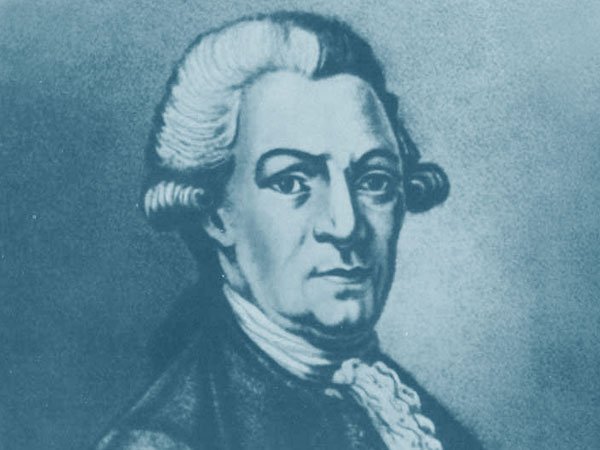
On November 11, 1711, the scientist and traveler Stepan Krasheninnikov was born.
Personal business
Stepan Petrovich Krasheninnikov (1711 - 1755) was born in Moscow. His father was a soldier of the Preobrazhensky regiment. In 1724 he began his studies at the Slavic-Greek-Latin Academy. Among the twelve best students in 1732 was sent to St. Petersburg, where he became a student of the Academy of Sciences. The next year after the exam, he was enrolled in the academic detachment of the Great Northern Expedition under the leadership of the professors of Johann Gmelin , Gerard Miller and Louis Delil de la Koroer. The program of the Academic detachment included a comprehensive study of Siberia and the Far East, the collection of materials in the archives of Siberian cities, a description of physical geography, flora and fauna of Siberia, meteorological and astronomical observations, linguistic and ethnographic studies.
Together with Professor Gmelin Krasheninnikov left the capital on August 19, 1733. The expedition proceeded through Tobolsk, Semipalatinsk, Ust-Kamenogorsk, Tomsk, Krasnoyarsk, Selenginsky Ostrog and Kyakhta.
Krasheninnikov was engaged in meteorological observations, collecting collections of animals and plants. On the way, he kept a diary, where many information on the ethnography of the peoples of Siberia, as well as the Evenki and Buryat languages, got.
In the summer of 1735, Krasheninnikov was sent on the first independent scientific trip to study warm sources to the Onon River. At the beginning of 1736, he visited and described the Barguzinsky prison, then examined the island of Olkhon in Lake Baikal and reached the Verkholensky prison in the Taiga paths. From Irkutsk, the horse's expedition rose to the top of the Lena River and from there went down the river to Yakutsk. Krasheninnikov took part in the description of Lena, made a trip up to Vitim and went to the Vilyuya basin to inspect salt sources. In Yakutsk, scientists stopped at the winter.
At the beginning of 1737, Gmelin and Miller decided to entrust Krasheninnikov an independent study of the Kamchatka peninsula. As Gmelin wrote, "we unanimously chose <...> Mr. Krasheninnikov, who in all respects differed from his brothers with his hard work and desire to fulfill everything instructed to him and whose good will we knew due to numerous trials." As a result, Krasheninnikov, accompanied by one translator, went to Okhotsk, and from there by sea to Kamchatka.
In Kamchatka, the scientist spent almost four years. He made numerous trips along the peninsula, compiled his geographical description, collected rich ethnographic, mineralogical, botanical and zoological collections, and made four “vocabulary” with the words of local languages. In June 1741, the traveler went on a ship in Okhotsk and further to Yakutsk, and then, through Irkutsk and Tobolsk, returned to St. Petersburg.
After returning, he worked in the Botanical Garden of the Academy of Sciences, which he headed a few years later, became an adjunct, and in 1750 a professor "in the Department of History of Natural and Botany." In the same year he was appointed rector of the Academic University and inspector of the Academic Gymnasium. Since 1749 he studied the flora of the St. Petersburg province (in 1761, his generalizing work of Flora Ingria was published in Latin, built according to the Linnei system). Simultaneously with the current activities of Krasheninnikov, he processed materials collected on expeditions.
Stepan Krasheninnikov died on February 25, 1755 in St. Petersburg.
What is famous
Shortly before the death of Krasheninnikov, he managed to complete his main work - the “Description of the Land of Kamchatka”, which was the first scientific composition in Europe dedicated to Kamchatka. According to Karamzin, Krasheninnikov died "on the very day, the last sheet of description of Kamchatka was printed."
The work of Stepan Krasheninnikov contained a geographical description of Kamchatka, information about its flora and fauna, the population, as well as historical data on the development of the Kamchatka Territory. During the trip, Krasheninnikov managed to study and copy documents stored in the archives of Bolsheretsk and other places, many of which were subsequently lost, also in the historical part of his work he used the “verbal news” about the campaign of Vladimir Atlasov. Soon after the publication, the book was translated into English, German, French and Dutch.
What you need to know about
Although linguistics was not a specialty in Stepan Krasheninnikov, he during the expedition to Siberia and Kamchatka wherever he could, recorded individual words and brief texts in the languages of local peoples. Thanks to this, it was possible to maintain valuable information about the dialects of the Tunguska (Evenki), Lamutsk (Even), Koryak, Kamchatal (Itelmen) languages of the 18th century. A number of dialects recorded by Krasheninnikov in the next decades disappeared. For example, in his time, Kamchatka Itelmen spoke three related languages, which are conditionally called Eastern, Southern and Western Itelmen languages. Only the Western language has been preserved to this day, while others are known for the notes of travelers of the XVIII - XIX century, including Krasheninnikov. He also recorded Itelmen mythological traditions.
Direct speech
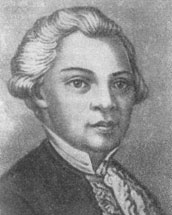 Stepan Krasheninnikov
“I, below, studied at the Moscow Iconspic School from 1724 to 1732, in which I received the last two years old Altyn for a month, and before Tritzati Altyn. In the outcome of 1732, by decree of the government Senate, he was taken to St. Petersburg at the Academy of Sciences, where he studied in August 1733, and in August he was sent by a student at an academic retinue to the Kamchatka expedition for a year for a year, from which he returned to St. Petersburg in 1743 in February of the month and received a hundred and more reasons for the payroll of a hundred and more rubles, which, on the proposal of the office of the Academy of Sciences, was determined by decree of the Senate Office in 1738. In 1745, according to the certification of the Academy of Sciences and, on the proposal of the office, by decree of the government Senate, the president was granted to the adjunct with a salary of 360 ru [Bley] for a year, and in 1750, at the discretion of his high -graphic glossal of the Academy of Sciences, Mr. President Kilo Grigoryevich of Razumovsky’s works in my post, was determined in my position. Professors with a salary of 660 Ru [Bley] for a year, in which I am still an order and salary, and it is also determined by the salary of the academic state tested from its imperial majesty; From my family, forty -thirds of the year of the male children, the son of Vasim Vasim months, and there are no peasants for me. To this skask Academy of Sciences, Professor Stepan Petrov, the son of Krasheninnikov, had a hand. ”
Stepan Krashennikov "Autobiography"
“I went from Okhotsk on the ship of Fortune October 4 days, an hour at 2 in the afternoon, and went safely an hour until 11 in the afternoon; And then mercuminess was made that the vessel was overcome by the vessel, and she began to clog in the spigates. And although in two pumps and in several large boilers it was poured, however, they could not pour it out, which for the sake of everyone. What there were also a load on the decks from the ship about four hundred pounds in the sea, and so barely saved, and especially that there was a calm at that time, and if there was a small excitement, it would be impossible to get rid of the ship in any way. From the mentioned discharge, I came to the extreme displacement: 1. In order to have a state of state -owned things in a slightly in the sea and spoiled, and namedly, one bag in which was gray paper, five districts of food of paper, and me with seeds; And there were only five districts of gray paper, and from the seeds of barley and peas, but one thermometer No 16 rosbit, also bent a windy and rospoyan, which I corrected upon arrival in Kamchatka, and bought two spools for the ammonia, 30 kopecks of a spool for the repair; 2. That my provisions were thrown into the sea alone, also a suitcase with linen, and I have no more left, as soon as one shirt that was at that time was on me. And what was so much discarded, it was made up that I was and the squealing at that time from the disease, which happened to many unprecedented at sea, were almost insensitive, and there was no one to watch my official things and baggage. ”
Krasheninnikov report to professors Gmelin and Miller on November 14, 1737
10 facts about Stepan Krasheninnikov
- Itelmens put on Krasheninnikov the song “Student Taemik Betel Chitis Killizik” (“If I were a student ...”).
- Returning from Kamchatka, Krasheninnikov spent a month in Yakutsk, where he married, taking the “native niece of the wife of the major and the Yakut governor of Mr. Pavlutsky , and the daughter of the Tobolsk nobleman Ivan Tsibulsky, by the name Stepanid.”
- In the diaries of Krasheninniks of the expedition of 1733 - 1743, it is estimated that his path in Siberia and Kamchatka amounted to 25,773 miles.
- In 1745, in response to Krasheninnikov’s request for the provision of the title of adjunct by the academic assembly, “it was decided to order him so that he would take a topic for natural history to develop and, having finished as soon as possible, presented the colleges of the professors so that they could better judge his successes.” Krasheninnikov presented the work after four days and received the title of adjunct of natural history and botany.
- Krasheninnikov belongs to the translation into Russian of labor “History of Alexander the Great Macedonian”, written by the Roman historian of the 1st century, Quintu Curziy Rufom.
- In 1988, the ashes of Stepan Krasheninnikov was transferred from a cemetery abolished in the 18th century at the Annunciation Church on the Vasilyevsky Island to the Lazarevskoye cemetery of the Alexander Nevsky Lavra.
- The name of Krasheninnikov is named the volcano, island, bay and cape in Kamchatka.
- About 30 species of plants are also named in honor of Stepan Krasheninnikov, including the sedge of Krasheninnikov ( Carex Krascheninnikovii ), which was discovered at the beginning of the 20th century on the slopes of the Krasheninnikov volcano.
- The mineral from the sulfate class, first discovered in Kamchatka, was called Krasheninnikov.
- In January 1837, Pushkin summarized the book of Krasheninnikov. Pushkin’s extracts made by Pushkin and notes turned out to be the last and unfinished literary work of Pushkin, apparently intended for placement in the first or second issue of the magazine “Contemporary” in the form of an article on the conquest of Kamchatka by Russians.
Materials about Stepan Krasheninnikov
Article about Stepan Krasheninnikov in Russian Wikipedia
Stepan Krasheninnikov in the project "Chronos"
Works by Stepan Krasheninnikov in the Library of Moshkova