
Translated material
Littleness to the fallen
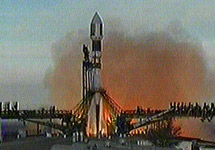
Roscosmos at the end of 2019 will stop the operation of the Soyuz-FG launch vehicle, wrote the general director of the state corporation Dmitry Rogozin on Twitter. The rocket was used in the October emergency launch of the Soyuz MS-10 ship with the ISS crew on board.
According to Rogozin, for the launches of the manned ships of the Soyuz MS series, from January 2020, instead of Soyuz-FG, the Soyuz-2.1.A rocket will be used. This model of the rocket has been used since 2006 for launching artificial satellites into the earth's orbit, but it has not yet been used for manned launches.
The first manned launch using the Union 2.1.A "plan to carry out in November 2019-this will be a flight to the ISS of the next crew on the Ship" Soyuz MS-13 ".
After the MS-10 Union’s accident, the Operation of Soyuz-FG was decided to temporarily suspend until the end of the investigation.
The launch of the next ship with the ISS crew on board - the Union MS -11 - is scheduled for December 3 of this year. The Soyuz-FG missile will also be displayed in orbit. RIA Novosti reported that the side blocks of the missiles on Baikonur would be disconnected and checked before launch, and then they would be attached back.
On November 11, Soyuz-FG was supposed to bring to the orbit "Union MS-10" with the new crew of the ISS-American Nick Hyig and Russian Alexei Ovchinin. However, emergency shutdown of engines occurred . The ship itself separated from the rocket and divided into compartments, after which the emergency parachute worked. The astronauts were not injured.
In the "Roscosmos" the cause of the accident was called the wrong work of the sensor signaling the separation of the 1st and 2nd steps of the launch vehicle. According to the executive director of Roscosmos for the manned programs of Sergei Krikalev, a "cycle of events" is now being held, which should provide safe flights in the future.
On October 22, RBC said with reference to unofficial springs in Roscosmos that the cause of the unsuccessful launch of the MS-10 Union was the unintentional damage to the 6-mm rod of the opening sensor of the nozzle of the first stage. It was statement that the stem was damaged when assembling a rocket on Baikonur.
The Investigative Committee of the Union MS-10 accommodation in Part 1 of Article 216 of the Criminal Code (violation of safety rules for construction or other work with causing major damage), which provides for up to three years of the colony. According to RBC, as well as RIA Novosti, the Investigative Department and the Roscosmos Commission have already established the perpetrators. However, their names and positions were not reported.