
Translated material
What happened at the exit?
Brussels and London agreed on a Brexit deal, but the project has changed beyond recognition: who is now and against
On Wednesday afternoon, the British Cabinet of Ministers met for more than five hours - and approved the draft of the Brexit transaction, agreed on the eve of the UK and the European Union after the months of painful negotiations. The deal is actively welcomed in the European Union, but in the UK it seems that no one really likes it. London had to make serious concessions, and now Brexit is not at all what his supporters imagined, voting in a referendum. Next in line is the Summit of the European Union, and then the vote in the British parliament. And not the fact that this vote will survive.
The main problems
On March 29, Great Britain leaves the European Union, thereby completely changing the balance of power in the region. Uniting into the European Union, the countries thought out the mechanisms of integration and interaction, but there was no rules in case one of the members decides to go out. In the case of Great Britain, they had to write from scratch.
The most global changes after Brexit relate to:
the movement of citizens - the border again appears between the UK and the European Union;
The movements of goods and services - the UK intends to get out of the Unified Market and the Customs Union in order to conclude independent trade agreements with different countries of the world without regard to the EU rules;
various aspects of defense policy, security, ecology - there are no special problems, since both sides promise to maintain close interaction;
The boundaries between Northern Ireland and the Republic of Ireland .
The last point is the main stumbling block in the negotiations.
So far, Britain and Ireland are included in the European Union, the border between Northern Ireland and the Republic of Ireland exists purely nominally, without interfering with the unhindered movement of people and goods. Leaving the European Union, the UK takes Northern Ireland with him. The return of the border risks causing a social conflict and greatly complicates the trade relations between the two parts of the island.
In fact, the final solution to the issue of Ireland from the very beginning was agreed to postpone for later. The transition period associated with Brexit will last until December 2020. During this time, the UK and the European Union should sign a free trade agreement that eliminates the need for a tough border for the movement of goods. A soft border regime will be organized for the movement of people. The question is how and on what conditions to survive this transition period.
Faced in time
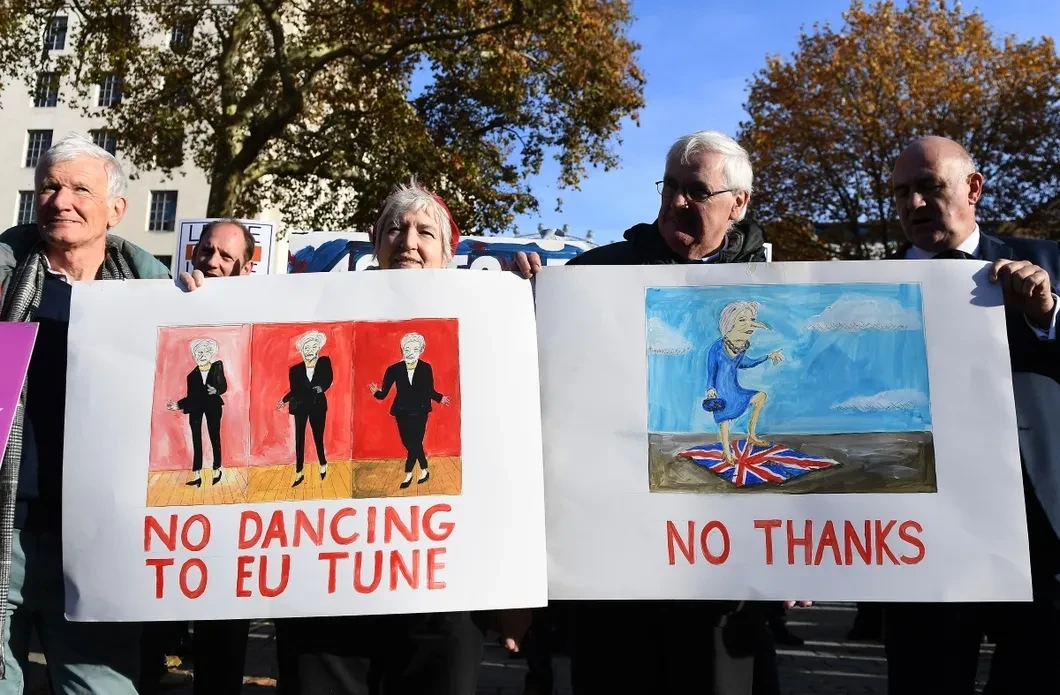
The atmosphere around the negotiations became more and more nervous from the beginning of autumn. Both Teresa May, and the head of the European Commission Jean-Claude Junker, and the chief negotiator of Brexit from the European Union Michel Barnier more than once stated that it was a little more-and the deal would be ready.
At the same time, everyone understood: negotiations could not last endlessly. In September, the EU special Summit was approximately planned for November, but at the beginning of this week it seemed that the deadlines would be inevitably disrupted. On the weekend, it became known that the European Union rejected the next proposal of Teresa May on the Irish issue. More and more politicians spoke about the probability of an exit without a transaction - the worst scenario. At the same time, the voices of supporters of the re -referendum sounded. In particular, this
The idea was now supported by the former Minister of Transport Joe Johnson, who resigned on Friday, with the words that Great Britain now has a choice - to become a “vassal of Europe” or “immerse yourself in chaos”.
Suddenly, on Tuesday morning, the head of the Prime Minister David Lidington said that serious progress was outlined in the negotiations and carefully suggested that the transaction could be prepared within the next 24 or 48 hours. And already on Tuesday evening it became known that the EU and the UK finally agreed on the Brexit plan.
New plan
On Wednesday, ministers finally supported the agreement. The document contains 585 villages, here is its main points:
A border appears between the European Union and Great Britain, the free movement of people ceases.
At the same time, there is the possibility of a visa -free visit to the UK for EU citizens and, conversely, for tourist or working purposes.
Between Great Britain and the EU there is a free trade zone, zero customs duties.
Great Britain comes out of a single market and forms its trade relations with other countries of the world.
Partnership continues in issues of foreign policy and defense, including the possibility of the participation of Great Britain in military missions, consultations on joint sanctions, and the exchange of information between special services.
The UK will have to pay the European Union 39 billion pounds.
A separate head of the agreement is devoted to the Irish border. In this matter, both London and Brussels made concessions. The solution looks like this: before the entry into force of the Free Trade Treaty, the UK remains in the Customs Union, which it cannot leave of its own free will. The validity of the transition period may be extended after December 2020, if the free trade agreement is not ready. To judge the readiness of Great Britain to leave the Customs Union will be a special body, which, apparently, will consist of representatives of Brussels and London.
To resolve issues regarding the movement of people, Great Britain and Ireland should among themselves - but taking into account the fact that the transaction already implies a visa -free regime for tourist and business trips, this is not such a significant problem.
In fact, a decision in Ireland is a compromise that is temporary and does not take into account a huge number of aspects. But this compromise allows, at least, to agree on a deal at all - and work out the details later, during the transition period.
What will happen next?
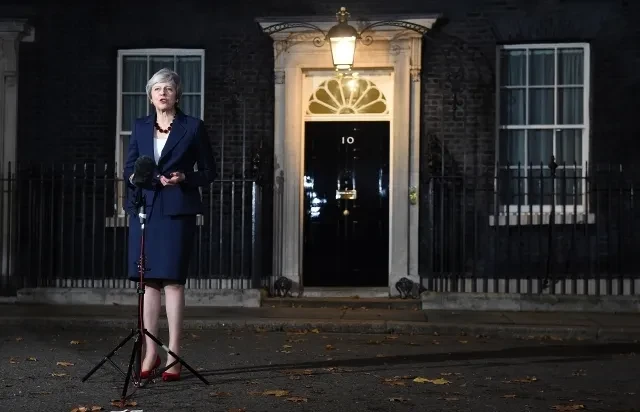
Teresa Mei perfectly understands that it is too early to celebrate the victory - yesterday's approval of ministers, she practically pulled her teeth. And approval in itself is not a demonstration of loyalty, but the choice of the smallest of evils: a bad deal is better than the lack of a transaction in general.
In fact, the Prime Minister itself also said about this, speaking after a five-hour meeting before the press.
“If you discard the details, the choice that is facing us is obvious,” she said. “This is either a deal that corresponds to a referendum decision, returns us control over our money, laws and borders, cancels freedom of movement, guarantees protection of jobs and safety, or the lack of a transaction in general.”
The British media report that at least 10 ministers during the debate expressed a categorical disagreement with the proposed plan, and predict that in the coming days some may resign. The supporters of the Hard Brexit are disappointed primarily. Firstly, they are afraid that the transition period will be delayed and the UK will get stuck in the Customs Union for many years, becoming, as Joe Johnson called it, the "vassal of Europe." Secondly, while the UK remains a member of the Customs Union, it undertakes to verify some aspects of domestic policy with the EU-in particular, taxes, environmental norms and labor legislation. That is, it temporarily puts a cross on the hopes of those who dreamed of liberalizing the economic system and reducing taxes.
Now in line - the EU summit: for the transaction to take place, all countries - members of the Union should support it.
But at this stage of problems there should not be arise: the heads of most European countries have already expressed fundamental consent. It is expected that the European Union summit will be held at the end of November.
And then there will be the most serious test - voting in parliament. Obviously, Teresa May should not hope for the total support of the conservatives of his own: among them there are many supporters of the “hard Brexit”, and they will most likely vote against. Moreover: several British media reported with reference to their own sources in the conservative party that some of its members are already gathering votes to initiate a vote of distrust Teresa May. It is not clear how the second largest party - the Labor. Her leader Jeremy Corbin called the deal "failure after two years of unsuccessful negotiations."
It is expected that voting in parliament will be held in early December. In case of failure, Teresa May will have three months to agree with the European Union a new deal and introduce it to the deputies-unless, of course, she can resist the prime minister.
PS
On Thursday morning, it became known about the first resignations in the office of ministers. The British Minister of Brexit Dominic Raab announced the addition of authority, after him the younger Minister of Brexit Suella Braverman left. The Minister of Northern Ireland, Shaylesh Vara and Minister of Labor, Esther Makl, also resigned.