
Translated material
“Trotsky went out to smoke - so they removed him. And Lenin did not smoke "
In 1918, Dziga Vertov made a film about the revolution. They lost it, and now - restored pieces from archives
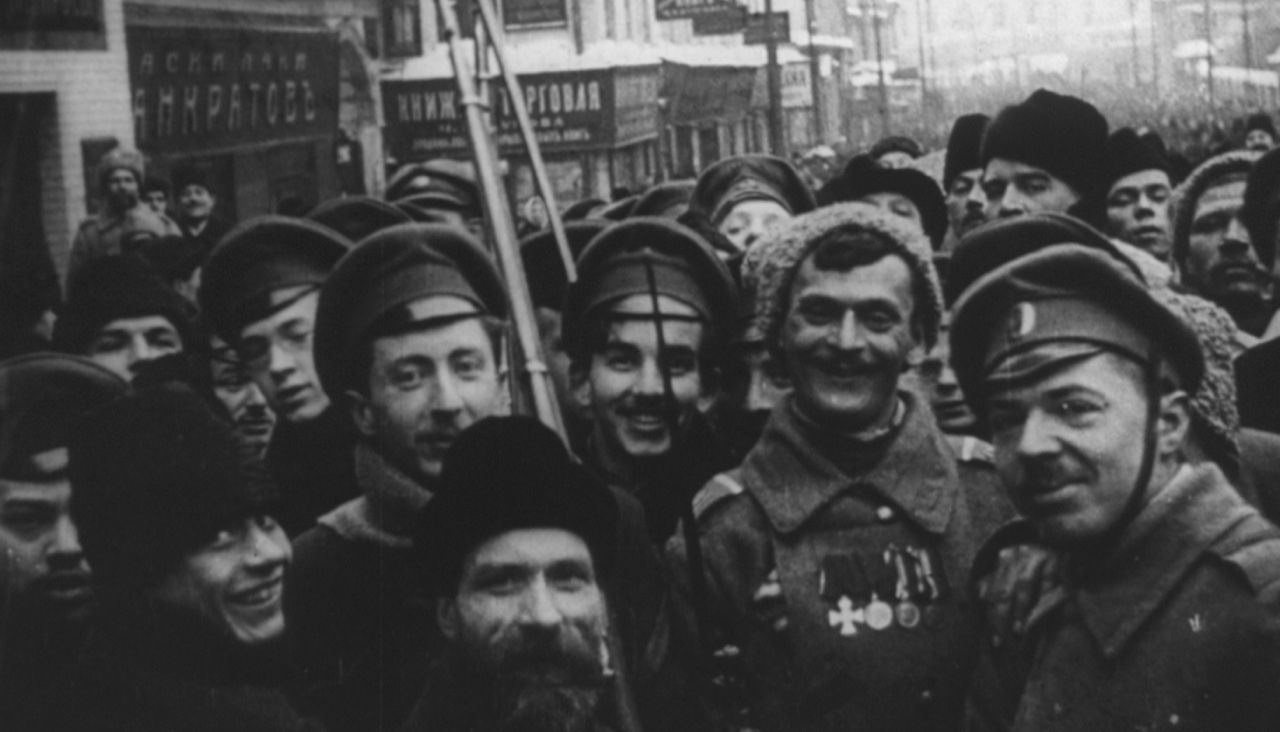
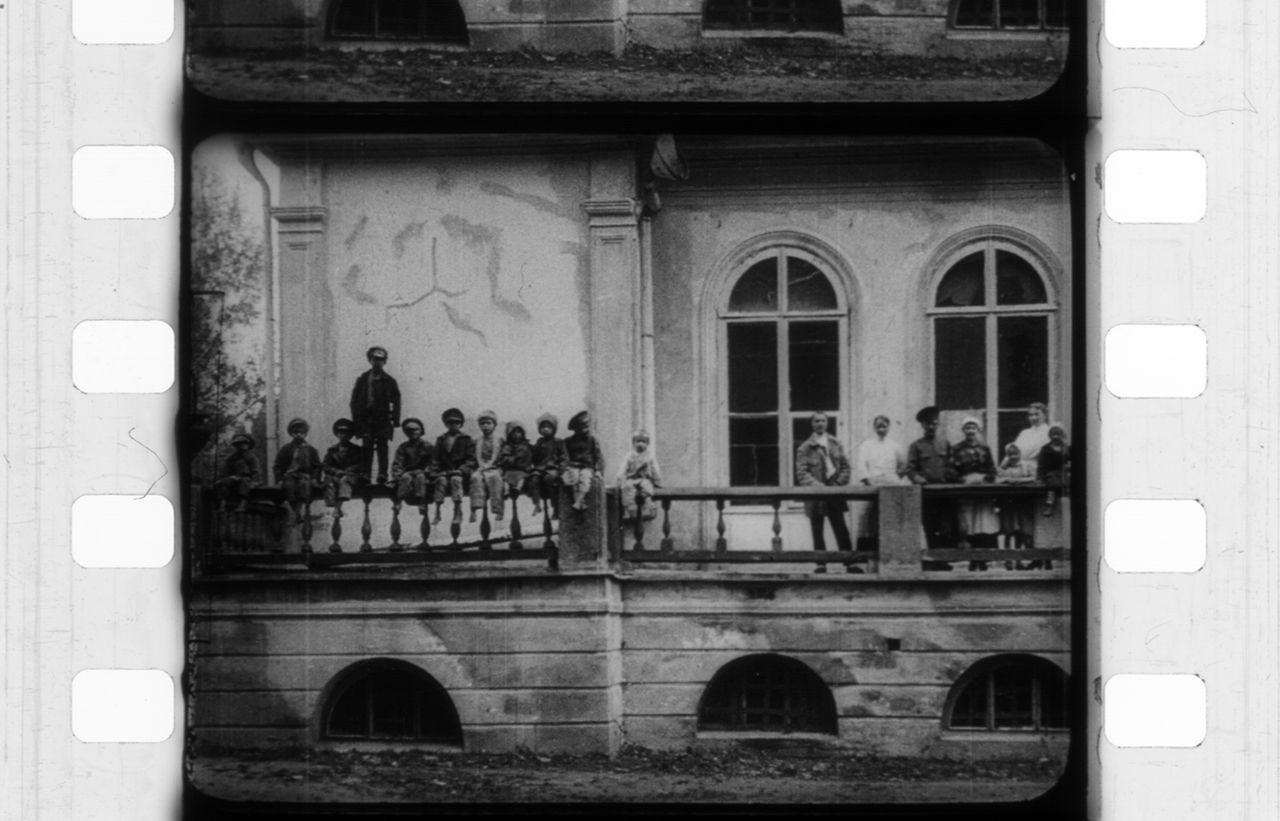
On November 20, at the IDFA documentary movie festival in Amsterdam, the debut film of the pioneer of the Soviet documentary of the Soviet Vertov “The Environment of Revolution” will be shown. The film was mounted and was first shown a hundred years ago, in 1918, but since then no one has seen it, and only disparate fragments have been preserved in the archives. The film was collected by the film by Nikolai Povolov-a film historian and the head of the historical and theoretical department of the Research Institute of Cinema. Medusa talked with him why the “anniversary of the revolution” was forgotten in Soviet times and why modern Russian television needs the film.
- How did the "anniversary of the revolution" appear?
- The first shootings are dated February 1917. In Petrograd, he shot the film department of the Skobelevsky Educational Committee - heroic operators who worked for movie magazines. This material was published in Free Russia magazines. [After the October Revolution] Soviet film organizations appeared, the film committee of the People's Commissariat of the People's Commissariat of the People's Committee appeared. There Vertov served since the last days of May 1918. First, the clerk, then the editor of the inscriptions, then the editor-editor. And by the fall of 1918, he, a 22-year-old young man who had four months of experience in practical work on the installation of documentaries, turned out to be, as they say, the director of this large tape.
- Was it important for him at that moment an artistic statement? Or is it a purely political order? Did he feel like an agitator or rather an artist?
- I think he felt more likely a manufacturer. At the moment when the civil war begins and when hunger occurs - and normal, monetary, and film - to think about artistic statement is difficult. The people were raised from Moscow. The sabotage of employees began. Cinematographers went south, then abroad. The studios were empty. In the fall of the eighteenth year, electricity was already turned off. What art statements are there! There would be to survive. It was a normal production task.
Nevertheless, Vertov considered himself a director. At that time, the directors of documentary cinema in the credits have not yet written their last name - this was not accepted. The first to do this was, by the way, Vertov - later, when he mounted the film “The Red Star instructor ship”, he mounted this film and set himself in the credits as a director. This caused some scandal, because at that moment the director of documentary cinema-it was some kind of oxymoron, nonsense. There were gluers, credits editors, operators. And so that there was a director who did not go to the shooting, it seemed strange.
- What was the work of Vertov as a director?
- He collected all the materials that were shot by October 1918. They had to be correctly organized, identified. This needed people who knew topographics, say, Petrograd and Moscow. Because the person who was present in Petrograd in February 1917 could not understand what was happening in Moscow, for example, in October.
Vertov from this collected a large mosaic panel, folded a puzzle. There were many pieces. You can calculate the [mezhdr] inscriptions, their 242, for each inscription there is a plot of, say, five, four or three installation plans. That is, the total amount is more than a thousand. Keeping this whole picture in my head, of course, is very difficult.
30 copies of the film were made simultaneously. Not printed, but glued - this is a very big difference. There was no negativity, and the film was assembled into pieces of different copies, at the same time 30 installers at the same time sat at different tables, each piece of each of the thousands of plans of this film was printed for each installer, and Vertov, as he later wrote in his articles, as a grandmaster during a session of simultaneous chess game, walked and distributed pieces of copies to the installers. This is a fantastic work. It was an avant -garde in the superhiopermegastadium. I do not know another case that the film was done in this way.
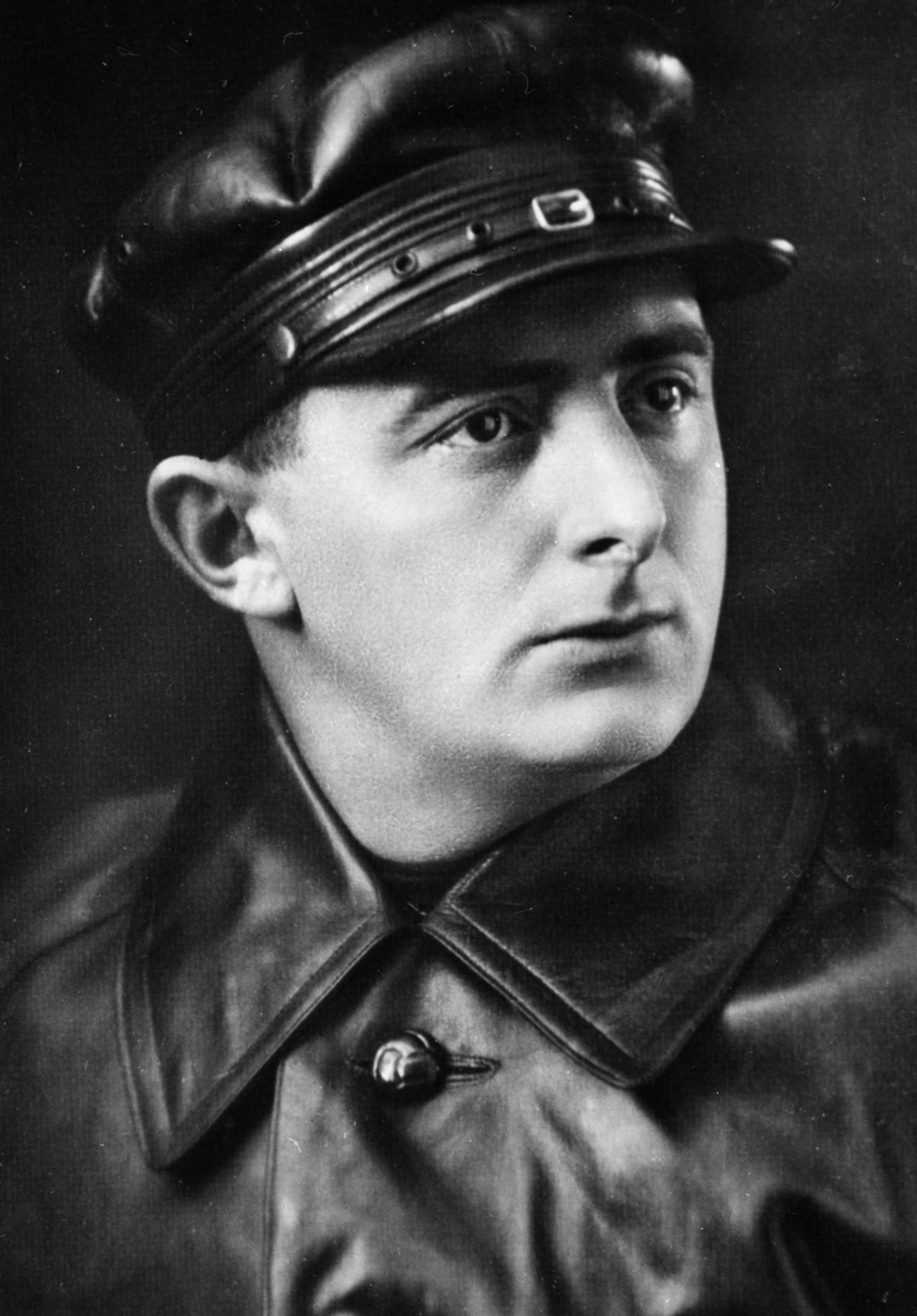
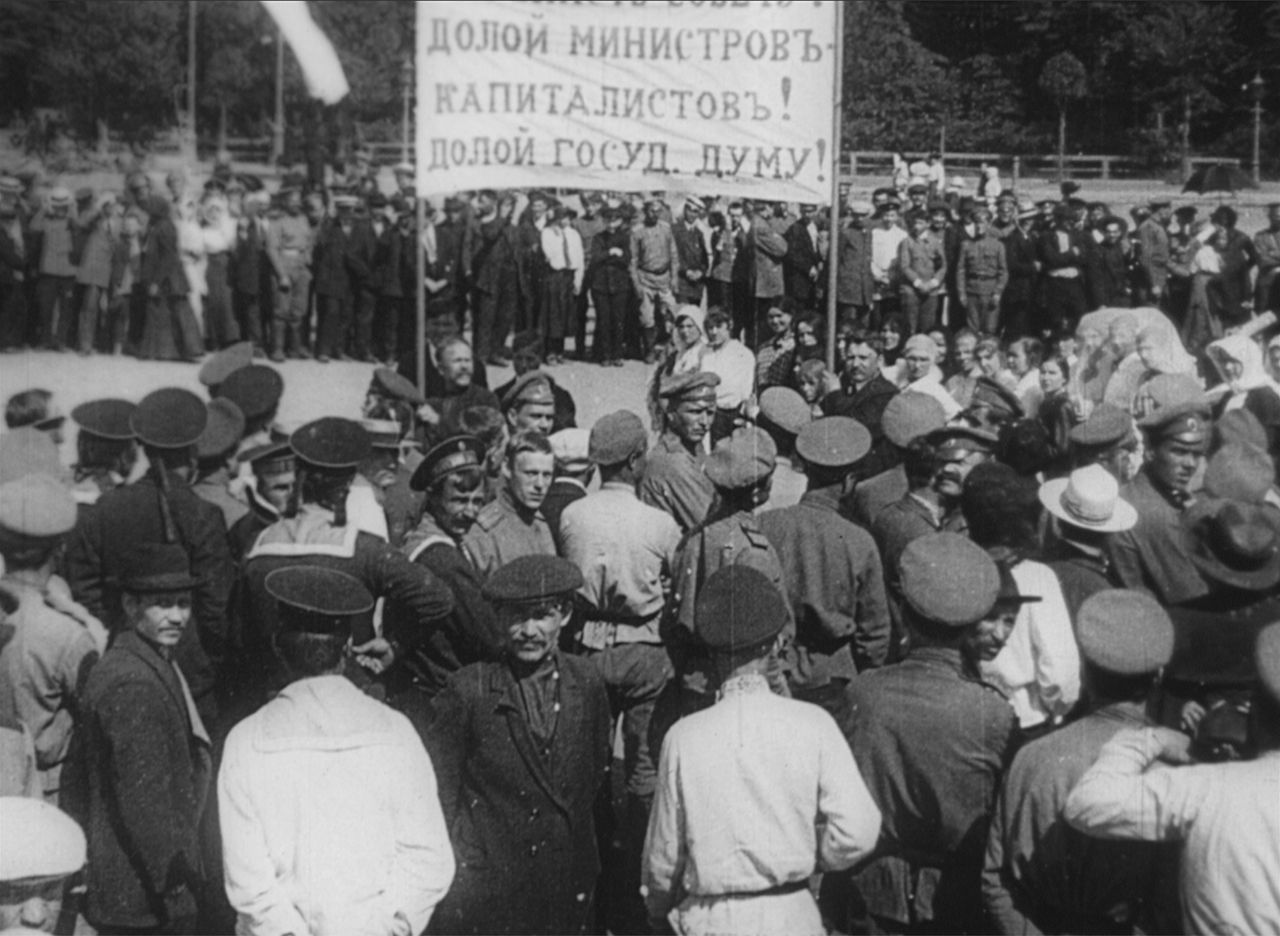
The work was still unprecedented because in world cinema by that time there was not a single film of such a mounting structure lasting more than three thousand meters. The only example that comes to my mind is the film [David] Griffith “ Interest ”, which was a little longer-there are 3300, in my opinion, meters. But it was still a film on which millions of dollars were spent!
- And how much did Vertov's film watch?
- The film lasted more than three thousand meters. Then they considered it meters, because the projection time depended on the speed with which the mechanic twisted the handle. And the mechanic could twist as he wants. He could twist at a speed of 16 frames per second, or 18, or 20 frames per second, or even 25. That is, the timing could fluctuate from two hours to, say, one and a half. In one case, you observed caricaturely moving figures, like Charlie Chaplin, and in the other it was an epic slow canvas, where some strange shadows moved smoothly with dignity. The mechanic was an important person.
- And where did they show it?
- He was clearly shown on the squares, for campaign purposes, a large number of people. Copies of the film went to the cities of Soviet Russia. I think that for the maximum effect, these were public shows, free; Probably, they were accompanied by music that did not require chamber space. I assume that these were brass bands who could play in the fresh air.
- If the film has seen as many people as it could be lost?
-In general, the cinema of the 1910–20s in the world has survived very little. Loss statistics are approximately the same for all countries - for Russia, and for Europe, and for America. In these countries, approximately 80% of all films that were shot until the end of the silent period died. We will never see them.
This died for one simple reason: there were no state archives. What is the state archive? This is a place that has stable and regular financing, where specially trained people work who have received professional training, can catalog, physically store and show what they have. At the warehouse of a private company, when the film was worked out and no longer in demand by anyone, the boxes are simply thrown away - and that’s all, they are lying there. And the state archive is a completely different organization.
In our country, the first -now existing archive of film photophodes still appeared - it is now located in Krasnogorsk, not far from Moscow. This was the first state archive of documentary cinema in the world. For this it is necessary to thank the Soviet government, which was primarily interested in keeping the documents of the October Revolution. And as we recently found out, it was there that the "anniversary of the revolution" was preserved.
Apparently, a copy that went with campaign trains around the country got into the archive. Because when the trains returned to Moscow, the films were handed over to the warehouse. The copy got into the archive - and in the form in which it was, scratched with a film projector, has survived and survived to this day.
- That is, there were films there, but no one understood that this was Vertov’s film? How is it possible?
- The archivists could not make an accurate catalog, because these were scattered fragments. Everything was in such a “vinaigretical” state - how could the archivists identify this? They recorded fragments under different accounting numbers. And in order to collect the film together, it was necessary to have some kind of document proving that these were fragments of one film. Such a document was found in the summer of 2017, the past, my colleague, Kinoved Svetlana Ishevskaya, rgoli . In the Foundation of Vladimir Mayakovsky, she found the poster of 1918, where all [intermediary] inscriptions from this film were listed. It was a kind of skeleton by which we eventually collected this film. So he was lucky much more than others.
Another thing is that he was not in demand for a long time, but this is also understandable. Indeed, the film discusses the beginning of the Civil War in 1918, and then Lev Davidovich Trotsky was the main military commissar. He was present in the film in huge numbers. And as soon as in 1927 he became Persona Non Grata, this film, of course, was very unprofitable for the authors. They wanted to live.
- There, not only show Trotsky a lot, but, it seems, they never mention Stalin, although the figures of the revolution and the civil war are listed and shown in huge numbers.
- Yes, Stalin is not in this film. He in 1918 was not such a particularly important figure. At the same time, all members of the Soviet government, shot there, are carefully reproduced in the film. But, for example, if you look at the [fragment] about the leaders of the October Bolshevik coup, then there are [shown] only three people - these are Trotsky, Lunacharsky and Kollontai. I think the operators simply could not remove anyone else, because it was a very chaotic, seething time. It was November - a month when there are very few light hours in the bottom. Very low cloudy. It is impossible to remove without lighting devices indoors. And they, in fact, did not go out into the street. Trotsky went out to smoke - then he was removed. And, for example, Lenin did not smoke and did not go out into the street, so he was not removed. This is all explained by quite prosaic reasons.
-Are there any personnel in this film that were unknown to historians?
- When a restructuring occurred and all the documentaryists rushed to show exactly those films that were not shown during the Soviet regime, all the films, where there were, for example, Trotsky, were shown many times. But all documentary films that used this material, as a rule, pursued their goals. They had to, say, find a plan with some Lacis , or a plan with Trotsky, or Lenin's frame. So they grabbed these pieces.
Now we are from this, sorry for the expression, vinaigretted recreated the original product. That is, we seemed to be these pieces of beetroot, cucumber, potatoes and boiled sausage glued back - and suddenly something that we had not seen before. This is a coherent story about the events that took place from February 1917 to October 1918.
- In the film there is a fragment where, with the help of animation, the fighting of the Red Army against the Czechoslovak troops during the Civil War is shown. Was it a new technique for that time?
- This is done by a pararodal animated shooting. And it was this fragment, where the finger outlines the border of the Czechoslovak troops, was later considered one of the first tricks of Soviet animation. But none of the researchers of the cinema - neither Soviet nor foreign - knew that this fragment was part of the "anniversary of the revolution." It was believed that it was removed much later, in the early 1920s. The fact that it was removed already in 1918 changes our idea of what technical capabilities people had at that time.
At the same time, if you look at the chronicles of, say, the times of the First World War, then a multiplier submitted as infographics can be found in the movie magazines. And not only in ours, but also in foreign ones. In this sense, Vertov was not an inventor.
- And in which one was? What helps the restoration of his first film to understand about Vertov himself?
- Vertov is considered the founder of Soviet documentaries. His initial professional experience has been studied seriously, but there are a lot of gaps. I always wanted to call it the founder, but this was needed for arguments. Now such an argument appears. He really created a colossal film that was politically recognized. This means that the role of documentary cinema was clear. And it becomes clear why, for example, Vertov could subsequently create his “Film” - this was his attempt to create a cinematic analogue of the Bolshevik newspaper Pravda. He constantly tried some new tricks. He, like a launch vehicle, pulled out this huge area of fixing the world, from which cinematic products made that had not only propaganda and not only commercial, but also artistic value.
It was a fantastically useful experience, an experiment that allowed Vertov to become the helicopter that he was, and all documentary cinema to stick to him and germinate through this very difficult time.
- What personal discoveries are related to you for this film?
- For example, knowing the Lenin phrase that Trotsky is a poser, with great interest I examined him on the screen. And indeed, Trotsky always very well understood that the camera was being removed. And I see that sometimes some of his gestures are provoked by what he thinks about how he looks on the cell. I never thought about this before, but now I see very clearly, and this discovery seemed interesting to me.
- What did this experience mean to you - to collect Vertov’s film again?
- Can you imagine how a person feels for the first time seeing the Egyptian mummy or ancient amphoras that no one has seen? Or found some inexplicable artifact that other historians have not seen? This is interesting, but life does not end there, this artifact becomes a number of others and is embedded in the chain of general history and begins to participate in the reproduction of further cultural phenomena. We strive to enrich our ideas about life, and in this sense I believe that some kind of brick has introduced into this wall of general knowledge. Because the film in the form in which he now appears before the public, did not exist before.
- You show the film at the IDFA festival in Amsterdam. Why not in Russia?
- When I was engaged in the restoration of the film, I wanted to show it very worthy. And I would like him, for example, to show some federal channel on November 7. But the fact is that a year ago it was a centenary of the October Revolution. And no one wants to listen to the revolution, they have already shown a hundred times already. And the fact that this is Vertov and his first film, which in exactly a hundred years arises from non -being, is not interested in television channels, but rather a cinematic community. And then I just looked at which festivals were held in November, and stumbled upon the IDFA festival in Amsterdam - a good festival, with a reputation, with a film market where the whole cinema public gathers.
For the show, one of the largest halls of Amsterdam-Tushinsky, built in the early 1920s, was rented, a local attraction. I read somewhere that this hall is one of the five most beautiful cinemas in the world. Special musical accompaniment has been made for the show - they have been rehearsing for the second month. [The organizers of the festival] wanted me to advise them, but, on the contrary, I wanted to maintain the freshness of perception and for the first time to see what would happen there for the first time. I gave some advice, but everything else is their author's work. For several months I shook these films back and forth, and now I want to be a simple viewer. Let the phonogram be unfamiliar to me at least.
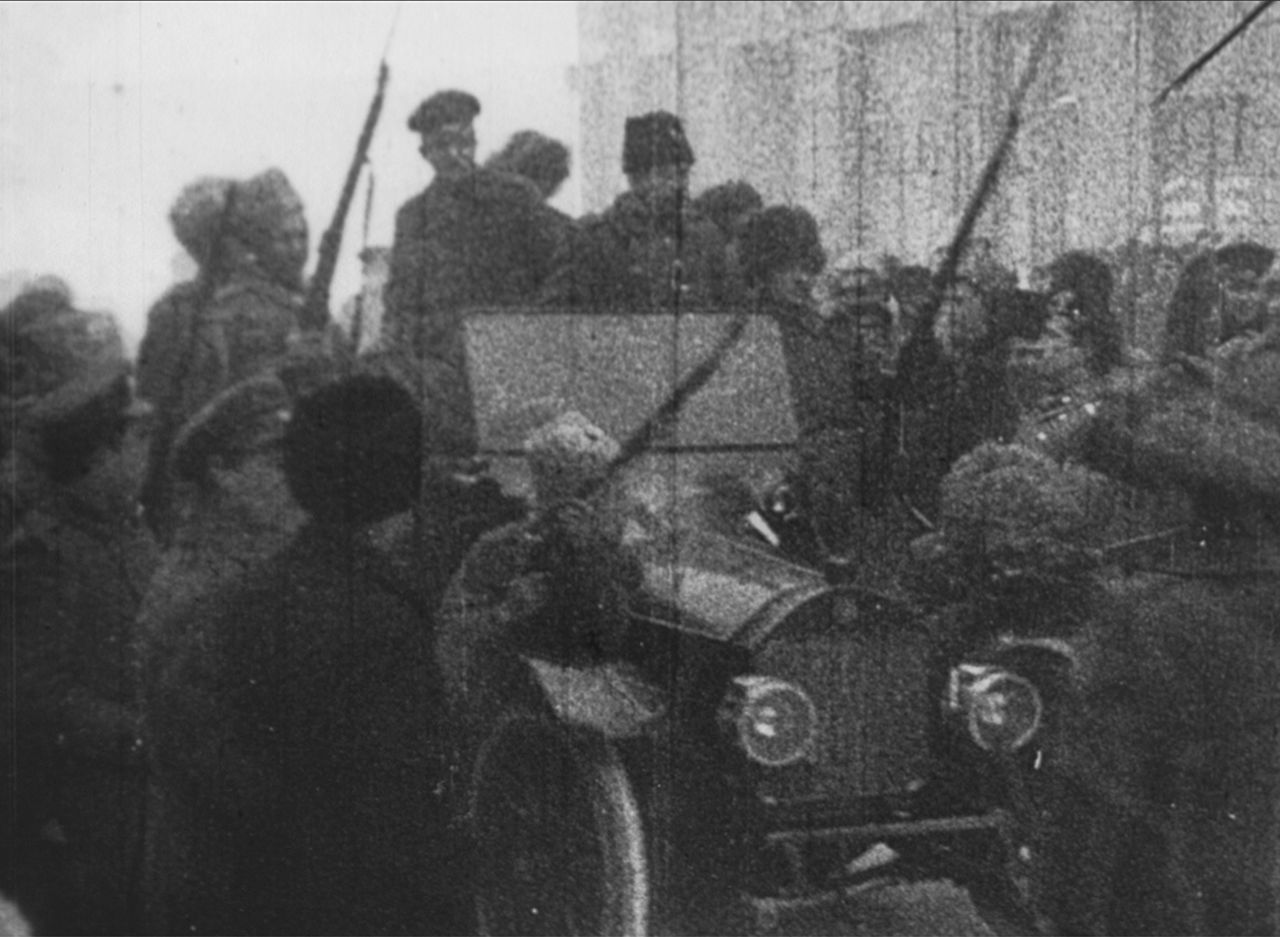
“Recently, Peter Jackson painted for his film about the First World War, normalized in speed and, with the help of people who know how to read on his lips,” he voiced the documentary chronicles of that time. Would you be interested in such a thing with Vertov’s film? Maybe it will look at him like that more spectators?
“I have great respect for what Jackson did.” I saw some fragments of his work, technically, this, of course, is amazing.
In the history of cinema, something similar happened before, but it was more likely a comic shade. For example, in a silent movie, when there was no sound, the actors very often, acting in films, said not the text that was needed in the plot, but simply gag: joking, indecent things said, no one heard it all the same. But there were deaf -mute spectators who knew how to read the lips, and they understood what the actors actually say. Therefore, in the halls, sometimes the strange laughter of these deaf -mute was heard. Imagine a scene of love or tenderness on the screen, and at that moment a wild sound is heard in the hall that shocking the rest of the spectators.
In documentary cinema, reading on the lips can be more meaningful, but we do not know what people said to the operator when he shot them. They could say: “Go *****, *****! What the hell did you come here, the old fart?! " It is unlikely that they said: “The glory of our great English queen! Long live the king, for whom we are ready to die tomorrow, and let our mortal remains lie in the fields of Somma and Verden! ”
The question is what we want to hear. Of course, it's great to see and hear some real cast of the past. I am not against it. But this will not be a whole artistic phenomenon, because people who shot films used other tricks, and did not use color and sound. And now, when we, for our part, add something of our own, we get funny artifacts, but this is not an act of art.
- How do you see the future fate of this film?
— Меня как историка мало волнует его прокатная судьба. Это как родителя перед половым актом спрашивать: «Сегодня вы совершите половой акт и ваш сперматозоид сойдется с яйцеклеткой. Как вы видите будущее этого продукта?» Откуда я знаю?! Я запускаю этот фильм в мир, а что с ним будет — кто знает. Может, кто-то заплачет, кто-то увидит своих родственников, кто-то использует это в научной работе, а кто-то просто посмотрит и скажет: «Какая херня! Что за чушь, опять Троцкий ходит, дебил!»
Я не берусь гадать. Я не прокатчик и не дистрибьютор, я историк и понимаю, что каждый артефакт имеет бесконечное количество возможностей взаимодействовать с окружающей действительностью. Хорошо, что фильм сохранился, что мне удалось его воссоздать, что люди его увидят, что он будет показан там, где соберутся профессионалы, которые смогут способствовать его продвижению. Ребенок родился, теперь пусть сам развивается.
Andrey Borzenko