
Translated material
European teams are now playing in the League of Nations. Everyone thought that the tournament was doomed to failure, but suddenly it turned out to be very spectacular
Since the fall of 2018, all European football teams have been participating in a new tournament called the UEFA League. According to the plan of European football officials, the tournament, whose matches are distributed according to the calendar for a whole year, should replace comradely matches that do not cause much interest among fans. At first, very many were skeptical of the idea, but now, closer to the end of the first stage of the tournament, it becomes obvious that UEFA was right. It is very interesting to follow matches in the League of Nations, and that's why.
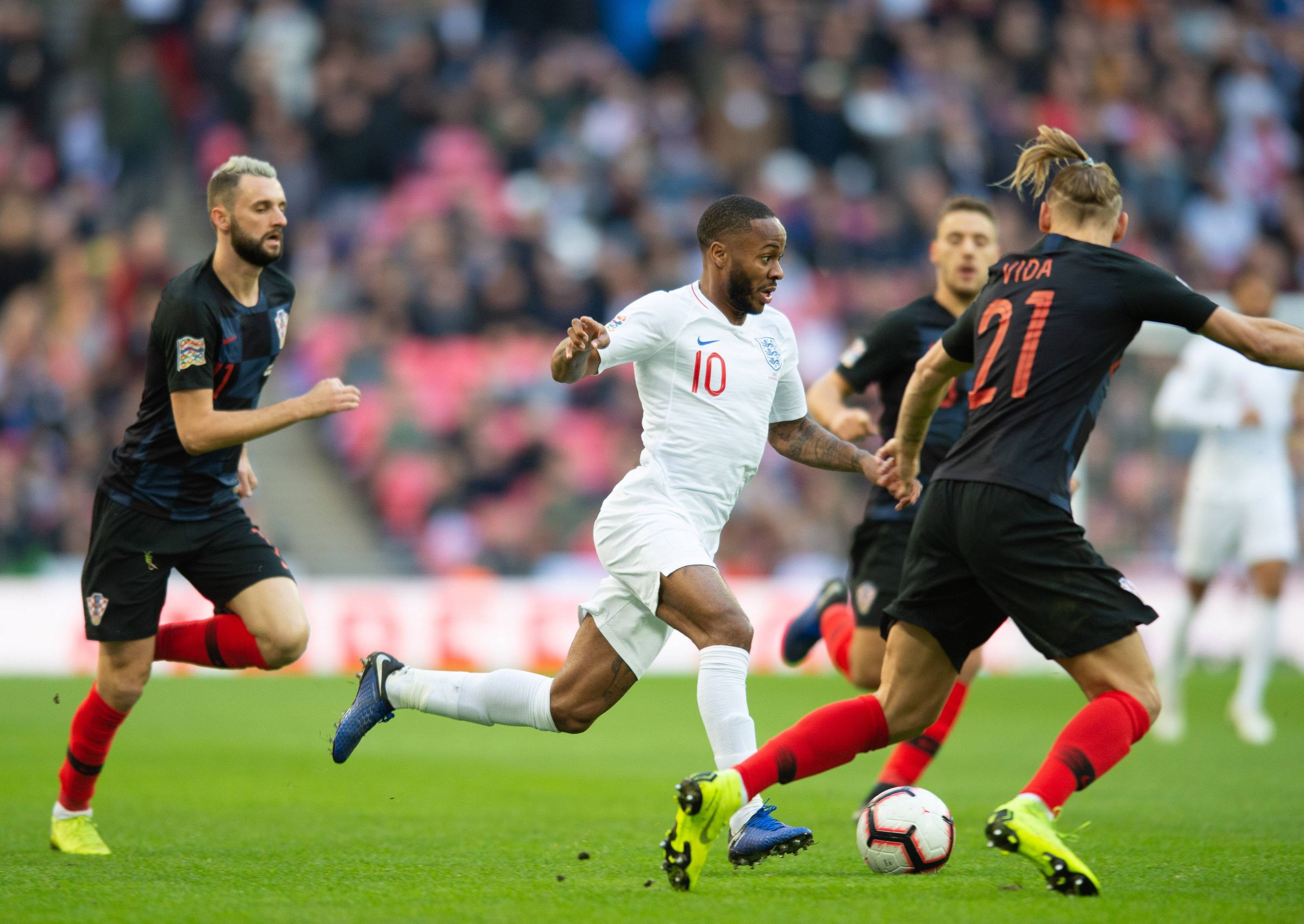
The League of Nations has a revolutionary format. Strong play with strong, weak - with weak
Usually, at all tournaments of the prefabricated (and not only national teams), the groups are formed in such a way that each have strong teams and weak ones. This is done mainly in order to practically exclude the departure of all strong teams in the early stages (after all, then the tournament will not be interesting to watch).
The League of Nations is built in a completely different principle: it is divided into four divisions (League A, League B, League C and League D), while only strong teams play in League A, only weak in the league D. According to the results of the entire tournament, the best teams receive an increase in the classroom (the winner of the group in League D goes to the league C and so on), and the worst - fly out to the lower division. The four strongest teams of the league and after the completion of all games are additionally involved in a separate mini-tournament , where the final winner of the League of Nations is determined.
Now top commands are constantly playing among themselves!
Here is the composition of one of the groups of the League A: France, Holland and Germany. And here is another one: England, Spain and Croatia. Previously, the top-team matches could only be seen at the world and European championships once every two years. Yes, sometimes the grads are found with each other and in qualifying tournaments, but this is very rare, and even less often the outcome of such matches is of tournament significance. Now, the opposite is the contrary - on every game day there is definitely a match, according to the composition of the participants, worthy of the decisive stages of the World Cup! And often not one.
As for the weak teams, for them the League of Nations is a great opportunity to test your strength in matches with your own kind. Now, for example, the Liechtenstein team does not hold meaningful meetings with teams like England or Portugal, always ending with an obvious result, and fights in every game with such teams as Gibraltar or Macedonia, scores goals and even won victories.
There are very few matches at the tournament, so each of them is important
In League A and League B, the group consist of only three teams - that is, each plays only four matches (at home and away). At the same time, the price of each game is unusually high - not only because the winner of the group enters the league class above (or in the final final - in the case of the league a), but also because the worst team returns to the league lower. In other words, the format is specially selected so that all matches without exception have tournament significance.
Because of this, the situation in the League of Nations is similar to group rounds of the world and European championships-here everything is sometimes solved at the very last moment, and the matches are very dramatic. For example, on November 18, in one of the League groups, Switzerland played with Belgium: in order to take first place and get into the final mini-tournament, the Swiss had to win, and the Belgians arranged a draw. By the 17th minute, Belgium won 2-0, but Switzerland was able not only to recoup, but also to give up the opponent: the final account of the match is 5: 2 in favor of the Swiss. Now they will go to the final mini-tournament.
Russia is the first in its group. But the main match has not yet been played
Russia in the first drawing of the League of Nations fell into the second largest League B, and Sweden and Türkiye became its rivals. While the Russians are very successful: they won the Turks twice and tied with the Swedes once, having missed a total of only one goal.
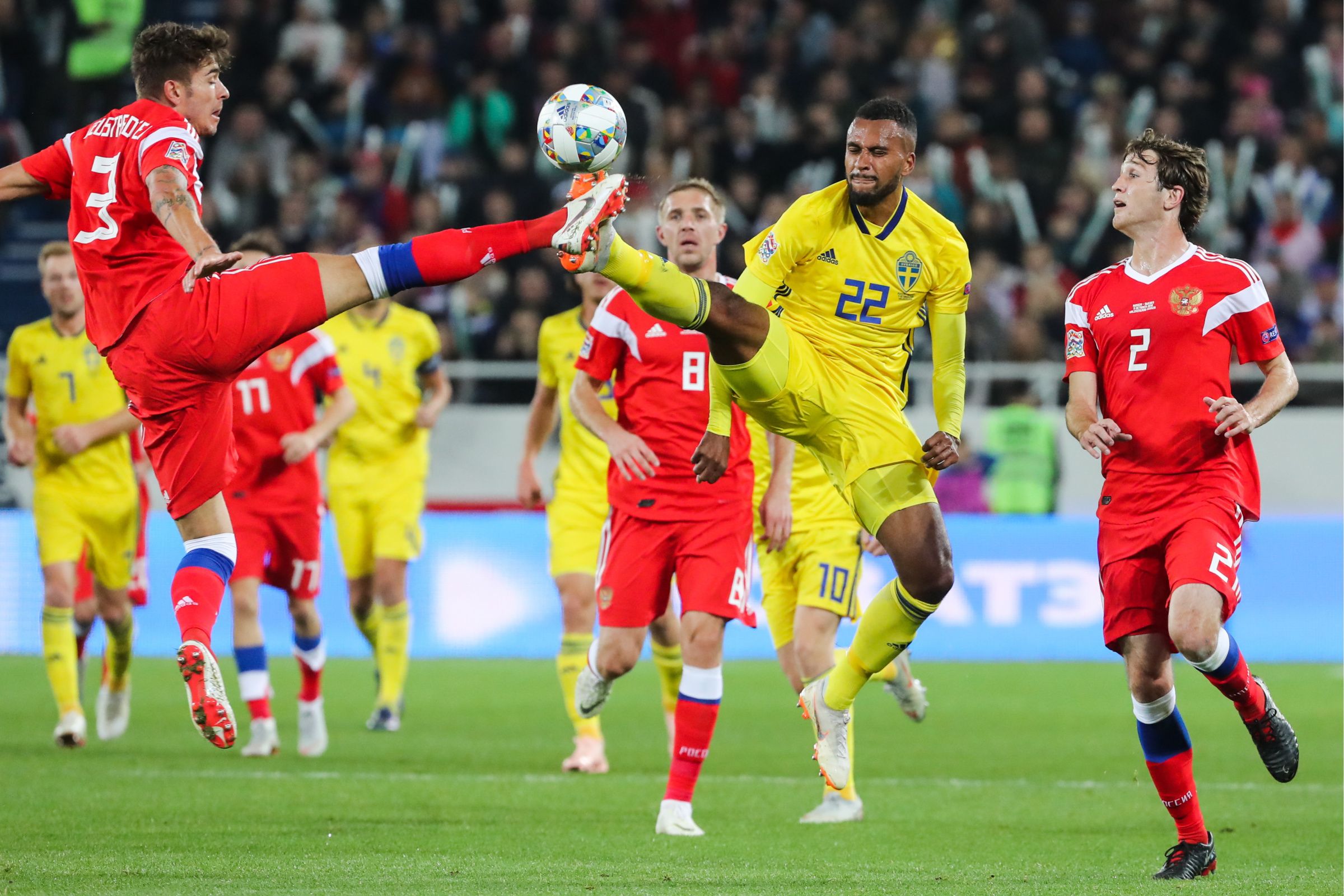
On Tuesday, November 20, the Russian team will play with Sweden away - this will be a final match in a group that will determine which of these teams (Turkey has already lost its chances) will fall into the League of A. Russia (often it happens!) Even a draw will arrange a draw. The game will begin at 22:45 in Moscow, the Channel One will show it.
Grigory Levchenko