
Translated material
Stormy week
Great Britain and the European Union agreed on the draft agreement regulating the procedure for the exit of Britain from the Union. But the fact that the Prime Minister considers the best of the possible options, many call the betrayal of the interests of Great Britain-why, Masha Slonim sorted out
In the three days of the last week, members of the government, journalists, experts, and behind them the whole country studied the art of speed reading, refreshed sports terms and simple arithmetic rules in memory.
The members of the government in a fireman got acquainted with a document in 585 pages agreed with the EU - a draft agreement between Great Britain and the European Union on the conditions of withdrawal from the EU.
Fire from all guns
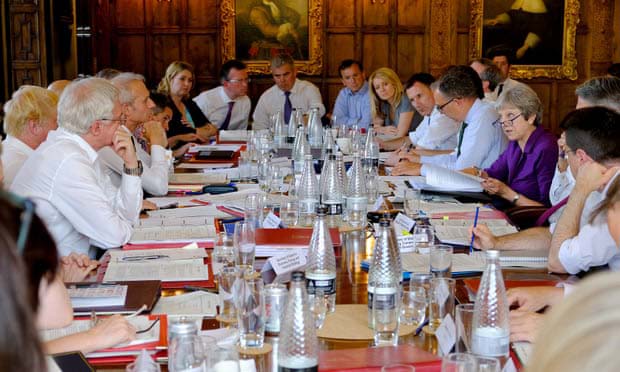
Photo: Joel Rouse/Mod/Crown Copyright
On Wednesday, November 14, the government studied and discussed the document for 5 hours in a row, and it seemed that this time Teresa May was enough to praise the agreement. In any case, at the end, she proudly reported on the support of the government.
But before she had time to close her mouth, but I must say, she spoke with inspiration and confidently how the statements about the resignation of ministers went. Moreover, the most awkward moment was the resignation of just the Minister for Brekzit's Affairs Dominic Raab, a person who, in principle, had to negotiate with the EU under the agreement of the document. But no, as Raab said on Sunday in an interview with Sunday Times, for him the maintenance of the key positions of the agreement was a surprise! He did not say who exactly deceived him, but complained that he was simply powdering his brains. It is interesting that the previous Brekzit Minister David Davis, whom Raab recently changed, also resigned in protest against the fact that he was not really allowed to negotiate. (Then Teresa May personally engaged in negotiations with assistant Olli Robins.
In an interview with Sunday Times, Raab accuses May of not firmly resisted the European commission, which he compared with an aggressive partner in the divorce proceedings.
Instead of leaving the Customs Union, Britain in it remains indefinitely Belfast stumbling
The last straw for Raab was that the so -called “backstop”, a term taken from baseball, designating a safety grid, is based on future trade relations with the EU. It was believed that Bestop will be guaranteed that between Northern Ireland, which is part of the UK, and the Irish Republic, which an EU member, will not be a rigid physical border, in case this cannot be agreed. But now it turns out that the idea of Bestop simply lies at the basis of the draft agreement. Instead of leaving the Customs Union, as assumed according to the plan of the Brexitors, Britain remains in it for an indefinite time, not having the right to trade with other countries, and most importantly - unilaterally to get out of it unilaterally. Under the terms of the proposed agreement, the EU has the right to a veto to any decision of Great Britain on participation or non -participation in the Customs Union.
In principle, it was not necessary to read all 585 pages of the agreement in order to understand that he would not be accepted by supporters of the tough Brexit, who always wanted a pure divorce, nor unionists, fearing that Northern Ireland would be torn from the UK. For them, this is an anathema, not for this a party of democratic unionists, for whom the main thing is the inextricable connection of Northern Ireland and Britain. For this, the party fought all these years. The absence of a tough border between the two Irelands is one of the main terms of the agreement of passionate Friday or the Belfast Agreement, which was adopted on the Easter days of 1998. This historical agreement laid the end of the 30-year civil and religious war, which is commonly called "riots." These "riots" claimed 3.500 lives. The memory of them is still alive, the agreement of passionate Friday is formulated quite ambiguously and it itself is very fragile, so there is a fear that the installation of the physical boundaries between the two parts of Ireland can again lead to serious riots, attacks on border points, etc. This is not to mention the fact that now there is an unhindered trade between Northern Ireland and the Irish Republic. transport, goods and people. So far, the UK remains a member of the European Union. The draft agreement, which is so, including the Minister of Brectzit, surprised nothing definite about how the issue of the border would be resolved. The only thing that is clear is that the transition period after the deadline - March 29, 2019, will continue until December 2020, and then can be extended for an indefinite period. Moreover, not free. The first period will cost UK 39 billion euros, subsequent prolongation - 10 billion euros annually. During this time, supposedly, it will be possible to come up with something and solve the problem of the border with Ireland.
May is a VA-Bank
This week showed that Teresa May holds perfectly and, as if, does not want to see that the draft agreement she proposed is not satisfied with almost anyone.
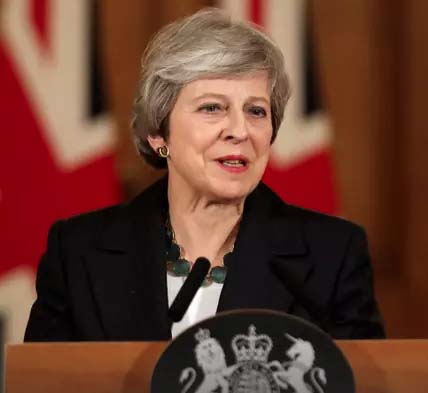
On the debate in parliament on November 15, the day after the government allegedly supported the project, only a few people came to her aid. Basically, harsh criticism was heard from a wide variety of parties and politicians.
Stories? " Photo: YouTube.com
It was found, though 5 ministers of the government who are still offering to work with the document in order to smooth out the corners. It is not known how they are going to do this and whether they want to change anything in a agreed project in Brussels.
Firm Brexeters accuse May of betrayal and require blood. Now they are gathering votes to hold a vote of no confidence. To do this, the Committee 1922, which resolves such issues, should enter 48 letters from conservative-casements with a demand for voting. So far, the desired number of letters seems to have not been received. If 48 dissatisfied are recruited, conservative deputies will have to vote and resolve the issue of trusting the party leader with a simple majority, that is, to gain 320 votes. But if the conspirators will not be able to get the majority and Teresa May wins, then her leadership cannot be disputed for 12 months.
Teresa May said on Sunday that there are seven days ahead, which will be critical for the future of Great Britain. She did not say that the week could become decisive for her own political future. The next obstacle that she and her government must overcome is the vote in parliament on the draft agreement. And here is a simple arithmetic - the calculation of those who have already stated that they would vote against is suggested that the project will ride the parliament.
What next?
The exit of Great Britain from the EU without a transaction. This is possible and becomes more and more possible, although many predict the crisis (economic, financial and political), all sorts of horrors and even riots in case of exit without a transaction. In the last issue , the Sunday Times writes about the preparation of emergency measures in case of release without a transaction.
The army, according to the sources of the newspaper in the Armed Forces, makes plans for emergency assistance to the police on the streets to suppress unrest and terrorist attacks.
Supporters of the second referendum are inspired by the results of the latest surveys. Now, after the publication of the draft agreement, 69% of respondents approve the idea of a second referendum. Both among the conservatives and among the Laborists there are those who advocate a repeated referendum, but neither May nor Korbin (Jeremy Corbyn, Labor leader) do not support this idea.
Well, in extreme cases, there is always a variant of new parliamentary elections. They can also be announced by Teresa May, losing all the options with an agreement, and demand the Labor, if the conservatives lose their unsteady majority in parliament, having lost the support of junions. For conservatives, this is a rather dangerous moment - according to the latest polls, the Labor, after the visible fiasco with the same, escaped forward and ahead of the conservatives by several percent.
In search of ancestors
Brexit has already split the country. After leaving the EU, the British parties are even more radicalized, and the political center, so really not forming, will completely disappear for a while.
Brexit and disputes around him raised the question of national identity.
Brectzit supporters insisted that an exit from the EU needed to defend the sovereignty of Great Britain, “laws should be adopted in Westminster, and not in Brussels,” etc.
But Brexit is already jealous of the integrity of the United Kingdom. Scotland can again raise the issue of sovereignty and exit from the United Kingdom. The position of Northern Ireland in connection with the problem of its border with the European Union (with Ireland) is also very unstable.
Foreign Minister Jeremy Hunt recently compared the European Union with the Soviet Union, which caused the discontent of Brussels and possible voters within the country. This statement cost him the support of many of those who saw him as the leader of the conservative party.
But the fact that Brexit and passions around him turn the history of the country into a new direction is a fact. And the question will inevitably raise-who are we: Europeans or British-Ostrovites.
Meanwhile, many British in search of national identity are looking for Irish ancestors.
According to the laws of Ireland, the Northern Irish can choose citizenship and decide for themselves who they are - citizens of Ireland or citizens of Britain.
The British, on the same Irish laws, can receive Irish citizenship if parents or grandfathers-women were Irish. Enough the document confirming.
So, according to Neil Richmond, the chairman of the Brexit Committee in the Senate of Ireland, for the first half of 2018, the Embassy of Ireland received 45,000 statements from British citizenship for the entry into citizenship of Ireland.
The lines behind the Irish passport and citizenship are unlikely to be caused by the fact that the British suddenly heard the call of their ancestors and felt like the Irish. Most likely, they just want to be EU citizens. It’s easier to live and this does not contradict their national identity. And, perhaps, this is the answer to the question - who they are. Yes, Europeans. And they want to stay in Europe.